
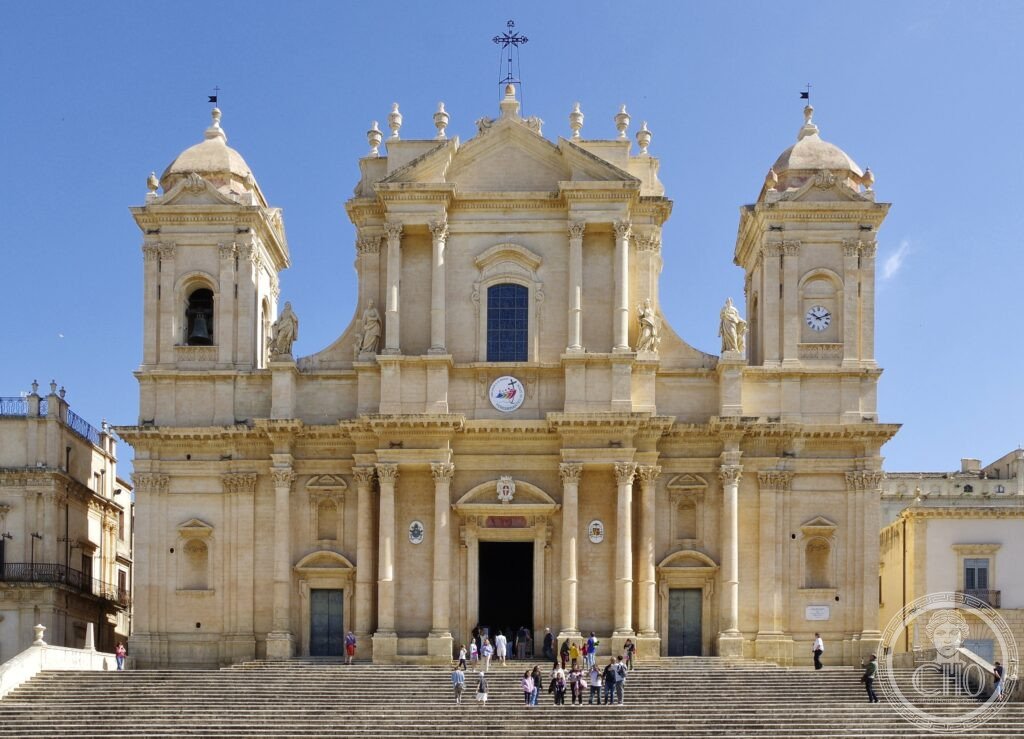
In January 1693 an earthquake flattened south-eastern Sicily, killing tens of thousands and levelling the towns of the Val di Noto. What rose from the rubble was an unusually coherent late Baroque, carved from local golden limestone by architects and masons working to a shared idiom across eight towns, of which Noto remains the clearest single example.
At a glance
Noto is the rebuilt heart of what is known as the Val di Noto, a group of eight south-eastern Sicilian towns destroyed or badly damaged by the earthquake of 11 January 1693 and reconstructed in a shared late Baroque style. The towns are Caltagirone, Militello in Val di Catania, Catania, Modica, Noto, Palazzolo Acreide, Ragusa and Scicli. Their common thread is the warm yellow calcarenite of the Hyblean plateau, carved into convex-concave facades and the zoomorphic balcony brackets that decorate many of the finest houses.
Noto itself was not rebuilt on its original hilltop site. The old town, Noto Antica, was abandoned, and the new Noto was laid out on the valley floor some way to the south-west, on the orders of the Viceroy of Sicily. Ragusa, by contrast, was rebuilt in part on its original site, so that the old quarter of Ragusa Ibla still follows a medieval street plan alongside the newer upper town.
Key facts
- Earthquake: 11 January 1693, around 9pm local time, with an intensity strong enough to level the towns of the Val di Noto and cause a very high death toll across the region.
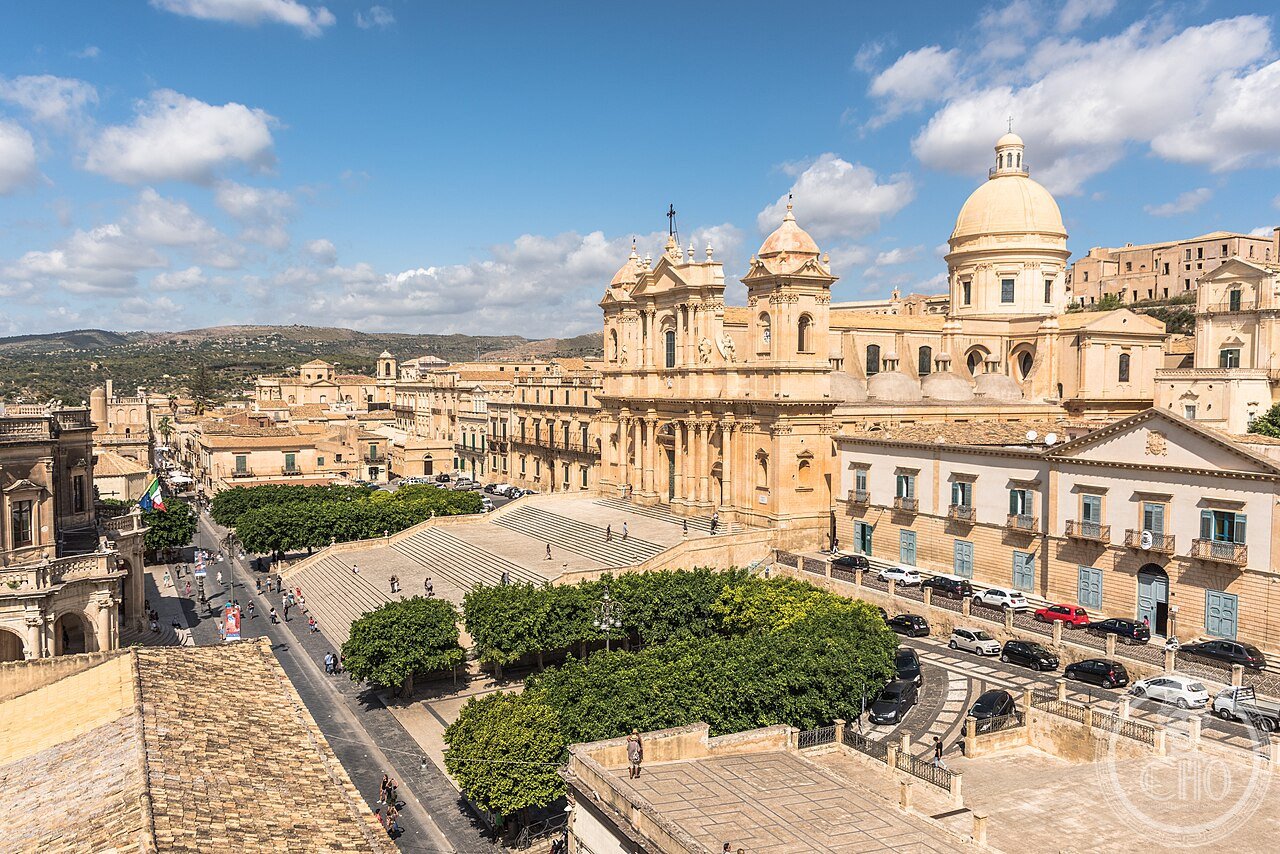
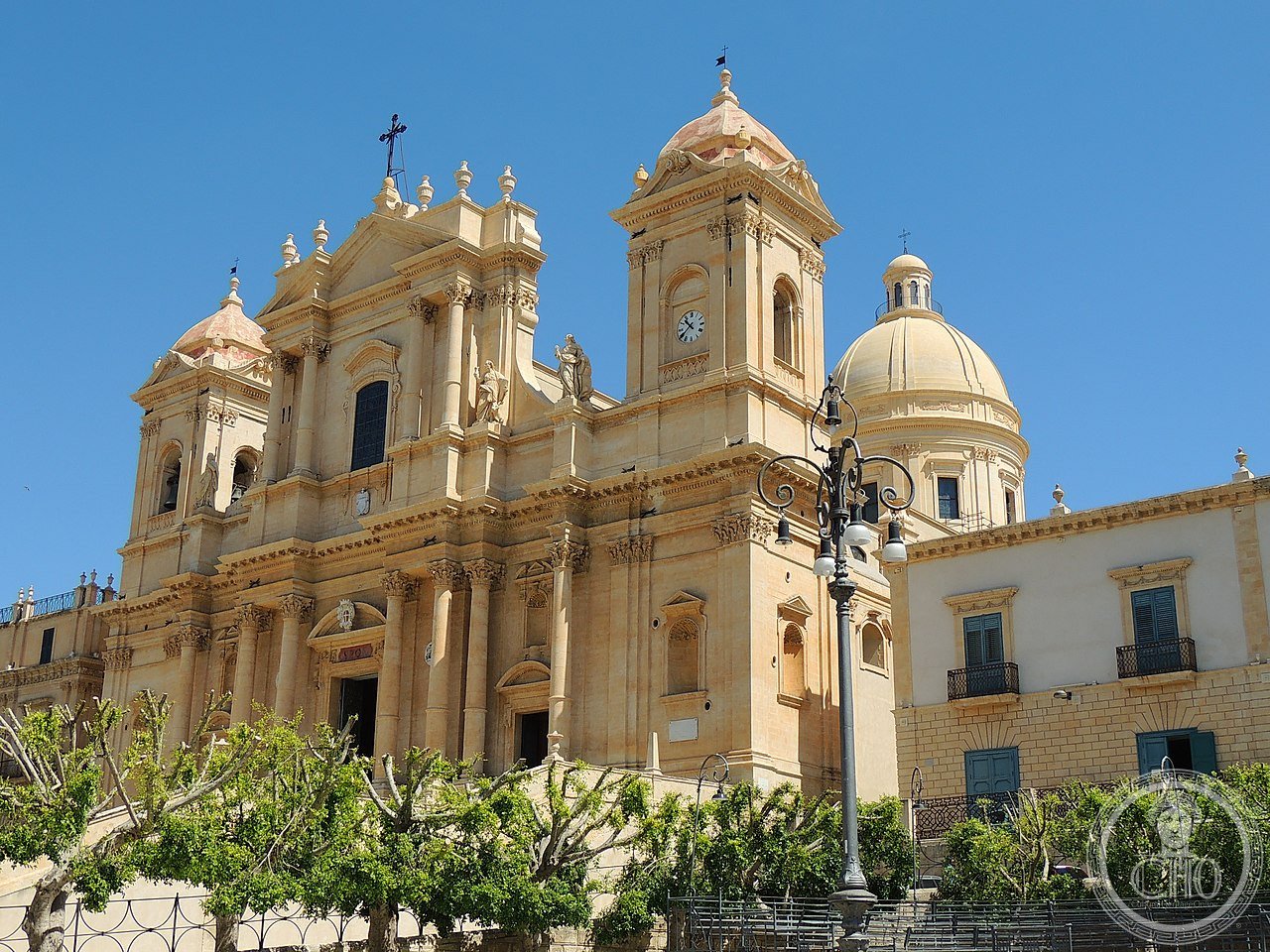
- Cathedral of San Nicolò: built between 1703 and 1776, its three-tiered facade and twin bell towers the work of several architects, chiefly Rosario Gagliardi and Giovanni Battista Landolina.
- Dome collapse and rebuilding: the cathedral’s dome came down on 13 March 1996; the building was reconstructed over the following years, with the Soprintendenza of Syracuse and the Sicilian regional authorities overseeing the works, and reopened in June 2007.
- UNESCO inscription: the eight towns of the Val di Noto, including Noto, were inscribed on the World Heritage List in 2002, reference 1024.
- Palazzo Nicolaci di Villadorata: built between 1737 and 1765, its main facade carries eight balconies, each supported by a differently carved stone corbel in the form of a chimera, a horse, a griffin, a centaur, a mermaid and other figures.
History
The earthquake of 11 January 1693 is remembered as one of the most destructive in Italian history before the Messina earthquake of 1908. A foreshock two days earlier had already brought down buildings in Catania and Augusta, and the main shock, which by eyewitness accounts lasted several minutes, brought down houses, convents and churches across the Val di Noto within a short space of time. A contemporary chronicler, G.B. Caruso, described the destruction of Noto in his Memorie istoriche of 1693.
Rebuilding was, by the standards of the time, remarkably fast and well organised. The Viceroy of Sicily commissioned a master plan for the new Noto from the military engineer Giuseppe Lanza, Duke of Camastra, within months of the disaster, and the first buildings of the new town were already standing within a few years. Good local stone, quarried close by at Monte Alveria, and loans guaranteed by the Spanish colonial government helped the towns of the Val di Noto rebuild along broadly consistent lines. Three architects are particularly associated with the resulting style: Rosario Gagliardi, active chiefly in Noto and Ragusa; Giovanni Battista Vaccarini, whose masterpiece is the Piazza del Duomo in Catania; and Andrea Palma, who worked in Noto. The towns were collectively inscribed on the UNESCO World Heritage List in 2002.
What you see
Noto’s historic centre runs along the Corso Vittorio Emanuele, laid out as a single consistent plan after 1693 and still legible as such today. The Cathedral of San Nicolò dominates the upper part of the town, its dome and towers rebuilt after the 1996 collapse. Facing it across the piazza stands the Palazzo Ducezio, the former town hall, with a convex-concave colonnaded facade; the building now serves as the seat of the municipality.
A short walk away, the Palazzo Nicolaci di Villadorata carries the most celebrated set of carved balcony brackets in the town, each one a different invented creature or figure worked into the golden local stone. In Ragusa Ibla, the old quarter of neighbouring Ragusa, the Church of San Giorgio by Gagliardi stands at the head of a long flight of steps and is generally considered the most accomplished Baroque facade in the group. Ragusa Ibla is also known as the main filming location for the Italian television series Il Commissario Montalbano.
Practical information
- Visiting the cathedral: opening times and any access arrangements are best checked directly with the parish or the local tourist office before travelling.
- Civil weddings: the Palazzo Ducezio is used for civil ceremonies; couples should enquire with the town hall for current arrangements and fees.
- Church of San Giorgio, Ragusa Ibla: opening hours and any entrance charge should be confirmed locally, as these can change.
Getting there
Noto lies in the province of Syracuse, in south-eastern Sicily, with its historic centre and cathedral at the heart of the town. The stone used to build it was quarried a short distance north-west, at Monte Alveria. For current information on how to reach Noto and the other towns of the Val di Noto, travellers should consult local tourist information services.
Nearby
- Ragusa Ibla — the old quarter of Ragusa, rebuilt on its medieval plan after the 1693 earthquake, with Gagliardi’s Church of San Giorgio at its heart.
- Modica and Scicli — two more of the eight Val di Noto towns rebuilt in the same late Baroque style after 1693.
- Caltagirone — another town in the group, known also for its long ceramic tradition.
- Siracusa — the provincial capital under which Noto falls.
Sources
- UNESCO World Heritage List
- Soprintendenza per i Beni Culturali ed Ambientali di Siracusa
- Regione Siciliana
- G.B. Caruso, Memorie istoriche (1693)
- RAI, Il Commissario Montalbano
Gallery
Find it on the map
See this place and what’s around it →📷 Become a Cultural Heritage Online photographer
Share your photos of places: they stay published under your name as the author. The more they're seen, the more you get noticed — and soon a contest will reward the most appreciated photos.
Log in or sign up free to add a photo