
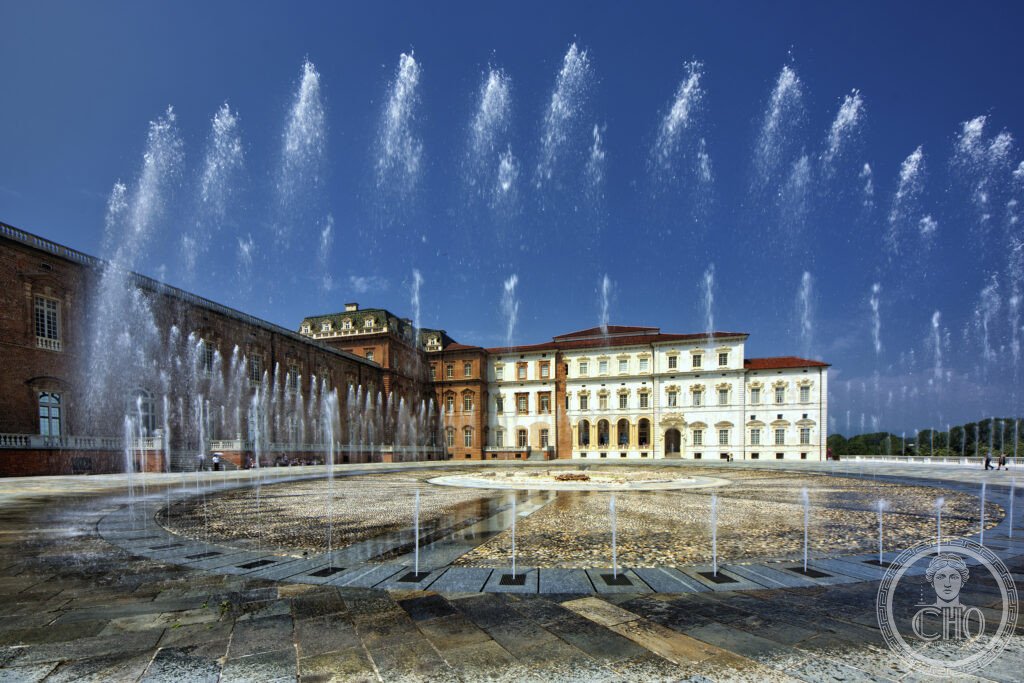
Once a hunting palace for the House of Savoy, later a cavalry barracks for nearly two centuries, the Reggia di Venaria Reale now shows off Filippo Juvarra’s Grande Galleria and Cappella di Sant’Uberto alongside a vast formal park, the result of one of the largest restoration campaigns undertaken on an Italian historic monument.
At a glance
The Reggia di Venaria Reale is among the largest baroque royal residences in Piedmont and one of the most extensive in Europe, with roughly 80,000 square metres of interior space, more than the palaces of Versailles or Schönbrunn. Its grounds combine formal gardens with woodland to cover some 1.9 million square metres. The town of Venaria Reale itself grew up around the palace as a planned satellite settlement, its main street aligned as a processional route towards the royal apartments.
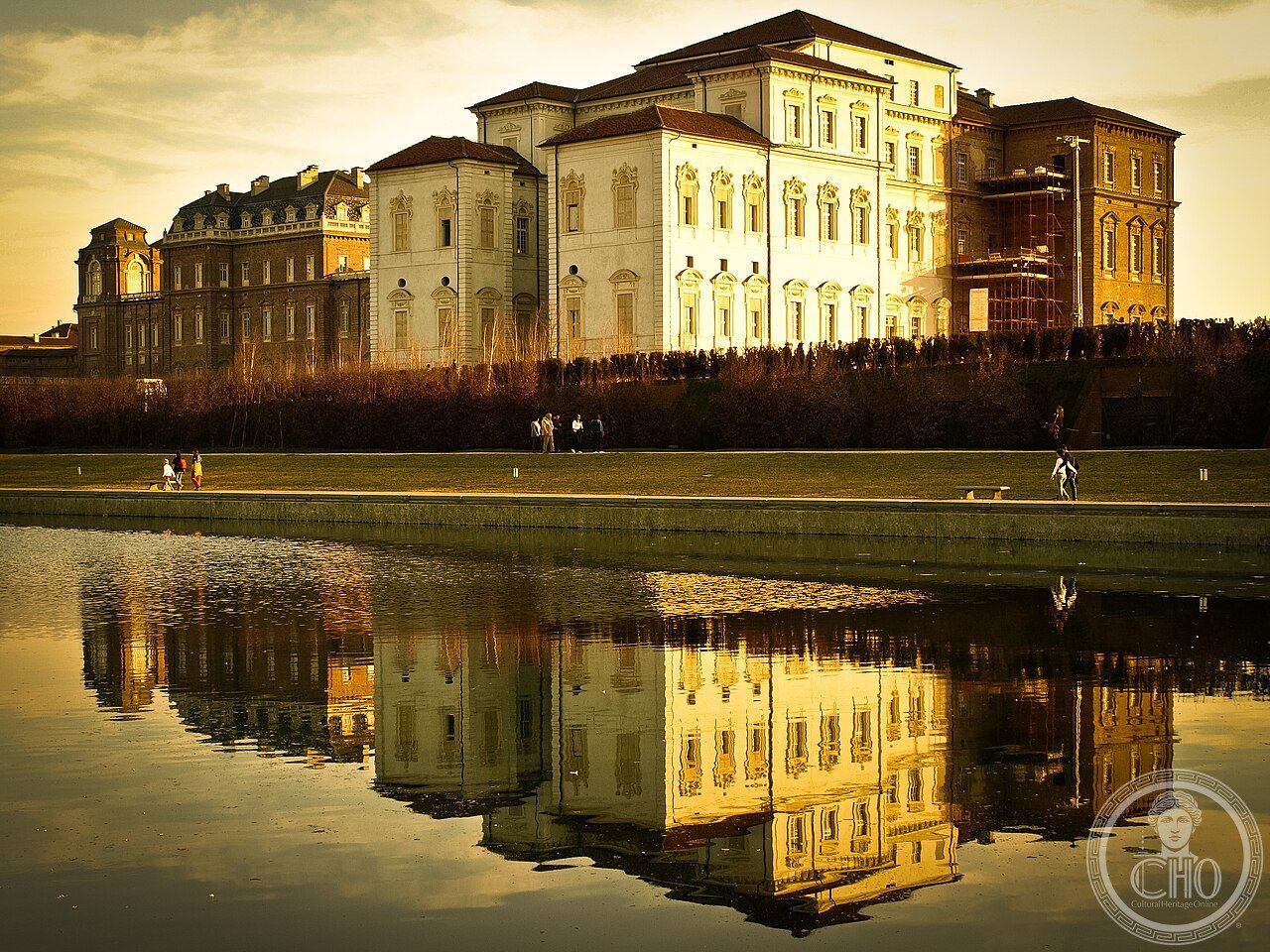
The building’s finest addition is the Juvarra wing, added between 1716 and 1721 to the existing complex designed earlier by Michelangelo Garove. It comprises the Grande Galleria di Diana and the Cappella di Sant’Uberto, both considered among the architect’s finest baroque interiors in the region.
Key facts
- Interior area: around 80,000 square metres, making it one of Europe’s largest baroque residences.
- Park: about 1.9 million square metres, split between formal gardens and woodland.
- Grande Galleria di Diana: 72 metres long, 9 metres wide, 14 metres high, with a five-bay barrel vault and 32 east-facing windows.
- Cappella di Sant’Uberto: an oval chapel measuring 22 by 16 metres, with a 33-metre cupola painted in trompe l’oeil by Giovanni Antonio Aviani.
- Heritage status: part of the UNESCO World Heritage listing of the Residences of the Royal House of Savoy, inscribed in 1997 under reference 823.
History
Carlo Emanuele II, Duke of Savoy, commissioned the palace in 1659 as a hunting residence, drawn to the site by the nearby Mandria forest, then the largest deer reserve in Piedmont. The first design, by court architect Amedeo di Castellamonte, laid out a symmetrical H-plan building with a forecourt and formal garden in the manner of a French maison de plaisance.
In 1693, during the War of the League of Augsburg, French forces under Nicolas de Catinat burned the palace and its gardens, destroying the elaborate Castellamonte fountain garden. Vittorio Amedeo II, later the first King of Sardinia, engaged Michelangelo Garove to rebuild the damaged residence and subsequently commissioned Filippo Juvarra to design the Grande Galleria and the Cappella di Sant’Uberto between 1716 and 1721.
The Savoy court’s fall brought a very different chapter: the French Revolutionary army confiscated the palace in 1798, converting it into a supply depot with stables, and the gardens were turned over to wheat fields. Military use continued after Italian unification, with the Reggia serving as headquarters to a cavalry regiment. By the time the military finally withdrew in the late twentieth century, the palace had lost its original furnishings, much of its decorative ceilings lay hidden under layers of paint, its lead roofing had been stripped, and its garden fountains had long since run dry. A large-scale restoration begun in 1999 and completed in 2007, funded jointly by the Italian state and European regional development funds, returned the palace to public use and is regarded as one of the largest such investments in Italian heritage history. The Reggia forms part of the serial UNESCO inscription covering the Savoy residences of Piedmont, listed in 1997.
What you see
The visit follows a long circuit through the palace’s principal rooms. The seventeenth-century Appartamenti di Caccia retain painted wooden ceilings from the Castellamonte era, including the so-called jewel room with its inlaid octagonal ceiling. The Grande Galleria di Diana is the architectural highlight: walking its full length and looking back reveals Juvarra’s five-bay vault and the hunting scenes painted across its lunettes, while its marble floor echoes the pattern of the garden parterre visible through the windows, so that gallery and garden read as a single composition. Nearby stands the Fontana del Cervo, referencing the wounded stag of the Diana myth from Ovid’s Metamorphoses and the origin of the town’s name in the Latin word for hunting.
The Cappella di Sant’Uberto, Juvarra’s palace chapel, is built to an oval plan beneath a painted cupola whose trompe l’oeil decoration extends the architecture upward. Its black-and-white marble floor and eighteenth-century organ complete one of Piedmont’s most accomplished baroque chapel interiors. The former royal stables, also by Juvarra, now serve as exhibition space and remain notable for their innovative two-storey layout arranged around a monumental courtyard. Beyond the palace, the formal garden unfolds across terraces, including a clipped hedge maze and a large restored fishpond fed by the estate’s original hydraulic system.
Practical information
- Opening times and tickets: these change seasonally, so visitors should check the palace’s official channels before travelling.
- Visit length: the interior circuit covers roughly 2.5 kilometres, so a full visit including the gardens takes a good part of a day.
- Chapel concerts: organ recitals are held on Sunday mornings; current timings should be confirmed with the site.
Getting there
The Reggia stands in the town of Venaria Reale, just north of Turin, with its main entrance located at approximately 45.1350° N, 7.6300° E. Visitors travelling from Turin should check current public transport and road access via the palace’s official information channels.
Nearby
- La Mandria park — the former royal hunting reserve adjoining the estate, covering some 6,600 hectares and now a protected nature area.
- Palazzo Reale, Turin — one of the two Turin royal buildings included in the same UNESCO serial listing of Savoy residences.
- Castello del Valentino, Turin — the second Turin building forming part of the same Savoy residences inscription.
Sources
- UNESCO World Heritage List
Gallery
Find it on the map
See this place and what’s around it →📷 Become a Cultural Heritage Online photographer
Share your photos of places: they stay published under your name as the author. The more they're seen, the more you get noticed — and soon a contest will reward the most appreciated photos.
Log in or sign up free to add a photoIs this page about you?
This page is read by travellers and heritage enthusiasts who find it on Google. Tell us how you are connected to this place and we will take it from there.