Napoli: Centro Storico
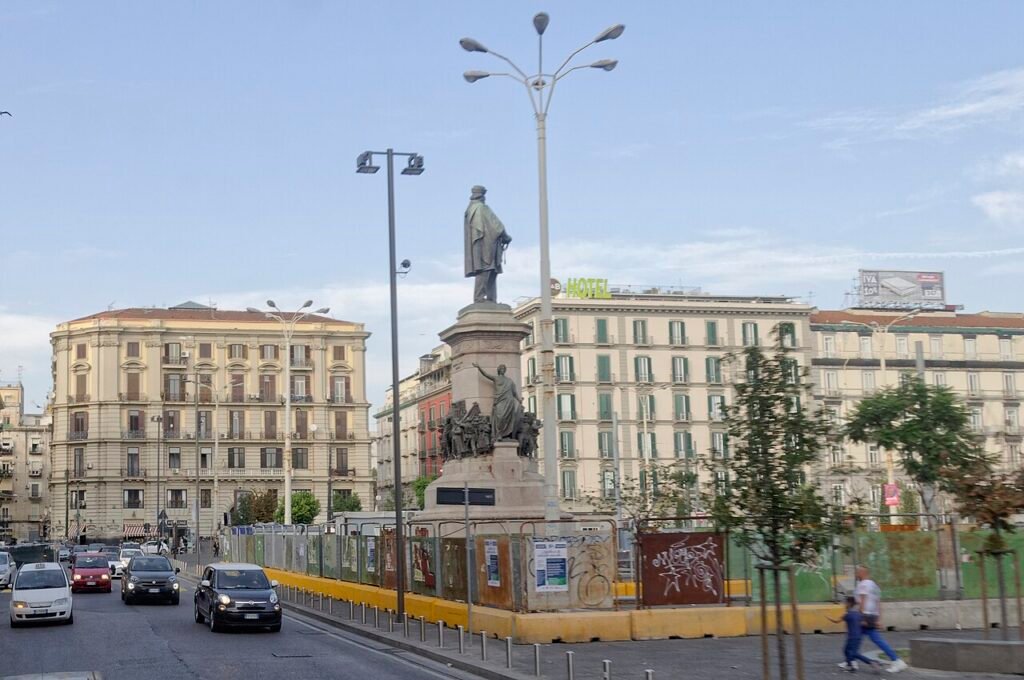
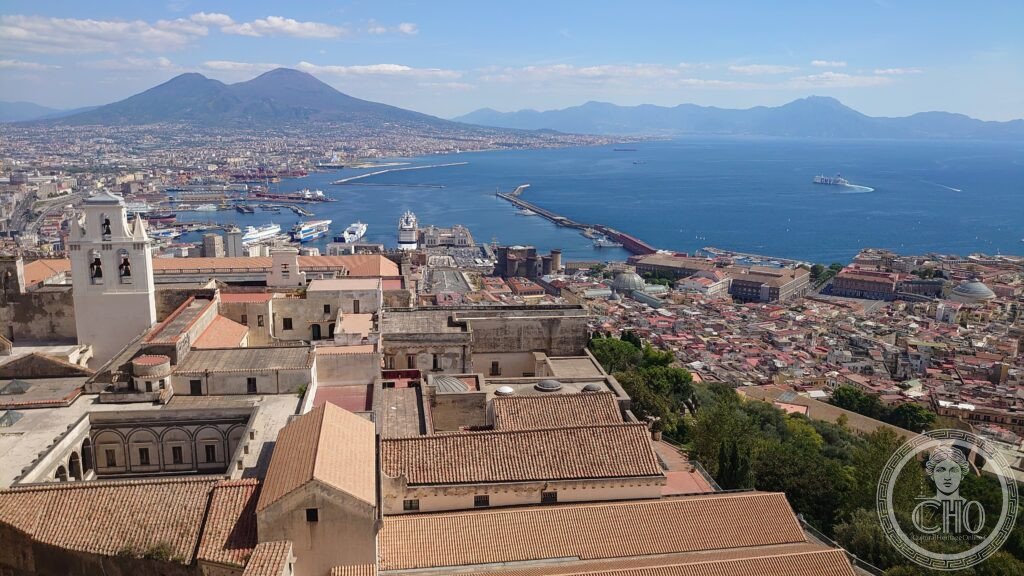
Il Centro Storico di Napoli (UNESCO 1995) è la più grande area urbana di origine greco-romana rimasta con struttura stradale intatta al mondo — le tre strade rettilinee dei decumani greco-romani (V secolo a.C.) corrono ancora oggi come Spaccanapoli, Via dei Tribunali e Via dell’Anticaglia, sovrapponendo 2.700 anni di strati da Partenope a Borbone in un unico centro urbano densissimo con 448 chiese, 51 piazze e una densità artistica che nessuna altra città italiana raggiunge nel rapporto superficie/patrimonio.
At a glance
Napoli centro storico (the most precisely Naples zone Naples Campania Italy 40.8518 N 14.2681 E UNESCO WHS 1995 reference 726: the Greek urban grid (the original city of Neapolis (founded c.470 BCE by the Cumaean Greeks, replacing the earlier Parthenope settlement of c.680 BCE) was laid out on a standard Hippodamian grid (named after Hippodamus of Miletus, the Greek urban planner): 3 east-west decumani (the Decumanus Maximus = the current Via dei Tribunali, the Decumanus Inferior = Spaccanapoli/Via San Biagio ai Librari, and the Decumanus Superior = Via dell’Anticaglia) crossed by approximately 40 north-south cardines (the current vicoli, the narrow alleys of the centro storico); the specific survival (the grid has been continuously inhabited for 2,500+ years without interruption (no catastrophic destruction of the Pompeii type, no planned reconstruction of the Bologna or Turin type); the result: the street widths (circa 6–8 m for the decumani; circa 2–4 m for the vicoli) are exactly the widths of Greek colonial street planning of the 5th century BCE; the ratio of street width to building height (approximately 1:3 for the decumani, 1:5 for the vicoli) creates the characteristic Neapolitan street-canyon light quality (direct sunlight reaches the street level only between 11 AM and 2 PM in summer; never in winter in the narrowest vicoli)); the 448 churches (the Encyclopaedia Britannica (1911 edition) identified 448 churches in the historic centre of Naples — more than any other city in Italy, more than Rome (approximately 300), more than Venice (approximately 100); the specific context: Napoli was the capital of the Kingdom of Naples (1282–1816 CE) and then of the Kingdom of the Two Sicilies (1816–1861 CE); as the capital of the most populous Italian kingdom (approximately 7 million inhabitants at its peak), it received the patronage of the Angevin, Aragonese, Spanish Viceroys, and Bourbon dynasties simultaneously; each dynasty built or expanded churches).
Key facts
- Spaccanapoli — the single most intense urban cultural concentration in Italy: the name (Spaccanapoli = “Naples-splitter”: the street (the Decumanus Inferior of Greek Neapolis; combined with the parallel section Via San Biagio ai Librari, it runs 3.1 km from the Gesù Nuovo to the Piazza del Gesù; it splits the historic centre visually along its east-west axis) runs straight through the heart of the centro storico; the density of monuments per 100 m of Spaccanapoli: the Gesù Nuovo (1584 CE: the diamond-point rusticated facade of the Palazzo Sanseverino converted to a church in 1584 CE by the Jesuits; the specific facade: the diamond-point rustication (punta di diamante: stone blocks cut so that each protrudes from its center in a 4-pointed diamond shape; the pattern covers the entire facade of approximately 45 m × 18 m; originally this was the exterior of a Franciscan friary entrance; when the Jesuits acquired the building, they used the facade as-is (the roughness of the rustication was reinterpreted as expressing Jesuit austerity and strength)); the Via San Gregorio Armeno (the street immediately east of the Gesù Nuovo: the most concentrated display of Neapolitan presepe (Nativity scene) craftspeople in the world; 40+ workshops selling and crafting handmade terracotta Nativity figures; the figures range from the traditional (shepherds, magi, the Holy Family; the standard Neapolitan presepe types established by the Bourbon court of Charles VII in the 18th century CE) to the modern (footballer figures, politicians, television personalities; a specifically Neapolitan tradition of including contemporary public figures in the presepe, making each scene a political-cultural commentary on the current year)); Santa Chiara (the Anjou Gothic church 1310–1328 CE; the Bourbon majolica-tiled cloister (1742 CE: the 72 pilasters covered with majolica tile scenes of gardens, pastoral life, hunting, and commedia dell’arte figures; the most vivid Rococo decorative programme in southern Italy)); San Gregorio Armeno (the Benedictine monastery 1572–80 CE; the ceiling of the church: Luca Giordano’s fresco of the Apotheosis of St Gregory the Illuminator (1679 CE: Giordano completed it in 5 months, earning his nickname “Luca fa presto”)))
- GPS (Centro Storico): 40.8518° N, 14.2681° E
- Pizza Margherita (1889): Pizzeria Brandi, Salita Sant’Anna di Palazzo 1-2 (since 1780 CE; documented creation of the Margherita for Queen Margherita of Savoy on June 11, 1889 CE by Raffaele Esposito)
History
From the Cumaean colony of Partenope to the Angevin capital to the Bourbon kingdom to the pizza capital of the world (the most precisely Naples zone history: the Greek period (c.680 BCE: the founding of Parthenope (the earlier settlement on the Pizzofalcone hill, where the current Castel dell’Ovo stands on a small offshore island); c.470 BCE: the foundation of Neapolis (“New City”) by the Cumaeans on the flatland east of Parthenope; the specific name (Neapolis was so named in contrast to the older Parthenope which became “Palaiopolis” = “Old City”); the Roman period (326 BCE: Napoli surrendered to Rome without being sacked (the specific consequence: the city grid was preserved because there was no tabula rasa destruction; Napoli was the wealthiest Greek city in the Roman Empire, maintaining its Greek language, Greek games, and Greek customs until the 4th century CE; the Crypta Neapolitana (the tunnel through the Posillipo hill: 711 m long, 4.5 m wide; dug in the Roman period (c.37 BCE; attributed to Cocceius, the architect of Augustus); still visible under Piedigrotta; Virgil’s tomb (the traditional identification: a 1st-century CE Roman columbarium tomb on the Posillipo hill above the tunnel entrance; the identification as Virgil’s tomb is traditional from the Middle Ages and is not archaeologically confirmed; Petrarch visited it in 1341 CE)); the Anjou period (1266 CE: Charles I of Anjou conquered Naples from the Hohenstaufen; the capital moved from Palermo to Naples; the Castel Nuovo (1279–82 CE: “Maschio Angioino”; Robert of Anjou’s court (1309–43 CE): Boccaccio and Petrarch lived in Naples at this court; the Salle Grande has a recently rediscovered fresco cycle by Giotto (c.1330 CE: only fragments survive; the work was the largest Giotto commission in Italy after Padua); the Aragonese period (1442 CE: Alfonso I of Aragon conquered Naples; the humanist court of Alfonso, Ferrante, and Alfonso II: the academy of Giovanni Pontano (Pontaniana Academy); Lorenzo Valla wrote the Donation of Constantine forgery debunking here in 1440 CE; the Spanish Viceroy period (1503–1713 CE: the longest period of foreign rule; the Toledo grid (Don Pedro de Toledo, Viceroy 1532–53 CE: the Via Toledo (today Via Roma) extending the city southwestward; the building of the Quartieri Spagnoli (the Spanish soldiers’ barracks quarter: a rectilinear grid west of the Via Toledo, the most densely urban area of Naples today))); the Bourbon period (1734 CE: Charles VII of Bourbon (later Charles III of Spain) captured Naples from the Austrians; the Bourbon Naples (the Royal Palace (1600 CE, Domenico Fontana; expanded Bourbon period); the Palazzo Reale di Caserta (1752 CE, Vanvitelli; 30 km north; UNESCO 1997); the San Carlo opera house (1737 CE: the oldest continuously operating opera house in the world; opened 4 November 1737 CE, 41 years before La Scala in Milan)).
What you see
The Cappella Sansevero, the Museo Nazionale Archeologico, and the Crypta Neapolitana (the most precisely Naples zone visit (2 days minimum): Day 1 (the Spaccanapoli circuit): 9 AM: Gesù Nuovo (facade + Cappella di S. Giuseppe Moscati; the radiograph panels); 9:45 AM: Santa Chiara (majolica cloister; the Anjou royal tombs in the nave); 10:30 AM: Cappella Sansevero (Via Francesco De Sanctis 19R; open Mon + Wed-Sun 10 AM–6 PM; €9 (one of the most visited sites in Naples; booking essential); the Veiled Christ (Raffaele Monti, 1753 CE: wait, actually the Veiled Christ is by Giuseppe Sanmartino, 1753 CE; a single block of white marble; the veil over Christ’s face is carved from the same block; the specific technique: the veil is approximately 3–5 mm thick in carved marble; it drapes over the body with 35+ individual fold lines; the transparency effect (the veil appears translucent because Sanmartino carved the folds so that the body beneath is suggested rather than revealed; in reality the marble is the same opaque white throughout, but the thinness of the veil sections and the angled light in the chapel create the optical illusion of translucency); the anatomical machines (2 standing full-body anatomical specimens in the crypt: the veins and arteries of 2 figures preserved in bronze-colored wax (a preservation technique attributed to Prince Raimondo di Sangro, the patron of the chapel)); 11:30 AM: San Gregorio Armeno (the Luca Giordano ceiling fresco; the presepe workshops on the Via San Gregorio Armeno); 12:30 PM: pizza at Di Matteo (Via dei Tribunali 94; founded 1936 CE) or Gino Sorbillo (Via dei Tribunali 32; the third generation of the Sorbillo family; the pies are baked in a wood-fired oven at 485°C for 60-90 seconds); Day 2: Museo Archeologico Nazionale (9 AM–7:30 PM; closed Tue; €22; the Farnese Bull (the largest ancient sculpture complex surviving; 370 cm × 150 cm × 290 cm; carved from a single block of Parian marble in the 2nd century CE after a 3rd-century BCE original); the Farnese Hercules (captured by Lysippus; the largest surviving Hellenistic bronze cast replica in marble); the Secret Room (the Gabinetto Segreto: the erotic art from Pompeii and Herculaneum; the hydraulic wine press from the Villa dei Papiri at Herculaneum; the Pompeii mosaic rooms (the House of the Faun mosaics: the Alexander Mosaic (lion hunt); the Nile Scene (crocodiles and hippos))); the Castel dell’Ovo and the Via Posillipo (the Castel dell’Ovo (the Norman castle on the island of Megaris: “Egg Castle” (Virgil is said to have placed a magic egg inside the castle foundations; the castle would stand as long as the egg remained intact); the access: a free footbridge; the terrace: the best panoramic view of the Bay of Naples and Vesuvius available for free in Naples)).
Practical information
- Getting to Naples and planning the UNESCO Historic Centre efficiently: arrival (Napoli Centrale station: Frecciarossa from Rome Termini (1h10; €30–45; every 30 min); from Milan (4h20; €60–90); Circumvesuviana train from Sorrento (65 min; €3.60; the same line for Pompeii and Herculaneum exits); or by ship (SNAV and Tirrenia ferries from Palermo 10h, Cagliari 16h, Genova 18h; all dock at Napoli Beverello or Mergellina)); the Napoli Artecard (€35; 3 days; unlimited public transport + free/reduced entry to museums including the Museo Nazionale, Museo di Capodimonte, Castel Sant’Elmo, and 20+ other sites: the best-value museum pass in Italy for a 3-day visit); the Cappella Sansevero booking (book online (museosansevero.it) at least 1 week in advance in summer (July–August); the chapel has a maximum capacity of 25 visitors per 15-min slot); the pizza protocol (the queue at Gino Sorbillo starts at 12:15 PM; arrive at 12:10 for a wait of approximately 20 min; after 1:15 PM the wait can be 45–60 min; Di Matteo on Via dei Tribunali has a faster takeaway counter (the friggitoria section: fried pizza, fried zucchini flowers, fried mozzarella balls; eat standing at the counter or walking)); footwear (the vicoli cobblestones (basalt/sanpietrini) are wet and slippery after rain; good walking shoes essential; the Spaccanapoli descent from Piazza del Gesù to San Domenico Maggiore involves approximately 15 min of slow walking on uneven surfaces))
Getting there
Frecciarossa da Roma Termini (1h10, €30-45, ogni 30 min); da Milano (4h20, €60-90). Metro linea 1: Museo (Museo Nazionale) o Dante. Circumvesuviana per Pompeii-Sorrento da Napoli Centrale. GPS: 40.8518, 14.2681.
Nearby
- Pompei ed Ercolano — 25 km est (UNESCO WHS 1997; Circumvesuviana da Napoli Centrale: Pompei Scavi 35 min €2.80, Ercolano Scavi 20 min €2.20; open daily 9am-7pm (summer); biglietto cumulativo €22)
- Palazzo Reale di Caserta — 40 km nord (UNESCO WHS 1997; Vanvitelli 1752; il Versailles italiano; 1.200 stanze; parco 3km cascata; Trenitalia da Napoli Centrale 40 min €4.10; open Wed-Mon 8:30am-7:30pm; €16)
Gallery


Sources
- Wikipedia, Historic Centre of Naples; Spaccanapoli; Cappella Sansevero; Veiled Christ, accessed June 2026
- UNESCO, Historic Centre of Naples, WHS reference 726, inscribed 1995
- De Seta, Cesare. Napoli. Roma-Bari: Laterza, 1981 (the standard historical atlas of the city)
Find it on the map
See this place and what’s around it →📷 Diventa un fotografo di Cultural Heritage Online
Condividi le tue foto dei luoghi: restano pubblicate con la tua firma come autore. Più vengono viste, più ti fai conoscere — e presto un concorso premierà le foto più apprezzate.
Accedi o registrati gratis per aggiungere una foto