

Modica rises in tiers up a steep limestone canyon, its rebuilt Baroque skyline crowned by the Duomo di San Giorgio at the top of a long monumental staircase. The town is also home to a chocolate tradition made without heat or conching, following a method said to descend from the Aztec recipe brought to Sicily under Spanish rule.
At a glance
Modica is one of the towns of the Val di Noto rebuilt after the earthquake of 1693, and it is inscribed as part of the UNESCO World Heritage listing for the Late Baroque Towns of the Val di Noto, granted in 2002 under reference 1024bis. For centuries it was the seat of the County of Modica, one of the largest feudal estates held in Sicily under Spanish rule, and it was the wealth of its ruling family that paid for the reconstruction of the Duomo di San Giorgio. Modica is equally known today for Cioccolato di Modica, a cold-processed chocolate recognised with IGP status, made without dairy, lecithin or conching, so that it keeps a coarse, grainy texture unlike modern tempered chocolate.
Key facts
- Type: Late Baroque town, part of the Val di Noto reconstruction after 1693
- Key monument: Duomo di San Giorgio, attributed to Rosario Gagliardi, begun in 1702
- Historical role: seat of the County of Modica, a major feudal estate under the Chiaramonte and then Cabrera families
- Local product: Cioccolato di Modica IGP, made by a cold, unconched process
- Heritage status: UNESCO World Heritage Site since 2002, reference 1024bis, Late Baroque Towns of the Val di Noto
History
The area around Modica has been settled since the Bronze Age, with the nearby canyon of Cava d’Ispica showing continuous occupation from that period through to Byzantine times. Under Arab rule the town was known as Madinat Ibla, and in 1061 it passed to Norman control, when a castle built on the Pizzo hill became the centre of what would develop into the County of Modica.
The county passed from the Chiaramonte family, who held it from 1296, to the House of Cabrera by marriage in 1392, and it remained a private feudal estate until the abolition of the Sicilian feudal system in 1816. On 11 January 1693 an earthquake devastated the town more severely than elsewhere in the Val di Noto, triggering landslides in the narrow canyon and burying the valley floor in debris. Rather than move the settlement, as happened at Noto, Modica’s survivors rebuilt on the same site, and the reconstruction shaped the town into two distinct quarters, Modica Alta on the plateau, where the Duomo di San Giorgio stands, and Modica Bassa on the valley floor, centred on the church of San Pietro and the Corso Umberto I. Modica was added to the UNESCO World Heritage list in 2002 as part of the Late Baroque Towns of the Val di Noto, reference 1024bis.
What you see
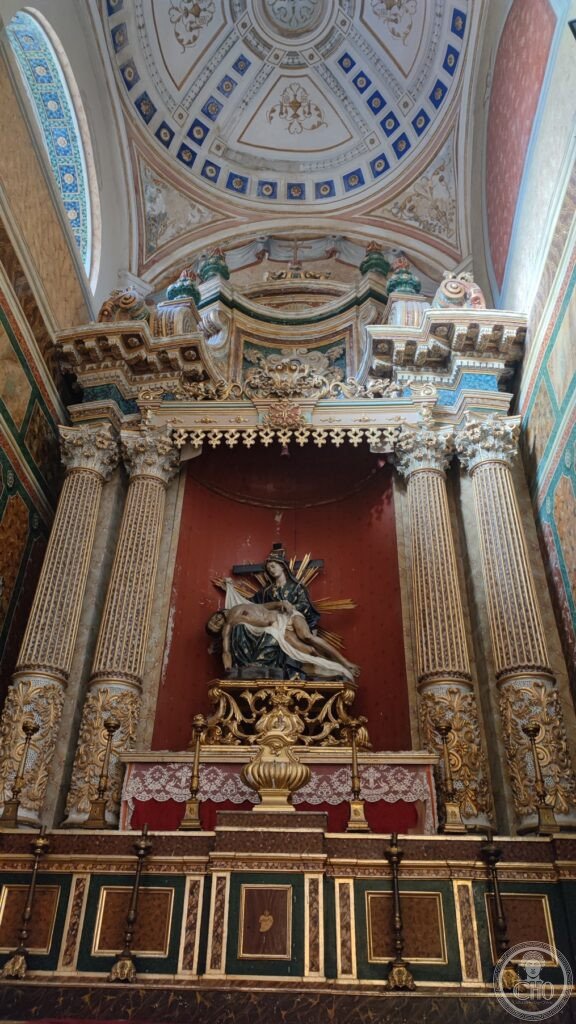
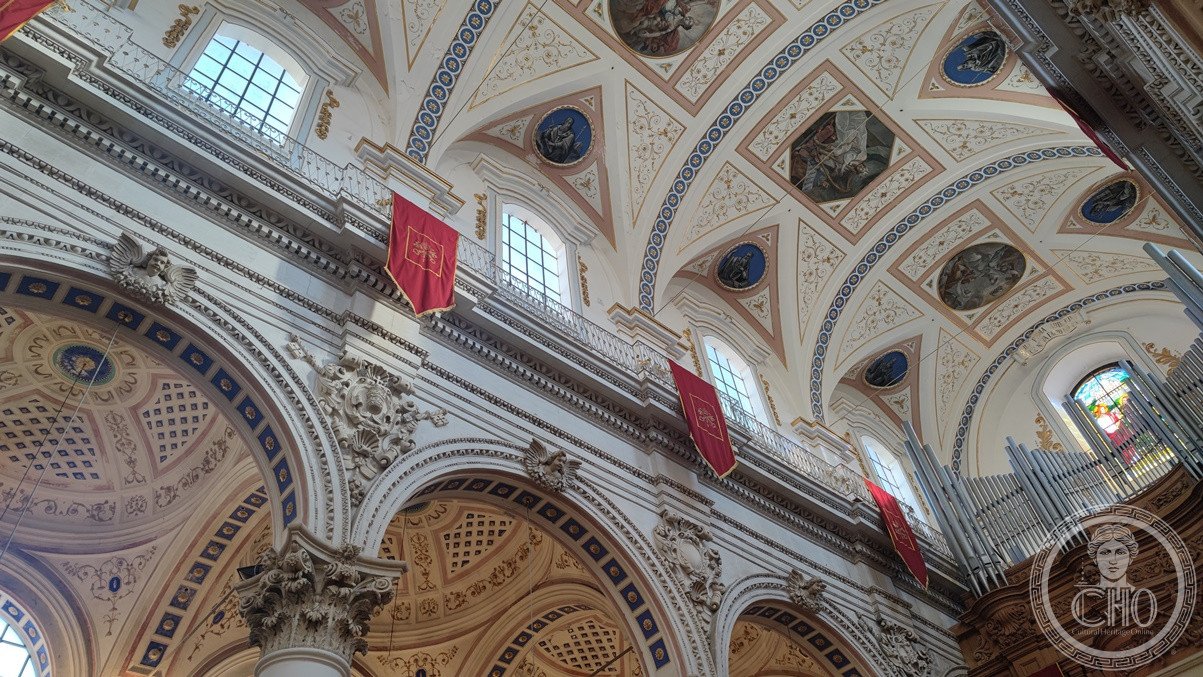
Corso Umberto I is the spine of the lower town, lined with Baroque palazzi, among them Palazzo Polara and Palazzo dei Mercedari, and with chocolate shops including Dolceria Bonajuto, documented since 1880 and said to preserve its sixteenth-century recipe unchanged. From the Corso, a long monumental staircase climbs to the forecourt of the Duomo di San Giorgio, whose three-tiered facade, with paired pilasters below, balustrades and niched figures at mid-level, and a convex-concave silhouette above, is visible from some distance down the street, a deliberate visual axis built into the reconstruction. Inside, the church has a five-aisle plan with Doric columns and a sixteenth-century silver altar depicting the martyrdom of Saint George.
Nearby, the Museo del Cioccolato in the Palazzo della Cultura sets out the history of the cold-process chocolate method and its supposed link to the Aztec recipe, alongside original moulds from the Bonajuto family workshop.
Practical information
- Access to the Duomo: reached on foot via the staircase from Corso Umberto I; opening times and any admission arrangements are best checked with the parish or the town’s tourist office before visiting
- Chocolate shops and museum: Dolceria Bonajuto and the Museo del Cioccolato are both on or near Corso Umberto I; current hours and prices should be confirmed directly with each venue
- Combining with other towns: Modica is often visited together with Ragusa Ibla and Scicli, the other Val di Noto towns nearby
Getting there
Modica can be reached from Catania by train, changing at Siracusa, or by coach services running from Catania airport; both options serve the town centre, and current timetables and fares should be checked with Trenitalia or the relevant coach operator.
Nearby
- Ragusa Ibla — a short journey away, another Late Baroque town of the Val di Noto
- Scicli — nearby, the third of the closely linked Val di Noto Baroque towns
- Cava d’Ispica — a canyon south of Modica with a cave necropolis occupied from the Bronze Age to the Byzantine period
Sources
- UNESCO, Late Baroque Towns of the Val di Noto (reference 1024bis)
Gallery
Find it on the map
See this place and what’s around it →📷 Become a Cultural Heritage Online photographer
Share your photos of places: they stay published under your name as the author. The more they're seen, the more you get noticed — and soon a contest will reward the most appreciated photos.
Log in or sign up free to add a photo