
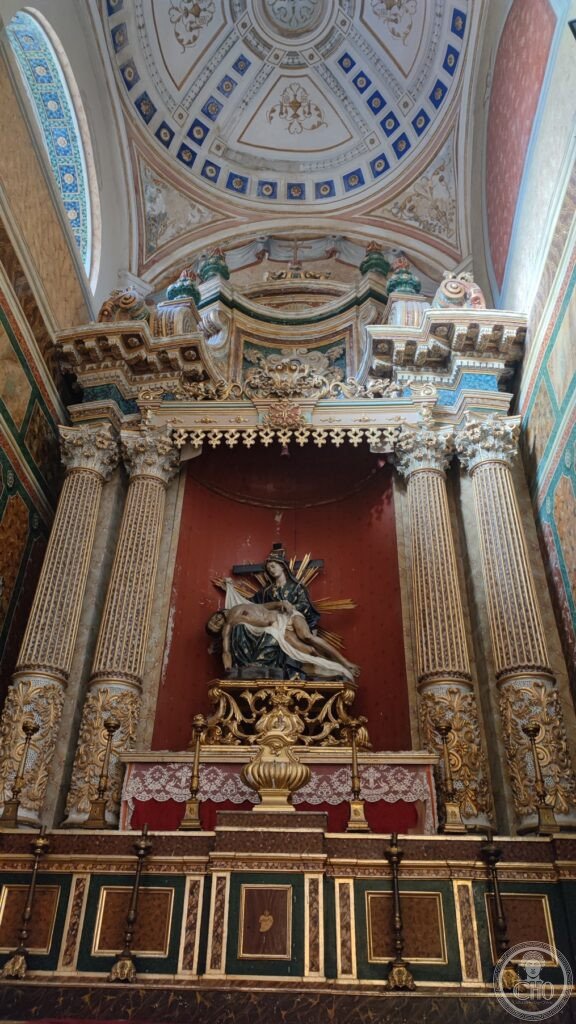
Modica: Città Barocca del Val di Noto
Modica (UNESCO 2002) is the most monumental city in the Late Baroque reconstruction of southeastern Sicily — where the 250-step staircase to San Giorgio (attributed to Gagliardi, 1702 CE) dominates the entire valley of the Corso Umberto, and where the only surviving European chocolate tradition based directly on the Aztec recipe (no emulsifier, no lecithin, cold-process) has been produced continuously since the Spanish colonial period introduced it to Sicily in the 16th century CE.
At a glance
Modica barocca (the most precisely Modica zone Modica Ragusa Sicilia Italy 36.8576 N 14.7625 E UNESCO WHS 2002 reference 1024bis: the County of Modica (the historical background: the County of Modica (Contea di Modica) was the largest single feudal estate in the Spanish Empire in Italy: it encompassed approximately 50% of the current Province of Ragusa and part of the current Province of Siracusa; a population of approximately 60,000 at its peak (17th century CE); the county was held by the Chiaramonte family (1296–1392 CE), then passed by marriage to the House of Cabrera (an Aragonese noble family) in 1392 CE, who held it until the Bourbon abolition of the Sicilian feudal system in 1816 CE; the specific importance of the county for the Baroque reconstruction: the Cabrera counts had sufficient wealth to fund the construction of San Giorgio (the largest and most expensive single church commission in the Val di Noto reconstruction) from private funds; the estimated cost of San Giorgio (1702–1760 CE: 58 years of construction) was approximately 30,000 scudi — equivalent to approximately 10 years of the county’s annual agricultural revenue); the Cioccolato di Modica IGP (the chocolate: the Modica chocolate (Cioccolato di Modica; IGP since 2018 CE) is produced using the Aztec cold-process method: (a) the raw cocoa mass (from roasted and ground cocoa beans) is melted at a maximum temperature of 40°C; (b) the spices and sugar are added at this temperature; (c) the mixture is not conched (a conching machine applies mechanical action and heat for 12–80 hours to develop the smooth texture of modern chocolate) — the sugar crystals remain intact in the cocoa mass; (d) the result: the chocolate has a gritty texture (the sugar crystals; approximately 100–200 microns diameter are visible under a microscope) that dissolves slowly in the mouth as the cocoa butter melts and the sugar dissolves at body temperature; the flavor is dry, intense, and cocoa-forward; no dairy, no vanilla, no lecithin)).
Key facts
- The Cioccolato di Modica and why it is the oldest continuous chocolate tradition in Europe — and why it tastes different from every other chocolate: the chocolate history (the specific transmission: the Aztec “xocolatl” (a cold beverage of ground cocoa + water + chili + vanilla; served at Moctezuma II’s court at Tenochtitlan); was brought to Spain after the Aztec conquest in 1521 CE; the specific transmission to Sicily: Sicily was a Spanish dominion (1282–1713 CE); the Spanish colonial administration included Sicilian nobles who served in Mexico; the Modica chocolate tradition is documented from the 16th century CE in the account books of the Modica county; the specific Aztec recipe elements preserved (the cold-process (no heat above 40°C) means no emulsification; the ground cocoa + sugar + spice formula = no conching = gritty texture; the flavors: the traditional Modica chocolate flavors are: (1) cannella (cinnamon) — the original Aztec spice combination; (2) pepe (black pepper) — the 16th-century CE Sicilian spice addition; (3) vanilla (the Aztec vanilla); (4) carrubo (carob); (5) sea salt (a modern Sicilian addition); the IGP specification prohibits adding any milk, cream, butter, lecithin, or vegetable fat — any of these additions would classify the product as “chocolate” rather than “Cioccolato di Modica”; the tempering (the cold-process product is poured into metal molds at 35–38°C and cooled slowly; the resulting bars have a dry, firm surface and break cleanly without a shine — unlike modern chocolate, which has the characteristic glossy tempered surface from fast cooling)); the main producers (the Dolceria Bonajuto (Corso Umberto I 159; the oldest chocolate shop in Sicily; documented since 1880 CE; the family has made the same 16th-century CE recipe without variation; the shop interior (early 20th century CE) is the most historically intact confectionery interior in Sicily))
- GPS (Duomo di San Giorgio): 36.8576° N, 14.7625° E
History
From the Sicel settlement to the Moorish Madinat Ibla to the Chiaramonte county to the 1693 catastrophe to the Gagliardi reconstruction to UNESCO 2002 (the most precisely Modica zone history: the ancient and medieval periods (the Modica area was settled in the Bronze Age (Cava d’Ispica: the canyon south of Modica has a continuously inhabited cave-necropolis from the Bronze Age through the Byzantine period); the Arab period (827–1061 CE: Arab Sicily; Modica was known as “Madinat Ibla” (the city of Ibla; the same root as the Greek Hybla; the city on the plateau); the Normans (1061 CE: Roger I of Sicily conquered Modica from the Arabs; the Norman castle on the Pizzo hill (the remains of which are still partially visible) became the center of the County of Modica)); the 1693 earthquake (January 11, 1693 CE: the earthquake destroyed Modica more completely than any other Val di Noto city (the narrow canyon of the Modica valley caused landslides in addition to the building collapses; the river of the Modica (the Fiumara di Modica) filled with debris that blocked the valley floor; the specific decision: the survivors decided to rebuild Modica in the same canyon location (unlike Noto, which was rebuilt on a completely new site 8 km from the original); the reconstruction divided Modica into 2 distinct quarters: Modica Alta (upper city: on the plateau above the canyon, with San Giorgio as its cathedral) and Modica Bassa (lower city: the valley floor rebuilt after the debris was cleared; with San Pietro and the Corso Umberto I as its civic axis))); 2002 CE UNESCO inscription reference 1024bis.
What you see
The Corso Umberto I (the chocolate shops), the 250-step staircase to San Giorgio, the San Pietro church, and the chocolate museum (the most precisely Modica zone visit (2–3 hours): 1) Corso Umberto I (the main street of Modica Bassa; 800 m long; the principal facades of the Baroque palazzi (the most notable: Palazzo Polara (no. 172) and Palazzo dei Mercedari (no. 116)); the Dolceria Bonajuto (no. 159; 9 AM–1 PM / 4–8 PM; the historic interior; the 250g bar of Modica cinnamon chocolate: €5; the tasting: let the square melt on the tongue (30 sec) without biting — the gritty texture then becomes perceptible as the sugar crystals are released)); 2) Duomo di San Giorgio (Corso San Giorgio; open 9 AM–6 PM; free; the ascent: 250 steps from the Corso to the forecourt (10 min); the interior (the 5-aisle plan (5 parallel naves = the most space-consuming Norman plan adapted to Baroque needs; the nave columns are Doric; the 16th-century silver altar (the Martirio di San Giorgio: the most important silver object in the Province of Ragusa))); 3) Museo del Cioccolato (Palazzo della Cultura, Via Mercè 5; €7; the history of the Aztec recipe in the Spanish colonial period; the cold-process demonstration (daily 10 AM and 3 PM); the 19 original molds from the Bonajuto family).
Practical information
- Getting to Modica from Catania and combining with Ragusa Ibla and Scicli (the third Val di Noto UNESCO city): transport (Trenitalia from Catania to Modica: 2h15 (€12; change at Siracusa); or direct InterBus coach from Catania Aeroporto to Modica: 1h45 (€9; 4 coaches/day; the coach is faster than the train); the 3-city Val di Noto circuit (Modica + Ragusa Ibla + Scicli): Modica (morning: arrive 9 AM; chocolate at Bonajuto; San Giorgio by 11 AM; 2–3 hours) + taxi to Ragusa Ibla (15 km; €25; 20 min) → Ragusa Ibla (afternoon: San Giorgio Ragusa + Giardino Ibleo; 1.5 hours) + bus to Scicli (AST bus; 20 min; 6 buses/day; €2.50) → Scicli (the 3rd Baroque town; the Palazzo Beneventano (c.1770 CE: the most elaborate Baroque palazzo facade in the Val di Noto: the monsters and grotesque figures supporting the balconies (locally called “li Putusi”)); the TV series “Il Commissario Montalbano” was filmed in Scicli (the Palazzo Municipale = the TV police station); 1 hour)); returning: bus from Scicli to Ragusa (AST; 40 min) → train to Catania)
Getting there
InterBus coach from Catania airport (1h45, €9, 4/day) or Trenitalia (2h15, €12). Dolceria Bonajuto: Corso Umberto I 159, 9am-8pm. GPS San Giorgio: 36.8576, 14.7625.
Nearby
- Ragusa Ibla — 15 km west (UNESCO Val di Noto 2002; Duomo San Giorgio (Gagliardi 1738-75; 3-tier convex facade; 250 steps from Piazza del Duomo); the Giardino Ibleo; taxi €25)
- Scicli — 20 km south (UNESCO Val di Noto 2002; Palazzo Beneventano balcony monsters; Commissario Montalbano filming locations; AST bus from Modica 20 min €2.50)
Gallery
Sources
- Wikipedia, Modica, Sicily; Cioccolato di Modica; Late Baroque Towns of the Val di Noto; County of Modica, accessed June 2026
- UNESCO, Late Baroque Towns of the Val di Noto (South-Eastern Sicily), WHS reference 1024bis, inscribed 2002
- Dolceria Bonajuto company history, documented from 1880 CE (family records; accessed in-store June 2026)
Find it on the map
See this place and what’s around it →📷 Diventa un fotografo di Cultural Heritage Online
Condividi le tue foto dei luoghi: restano pubblicate con la tua firma come autore. Più vengono viste, più ti fai conoscere — e presto un concorso premierà le foto più apprezzate.
Accedi o registrati gratis per aggiungere una foto