
Villa Romana del Casale
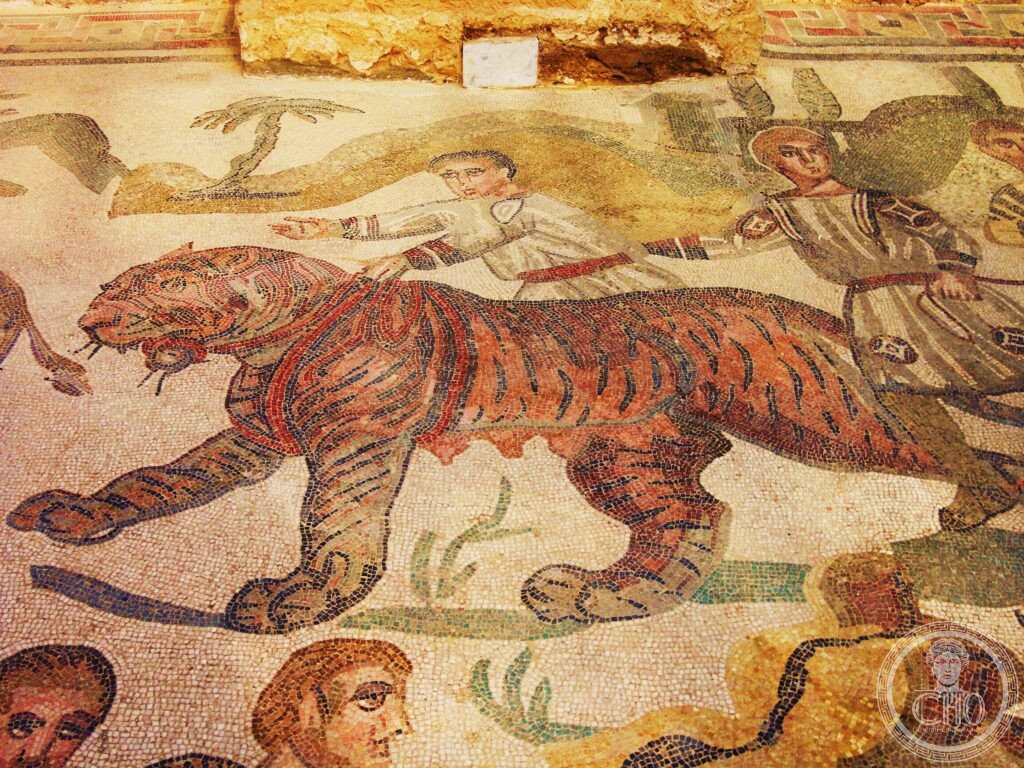
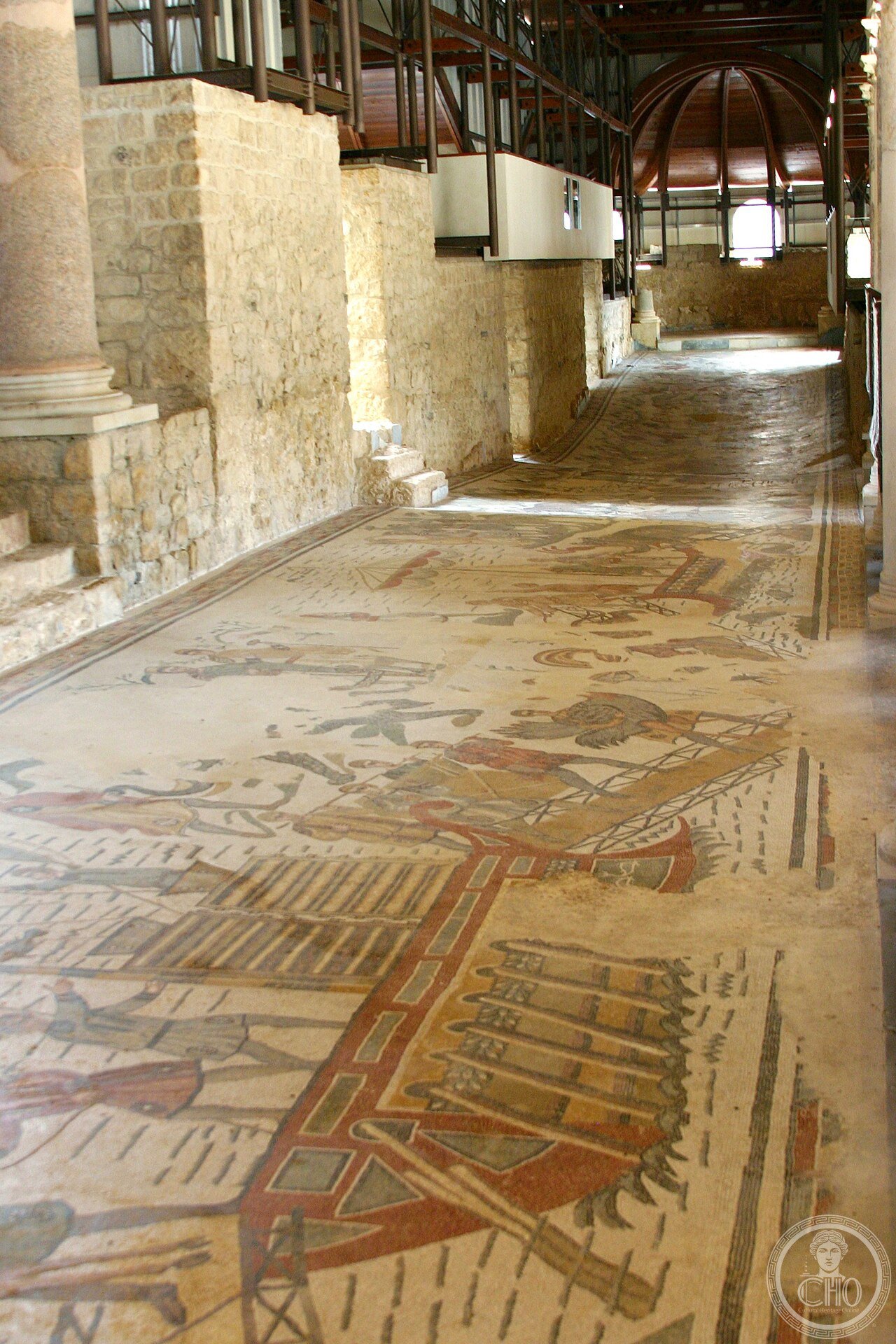
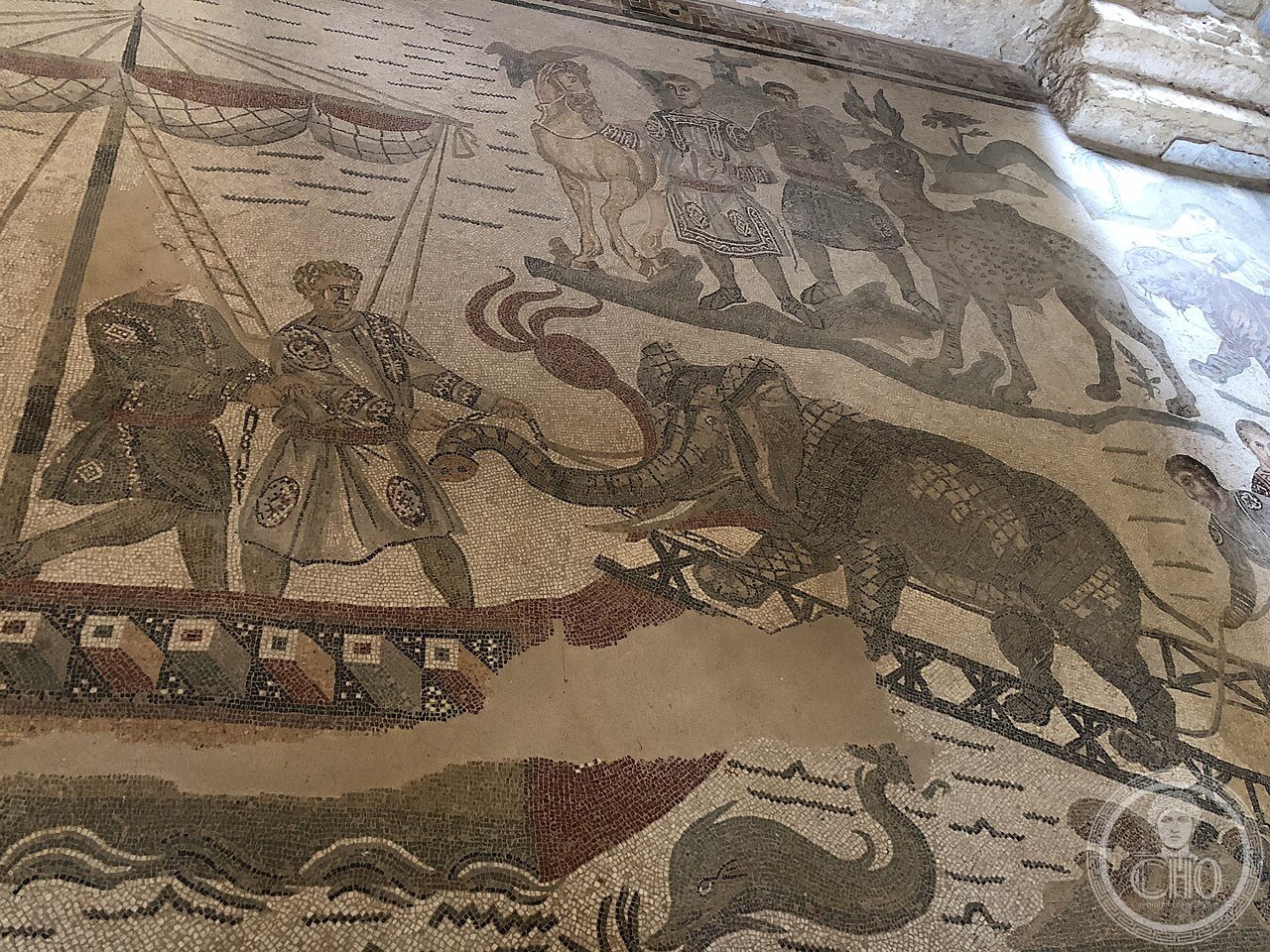
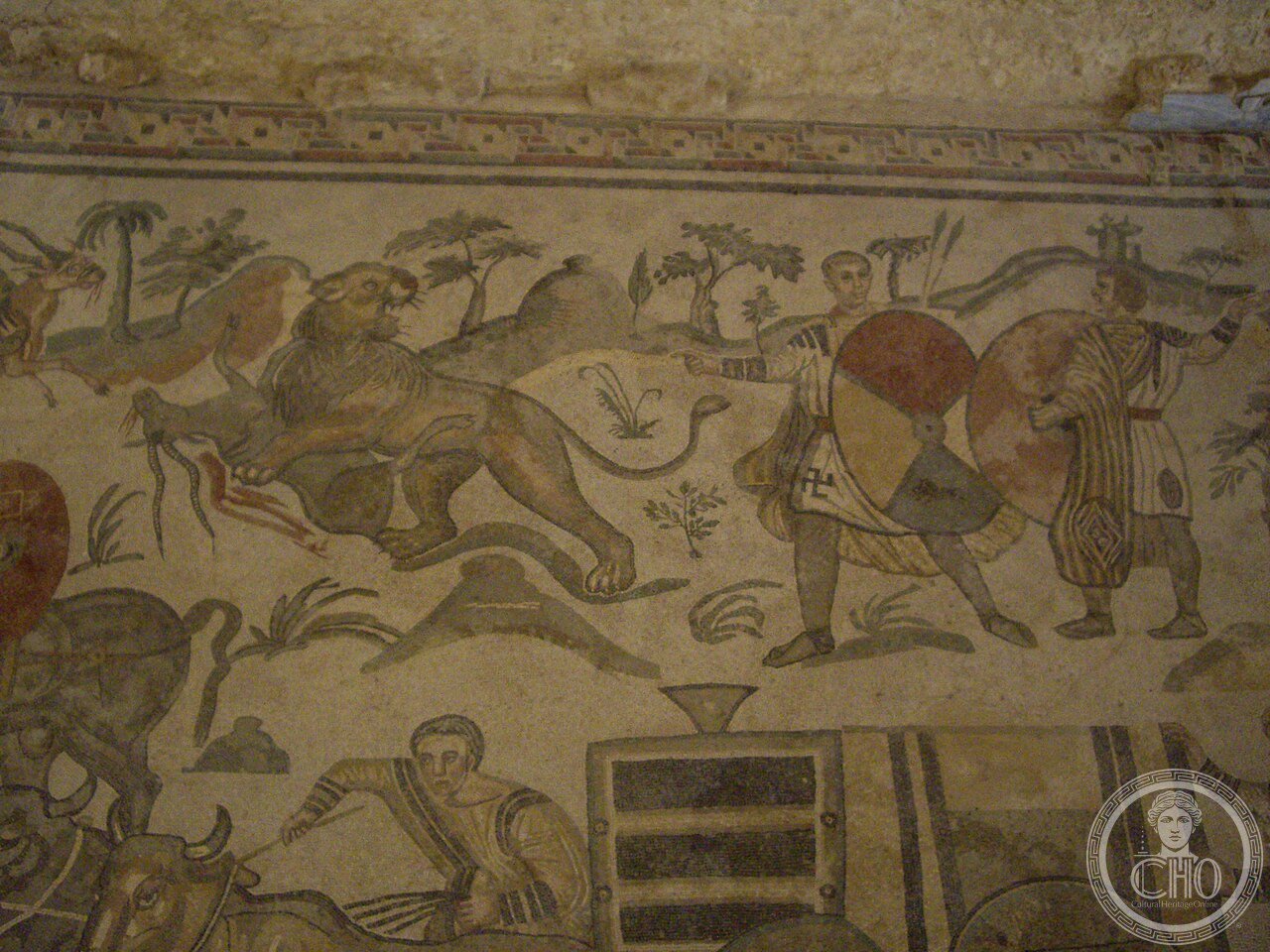
The Villa Romana del Casale (UNESCO 1997) is the largest surviving ancient Roman mosaic programme — 3,500 square metres of polychrome floor mosaics covering the floors of a 4th-century CE imperial villa in the Sicilian highlands, including the most famous Roman mosaic in the world (the “Bikini Girls” athletes mosaic), the longest mosaic corridor in existence (the 60-metre Great Hunt), and the most complete documentation of late Roman provincial animal-catching and circus spectacle.
At a glance
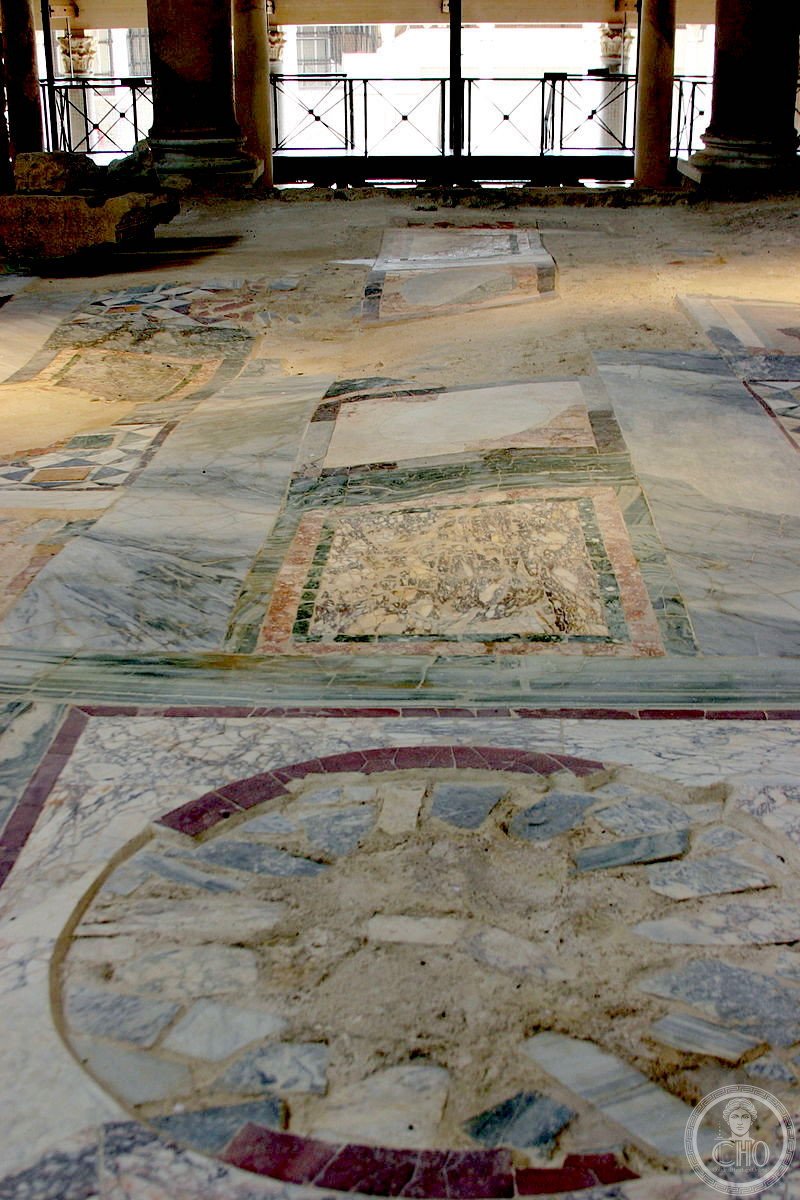
Villa Romana del Casale (the most precisely VillaRomanaDelCasale single Piazza Armerina Enna Sicilia Italy 37.3627 N 14.3392 E UNESCO WHS 1997 reference 832: the physical context: the villa is on a wooded hillside at 460m altitude in the Sicilian interior (the specific location: the Contrada Casale, 3 km southwest of Piazza Armerina; the villa was built on a natural terrace overlooking the Gela river valley below; the altitude explains the climate — the interior of Sicily is significantly cooler than the coast, making it a preferred summer residence for the wealthy); the villa complex: the total area of the villa is approximately 35,000 sq m (3.5 ha); the main building (the domus: approximately 15,000 sq m) consists of: a large peristyle (the central colonnaded garden: 60m × 45m); 3 connected thermal bath complexes (frigidarium, tepidarium, caldarium); a large triclinium (the principal dining room: 30m × 10m; the apse mosaic here shows Hercules and the 12 labors — the primary claim to divine ancestry by the imperial owner); numerous private rooms, reception halls, and service corridors; the mosaics (3,500 sq m; the most concentrated surviving collection of 4th-century Roman mosaics; the specific quality: the detail and color preservation are exceptional because the landslide that buried the villa in the 12th century CE protected the mosaics from human damage (the stones that crushed the walls and roofs did not disturb the floors); the craftsmen (the mosaics were made by craftsmen (tessellarii) from North Africa (probably from the Carthage region based on the specific stylistic comparisons with North African mosaics of the same period); the tessellae (individual mosaic tiles) are cut from stone, glass, and ceramic at sizes ranging from 2mm to 15mm square — the smaller tesserae in the figural scenes, the larger in the background geometric patterns)).
Key facts
- The “Bikini Girls” mosaic and why it is the most discussed single image in all of Roman mosaic art: the “Bikini Girls” mosaic (the formal title: “Sala delle Ragazze in Bikini”; Room 30 in the villa plan; the mosaic in a small rectangular room (7m × 4m) adjacent to the women’s baths; the mosaic shows 10 female athletes engaged in athletic competitions: discus throwing, long jump, ball games, running (the figures are wearing 2-piece garments consisting of a breast band (fascia pectoralis) and briefs (subligaculum) — the standard athletic dress for women in the Roman Empire (not, as the popular name implies, a form of swimwear)); the specific significance: (1) the mosaic is the most complete surviving image of Roman women’s athletics (the literary evidence for women’s athletics in the Roman Empire is scattered and unclear; this mosaic is the single most direct visual evidence that Roman women competed in athletic events); (2) the psychological realism of the figures (the athlete reaching for the starting line on the left; the dancer/jumper in the center; the winner receiving the crown and the palm branch on the right) is among the finest in all Roman mosaic art; (3) the identity of the woman receiving the crown (she is dressed in the same garment as the others but is positioned above them and receives the prize: this is the specific compositional convention of a Roman victory panel); the owner identification debate: the villa owner is identified in some scholarship as the co-Emperor Maximianus Herculius (ruled 286–305 CE; Diocletian’s western co-emperor; owner of Sicily as part of his imperial portion); the alternative identification is Maxentius (ruled 306–312 CE; the last emperor to rule from Rome before Constantine moved the capital east); neither identification is confirmed by documentary evidence
- GPS: 37.3627° N, 14.3392° E
History
From the late 3rd century CE villa to the 12th-century landslide to the 1950 excavation to 1997 UNESCO (the most precisely VillaRomanaDelCasale single construction: the villa was built in at least 2 phases: Phase 1 (late 3rd century CE, possibly c.270–290 CE): the thermae (bath complex) and the earliest peristyle; Phase 2 (early 4th century CE, c.300–325 CE): the Great Hunt corridor, the Triclinium, the women’s apartments, and the specific mosaic programme (the quality and uniformity of the Phase 2 mosaics suggests they were commissioned as a single programme, not as accumulated additions over decades); the landslide (the villa was occupied through the Byzantine period (6th–9th century CE) as a private house with reduced function; the Norman period (1072 CE onwards) saw the region repopulated but the villa was no longer used; a landslide from the hillside above (likely between 1100 and 1160 CE) covered the villa with 3–4m of debris; the vegetation grew over the debris; the villa was completely forgotten for approximately 800 years)); the excavations (Paolo Orsi (the pioneer of Sicilian archaeology) first reported remains at the site in 1881 CE; systematic excavation began in 1929 CE (Giuseppe Cultrera); the major campaign (1950–1963 CE; Gino Vinicio Gentili, the Sicilian archaeologist who directed the most productive excavation campaign and wrote the primary academic publication of the mosaics); the protection structure (1961–1966 CE: the original protective roof over the mosaics was a controversial polycarbonate structure designed to protect the mosaics from weather; the current protection structure (built 2012–2016 CE) is a steel-and-glass architectural cover designed to provide natural light with UV filtering while protecting from rain and humidity)); 1997 CE UNESCO inscription reference 832.
What you see
The Great Hunt corridor, the Bikini Girls room, the Triclinium Hercules, and the thermal baths (the most precisely VillaRomanaDelCasale single visit (2–3 hours; the visit follows a prescribed walking route on elevated walkways above the mosaic floors; the walkways were built to protect the mosaics and provide the elevated viewing angle needed to see the full picture (some mosaics are only fully readable from 2–3m above, not from floor level)): 1) the Peristyle (the entry to the visit is through the monumental entrance portico (the thermal baths entry is closed to the public; the visit follows the anti-clockwise route from the entry portico to the west wing to the south wing to the Great Hunt corridor); the peristyle colonnades: only the column stumps survive (the columns were re-used for medieval construction in Piazza Armerina); the peristyle floor mosaics (geometric only — the figural mosaics are in the rooms))); 2) the Sala della Piccola Caccia (the Small Hunt room: hunting scenes in a Sicilian landscape (the specific animals: boar, deer, hare, fox, birds; the specific setting: the Sicilian hills with trees (identifiable as oak and laurel by the leaf shapes)); 3) the Great Hunt corridor (the 60m corridor; the most impressive single space in the villa; the reading direction: east to west (the hunt proceeds from the eastern province (Africa) through the Mediterranean sea to the western destination (Rome); the specific animals: rhinoceros, hippopotamus, elephant, tiger, lion, leopard, ostriches, antelope, boar, bear — the complete catalogue of the Roman animal hunt (venatio)); 4) the Bikini Girls room (Room 30; 7m × 4m; the 10 athletes; the most photographed single room in the villa); 5) the Triclinium (the main dining room apse mosaics: Hercules fighting the giants; the 12 labors of Hercules visible in the side apses).
Practical information
- Getting to Villa Romana del Casale from Catania or Palermo and managing the summer heat in the unair-conditioned interior: transport from Catania: SAIS Autolinee bus from Catania (2h30min; €8; 3 departures/day; the bus stop is in Piazza Armerina town center; the villa is 3 km from the town center — taxi €8 or town bus in summer); from Palermo: SAIS bus from Palermo (3h30min; €12; 2 departures/day); by car: A19 autostrada (Palermo–Catania; exit Enna; SS560 to Piazza Armerina; 30 km; 40 min); visiting the villa: open daily 9 AM–7 PM (summer) / 9 AM–5 PM (winter); admission €10 (MiC); no audio guide included (audio guide €4 at the ticket office; recommended — the spatial complexity of the villa plan and the iconographic depth of the mosaics are difficult to navigate without guidance); the summer heat: the protection structure traps heat (the interior temperature in July–August can reach 38–40°C); visit early morning (9 AM opening) or late afternoon (5–7 PM); bring water; wear light clothing; the winter visit is strongly recommended for photography (no direct sun; lower temperatures; the mosaics are most visible in diffuse light); the Piazza Armerina combination: the town of Piazza Armerina (3 km north) has: the Cathedral (Duomo; 17th–18th century; Baroque; the octagonal facade campanile is the visual landmark of the town); the Aragonese castle (12th century; the ruins visible on the north hill); the Palio dei Normanni festival (August 13–14; medieval horse tournament and procession in 12th-century Norman costume — the most important medieval festival in Sicily)
Getting there
SAIS bus from Catania (2h30, €8, 3x/day) or Palermo (3h30, €12, 2x/day) to Piazza Armerina + taxi 3 km to villa. Car: A19 exit Enna + SS560. Open daily 9-19 (summer). Admission €10. GPS: 37.3627, 14.3392.
Nearby
- Agrigento Valle dei Templi — 70 km southwest (UNESCO WHS 1997 (ref 831); the best-preserved Greek temple complex outside Athens; the Temple of Concordia (430 BCE) is the most intact Doric temple in the world (more complete than the Athens Parthenon); daily 9 AM–7 PM; €12)
- Siracusa — 80 km southeast (UNESCO WHS 2005 (ref 1200); the Greek Theatre (5th century BCE) + the Cathedral built inside the Temple of Athena; the Ear of Dionysius (latomia quarry))
Gallery
Sources
- Wikipedia, Villa Romana del Casale; Maximianus; Late Roman mosaics, accessed June 2026
- UNESCO, Villa Romana del Casale, WHS reference 832, inscribed 1997
- Carandini, Andrea, Andrea Ricci, Mariette de Vos. Filosofiana: La villa di Piazza Armerina. Palermo: Flaccovio, 1982
Find it on the map
See this place and what’s around it →📷 Diventa un fotografo di Cultural Heritage Online
Condividi le tue foto dei luoghi: restano pubblicate con la tua firma come autore. Più vengono viste, più ti fai conoscere — e presto un concorso premierà le foto più apprezzate.
Accedi o registrati gratis per aggiungere una foto