
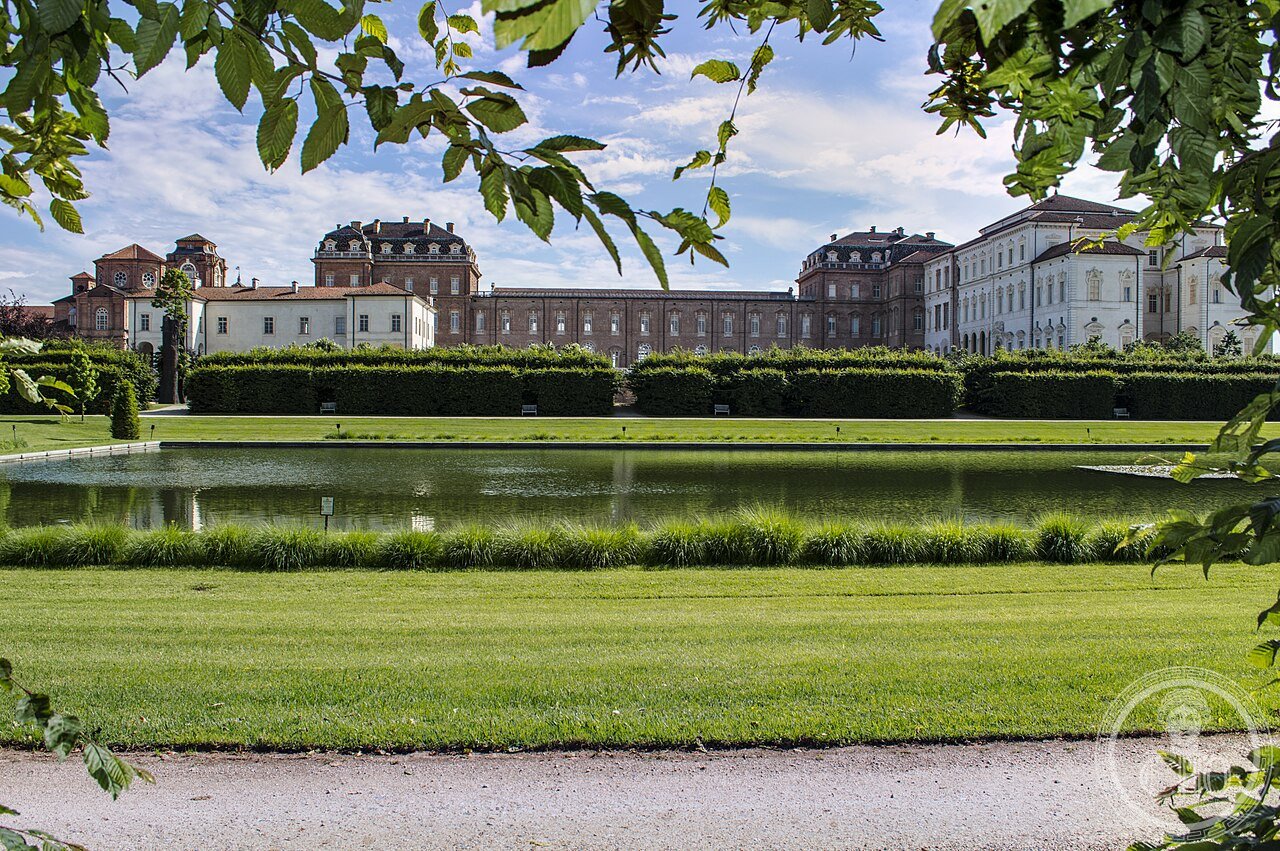
Fourteen palaces and hunting lodges built around Turin by the House of Savoy between the sixteenth and eighteenth centuries form the densest cluster of Baroque royal architecture in northern Italy, shaped by Guarino Guarini’s structural daring and Filippo Juvara’s palace-building on a European scale.
At a glance
The Residenze Sabaude is a serial UNESCO inscription covering fourteen properties built or remodelled by the House of Savoy. In Turin itself the group includes the Palazzo Reale on Piazza Castello with its Royal Armoury, the medieval-origin Palazzo Madama reworked with a Baroque facade by Juvara, the Palazzo Carignano built by Guarino Guarini, and the nineteenth-century Galleria Subalpina connecting Piazza Castello to Via Accademia delle Scienze.
Outside the city stand two of the largest residences: the Venaria Reale, restored by Juvara, with its Galleria Grande, and the Palazzina di Caccia di Stupinigi, a hunting lodge built around a central octagonal salon with four wings set at forty-five degrees.
Key facts
- Dynasty: House of Savoy, ruling from Turin from 1563 until the abdication of King Umberto II in 1946.
- Architects: Guarino Guarini, Filippo Juvara and later Benedetto Alfieri shaped the complex over two centuries.
- Cappella della Sindone: the chapel built by Guarini to house the Shroud of Turin, its dome formed of interlocking stone arches rather than a conventional vault; it was damaged by fire in 1997 and restored using Guarini’s surviving drawings, held at the Biblioteca Reale in Turin.
- Palazzo Carignano: Guarini’s only surviving secular building, with a curving brick facade unlike any other seventeenth-century Italian palace.
- UNESCO status: inscribed in 1997 as a serial World Heritage property under reference 823.
History
The Savoy dynasty, one of Europe’s oldest ruling houses, moved its capital from Chambéry to Turin in 1563, a decision driven by the pressure of French and Milanese territorial ambitions and by the wish to develop the Po plain. The move triggered a rebuilding of Turin on a grid plan and set off a long sequence of palace commissions, beginning with Amadeo di Castellamonte and continuing with Guarino Guarini, who arrived in Turin in 1668 and built the Palazzo Carignano from 1679.
The Savoy-Austrian victory at the siege of Turin in 1706 secured Piedmontese control of northern Italy and prompted Victor Amadeus II to expand the palace complex further. Filippo Juvara began work at Venaria Reale in 1716 and at Stupinigi in 1729, and Benedetto Alfieri enlarged the Royal Palace in the 1780s. Turin briefly served as capital of the newly unified Kingdom of Italy from 1861 before the seat of government moved to Florence and then Rome. The monarchy ended with the 1946 referendum that established the Italian republic, and the residences were inscribed on the UNESCO World Heritage List in 1997.
What you see
In Turin, the Palazzo Reale opens onto its Royal Armoury, one of Europe’s most significant collections of arms and armour, including a complete ceremonial suit made for Emanuele Filiberto in 1553. The adjoining Palazzo Madama houses the Museo Civico d’Arte Antica, with a medieval and early Renaissance collection that includes Antonello da Messina’s Portrait of a Man. A short walk away, the Palazzo Carignano’s undulating brick facade fronts the Museo Nazionale del Risorgimento Italiano, on the site where the Subalpine Parliament sat and where the Kingdom of Italy was proclaimed in 1861.
Outside the city, the Venaria Reale centres on Juvara’s Galleria Grande, the largest Baroque interior in Piedmont, set within gardens redesigned in the Le Nôtre tradition. At Stupinigi, four wings radiate from a central octagonal salon beneath a ceiling fresco by Crosato depicting Diana choosing a stag for the hunt, and the site also holds the Museo Nazionale dell’Arredamento, a collection of eighteenth-century court furniture.
Practical information
- Combined access: a Torino+Piemonte tourist card gives entry to all fourteen Sabaude residences and other Turin museums along with local public transport; details and current terms are best checked on the official Turin tourism channel.
- Suggested pattern: the Palazzo Reale and Palazzo Madama sit together on Piazza Castello and can be seen on foot in one visit, with the Palazzo Carignano a short walk away.
- Venaria or Stupinigi: both lie outside the centre and are generally treated as separate outings by bus rather than combined in a single day.
Getting there
Turin is reached by train from Milan and from Genoa, and by international service from Paris via the Fréjus tunnel. Venaria Reale lies to the northwest of the city and Stupinigi to the southwest; both are served by bus from central Turin. Current timetables and fares should be checked with the operators or the residences’ own visitor information.
Nearby
- Venaria Reale — northwest of Turin, Juvara’s restored residence with its Galleria Grande and gardens.
- Palazzina di Caccia di Stupinigi — southwest of Turin, the Savoy hunting lodge with its radiating wings and furniture museum.
- Palazzo Madama — central Turin, on Piazza Castello beside the Palazzo Reale.
- Palazzo Carignano — central Turin, a short walk from Piazza Castello.
Sources
- UNESCO
- Biblioteca Reale di Torino
- Museo Civico d’Arte Antica
- Museo Nazionale del Risorgimento Italiano
- Museo Nazionale dell’Arredamento
Find it on the map
See this place and what’s around it →📷 Become a Cultural Heritage Online photographer
Share your photos of places: they stay published under your name as the author. The more they're seen, the more you get noticed — and soon a contest will reward the most appreciated photos.
Log in or sign up free to add a photoDo you manage this place?
This page is read by travellers and heritage enthusiasts who find it on Google. Keep it accurate — and make it work for you. Free for non-profit heritage institutions.