
Crespi d’Adda
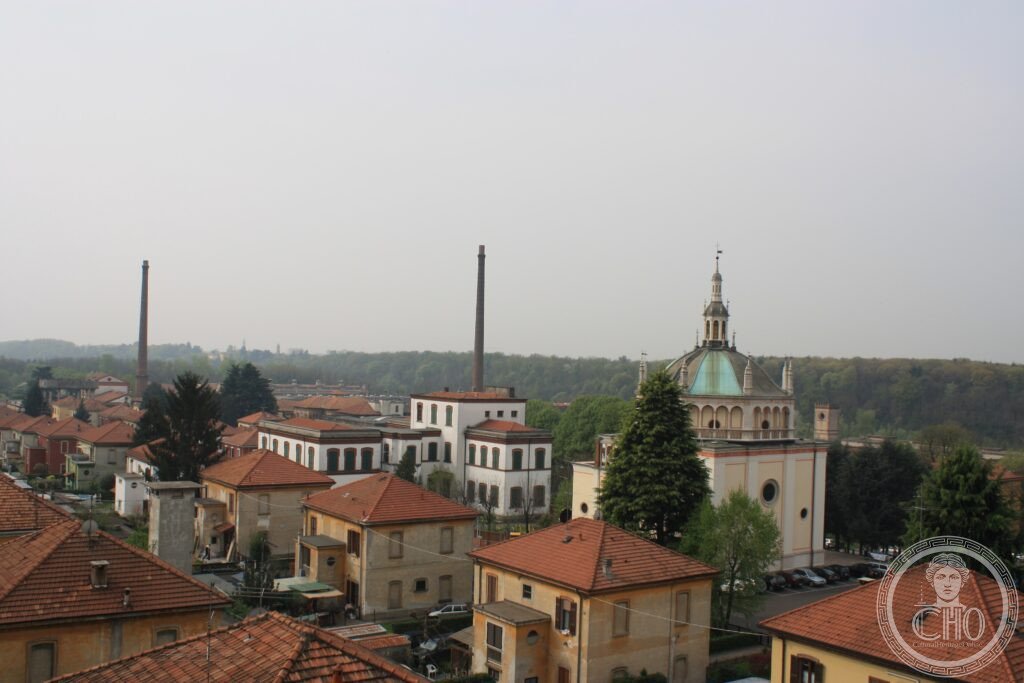
Crespi d’Adda (UNESCO 1995) is the finest surviving example of a 19th-century company town — a complete industrial village built from scratch in 1878 by the Crespi cotton family on the Adda River near Bergamo, including a cotton mill, workers’ cottages, church, school, hospital, sports ground, owner’s villa, and a neo-Gothic family mausoleum, all still inhabited and maintained as a living community — the most complete expression of Italian utopian industrial paternalism.
At a glance
Crespi d’Adda (the most precisely CrespiDAdda single Capriate San Gervasio Lombardia Italy 45.6004 N 9.5277 E UNESCO WHS 1995 reference 730: the company town (the specific type: a “villaggio operaio” (workers’ village) — the Italian version of the English company town (Port Sunlight, Saltaire, Bournville) in which a manufacturing company builds not just a factory but an entire self-contained community for its workforce; the Italian examples are fewer than the English and generally later; Crespi d’Adda (1878 CE) was preceded in Italy by Schio (Rossi wool mills, 1873 CE) and followed by Sesto San Giovanni (Pirelli + Breda, from 1890s CE) and Ivrea (Olivetti, from 1930s CE)); the Crespi family context: Cristoforo Benigno Crespi (1833–1920 CE; the founder of the village; the Crespi family had built their textile fortune in Milan in the 1860s–1870s CE; Cristoforo Benigno chose the Capriate site on the Adda River in 1875 CE for two reasons: the river provided water power for the cotton mill and the distance from Milan provided isolation from labor organizing and urban competition for workers); the village plan: designed by Ernesto Pirovano (1866–1934 CE; the lead architect for the Crespi family); the layout: the factory at the center of the river bank; a grid of workers’ cottages (each cottage: 1 family; 2 floors; small front garden; identical design in 2 types — Type A for skilled workers (3 rooms) and Type B for unskilled workers (2 rooms)); a large central piazza with the church (Sant’Antonio, 1891 CE; neo-Romanesque style); a school (for workers’ children); a hospital; a sports ground and bowling alley; at the extreme north end of the village, the Crespi family villa (a large Art Nouveau mansion separate from the workers’ housing by a garden wall); at the highest point, the Crespi family mausoleum (neo-Gothic; Gaetano Moretti architect, 1906 CE; the mausoleum is visible from every point in the village — its tower is the highest structure in the landscape and the dominant visual element of the village skyline)).
Key facts
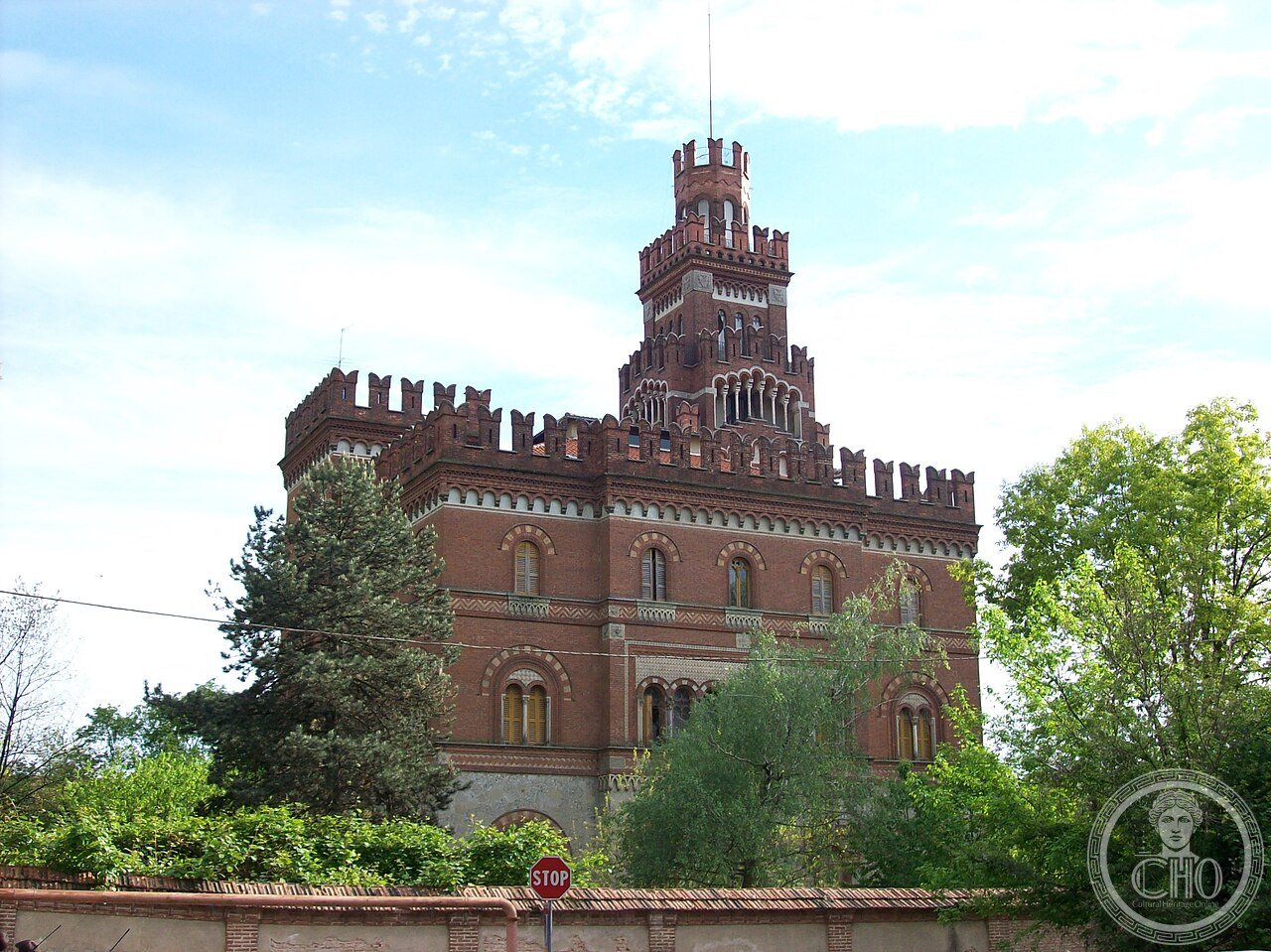
- The Crespi mausoleum and why it represents the visual grammar of Italian utopian industrial paternalism: the Crespi mausoleum (Via Manzoni, Crespi d’Adda; Gaetano Moretti 1906 CE; the structure: a neo-Gothic chapel tower rising 30m (the tallest structure in the village; taller than the church); the style: free interpretation of the Milan Duomo’s tiburio pinnacles (the mausoleum appears in miniature as a single pinnacle extracted from the Duomo facade and placed in a Lombard industrial landscape; the visual effect is deliberate — the Crespi family built their fortune in Milan and the mausoleum asserts a connection between the Milanese Gothic tradition and the Bergamo provincial industrial enterprise); the symbolic function: the mausoleum is the most visible structure in the village — it can be seen from every point in the worker housing, from the factory floor, from the school, from the church; the vertical axis of the company hierarchy is made architectural (God at the top of the church spire; the Crespi family at the top of the mausoleum tower; the workers in the horizontal grid of identical cottages below); the specific Crespi family philosophy: Silvio Benigno Crespi (1868–1944 CE; the son of Cristoforo Benigno; the publisher of the Corriere della Sera from 1886 to 1899 CE; the minister of food supply in the Italian government during WWI; the person who managed the company town from 1900 to 1930s CE) wrote explicitly in 1900 CE that the village was designed so that workers would feel gratitude to the Crespi family for their housing, which would reduce the appeal of labor unions; the argument: the worker who owned (rented at subsidized rates) a home with a garden had something to lose from a strike and a reason to stay loyal to the company
- GPS: 45.6004° N, 9.5277° E
History
From the 1875 CE land purchase to the 1929 factory closure to UNESCO (the most precisely CrespiDAdda single 1875 CE site selection: Cristoforo Benigno Crespi selected the Capriate site at the confluence of the Adda and the Brembo rivers (the rivers provided: (1) the water power for the cotton mill turbines; (2) the raw material water supply for the bleaching and dyeing vats; (3) the natural barrier that isolated the village from the surrounding territory — the rivers form a peninsula on 3 sides, making the village naturally bounded); the construction: 1878 CE the first workers’ cottages; 1879 CE the factory; 1891 CE the church; 1896 CE the school; 1900 CE the hospital; 1906 CE the Crespi mausoleum; the workforce at peak: approximately 3,000 workers (including family members living in the cottages; the adult male workforce in the factory was approximately 1,200 persons, with an additional 600–800 female workers in the spinning and weaving departments)); 1929 CE the factory closure: the Great Depression and the competition from synthetic fibers reduced the cotton market dramatically; the Crespi family sold the factory to a series of subsequent owners who continued operations at reduced scale (the last cotton production at the site ended in 1995 CE); the village today: the workers’ cottages are still occupied by approximately 500 residents (the residents are descendants of the original Crespi workers, subsequent owners, or new tenants; the properties are privately owned or rented from the current site management); the UNESCO inscription (1995 CE, reference 730; the Crespi d’Adda inscription was one of the first UNESCO inscriptions of a 19th-century industrial heritage site; it preceded the inscription of comparable English company towns (Saltaire was inscribed 2001 CE; New Lanark 2001 CE; Ironbridge Gorge 1986 CE (different typology but the first industrial UNESCO in the UK)).
What you see
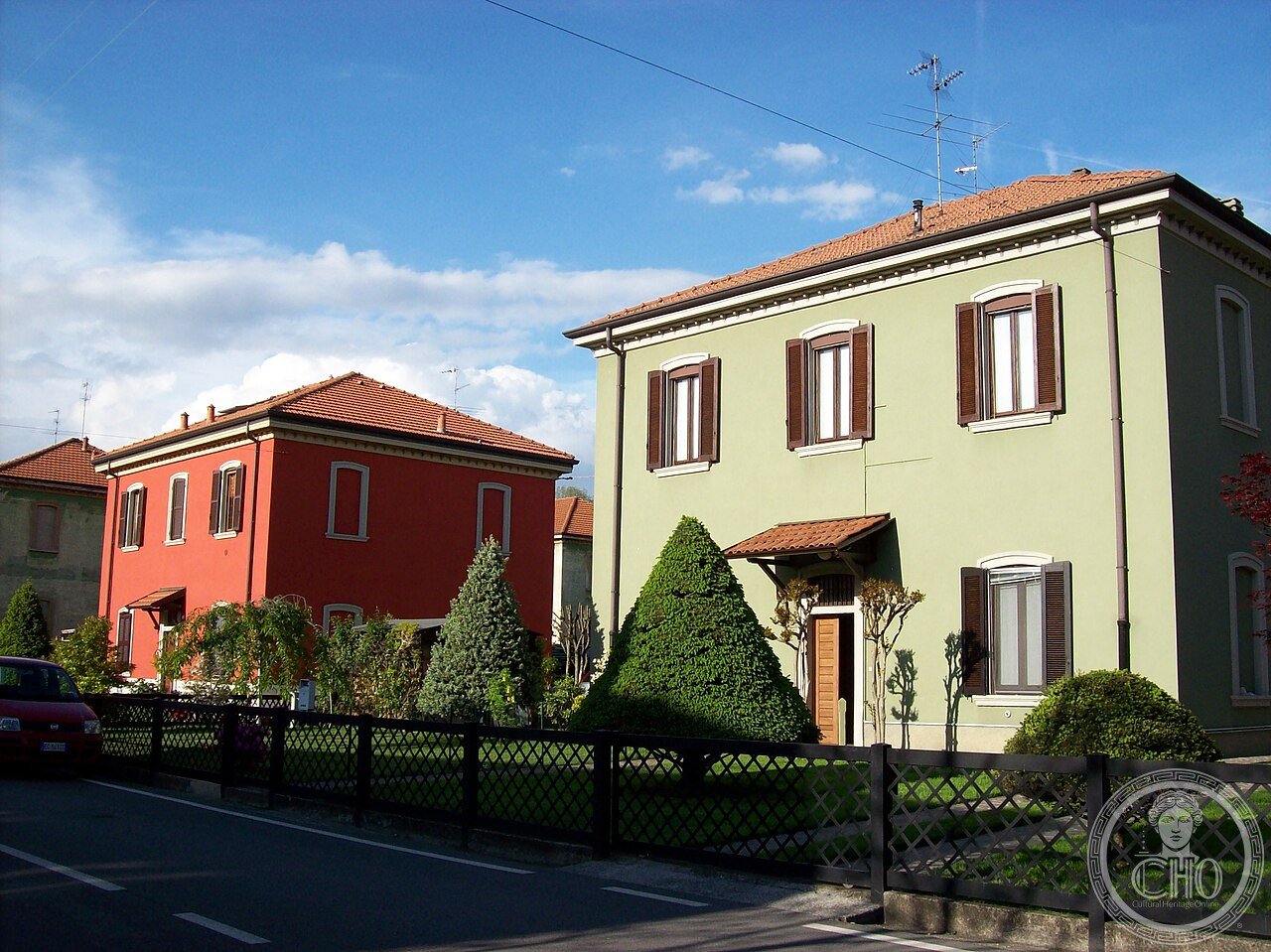
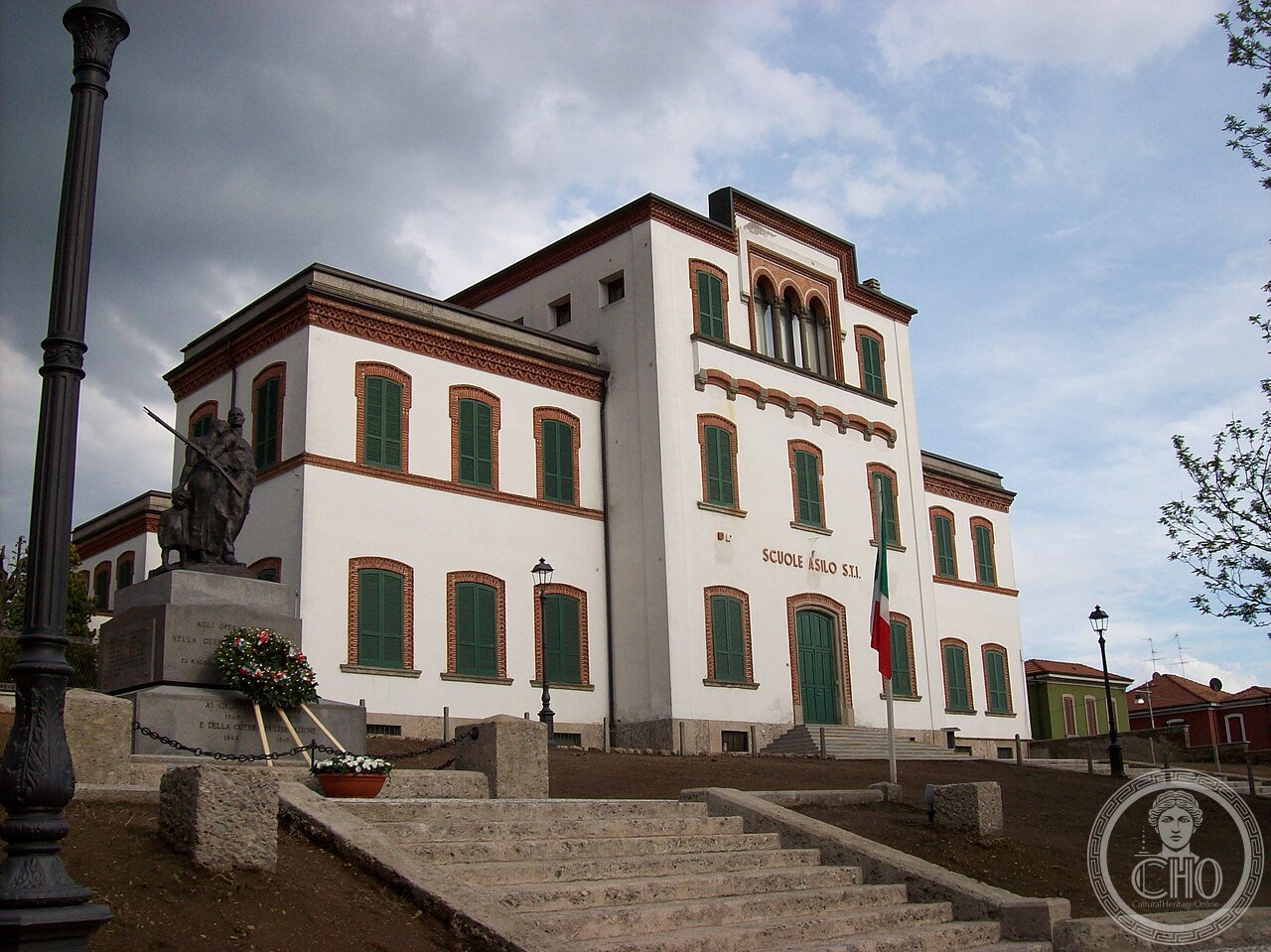
The village circuit, the factory, the mausoleum, and the Adda river bank (the most precisely CrespiDAdda single visit (1.5–2 hours): the village is not a conventional museum — it is a living residential community (access to the private gardens and interiors is not available; the visit is a walking circuit of the public streets and spaces); 1) the entrance (from the Capriate San Gervasio main road; the village is announced by a sign on the provincial road (SS342; 8 km from Bergamo); the parking is on the roadside outside the village boundary; the village is pedestrian-only (the streets were designed for foot traffic, not cars — the streetwidths are 4–5m, insufficient for modern vehicles)); 2) the workers’ cottage streets (the first impression: the uniformity and the scale (all cottages are 2-storey; all gardens are 10m × 15m; the windows are identical; the roof pitch is identical; the walls are all in the same Lombard red-brick construction); the variation between Type A and Type B cottages is visible in the number of rooms (the Type A cottages have an extra room on the second floor — the visible hierarchy of skill within the workforce)); 3) the central piazza (the church of Sant’Antonio (1891 CE; neo-Romanesque facade in Lombard brick; the campanile (bell tower) is the second highest structure in the village); the school (on the east side of the piazza; still functioning as a public school for Capriate San Gervasio municipality)); 4) the factory (the building is visible from the piazza; the current use is mixed (some industrial tenants; some derelict areas); the hydraulic turbine system (original late-19th-century machinery partially in situ; visible through the factory fence from the river bank)); 5) the mausoleum (a 15-minute walk from the central piazza to the northern end of the village; the viewing point from the Via Manzoni where the full tower is visible against the Alps (on clear days, the Bergamasque Alps 20 km north are visible above the mausoleum tower)).
Practical information
- Getting to Crespi d’Adda from Milan or Bergamo by train+bus and combining with the Bergamo Alta visit: transport from Milan: Trenitalia regional train from Milano Centrale to Canonica d’Adda (35 min; €5; direction Bergamo; the Canonica d’Adda station is 2 km from Crespi d’Adda; the walk from the station follows the Adda river bank trail (30 min walk through poplar-lined river flatlands — the specific Lombard agricultural landscape (pianura padana) that the Crespi family chose as the site)); from Bergamo: bus SAB line Z322 from Bergamo bus station to Capriate San Gervasio (25 min; €3; 6 runs per day); by car: A4 autostrada (Milan–Bergamo); exit at Capriate; the village is 3 km from the autostrada exit; parking on Via Manzoni; the guided visit option: the Consorzio di Gestione di Crespi d’Adda organizes guided tours on weekends (book at crespidadda.it; €8; 1.5 hours; the only way to see the interior of the factory area); the Bergamo combination (from Crespi d’Adda, the bus to Bergamo takes 25 min; the Bergamo Alta (the upper medieval city; reached by funicular from the Piazza Mercato delle Scarpe; the Piazza Vecchia and the Cathedral; the Accademia Carrara (the most important provincial art museum in northern Italy (Bellini, Raphael, Mantegna, Moroni, Tiepolo collections)); Bergamo is also UNESCO WHS as part of the Venetian Walls of Italy (2017 CE reference 1533))
Getting there
Train from Milan Centrale (35 min, €5) to Canonica d’Adda + 2 km walk, or bus SAB Z322 from Bergamo (25 min, €3). Car: A4 exit Capriate, 3 km. Guided tours weekends (crespidadda.it, €8). GPS: 45.6004, 9.5277.
Nearby
- Bergamo Alta — 12 km northeast (funicular from Piazza Mercato Scarpe; the Piazza Vecchia + Cappella Colleoni (Amadeo 1476 CE); the Accademia Carrara (Bellini, Raphael, Mantegna); UNESCO WHS Venetian Walls 2017)
- Lago di Como — 30 km northwest (UNESCO WHS (as part of Lombard Pre-Alps landscape buffer); Villa del Balbianello (FAI; filming location for Star Wars Episode II and James Bond Casino Royale)); ferry circuits from Varenna and Bellagio)
Gallery
Sources
- Wikipedia, Crespi d’Adda; Silvio Benigno Crespi, accessed June 2026
- UNESCO, Crespi d’Adda, WHS reference 730, inscribed 1995
- Ioppi, Stefano. Crespi d’Adda: il villaggio operaio UNESCO. Bergamo: Consorzio di Gestione di Crespi d’Adda, 2010
Find it on the map
See this place and what’s around it →📷 Diventa un fotografo di Cultural Heritage Online
Condividi le tue foto dei luoghi: restano pubblicate con la tua firma come autore. Più vengono viste, più ti fai conoscere — e presto un concorso premierà le foto più apprezzate.
Accedi o registrati gratis per aggiungere una foto