
Costiera Amalfitana
The Costiera Amalfitana (UNESCO 1997) is a 50-kilometre coast where the medieval Duchy of Amalfi — the first Italian maritime republic, which gave the world the compass rose and the first maritime law code — terraced near-vertical limestone cliffs with lemon groves and whitewashed villages that remain structurally unchanged since the 11th century, creating one of the most photographed coastal landscapes on earth.
At a glance
Costiera Amalfitana (the most precisely CostieraAmalfitana serial Amalfi Campania Italy 40.6340 N 14.6027 E UNESCO WHS 1997 reference 830 50km coast: the Duchy of Amalfi (the most important fact that distinguishes the Amalfi coast from every other Italian coastal landscape: the Duchy of Amalfi (9th–11th century CE) was the first of the 4 Italian maritime republics (Amalfi, Venice, Pisa, Genova; the traditional order follows the founding date, with Amalfi first (839 CE republic) followed by Venice (697 CE nominally but the independent commercial republic dates to the 9th century); the Duchy of Amalfi was the primary trade intermediary between the Byzantine Empire, the Arab world, and the Latin West in the 9th–11th century CE; the Amalfitani established the first European trading colony in Constantinople (before Venice); the Amalfitan merchant Mauro established the Hospital of San Giovanni di Jerusalem in 1048 CE — the founding institution of the Knights of St John (the Hospitallers); the Tabula Amalfitana (the Amalfi maritime law code; c.1000–1200 CE; the oldest surviving maritime law code in the Western world; the code established the principles of maritime contract, insurance, and tort that were adopted by Venice, Genova, Pisa, and subsequently all Mediterranean maritime commerce); the compass rose (the rosa dei venti — the 32-point compass card — is credited by Italian tradition to Flavio Gioia of Amalfi (c.1302 CE); the credit is disputed (the Chinese magnetic compass predates the Amalfitan claim by centuries) but the specific innovation of the dry-pivoted compass card with the 8 primary and 24 secondary wind directions is documented in Mediterranean sources from the Amalfi area in the 12th–13th century CE); the sfusato amalfitano lemon: DOP certification 2001 CE; the lemon is longer and more elongated than standard lemons (sfusato = tapered at both ends); the oil content of the peel is 3× that of the Sorrento lemon; the primary product: limoncello (the liqueur is a 20th-century commercialization of a traditional household preparation; the first documented commercial limoncello producer (1988 CE; Maria Antonia Farace, Capri) was from the Sorrento/Amalfi area)).
Key facts
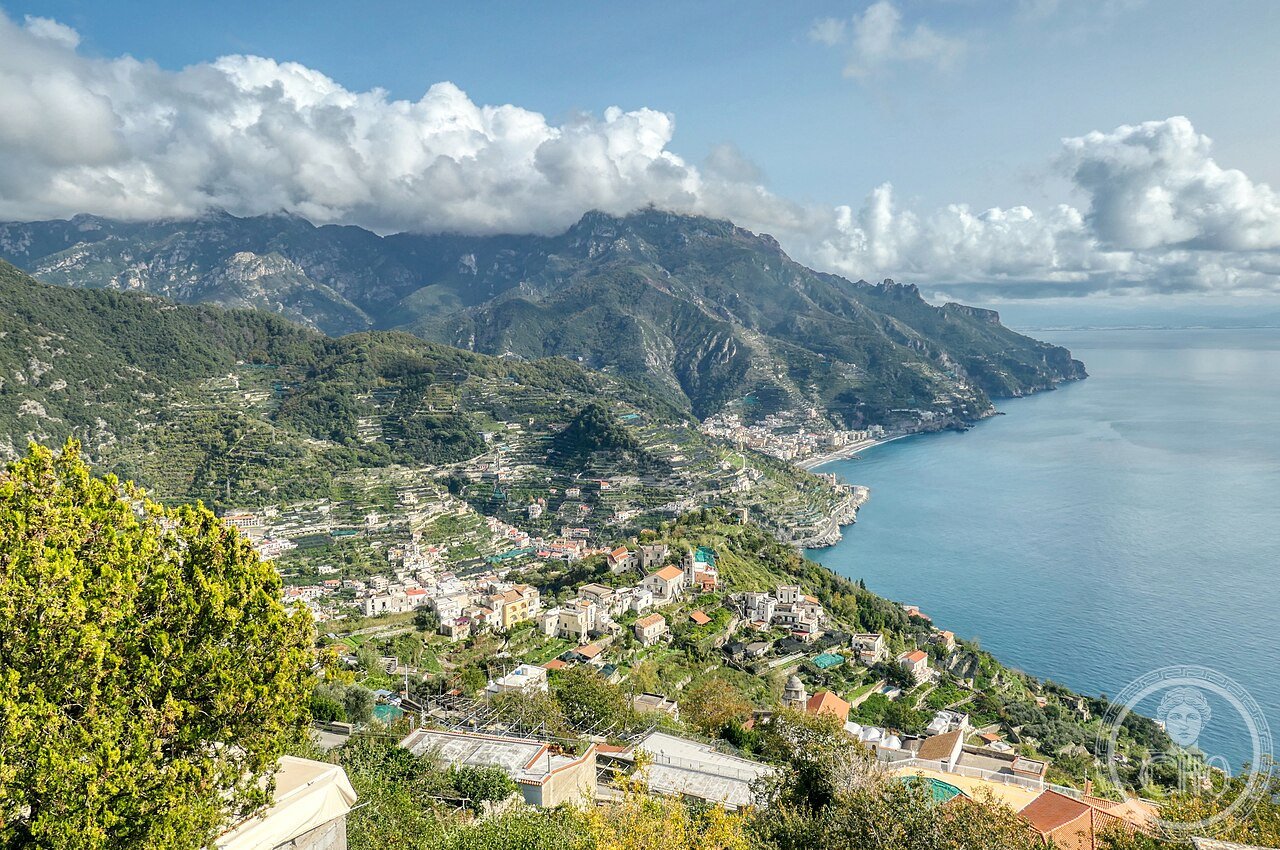
- The Ravello music festival and why the Villa Rufolo terrace is the specific origin of Wagner’s Klingsor’s Magic Garden in Parsifal: Ravello (the village at 350m above the coast; 2,500 inhabitants; the most elevated town on the Costiera Amalfitana; accessed from Amalfi by the Via della Repubblica road (7 km; 20 min by bus from Amalfi harbour)); the Villa Rufolo (built c.1270–1280 CE by the Rufolo merchant family (the Rufolo were the principal banking family of 13th-century Ravello; the villa was built on profits from banking and textile trade with the Angevins); the architecture: a Norman-Arab-Byzantine hybrid style (the arcaded loggia (24 arches in 3 registers); the mosaic floor decoration; the square tower (the Torre Maggiore) dominating the terrace gardens); the Wagner visit: Richard Wagner visited the Villa Rufolo on 26 May 1880 CE (the specific date is recorded in the villa guest book, which is displayed in the Villa Rufolo museum); he noted in his diary: “Klingsor’s magic garden has been found!” (the quote is in German; Wagner had been looking for a visual model for the garden in Act II of Parsifal (the garden created by the evil sorcerer Klingsor; characterized as tropical, lush, fragrant, and simultaneously threatening); the Rufolo terrace garden — with its Moorish-arched loggia, layered terrace gardens descending toward the sea, and the combination of northern-looking architecture with southern vegetation — provided the exact visual image Wagner needed); Parsifal was premiered at Bayreuth on 26 July 1882 CE; the Ravello Festival (the annual summer music festival; founded 1953 CE; the main concerts are held on the Villa Rufolo terrace; the terrace can accommodate 2,000 spectators; the stage is oriented so that the orchestra faces the Tyrrhenian Sea — the same view Wagner described; program at ravellofestival.com)
- GPS Amalfi town: 40.6340° N, 14.6027° E
- GPS Ravello: 40.6476° N, 14.6142° E
History
From the Duchy of Amalfi to the Norman conquest to the Grand Tour to UNESCO (the most precisely CostieraAmalfitana serial 839 CE Duchy: the Duchy of Amalfi (839–1131 CE) was established when the Byzantine themes of Amalfi (the coastal settlements administered from Constantinople) achieved de facto independence from the Byzantine Empire; the Duchy at peak (10th–11th century CE): population of Amalfi town estimated at 50,000–70,000 (comparable to Palermo and Naples, and larger than London at the same date); fleet of 200+ trading vessels; trading posts in Constantinople, Alexandria, Antioch, Palermo, Salerno, and Pisa; 1131 CE the Norman conquest: the Duchy of Amalfi was conquered by Roger II of Sicily (the same Norman king who commissioned the Cappella Palatina in Palermo); after the Norman conquest, Amalfi rapidly declined as a trade center — the Norman consolidation of Sicily reduced the need for an independent Campanian intermediary with the Arab world; the city never recovered its 11th-century scale; the surviving architecture (the Cathedral of Sant’Andrea, the Chiostro del Paradiso, the harbor arsenal) dates from this period of peak prosperity; 1343 CE the tsunami: a major tsunami destroyed the lower harbor of Amalfi (the harbor extended 300m further into the sea than the current shoreline; the 1343 CE event (possibly related to a submarine landslide off the Tyrrhenian coast) reduced the harbor by approximately half and ended what remained of Amalfi’s maritime trade); the Grand Tour (18th–19th century CE): the Amalfi coast became a standard destination in the Grand Tour (the English aristocratic educational journey through Italy); the specific attractions: the Grotta dello Smeraldo (discovered 1932 CE; an underwater cave with bioluminescent blue light effect created by sub-aquatic light diffraction); the Villa Cimbrone (Ravello; built 1904–1920 CE by Ernest Beckett (Lord Grimthorpe); the Belvedere of Infinity with its 18 ceramic portrait busts at the cliff edge; described by Greta Garbo (who stayed at the villa in 1938 CE with conductor Leopold Stokowski) as “the most beautiful view in the world”); 1997 CE UNESCO inscription reference 830.
What you see
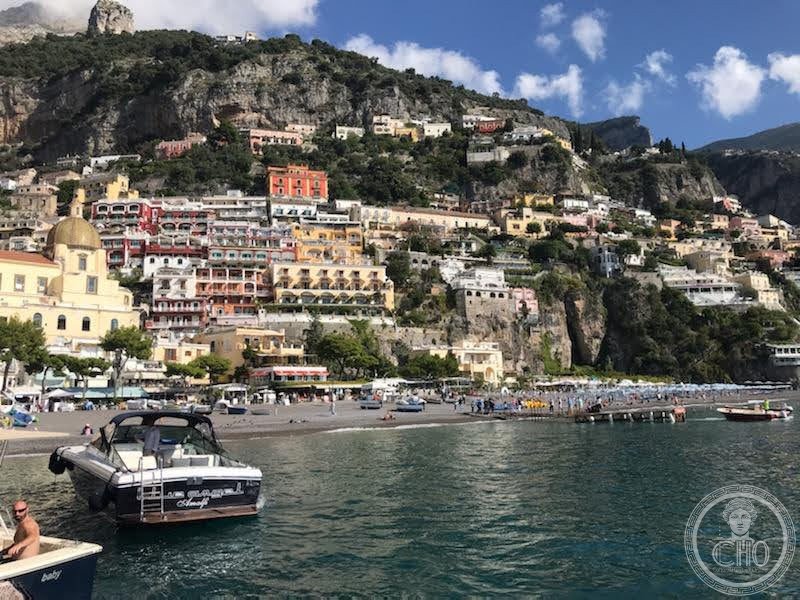
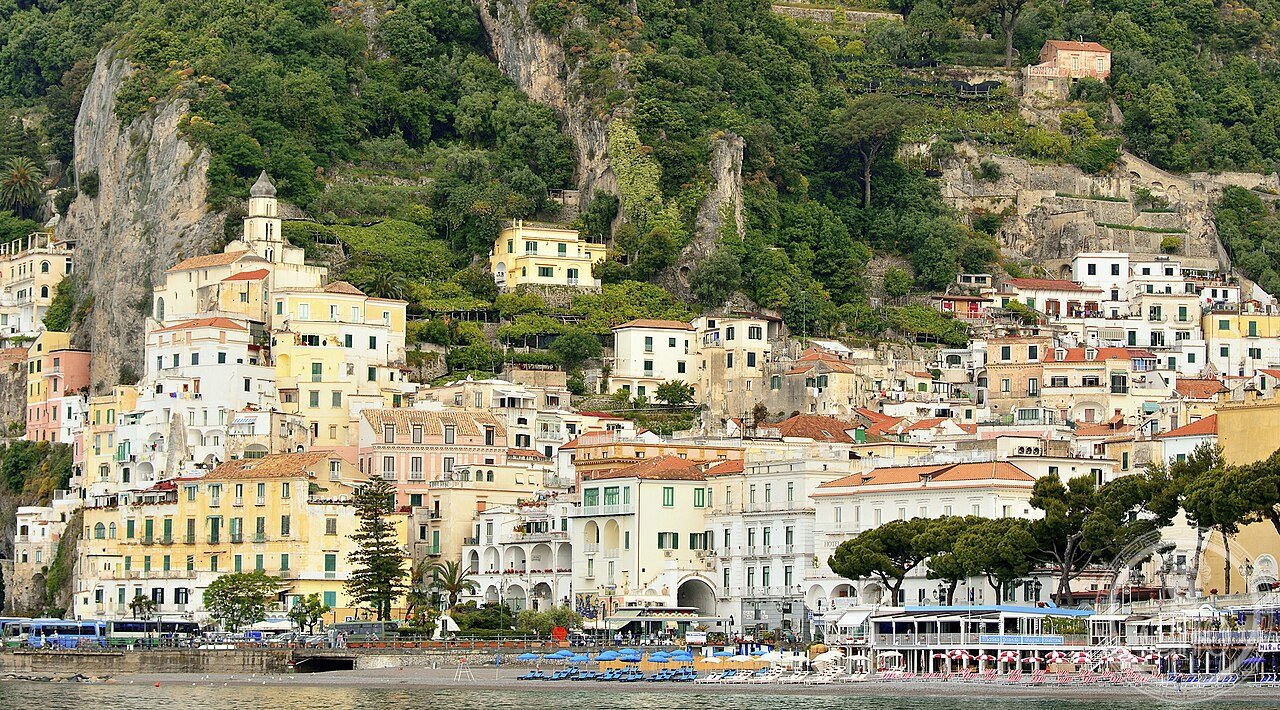
Positano, Amalfi town, Ravello, and the coastal road (the most precisely CostieraAmalfitana serial visit sequence (2–3 days recommended): 1) Positano (the westernmost town; the most photographed; the characteristic stacked cubic buildings on the cliff face (each building’s roof serves as the terrace/garden of the building above — the townscape is a continuous stepped pyramid from sea level to 400m above); the specific building: the Church of Santa Maria Assunta (the majolica-tiled dome (ceramic tiles in yellow, green, and white geometric pattern; restored 1954 CE; the original tilework dates from the 17th century) is the most photographed element of the entire Costiera in aerial photography); the specific experience: descend from the SS163 road to the beach on foot (the Via dei Mulini stairway — 300 steps to the beach; no car access below the main road; private ferry return to the ferry dock (20 min walk from the stairs) is the most practical exit)); 2) Amalfi town (the historic core; the Cathedral of Sant’Andrea (started 9th century CE; façade 13th century CE Arab-Norman style with polychrome stone bands; the Chiostro del Paradiso (c.1266 CE; the cloister of the cathedral chapter; 24 pointed arches around a central garden; the Arab-Norman pointed arch style and the decorative interlace is the same as the Cappella Palatina in Palermo — Amalfi and Palermo were under the same Norman patronage in the 12th century)); the Paper Museum (Museo della Carta; Via delle Cartiere 23; the medieval paper mills of Amalfi were the first in Europe to use waterwheel-powered paper production (c.1231 CE; the Amalfitan paper mills preceded the German mills by 100 years); the museum has a working reproduction of a medieval paper press); 3) Ravello (Villa Rufolo + Wagner terrace; Villa Cimbrone + Belvedere of Infinity; the specific experience: the 20-minute walk from the car park through the village to the Villa Cimbrone entrance crosses the entire medieval town center — 9th–13th century CE streets and churches in unchanged medieval plan).
Practical information
- Getting from Naples to the Amalfi coast and avoiding the SS163 traffic (the most expensive mistake tourists make): transport from Naples: Circumvesuviana train to Sorrento (50 min from Napoli Garibaldi; the last station on the Circumvesuviana Sorrento line; €4.10); from Sorrento, SITA bus n. 5010 to Positano–Amalfi (1h30min to Positano; 2h30min to Amalfi; departures every 30–40 min in summer; the bus operates on the SS163 (the Nastro Azzurro — Blue Ribbon — the cliff road built 1851–1853 CE under the Bourbon King Ferdinand II; the road is 50 km long and at many points only 3.5m wide — one bus/one car width; the bus has priority over private cars; car hire is genuinely not recommended because of the traffic and the parking situation in every town)); alternatively: the Alilauro / SNAV hydrofoil (Naples Molo Beverello → Positano in 40 min / Amalfi in 60 min; €15–20; summer only); the best strategy for 2 days: Day 1 Positano (arrive by ferry; explore on foot; lunch at Ristorante La Sponda or a simpler alternative); Day 2 Ravello (bus from Positano to Amalfi (30 min); then local bus Amalfi→Ravello (25 min; €1.30); Villa Rufolo (€7; 9–8 PM in summer); Villa Cimbrone (€10; 9–sunset); return to Amalfi; ferry back to Naples or Sorrento; the ferry is faster and more comfortable than the bus return for the final departure
Getting there
Circumvesuviana train Naples→Sorrento (50 min, €4.10), then SITA bus 5010 to Positano/Amalfi (1h30-2h30). Or hydrofoil from Naples Molo Beverello (40-60 min, €15-20; summer). Avoid private car. GPS Amalfi town: 40.6340, 14.6027.
Nearby
- Pompeii — 35 km north (UNESCO WHS 1997; Circumvesuviana from Sorrento → Pompei Scavi (25 min); the most visited archaeological site in Italy; the Via dell’Abbondanza + Villa dei Misteri fresco cycle)
- Paestum — 60 km south (UNESCO WHS 1998; the best-preserved Greek Doric temples outside Greece (5th century BCE); the three temples of Hera, Athena, and Poseidon/Hera II are the largest Doric temples in Italy)
Gallery

Sources
- Wikipedia, Amalfi Coast; Duchy of Amalfi; Ravello; Villa Rufolo, accessed June 2026
- UNESCO, Amalfi Coast, WHS reference 830, inscribed 1997
- Skinner, Patricia. Family Power in Southern Italy: The Duchy of Gaeta and its Neighbours, 850–1139. Cambridge University Press, 1995
Find it on the map
See this place and what’s around it →📷 Diventa un fotografo di Cultural Heritage Online
Condividi le tue foto dei luoghi: restano pubblicate con la tua firma come autore. Più vengono viste, più ti fai conoscere — e presto un concorso premierà le foto più apprezzate.
Accedi o registrati gratis per aggiungere una foto