
Castel del Monte
The most architecturally original castle of the Middle Ages and the only monument on Italy’s €1 cent coin — Castel del Monte (near Andria; UNESCO WHS 1996) was built by Frederick II Holy Roman Emperor around 1240 CE with an octagonal plan nested within octagonal towers, without stables, without a moat, without a drawbridge, in a location with no strategic military value: a perfect geometric monument whose function has never been completely explained.
At a glance
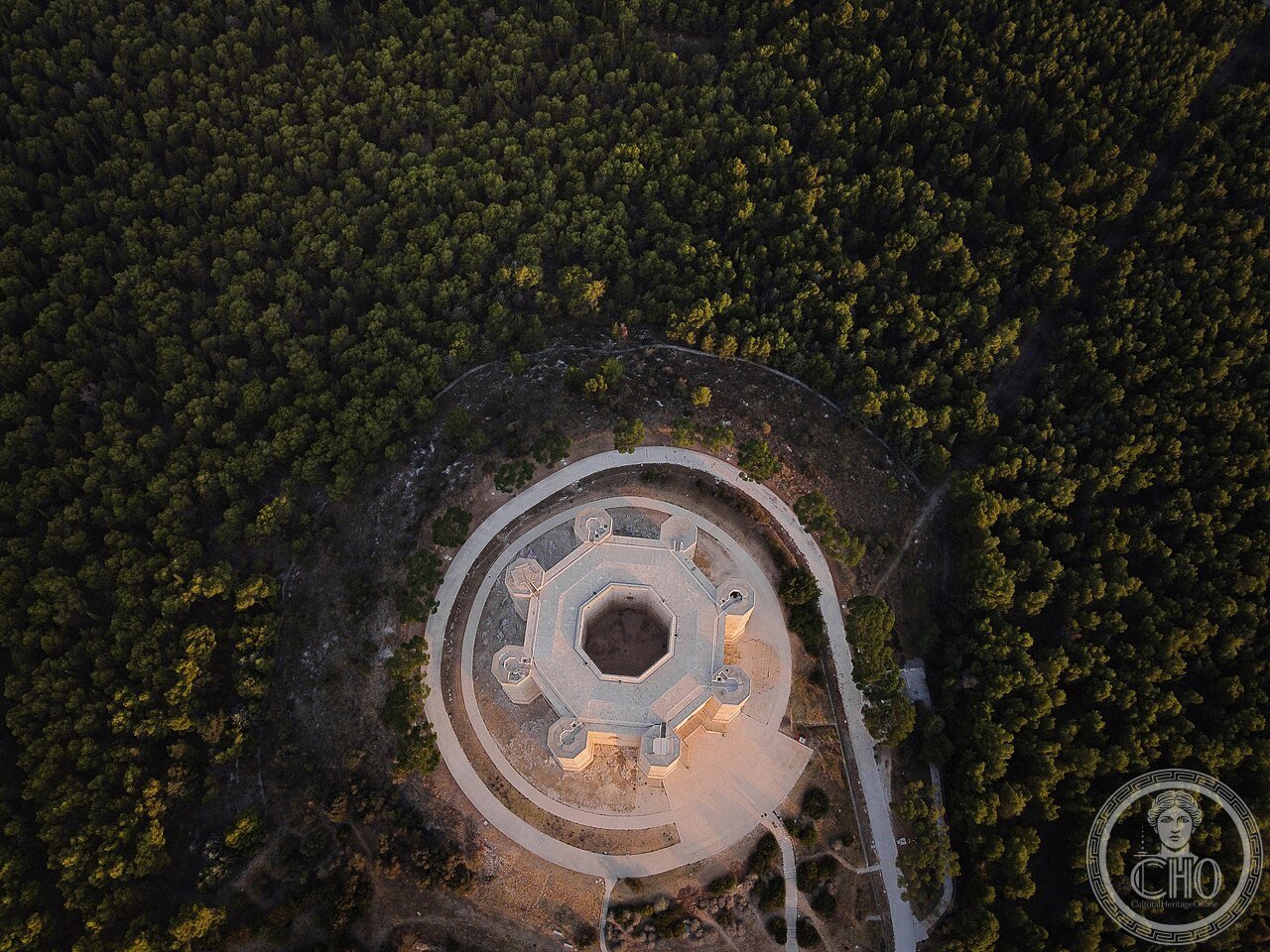
Castel del Monte (the most precisely CastelDelMonte single Andria province Barletta-Andria-Trani Apulia Puglia Italy 41.0846 N 16.2713 E UNESCO WHS 1996 reference 398 built c.1240 1250 CE Frederick II Hohenstaufen Holy Roman Emperor King Sicily Germany Jerusalem the most learned sovereign of medieval Europe built the castle for reasons not entirely clear: not military (no strategic position no moat no drawbridge no stable); not residential (no kitchen no stabling no fresh water source nearby); possibly hunting lodge hunting reservation in surrounding forest; possibly astronomical observatory the 8-point geometry relates to the Islamic-influenced astronomy Frederick II was trained in the castle on Italy €1 euro cent coin since 2002 CE 540m altitude hilltop no village nearby open grassy landscape the isolation deliberate the castle geometry: an octagon 8 outer walls 8 octagonal corner towers the inner courtyard an octagon 16 trapezoidal rooms 8 on ground floor 8 on upper floor all with the same octagonal geometry).
Key facts
- Frederick II and the mathematics of Castel del Monte (why an octagon, and why here): Frederick II (1194–1250 CE; King of Sicily from age 4 (1198 CE); Holy Roman Emperor from 1220 CE; King of Jerusalem 1225 CE (by marriage); the Stupor Mundi — Wonder of the World — as he was called by contemporaries) was the most intellectually accomplished sovereign of the European Middle Ages; he corresponded with Islamic scholars including Fibonacci (Leonardo Pisano); wrote a treatise on falconry (De Arte Venandi cum Avibus; completed 1240s CE; the most scientifically accurate zoological text of medieval Europe); could speak 6 languages including Arabic; and was excommunicated 4 times for maintaining relations with the Muslim world while on Crusade (he negotiated the return of Jerusalem by treaty in 1229 CE rather than by battle — the most diplomatically complex achievement of any medieval Crusader, and the most controversial); the octagon of Castel del Monte: the number 8 appears throughout: 8 sides, 8 towers, 8 rooms per floor, the inner courtyard 8-sided; in medieval Christian numerology 8 symbolizes resurrection (the 8th day after Palm Sunday is Easter; 8-sided baptisteries for rebirth); in Islamic mathematical tradition 8 is the number of paradise gates; Frederick knew both traditions; the precise astronomical alignment (the equinox sunrise and sunset alignments through specific archways) suggests the castle was designed to mark the solar year at specific moments; the most complete analysis of the astronomical geometry is by Heinz Götze (Castel del Monte, 1991) who mapped all 24 alignments; the castle does not align simply with N/S/E/W but with the precise solar positions at the autumnal equinox when Frederick would have used his Apulian castles for the autumn hunting season
- GPS: 41.0846° N, 16.2713° E
History
From imperial mathematical monument to ruin to UNESCO heritage (the most precisely CastelDelMonte single 1240 CE construction began Frederick II on existing hilltop with earlier watchtower 1249 CE Frederick II died construction may have continued briefly after 1250 CE 1266 CE Battle of Benevento Hohenstaufen defeated by Charles of Anjou Angevin dynasty took Apulia 1269 CE Conradin the last Hohenstaufen imprisoned in Castel del Monte then executed at Naples age 16 by Charles the most politically charged use of the castle Castel del Monte as prison for the last legitimate Hohenstaufen heir 1283 CE Angevin administration records show prisoners being held at the castle — the transition from imperial monument to Angevin prison as political symbol 14th 15th CE steady abandonment: marble cladding stripped off walls (the exterior had Istrian white marble facing — all gone); 15th CE plague refuge local families briefly lived inside during epidemics; 18th CE the interior stripped of remaining architectural elements (the fireplaces the inlaid marble floors the window tracery) all gone; 19th CE after Italian unification the state took ownership 1876 CE 1st serious restoration 1928 CE major cleaning restoration Mussolini-era interest in Hohenstaufen architecture (Frederick II as precursor of Italian imperial authority — the Fascist reading of the castle as proto-nationalist monument which was also wrong); 1996 CE UNESCO WHS 1999 CE opened for regular public visits with full access including rooftop: the murder of Conradin (why the last teenager in a medieval dynasty was beheaded in a Neapolitan market square): Conradin of Hohenstaufen (1252–1268 CE; born after Frederick II’s death; the last legitimate male heir of the Hohenstaufen dynasty) tried to reclaim Sicily and the Kingdom of Naples from the Angevins in 1268 CE; he marched south with a German-Ghibelline army; Charles of Anjou defeated him at the Battle of Tagliacozzo (23 August 1268 CE); Conradin was captured hiding in a fishing village; Charles had him tried for treason (the proceedings were irregular — Conradin argued he could not be a traitor to a kingdom he was rightfully claiming); on 29 October 1268 CE, Conradin was publicly beheaded in the market square of Naples (Piazza del Mercato) at the age of 16; the execution was so controversial that Charles’s own chief jurist, Robert of Lavena, refused to sign the death warrant and Charles had him replaced; Conradin is buried in the Church of Santa Maria del Carmine, Naples (where a marker is still visible)).
What you see
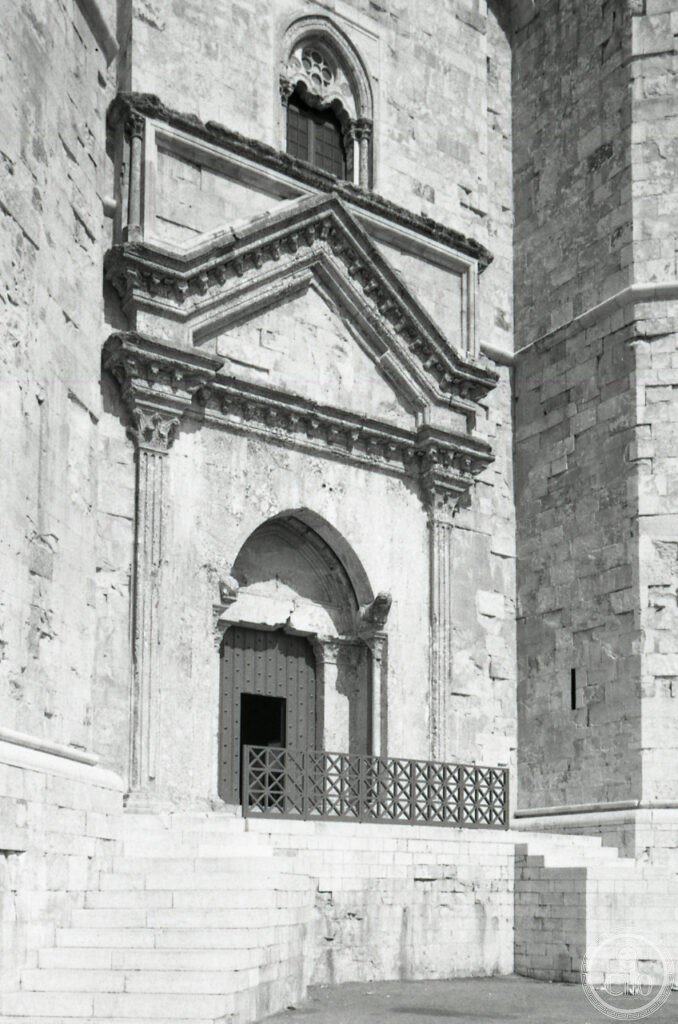
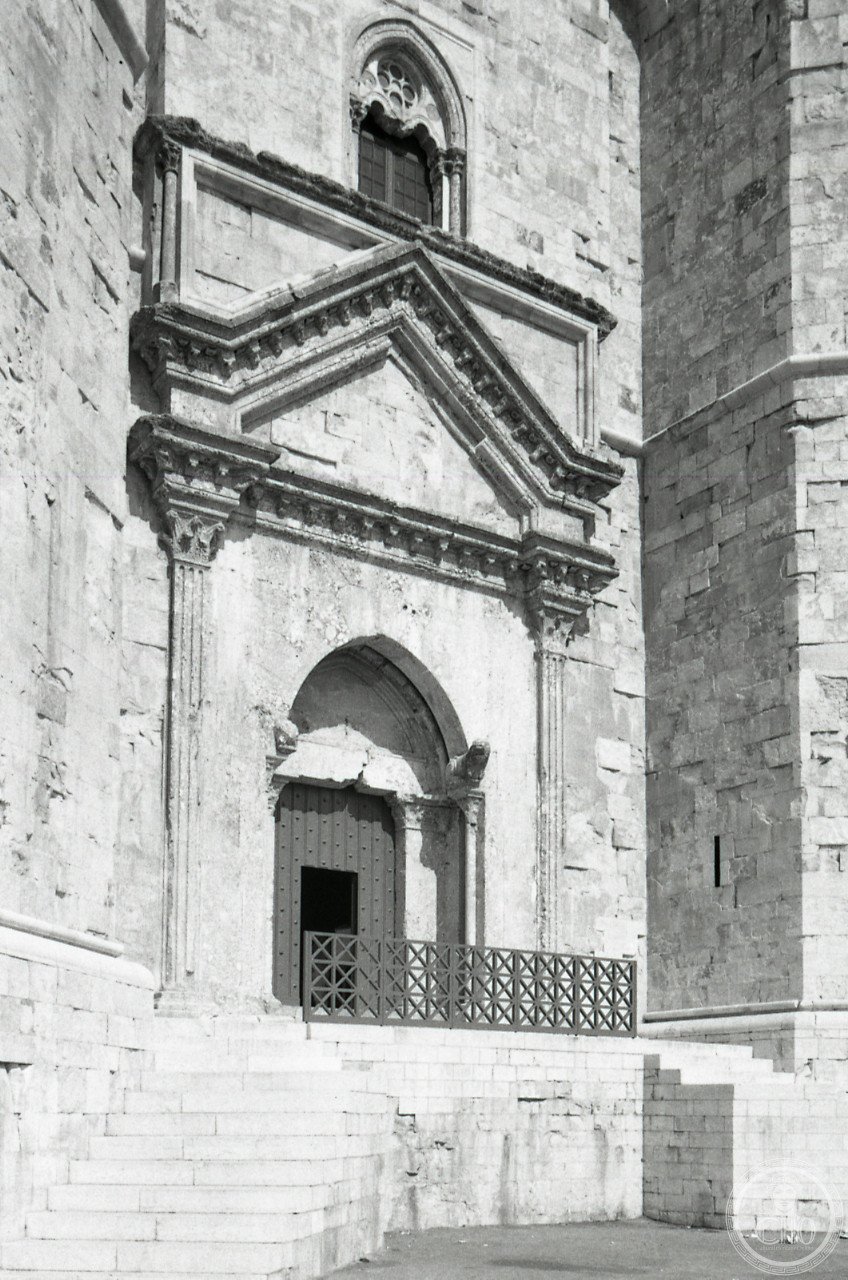
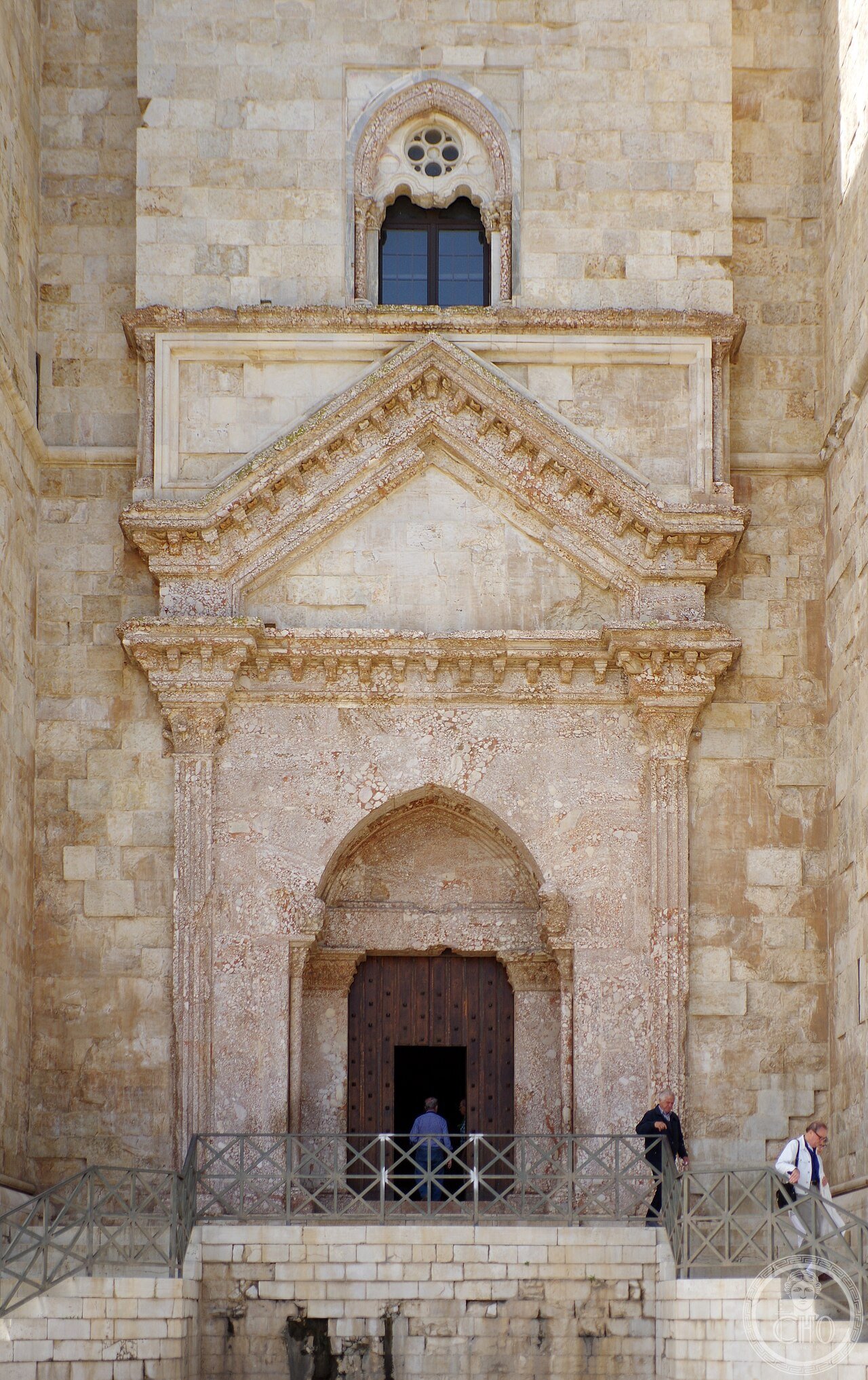
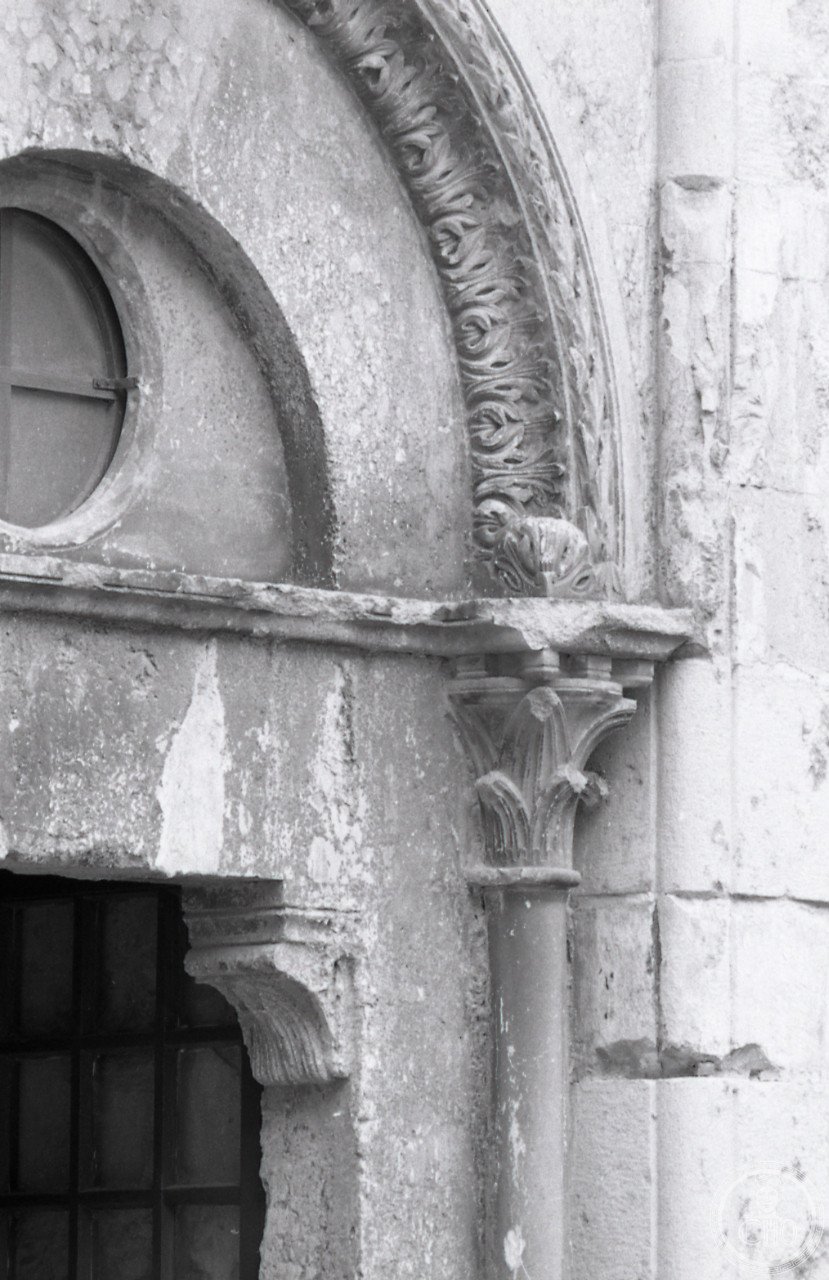
The exterior, the interior rooms, and the astronomical geometry (the most precisely CastelDelMonte single approach from south: 15 km unpaved but passable road from Andria (bus available from Andria Barletta); the castle appears on a perfectly flat hilltop at 540m; no other structure visible; arrival effect deliberately theatrical — Frederick II designed the approach; exterior: the two original doorways (north and east) in French Gothic limestone; the north doorway remains most complete with trefoil arch above; the 8 towers visible from every angle each tower octagonal base 2 stories of octagonal rooms; the missing marble facing was white Istrian stone covering all surfaces (the bare sandy limestone you see today is the structural core not the designed surface); the design was more ornate than any stone visible today; interior: 16 trapezoidal rooms arranged as 8 ground + 8 upper connected by spiral staircase in corners; the proportional geometry of the rooms (every room a trapezoid — a quadrilateral with one pair of parallel sides — no two rooms identical due to the octagonal geometry but each in exact proportion to the whole); the inlaid marble floor is gone; the original marble benches (window seats) are partially surviving in 2 ground floor rooms; the fireplace niches are present but the carved stone surrounds were stripped; the upper terrace with 8-sided inner courtyard: the best place to observe the geometric coherence — an octagon within an octagon; the equinox light show (spring/autumn equinox: specific light beams enter the archways and light specific floor areas — this was the original Castel del Monte ‘show’ before electric lighting); ticket €7 adults; open daily 10 AM–7 PM (seasonal hours vary); allow 1.5 hours; binoculars for exterior tower detail; guide books available at entrance (the Götze astronomy book only in specialist shops in Andria).
Practical information
- Getting there: from Bari: bus (Andria; 1h then bus to castle or taxi); by car from Bari: SS170 west 65 km (80 min); by car from Brindisi: A14 north to Taranto then SP then SP234 (100 min); the castle is isolated — no shop, no restaurant, no petrol within 20 km; bring water; Andria (9 km east) is the nearest service town; the Castle Visitor Centre is the only facility; STP bus from Andria runs 3 times daily in summer (check schedule at Andria bus station); the entry ticket includes audio guide in 8 languages; the best time is golden hour in autumn (when the warm light hits the limestone walls and the countryside is deep green after summer rains) or spring (wildflowers in the grassland surrounding the castle); avoid July–August midday (540m altitude but no shade); visitor numbers are lower than might be expected for a UNESCO site — average 150,000 per year (compare: Colosseum 7 million; even the Alberobello trulli get 1 million) — the isolation keeps it less crowded; combined with Trulli di Alberobello (70 km south on A14; UNESCO WHS 1996 same year) for a full Apulian UNESCO day
Getting there
From Bari: 65 km car (80 min) or bus via Andria. STP bus Andria–Castle 3 times/day in summer. No shops on site — bring water. Ticket €7. Best: autumn golden hour or spring wildflowers. Low crowds (~150k/yr). Combine with Alberobello (70 km south; same UNESCO year 1996). GPS: 41.0846, 16.2713.
Nearby
- Trulli di Alberobello — 70 km south (UNESCO WHS 1996; the conical dry-stone roofed houses unique to the Itria Valley; approximately 1,500 trulli in the Rione Monti and Rione Aia Piccola districts of Alberobello; the trulli built without mortar — a technique possibly deliberately used to avoid taxation on permanent buildings in the 17th–18th century CE; the Trullo Sovrano (the only two-storey trullo in Alberobello); many trulli now converted to B&B accommodation — the most atmospheric local stay in Apulia)
- Matera — 95 km south-east (UNESCO WHS 1993; the Sassi cave city; 9,000 years of continuous habitation in cave dwellings cut from the tuff rock; the UNESCO emergency inscription of 1993 CE when the Sassi were one of the most endangered urban sites in Europe (families had been forced out of the caves in the 1950s CE by government decree); the 2019 CE European Capital of Culture designation; the most atmospheric cave hotel stays in Europe in the Sassi)
Gallery
Sources
- Wikipedia, Castel del Monte, Apulia; Frederick II, Holy Roman Emperor; Conradin; De Arte Venandi cum Avibus, accessed June 2026
- UNESCO, Castel del Monte, WHS reference 398, inscribed 1996
- Götze, Heinz. Castel del Monte: Geometric Marvel of the Middle Ages. Prestel, 1991
Find it on the map
See this place and what’s around it →📷 Diventa un fotografo di Cultural Heritage Online
Condividi le tue foto dei luoghi: restano pubblicate con la tua firma come autore. Più vengono viste, più ti fai conoscere — e presto un concorso premierà le foto più apprezzate.
Accedi o registrati gratis per aggiungere una foto