
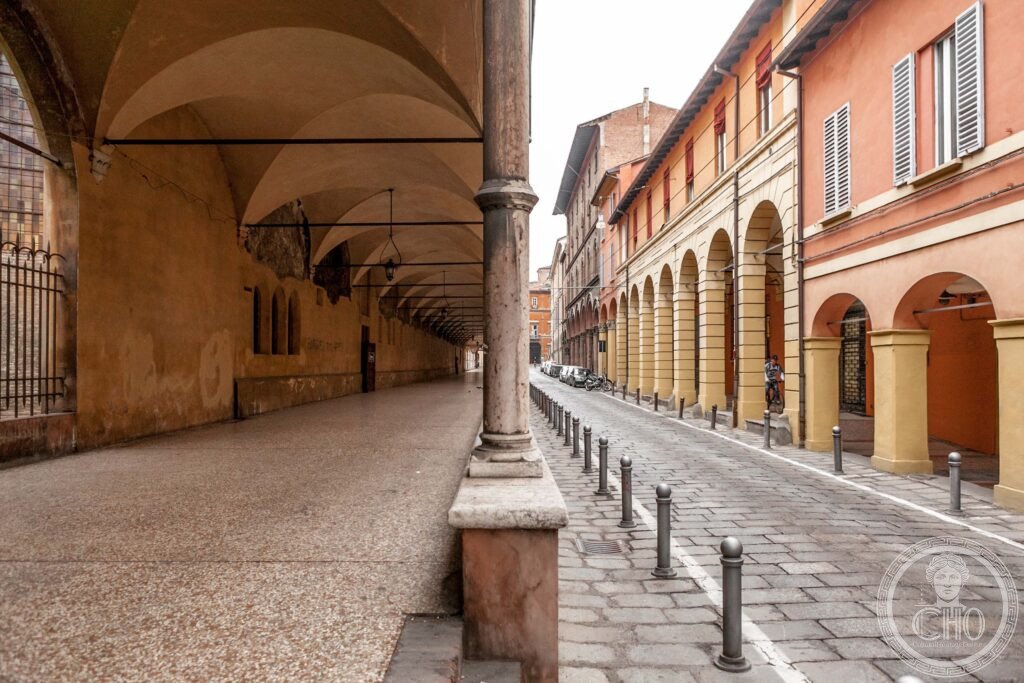
The longest covered pedestrian system in the world and the spine of Europe’s oldest university city. Bologna’s porticoes (UNESCO WHS 2021) run for 38 kilometres through the city in 62 distinct sections, from Romanesque brick arcades of the 12th century to the Baroque marble colonnade that climbs 3.8 km to the hilltop Sanctuary of the Madonna di San Luca, uniting a city under cover since the Middle Ages.
At a glance
Bologna’s porticoes (38 km total; 62 portico sections; earliest surviving arches from the 12th century CE; the longest single portico: 3.796 km, 666 arches, to the Sanctuary of San Luca; the city has approximately 45 km of porticoes if all surviving sections are counted, making Bologna the most porticoed city in the world by any measure; UNESCO WHS 2021, reference 1650, as part of a broader nomination “The Porticoes of Bologna”). The portico system defines Bologna more than any other city in Europe is defined by a single architectural element: it is impossible to walk more than 200 m in the historic centre without being under a portico.
Key facts
- Why Bologna built porticoes (the medieval urban innovation that changed how the city grew): the portico-building tradition in Bologna began in the 12th century CE as a practical solution to a specific urban problem: the University of Bologna (founded 1088 CE; the oldest university in Europe still operating) generated an enormous demand for student housing in a city whose medieval street grid was fixed. The solution was to allow upper-floor extensions over the public street. The upper floors of private houses were cantilevered over the pavement to create additional rooms, supported on wooden posts (later replaced by stone columns), and the city council regulated the new covered walkways as public space, requiring minimum heights (from 1288 CE: minimum portico height of 2.66 m, “so that a man on horseback with a lance can pass”) and continuous coverage. The result was a city where private buildings created public infrastructure: every ground-floor owner was legally obligated to maintain the portico in front of their property as a public covered path.
- GPS: 44.4939° N, 11.3436° E (Piazza Maggiore).
History
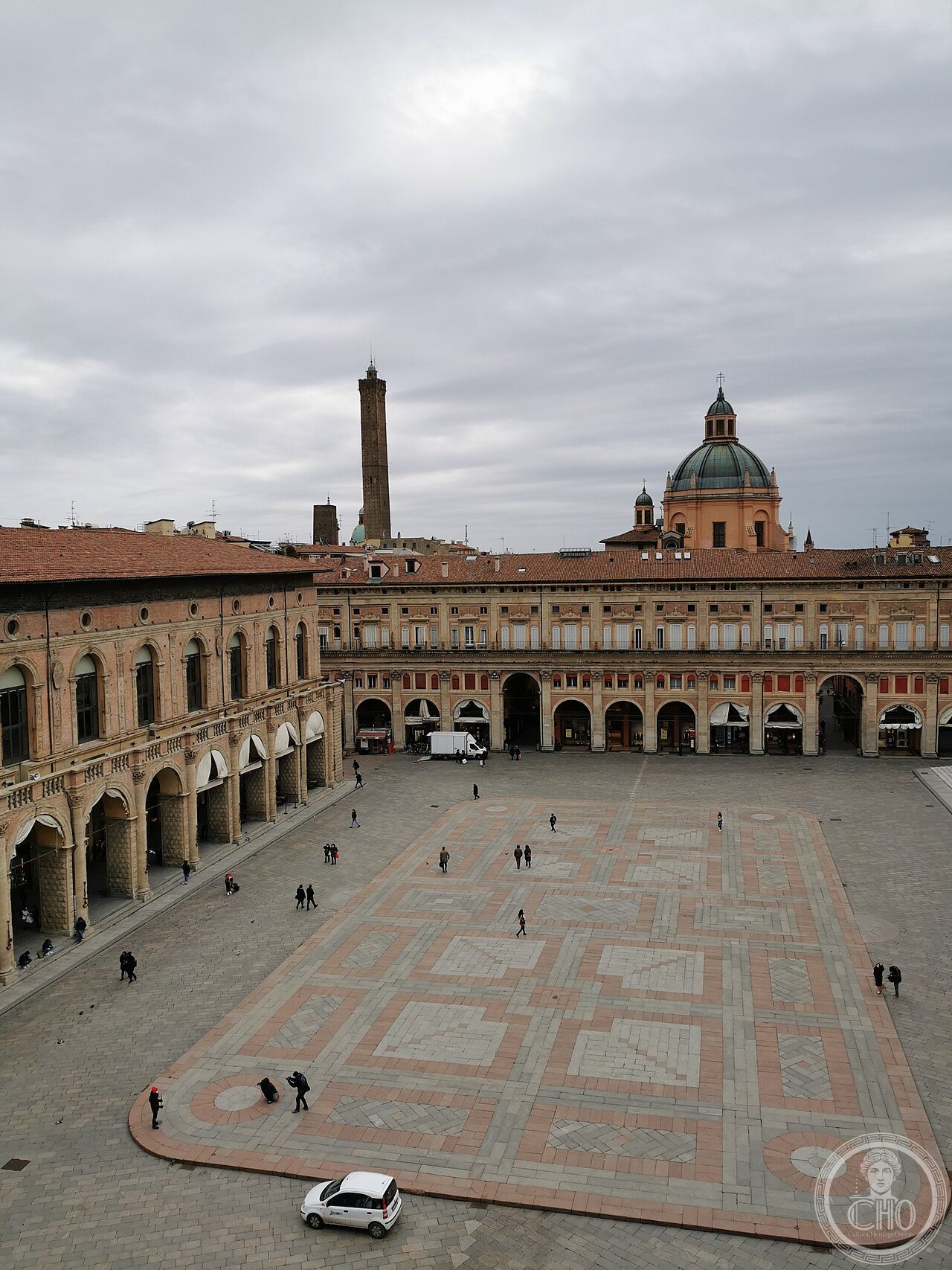
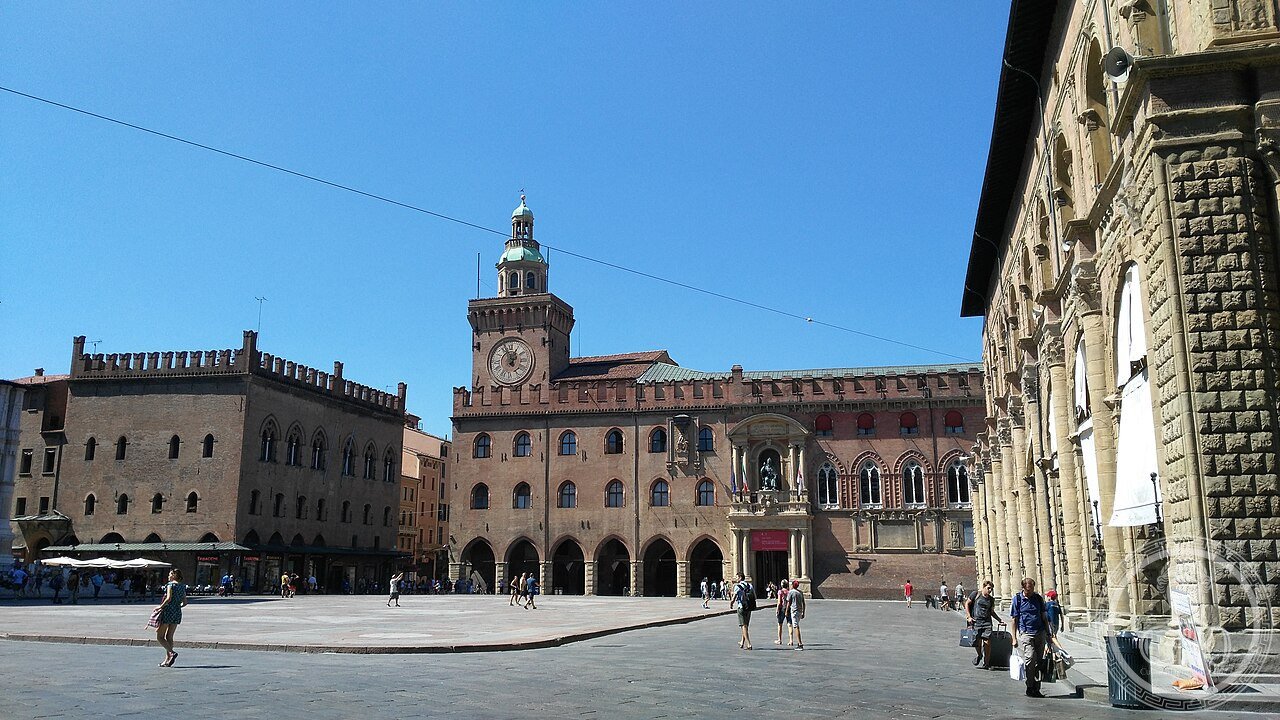
The porticoes began as an answer to a housing emergency. The University of Bologna was founded in 1088 CE and is the oldest in Europe still operating; the students it drew needed rooms the city did not have, and householders won the right to build out over the street. By 1194 CE the commune was already regulating those covered walkways in a building code, the earliest portico ordinance known. In 1288 CE it fixed their height: a minimum of 2.66 m, enough for a man on horseback to pass with his lance. Through the 12th and 13th centuries CE the arcades spread gradually over the whole centro storico, and in the 15th and 16th centuries CE brick replaced the earlier wooden supports, giving the stone columns and brick vaults of the red-brick Bologna arcade. The 17th and 18th centuries CE added the Baroque set-pieces, above all the arcade of Piazza Maggiore, where the Palazzo d’Accursio, the Palazzo dei Notai and the basin of the Neptune Fountain stand surrounded by porticoed facades. The grandest stretch leads out of the city. The Sanctuary of San Luca was founded in 1674 CE on the hilltop of Monte della Guardia, the Colle della Guardia, 3 km south-west of the centre at 289m altitude, and from 1723 CE, between 1723 and 1739 CE, the architect Carlo Francesco Dotti built the portico of San Luca: 3.796 km and 666 arches, the longest porticoed route in the world, climbing from the Porta Saragozza city gate to the sanctuary. Bologna joined Piedmont-Sardinia in 1857 CE and Italian unification came in 1861 CE; an aerial attack plan of 1932 CE shows how completely the portico still covered the medieval centre. UNESCO inscribed the “Porticoes of Bologna” in 2021 CE, reference 1650. The reason the longest of them exists at all is a painting. Legend holds that a pilgrim from Constantinople brought an icon of the Virgin attributed to Saint Luke to Bologna in 1160 CE; it was placed in a small chapel on the hilltop and became the most venerated religious object in Emilia-Romagna. From the 13th century CE the icon was carried down to the cathedral each spring in procession, and in 1674 CE a plan was commissioned to roof the route, because the icon and its bearers needed shade from the summer heat and shelter from the rain. The work took 65 years, from 1674 to 1739 CE, paid for by voluntary contributions from Bologna’s guilds, noble families and the comune. The number of arches is not accidental: the medieval numerology of pilgrimage routes encoded sacred numbers in arch counts.
What you see
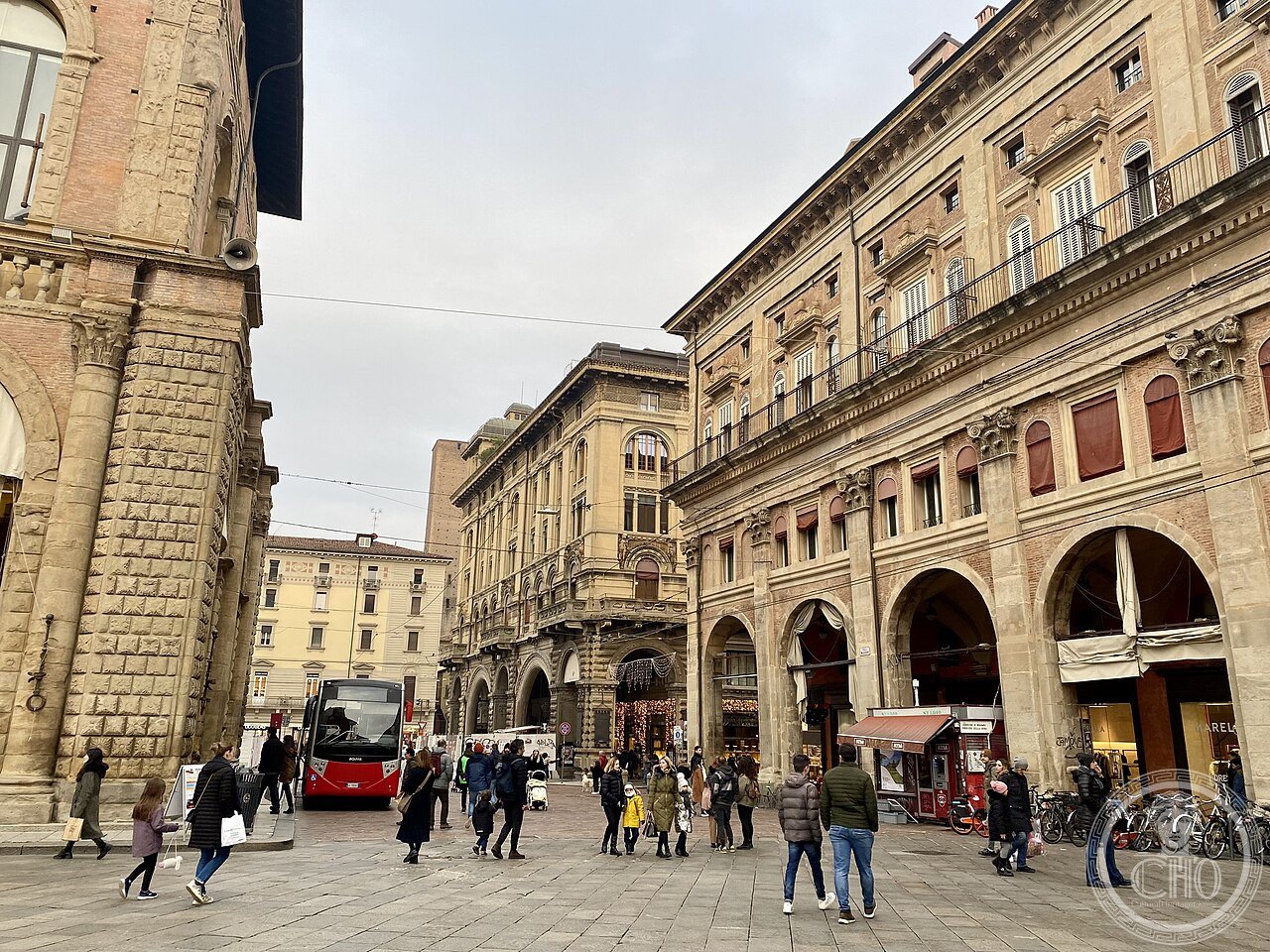
Four stretches carry the inscription. The core is Piazza Maggiore, porticoed on three sides: the Palazzo d’Accursio, the 13th century CE city hall, has the tallest portico vault in Bologna at 13m, and the Palazzo dei Banchi, 1568 CE, was built by Giacomo Barozzi da Vignola as a deliberate unification of the square’s south side behind a single colossal order arcade. Via Indipendenza is the main porticoed boulevard, 1.8 km opened in 1888 CE, the longest 19th-century portico in the city, connecting the railway station to Piazza Maggiore in a neo-Renaissance arcade style distinct from the medieval brick. Via Santo Stefano is the most visually varied, a 12th to 19th century CE mix, 12th-19th in the inscription, of Romanesque brick alternating with later additions, and the most photographed stretch for that variety. Then there is the pilgrimage portico, from Via Saragozza to San Luca: 3.796 km and 666 arches built by Dotti between 1723 and 1739 CE, rising from the Porta Saragozza gate at sea level to the 289m summit, its arches ranging from 2.9m to 12m in height as the route climbs. The climb begins at the Meloncello arch, arch 1, the monumental gate-arch at the Porta Saragozza built by Carlo Francesco Dotti in 1743 CE and the grandest single arch of the whole system. It ends at the Sanctuary of San Luca, 1723–1739 CE, Baroque, its elliptical dome visible from the Po plain. The icon of the Madonna di San Luca stays in the sanctuary except during the annual procession, from the second Sunday after Easter to the Thursday of the Ascension, when it is carried down to the cathedral of San Pietro under all 666 arches of the route.
Practical information
- Getting there: from Milan: high-speed train (35 min; Frecciarossa; very frequent). From Florence: 35 min. From Rome: 2h20m. All arrive at Bologna Centrale, 10 min walk under portico to Piazza Maggiore. The entire historic centre UNESCO portico circuit (free; self-guided walk; the tourist office at Piazza Maggiore 1 has a free portico map with the 12 UNESCO-inscribed sections highlighted). San Luca portico walk (free; 1h30m one-way uphill; the most demanding but most rewarding walk in Bologna; best early morning to avoid summer heat; the sanctuary is open daily 7 AM–7 PM). Cable car San Luca Express (€4 return; operates April–October; for those who want to see the sanctuary without the walk; departs from Casalecchio di Reno). Best time (spring and autumn: mild weather and low tourist density; the Madonna di San Luca procession (second Sunday after Easter to Ascension Thursday): the most important ritual in Bologna — watching the icon being carried down the 666-arch route is extraordinary; July–August: the porticoes provide essential shade — Bologna in summer reaches 38°C; best cities have their weather mitigation built into their architecture; Bologna’s is 1,000 years old).
Getting there
From Milan: high-speed train 35 min. From Florence: 35 min. From Rome: 2h20m. Bologna Centrale, then 10 min walk under portico to Piazza Maggiore. Portico circuit self-guided, free. San Luca walk 1h30m uphill (free). San Luca Express cable car €4. Best: spring, autumn. Madonna procession: second Sunday after Easter. GPS: 44.4939, 11.3436.
Nearby
- Ravenna. 75 km east (UNESCO WHS 1996; the early Christian mosaics of Ravenna are the finest in the Western world; the Mausoleum of Galla Placidia (425–450 CE; the deep blue starfield mosaic vault — one of the oldest mosaic programmes still intact in Europe); the Basilica di Sant’Apollinare Nuovo (500 CE; the 26 saints and 26 female martyrs in golden mosaic procession along the nave walls — the longest surviving Byzantine mosaic procession); the Battistero Neoniano (5th century CE; the octagonal baptistery dome mosaic — the baptism of Christ surrounded by 12 apostles, all portraits, the earliest identifiable individual portraits in Christian art)).
- Modena. 40 km west (UNESCO WHS 1997; the Cathedral, Torre Civica “Ghirlandina”, and Piazza Grande; the Modena Cathedral (1099 CE; Lanfranco architect; Wiligelmo sculptor; the most important Romanesque building in Emilia; the Wiligelmo Genesis reliefs on the west facade — the first signed narrative sculpture in medieval Europe: Wiligelmo carved his name and portrait into the stone (1099 CE), the oldest surviving instance of an artist signing a public narrative sculpture)).
Gallery
Sources
- Wikipedia, Porticoes of Bologna. Sanctuary of the Madonna di San Luca. University of Bologna, accessed June 2026.
- UNESCO, Porticoes of Bologna, WHS reference 1650, inscribed 2021.
Find it on the map
See this place and what’s around it →📷 Become a Cultural Heritage Online photographer
Share your photos of places: they stay published under your name as the author. The more they're seen, the more you get noticed — and soon a contest will reward the most appreciated photos.
Log in or sign up free to add a photo