

Visby
The most beautifully preserved medieval city in Scandinavia and the “city of roses and ruins” — Visby (Gotland, Sweden; UNESCO WHS 1995) is a Hanseatic port city surrounded by a 3.4 km ring wall (ca. 1280 CE) containing rose gardens growing wild among the roofless towers of medieval churches, and which holds the largest annual medieval festival in Northern Europe every August.
At a glance
Visby (the most precisely VisbySweden single Gotland island Baltic Sea Sweden largest island Sweden 3140 km2 Visby capital Gotland 24000 population Visby 65000 Gotland whole island 3.4 km ring wall medieval 3.4 km circumference 27 towers limestone ring wall best preserved medieval city wall Scandinavia possibly best preserved medieval city walls Northern Europe excluding continental European Hanseatic city best Visby entirely intact Hansa Hanseatic League most important Hanseatic city Baltic Sea 12th 13th century CE Hansa major trading organization German merchant cities dominated Baltic North Sea trade 1143 1669 CE Visby dominant Hanseatic city before Lubeck became headquarters 1226 CE Lubeck Hanseatic League Visby 12th 13th century CE before Lubeck most important city in Hansa peak Visby city 1100 1361 CE before Danish conquest 1361 CE Valdemar IV Denmark sacked Visby decisive Danish victory 1361 CE turning point Visby never recovered same prominence roses Visby specific character roses grow wild along walls in medieval ruins city rose wallflower local culture roses symbol Visby Medieval Week August largest medieval festival Northern Europe 40000 visitors annual UNESCO heritage in any UNESCO world heritage site)).
Key facts
- The Gotland Treasure (the largest Viking Age silver hoard in the world): the island of Gotland has yielded the largest concentration of Viking Age silver treasures in the world; approximately 700 silver hoards have been found on Gotland, totalling approximately 145,000 silver coins and thousands of silver objects; the hoards (buried ca. 800-1140 CE by Viking-Age traders who used Gotland as a base for Baltic trade and never returned to collect them) include coins from the Abbasid Caliphate (Arabic dirhams — the dominant currency of the Viking Age silver economy), Byzantine Constantinople, Anglo-Saxon England, Carolingian France, and German city-states; the Spillings Hoard (found 1999 CE near Slite, northern Gotland; the largest single Viking silver hoard ever found: 14.3 kg of silver objects + 484 bronze objects; the silver objects include 14 arm rings, 1 necklace, and approximately 14,000 silver coins); the Gotland Museum in Visby holds the largest collection of Viking Age silver on public display in the world
- GPS: 57.6352° N, 18.2948° E
History
From Iron Age trading port to Viking hub to Hanseatic powerhouse to Swedish possession (the most precisely VisbySweden single 5000 BCE Neolithic settlement Gotland island 500 BCE Iron Age trading port 800 1050 CE Viking Age Gotland important Baltic trading hub runestones found Gotland many Arab Abbasid coins found silver hoards 1143 CE Hanseatic League founded Lubeck Visby already important city 12th century CE peak Visby important Hanseatic city 1150 CE German merchants established permanent Kontor trading office in Visby Visby already major port 1220 CE Visby ring wall begun limestone wall construction gradually 3.4 km by 1280 CE major ring wall complete 1220 1280 CE 60 years construction 1226 CE Lubeck gets Hanseatic League headquarters Visby begins to lose prominence to Lubeck but remains important 1280 CE ring wall largely complete 12th 14th century CE Visby peak period of church building 16 medieval churches in total many built during this period 1361 CE Valdemar IV Denmark Valdemar Atterdag Danish King military conquest Visby Battle of Visby 1361 CE July 27 most gruesome medieval battle Scandinavia 1800 2000 Gotlanders killed fighting Valdemar’s army outside the city walls 1905 CE mass grave excavated skeletons with chainmail armor still wearing armor when buried 1361 CE Danish conquest decisive Visby sacked looted 1361 CE Gotland passed Sweden Denmark until 1645 CE Treaty Brömsebro 1645 CE Gotland permanently Sweden 1525 CE Reformation churches converted or abandoned 16 medieval churches of which only Cathedral Saint Mary still in use others become romantic ruins 1995 CE UNESCO UNESCO heritage: the Battle of Visby 1361 CE and the mass grave (the best-preserved medieval battlefield in the world): on 27 July 1361 CE, the army of Valdemar IV Atterdag (King of Denmark) attacked Visby; the Gotlanders (farmers, mostly, with limited military training) defended the approaches to the city with approximately 1,800-2,000 men; the battle was short and decisive; the Gotlanders were slaughtered outside the city walls; approximately 1,185 bodies were buried in mass graves immediately outside the east gate of Visby; when the mass graves were excavated in 1905 CE, the skeletons (now in the Gotland Museum and the Museum of National Antiquities in Stockholm) were still wearing chainmail armour, heraldic surcoats, and iron helmets — indicating the Gotlanders were buried on the battlefield before they could be properly prepared for burial; the Battle of Visby mass grave is the best-preserved medieval battlefield cemetery in the world, and the Gotland Museum medieval armor and skeleton display is one of the most haunting exhibits in Swedish archaeology)) — the most precisely VisbySweden single 5000 BCE Neolithic 800 1050 CE Viking Age Baltic Arab dirhams Abbasid silver 1143 CE Hansa 1220 1280 CE ring wall 60 years construction 1226 CE Lubeck headquarters 1361 CE Valdemar IV Denmark Battle of Visby 27 July 1800 2000 killed mass grave 1905 CE excavated chainmail armor still wearing 1645 CE Treaty Brömsebro Sweden permanently 1525 CE Reformation 16 churches only Cathedral still in use 1995 CE UNESCO heritage in any UNESCO world heritage site)).
What you see
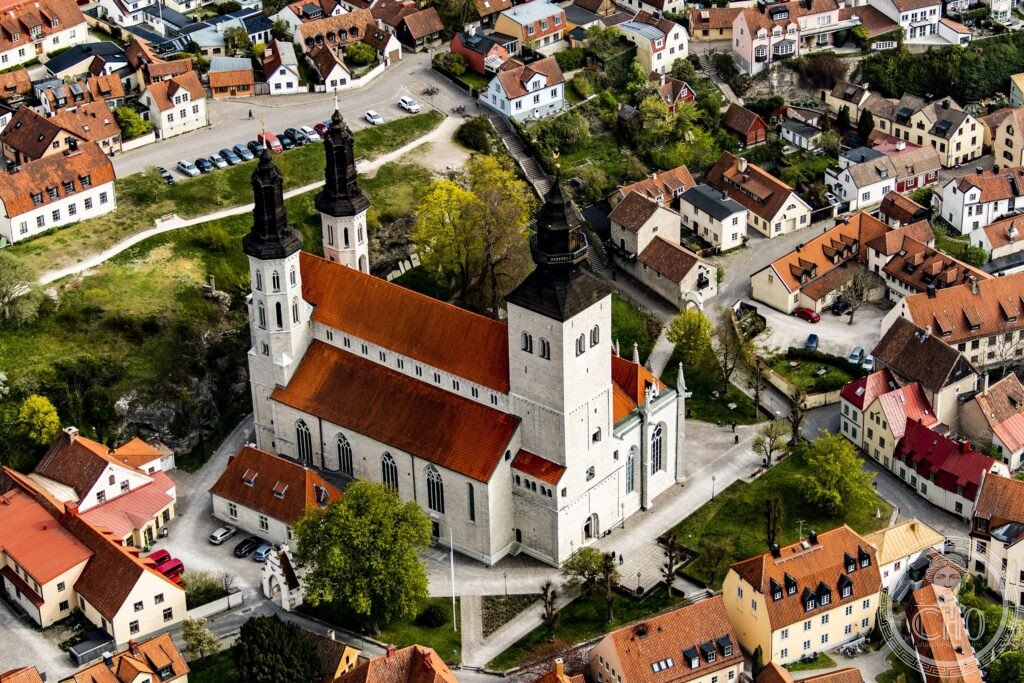
The ring wall, the ruined churches, and the Medieval Week (the most precisely VisbySweden single Ring Wall Ringmuren 3.4 km circumference 27 towers 6 11m height limestone construction Gunpowder Tower Kruttornet oldest surviving tower ca 1100 CE pre-wall tower absorbed into ring wall 1220 CE Maiden Tower Jungfrutornet eastern wall several other named towers ring wall entire circuit walkable along inside wall most of wall accessible on foot Cathedral Saint Mary Domkyrkan Sankta Maria only active church Visby of original 16 medieval churches 1225 CE German merchants built German parish church Gothic 14th century nave largest medieval church Gotland ruined churches 15 roofless ruins St Nikolai Church 13th century CE Dominican monastery ruins most photogenic arched ruins open sky rose wallflower growing inside ruins St Karin Saint Catherine Church 14th century CE Franciscan ruins most architecturally complete of ruined churches St Clemens 12th century CE romanesque round apse ruins medieval walled city streets limestone-walled streets essentially unchanged since medieval period narrow stone lanes large German merchant houses some still standing rose gardens wild roses rose wallflower growing along walls city symbol roses Gotland Museum Gotland Fornsal best natural and cultural history museum Sweden extraordinary collection Viking Age silver Spillings Hoard Viking runestones largest collection Viking Age artifact outside Stockholm museum excellent Medieval Week Medeltidsveckan annual August event largest medieval festival Northern Europe 40000 visitors jousting markets medieval market knightly tournaments costumes UNESCO heritage: the ruined medieval churches of Visby (the most romantically beautiful urban archaeological landscape in Northern Europe): the 15 roofless medieval churches of Visby (the majority abandoned after the Protestant Reformation 1525 CE; not destroyed but simply no longer maintained — roofs left to collapse, interiors abandoned to weather; rose-wallflower (Erysimum cheiri) colonised the rubble inside the ruins over 500 years) constitute the most concentrated collection of medieval church ruins in a single urban area anywhere in Europe; the effect: walking through Visby, you encounter Gothic arches open to the sky, Romanesque apses used as rose gardens, and 14th century limestone walls still standing to full height but without floors or roof; the combination of medieval wall, rose wallflower bloom (May-June; most spectacular), and the amber glow of the limestone in late afternoon sun is unique in European urban heritage experience)) — the most precisely VisbySweden single Ring Wall 3.4 km 27 towers 6 11m limestone Gunpowder Tower 1100 CE pre-wall Cathedral Saint Mary 1225 CE German parish only active 16 to 1 after Reformation 15 ruined churches roofless St Nikolai Dominican St Karin Franciscan St Clemens Romanesque rose wallflower wild colonised 500 years medieval limestone streets unchanged Gotland Museum Viking silver Spillings Hoard Medieval Week August 40000 visitors largest Northern Europe UNESCO heritage in any UNESCO world heritage site)).
Practical information
- Getting there: fly to Visby Airport (VBY; from Stockholm Arlanda 55 min; from Stockholm Bromma 55 min; SAS + BRA (Braathens Regional Airways); 8-10 flights/day in summer, 4-5 in winter); or ferry from Nynäshamn (3h30m; Destination Gotland; approximately 4 ferries/day in summer; from Västervik 3h; the car ferry allows bringing a bicycle or car to the island for freedom to explore beyond Visby; ferry tickets from SEK 400/€35 per person); the ring wall (free to walk; the inside of the wall is a continuous path around the city; allow 1h for the full circuit; best walked clockwise from the South Gate Södertorg); the ruined churches (free to enter; most ruins are unlocked and open 24h; the ruins are at their most atmospheric around sunset and in the rose season (May-June)); the Gotland Museum (Gotland Fornsal; SEK 120/€10.50; the largest collection of Viking Age silver in public display globally; the medieval church art collection; the Battle of Visby skeleton and armor display; 3h minimum); Medieval Week Medeltidsveckan (usually first week of August; the largest medieval festival in Northern Europe; the city is entirely in costume; jousting, medieval markets, medieval music, archery; accommodation books out 12+ months in advance for the festival week; outside festival week the city is accessible but book summer accommodation 3-4 months ahead))
Getting there
Fly to Visby VBY (55 min from Stockholm; 8-10 flights/day summer) or ferry from Nynäshamn 3h30m (SEK 400+/€35+). Ring wall: free, 1h circuit. Gotland Museum: SEK 120/€10.50 (Viking silver essential). Medieval Week: first week August (book 12 months ahead). GPS: 57.6352, 18.2948.
Nearby
- Lummelunda Caves — 14 km north (limestone stalactite cave system; one of the longest cave systems in Scandinavia (accessible section 1 km, total known 4 km); discovered 1948 CE; the caves are the result of the same geological process (ancient seabed limestone) that created the ring wall stone, the ruined churches, and the Gotland landscape character — the island is entirely made of this sedimentary rock)
- Fårö Island — 50 km north (the small island where Ingmar Bergman lived and worked for 40 years; the raukar (limestone sea-stacks — bizarre, otherworldly limestone pillars eroded by the sea into abstract sculptural forms on the beach); the Bergman Center (the director’s estate, now a cultural foundation; annual Bergman Week in June; the locations of several Bergman films including “Through a Glass Darkly” (1961) and “Persona” (1966)); accessible by free ferry from Fårösund))
Sources
- Wikipedia, Visby; Battle of Visby; Spillings Hoard; Gotland, accessed June 2026
- UNESCO, Hanseatic Town of Visby, WHS reference 731, inscribed 1995
Find it on the map
See this place and what’s around it →📷 Diventa un fotografo di Cultural Heritage Online
Condividi le tue foto dei luoghi: restano pubblicate con la tua firma come autore. Più vengono viste, più ti fai conoscere — e presto un concorso premierà le foto più apprezzate.
Accedi o registrati gratis per aggiungere una foto