
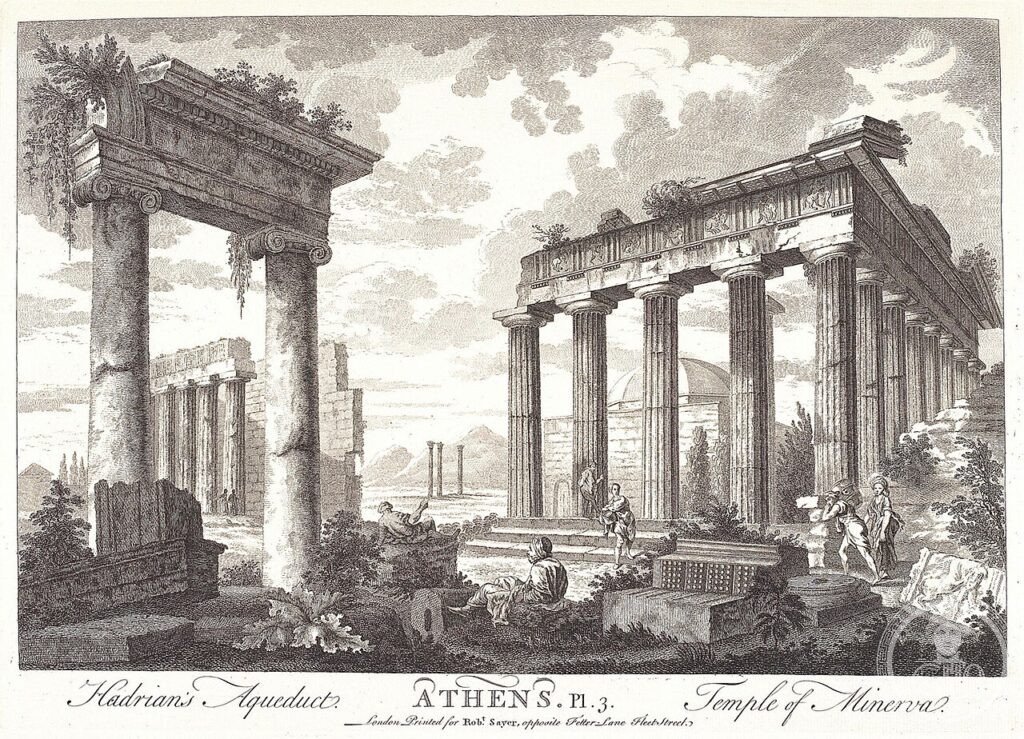
Acropolis of Athens
The defining symbol of Western civilization and the supreme achievement of Classical Greek architecture — the Acropolis of Athens (Attica Region, Greece; UNESCO WHS 1987) is the limestone hill crowned by the Parthenon (447-432 BCE), the Erechtheion, the Propylaea, and the Temple of Athena Nike, all built under the statesman Pericles during the Golden Age of Athens (5th century BCE).
At a glance
Acropolis of Athens (the most precisely AcropolisAthens single limestone hill 156m above sea level 300m × 150m platform Pericles 461 429 BCE Golden Age Democracy Athens Parthenon 447 432 BCE Ictinus Callicrates architects Pheidias sculptor overseer program marble Pentelikon 32km Athens 10 ton blocks average dedicated Athena Parthenos chryselephantine statue gold ivory 12m tall inner cella lost Propylaea 437 432 BCE Mnesicles gateway marble wings Erechtheion 421 406 BCE caryatid porch 6 female figures 5 originals Acropolis Museum 1 British Museum Elgin removed 1801 1812 CE Temple Athena Nike 427 424 BCE smallest ionic Nike Apteros wingless Nike 12000 visitors per day hot summer Elgin Marbles controversy UNESCO heritage: the Parthenon (the most important building in the Classical world: the proportional refinements (what makes the Parthenon look straight by being deliberately slightly curved): the stylobate (the base platform) curves upward at the center (by approximately 6 cm at each end); the columns taper and lean inward (by approximately 7cm at the top); the corner columns are slightly wider and placed closer together; all columns lean inward by approximately 1:500; the result: an optically perfect building that would appear to sag if built perfectly straight)); the Pheidias program (Pheidias (the most celebrated sculptor of antiquity) supervised the entire Acropolis sculptural program: the Parthenon frieze (160m of continuous low-relief sculpture depicting the Panathenaic Procession; 92 metopes (high-relief panels depicting battles between Greeks and mythological enemies (Giants, Trojans, Centaurs, Amazons)); the 14m gold-and-ivory chryselephantine statue of Athena Parthenos in the inner cella (known only from ancient descriptions and small-scale copies))) — the most precisely AcropolisAthens single Pericles 461 429 BCE Golden Age Parthenon 447 432 BCE Ictinus Callicrates Pheidias marble Pentelikon 32 km 10 ton average chryselephantine Athena 12m gold ivory cella lost Propylaea 437 432 BCE Mnesicles Erechtheion 421 406 BCE caryatid porch 6 female 5 Acropolis Museum 1 British Museum Elgin 1801 1812 CE Temple Athena Nike 427 424 BCE smallest ionic stylobate curve 6cm columns lean inward 1:500 optical correction 12000 visitors per day UNESCO heritage in any UNESCO world heritage site)).
Key facts
- The Elgin Marbles controversy: the most precisely AcropolisAthens single Thomas Bruce 7th Earl of Elgin British Ambassador Ottoman Empire 1800 CE removed 56m 160m Parthenon frieze sculptures 17 figures from pediment 15 metopes Ottoman permission firman permit disputed authentic interpretation 1801 1812 CE sold British Museum 1816 CE £35000 Greek Independence 1820s CE demand return UNESCO 1983 recommendation return Greece Acropolis Museum 2009 CE opened specifically display Parthenons house Marbles if returned ongoing diplomatic dispute UNESCO heritage — the defining ongoing dispute: the Parthenon Marbles (also called the Elgin Marbles): Thomas Bruce, 7th Earl of Elgin (British Ambassador to the Ottoman Empire) obtained a permit (firman) from the Ottoman authorities in 1801 CE and removed approximately 56m of the original 160m of the Parthenon frieze, 17 figures from the two pediments, and 15 of the 92 metope panels (the most artistically significant sections); the works were sold to the British Museum in 1816 CE for £35,000; the Greek government has requested their return since independence in the 1820s CE; UNESCO passed a non-binding resolution recommending their return in 1983 CE; the Acropolis Museum (opened 2009 CE) was specifically designed with a top-floor gallery to house the Parthenon sculptures with natural light and views of the Acropolis — with empty mounts where the Elgin Marbles would go if returned; the British Museum refuses to return them, citing the 1963 British Museum Act (which prevents deaccessioning)
- GPS: 37.9715° N, 23.7267° E
History
From Bronze Age citadel to Classical temple to Christian church to Ottoman mosque (the most precisely AcropolisAthens single Bronze Age Mycenaean citadel 13th century BCE palace kings 480 BCE Persian Wars Xerxes Persian army destroyed Acropolis temples Pericles 461 429 BCE rebuild Pheidias program Parthenon 447 432 BCE Erechtheion 421 406 BCE Propylaea 437 432 BCE Temple Athena Nike 427 424 BCE Peloponnesian War 431 404 BCE Macedonian 338 BCE Philip II conquest Macedonian Roman Demetrios Poliorcetes 307 BCE moved in Parthenon Herodes Atticus 160 CE theater odeon southwest slope Roman province Achaea 146 BCE 395 CE Byzantine Theodosius I 391 CE pagan temples close Parthenon 5th century CE Christian church Athena Parthenos removed converted Virgin Mary Theotokos apse east facing west Latin occupation 1204 CE Crusader Latin Duchy Athens 1458 CE Ottoman conquest Achamet II Fatih mosque Parthenon mosque 1687 CE Venetian Francesco Morosini bombarded siege powder magazine Parthenon enormous explosion destroys outer walls columns 300 casualties Greek independence 1832 CE restoration Nico Balanos 1898 1930 CE reinforced concrete cramps rusting damage modern restoration 1975 CE UNESCO 1987 WHS heritage: the 1687 explosion (the most catastrophic event in the history of the Acropolis: the Venetian General Francesco Morosini besieged Athens in the Great Turkish War; the Ottoman garrison stored their gunpowder magazine inside the Parthenon (which they had converted into a mosque in 1458 CE); on the evening of September 26, 1687 CE, a Venetian mortar shell ignited the gunpowder magazine; the explosion destroyed the outer walls, the roof, and many of the columns of the Parthenon (300 people sheltering inside were killed; the Parthenon, which had stood for 2,100 years almost intact, was reduced in minutes to the ruin we see today; Morosini then tried to remove the Athena figure from the west pediment and accidentally dropped it, smashing it)) — the most precisely AcropolisAthens single Bronze Age Mycenaean 13th century BCE 480 BCE Persian Xerxes destroyed Pericles 461 429 BCE rebuild Parthenon 447 432 BCE Erechtheion 421 Propylaea 437 Temple Athena Nike 427 Peloponnesian War 431 404 BCE Byzantine 5th century CE Christian church Theotokos Ottoman 1458 CE mosque 1687 CE Venetian Morosini bombardment powder magazine explosion 300 killed Parthenon ruins in minutes Greek independence 1832 restoration Balanos 1898 1930 UNESCO 1987 heritage in any UNESCO world heritage site)).
What you see
Parthenon, Propylaea, Erechtheion, and the Acropolis Museum (the most precisely AcropolisAthens single Propylaea 437 432 BCE Mnesicles monumental gateway 5 openings central passage horses Beule Gate outer wall later Roman Parthenon 447 432 BCE 8 × 17 Doric columns 10.43m high 1.9m diameter stylobate 69.5m × 30.9m marble 50 ton blocks no mortar iron clamps Pheidias frieze 160m Panathenaic Procession continuous 92 metopes battles pediment sculptures Athena birth west Athena Poseidon contest east cella inner room destroyed Athena Parthenos 12m gold ivory Erechtheion 421 406 BCE north porch Ionic columns caryatid porch south 6 female figures oldest olive tree sacred to Athena court Temple Athena Nike 427 424 BCE 4 Ionic columns each facade bastion southwest Athena Acropolis Museum 2009 CE architect Tschumi 4000 artifacts all periods Bronze Age archaic classical 3rd floor Parthenon gallery natural light original frieze 160m 50% original 50% plaster cast replacement Elgin Marbles empty mounts UNESCO heritage: the visitor circuit (the Acropolis is accessed from the southwest via the Beulé Gate (Roman period) and the Propylaea (the monumental gateway; 437-432 BCE); the Platform (the flat summit with all four main buildings visible simultaneously): the Parthenon (the largest building; now partially restored; the characteristic orange-yellow color of the Pentelic marble visible in direct sunlight; the inner cella (previously a mosque; now open sky)); the Erechtheion (opposite the Parthenon, on the north side; the north porch with the ornate Ionic columns; the famous caryatid porch on the south face (visible from the platform); the sacred olive tree in the court (a modern tree planted in the location of the original sacred olive tree of Athena))); the Acropolis Museum (the best museum in Athens; at the foot of the south slope of the Acropolis (5 min walk from the entrance); the 3rd-floor Parthenon Gallery (the original Parthenon frieze sculptures, with plaster cast replacements where the originals are in the British Museum (the empty mounts)); the archaic pedimental sculptures))) — the most precisely AcropolisAthens single Propylaea 437 432 BCE Beulé Gate 5 openings Parthenon 447 432 BCE 8 × 17 Doric 10.43m 1.9m diameter stylobate 69.5m × 30.9m 50 ton blocks no mortar iron clamps frieze 160m 92 metopes pediment cella chryselephantine 12m Erechtheion 421 406 BCE north porch Ionic caryatid south 6 female sacred olive tree Temple Athena Nike 427 424 BCE 4 Ionic columns bastion Acropolis Museum 2009 CE Tschumi 4000 artifacts 3rd floor Parthenon gallery natural light 50% original 50% plaster cast Elgin Marbles empty mounts UNESCO heritage in any UNESCO world heritage site)).
Practical information
- Getting there: the Acropolis is in the center of Athens (walkable from the Monastiraki and Syntagma areas); fly to Athens Eleftherios Venizelos International Airport (ATH; connections from all major European hubs: London LHR (3h20m), Paris CDG (3h30m), Rome FCO (1h45m), Frankfurt FRA (3h)); the Athens Metro (Line 1/2/3; the Acropolis station (Line 2) is directly at the base of the south slope; the Monastiraki station (Line 1/3) is 10 min walk from the north entrance)); the entry fee (the Acropolis + 6 other ancient Athens sites combined ticket: €30/€15 (reduced; April-October) or €20/€10 (November-March); the Acropolis Museum: €15/€8 (reduced)); the best time (early morning (opening time: 8 AM) or late afternoon (the light on the Parthenon at the golden hour); avoid the midday heat in summer (July-August: 35-40°C on the summit); the crowds peak between 10 AM and 3 PM in summer))
Getting there
Athens city center; Metro Line 2 (Acropolis station) directly at south slope. Entry €30 combined ticket (7 sites). Best: arrive at opening (8 AM) or late afternoon for golden light. Avoid midday in summer. Acropolis Museum 5 min walk, €15. GPS: 37.9715, 23.7267.
Nearby
- Odeon of Herodes Atticus — 200m southwest (the Roman-era theater (160 CE; built by the wealthy orator Herodes Atticus in memory of his wife); still in use for the Athens and Epidaurus Festival (May-October); performances of opera, ballet, and ancient Greek drama on the restored stage; capacity 5,000 seats)
- Ancient Agora of Athens — 400m northwest (the civic center of ancient Athens (5th century BCE-6th century CE); the Stoa of Attalos (the reconstructed shopping colonnade (159-138 BCE; reconstructed 1953-1956 CE); now the Agora Museum); the Temple of Hephaistos (the best-preserved ancient Greek temple in the world (449-415 BCE; the design influenced the 5th century BCE Athenian understanding of what a Doric temple should look like; in nearly perfect condition); the site where Socrates taught, where the Athenian assembly voted for the execution of Socrates (399 BCE), and where Paul of Tarsus preached (approximately 50 CE; Acts 17:17))
Sources
- Wikipedia, Acropolis of Athens; Parthenon; Erechtheion; Elgin Marbles, accessed June 2026
- UNESCO, Acropolis, Athens, WHS reference 404, inscribed 1987
Find it on the map
See this place and what’s around it →📷 Diventa un fotografo di Cultural Heritage Online
Condividi le tue foto dei luoghi: restano pubblicate con la tua firma come autore. Più vengono viste, più ti fai conoscere — e presto un concorso premierà le foto più apprezzate.
Accedi o registrati gratis per aggiungere una foto