
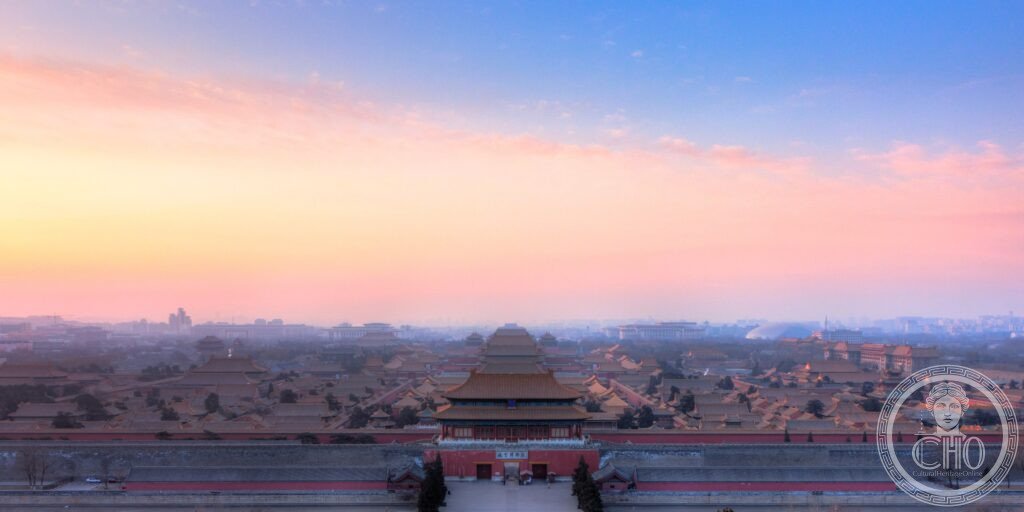
Forbidden City
The largest ancient palace complex in the world and the political and ceremonial center of China for five centuries — the Forbidden City (Zijin Cheng, “Purple Forbidden City”; now the Palace Museum; Dongcheng District, Beijing; UNESCO WHS 1987) was built by the Yongle Emperor between 1406 and 1420 CE, contains 980 surviving buildings with 8,728 rooms, and served as the imperial palace of the Ming (1420-1644 CE) and Qing (1644-1912 CE) dynasties.
At a glance
The Forbidden City (the most precisely ForbiddenCityChina single Yongle Emperor 1406 1420 CE 14 years 100000 workers 1000000 laborers Ming Dynasty Zhu Di third son Hongwu Emperor 1402 CE Jingnan usurped nephew Jianwen Emperor moved capital Nanjing to Beijing 3rd reason Mongolian threat north 72 hectares 720000 m2 980 buildings 8728 rooms 9999 rooms legend one room short Heaven 10000 rooms 17 emperors Ming 10 emperors Qing 24 emperors total 491 years until 1912 CE last Qing Emperor Puyi abdicated outer court Hall Supreme Harmony Taihe Dian throne room largest wooden building China 35.5m high 60.1m wide inner court residential private emperor family concubines Hall Heavenly Purity Qianqing Gong Hall Union Jiaotai Hall Earthly Tranquility Kunning Gong Imperial Garden 15000 art objects Palace Museum 1.8 million 1925 CE opened palace museum UNESCO heritage: the architectural symbolism (the Forbidden City is a cosmic diagram translated into architecture: the north-south central axis (the axis runs from Yongding Gate in the south to the Bell Tower in the north; the Forbidden City is centered on this axis; the Temple of Heaven is south, the Drum and Bell Towers are north; this central axis was the political spine of imperial China); the color symbolism (the roofs are covered in golden-yellow glazed tiles (yellow was the color of the emperor; only the emperor and his imperial family could use yellow; the surrounding walls are red (red is the color of good fortune); the Library of Wenyuan Ge has black tiles (black symbolizes water, which protects books from fire)); the number 9 (the most auspicious number in Chinese culture (9 = the Emperor’s number); the Forbidden City has 9,999 rooms (or 9,999.5 if you count the room above the gate); the gate studs have 9 × 9 = 81 bronze studs))) — the most precisely ForbiddenCityChina single Yongle Emperor 1406 1420 CE 14 years 100000 artisans 1000000 laborers 72 hectares 720000 m2 980 buildings 8728 rooms 9999 legend one short Heaven 10000 24 emperors total Ming 17 Qing 10 491 years until 1912 CE Puyi abdicated outer court Hall Supreme Harmony 35.5m 60.1m largest wooden building China inner court residential Imperial Garden Palace Museum 1.8 million objects 1925 CE yellow roof emperor red walls water black library fire 9 × 9 81 studs north-south axis cosmic diagram UNESCO heritage in any UNESCO world heritage site)).
Key facts
- The 1.8 million object collection: the most precisely ForbiddenCityChina single Palace Museum 1.8 million objects 2023 CE collection paintings calligraphy bronzes jade ceramics furniture clocks watches weaponry textiles documents largest collection Chinese imperial art world 600000 ceramics largest world Song Yuan Ming Qing ceramics collection 50000 paintings most of them unmounted study only 150000 pieces jade National Palace Museum Taiwan 1949 CE Kuomintang retreating took 600000 pieces mainland China Communist PRC Taipei Taiwan Pacific War Japanese threat shipped south Chongqing 1933 CE UNESCO heritage — the defining cultural significance: the Palace Museum collection (1.8 million objects; the largest collection of Chinese imperial art and cultural artifacts in the world); the division (the collections were split in 1949 CE: when the Kuomintang (Nationalist) forces retreated to Taiwan, Chiang Kai-shek took approximately 600,000 of the finest artifacts (particularly paintings, bronzes, and jade) to Taiwan where they are now displayed in the National Palace Museum in Taipei; the remaining 1.2+ million objects stayed in Beijing; the collection shipped south to escape the Japanese advance in 1933-1937 CE (the most complex mass art evacuation in history: the imperial treasures were packed into 13,427 cases and transported to Chongqing, then to Sichuan); the two Palace Museum collections in Beijing and Taipei are often called the “two halves” of the imperial art legacy
- GPS: 39.9163° N, 116.3972° E
History
From Kublai Khan to the Yongle Emperor to Puyi and beyond (the most precisely ForbiddenCityChina single Kublai Khan Dadu Zhongdu Mongolian Yuan Dynasty 1264 1279 CE Beijing capital first time Zhu Yuanzhang Hongwu Emperor 1368 CE Ming Dynasty founded Nanjing capital Yongle Emperor Zhu Di 1406 CE construction began 1420 CE completion moved capital Nanjing Beijing 14 years construction 100000 artisans craftsmen 1000000 laborers timber Sichuan Yunnan marble Hebei white marble stone balustrades gold tiles Jiangxi kilns 10 million glazed tiles Zheng He admiral voyages 1405 1433 CE contemporary same Yongle Emperor Li Zicheng rebel 1644 CE capture Beijing last Ming Emperor Chongzhen suicide tree Jingshan Hill Qing Manchu Shunzhi Emperor 1644 CE entered Beijing continued use Forbidden City Jiaqing 1803 CE rebellion entered forbidden city Boxer Rebellion 1900 CE 8 nation alliance entered forbidden city Wuchang Uprising 1911 CE end Qing Puyi last Emperor 1912 CE abdication treaty allowed remain Forbidden City 1924 CE expelled Republican government Palace Museum opened 1925 CE Cultural Revolution 1966 1976 CE closed UNESCO 1987 heritage: the Last Emperor (Puyi (Aisin-Gioro Puyi; 1906-1967 CE); the last Emperor of China (Xuantong Emperor; r. 1908-1912 CE); he abdicated at age 6 in February 1912 CE under the Articles of Favorable Treatment (which allowed him to continue living in the Forbidden City as “Emperor” within its walls)); he was expelled from the Forbidden City in 1924 CE by the warlord Feng Yuxiang; the Forbidden City became the Palace Museum in 1925 CE; Puyi went on to become the Kangde Emperor of Manchukuo (the Japanese puppet state; 1934-1945 CE); he was captured by the Soviets in 1945 CE, handed to the Chinese Communists, imprisoned and “re-educated” (1950-1959 CE), and released as a reformed citizen; his autobiography (From Emperor to Citizen) became the basis of Bernardo Bertolucci’s film The Last Emperor (1987 CE))) — the most precisely ForbiddenCityChina single Kublai Khan Dadu 1264 1279 CE Yongle Emperor 1406 1420 CE 14 years 100000 artisans 1000000 laborers timber Sichuan marble Hebei 10 million glazed tiles Jiangxi Zheng He admiral 1405 1433 CE contemporary Li Zicheng rebel 1644 CE Qing Manchu 1644 CE continued use 1912 CE Puyi abdicated 1924 CE expelled Palace Museum 1925 CE Cultural Revolution 1966 1976 CE closed UNESCO 1987 heritage in any UNESCO world heritage site)).
What you see
Meridian Gate, Hall of Supreme Harmony, and the inner residential court (the most precisely ForbiddenCityChina single south north axis 960m Meridian Gate Wumen 35m tall 5 openings outer court Gate Supreme Harmony Taihe Men most beautiful gate largest Chinese imperial gate Hall Supreme Harmony Taihe Dian throne room 35.5m high 60.1m wide largest wooden building China dual-hip gabled roof yellow tiles 72 interior columns Hall Middle Harmony Zhonghe Dian preparing ceremonies Hall Preserving Harmony Baohe Dian examination banquet outer inner court Gate Heavenly Purity Qianqing Men Hall Heavenly Purity Qianqing Gong imperial residential emperor Hall Union Jiaotai intersection heaven earth stored imperial seals Hall Earthly Tranquility Kunning Gong shamanic shrine late Qing marriage rites Imperial Garden wisteria 1420 CE original trees East West wings consort palaces concubine residences Shenwu Gate north back exit Clock Museum jewelry treasury UNESCO heritage: the visitor circuit (the main south-to-north axis; the most popular route): Meridian Gate (the main south entrance; the widest point of the Forbidden City); the Three Great Halls of the Outer Court (the Hall of Supreme Harmony (Taihe Dian; the largest wooden building in China; the throne room where the Emperor received officials on major state occasions; 72 interior columns; the Dragon Throne on the raised dais at the center); the Hall of Middle Harmony (Zhonghe Dian; where the Emperor prepared for ceremonies); the Hall of Preserving Harmony (Baohe Dian; used for the Imperial examinations in the Qing period)); the Inner Court: the Hall of Heavenly Purity (Qianqing Gong; the Emperor’s private residence in the Ming period; in the Qing period, the emperor slept in the west wing); the Jewelry Gallery (Treasury 1 and 2; the finest pieces of the imperial collection, including the Wan Shou (Ten Thousand Longevities) silk tapestry and the Tang Dynasty Golden Tang Zhenguan Court Costume)); the Imperial Garden (the 7,225 m² garden at the north end; gnarled cypress trees from 1420 CE; the rock garden; the Shenwu Gate (the northern exit to Jingshan (Coal Hill Park) with the best overhead panorama of the entire Forbidden City)))) — the most precisely ForbiddenCityChina single Meridian Gate Wumen 35m 5 openings outer court Hall Supreme Harmony 35.5m 60.1m 72 columns Dragon Throne Hall Middle Harmony preparing ceremonies Hall Preserving Harmony examinations inner court Hall Heavenly Purity emperor residential Hall Earthly Tranquility shamanic Qing Imperial Garden wisteria 1420 CE Shenwu Gate north Jingshan panorama Clock Museum Jewelry Treasury 1 2 UNESCO heritage in any UNESCO world heritage site)).
Practical information
- Getting there: the Forbidden City is at the heart of Beijing (Tiananmen Square is directly south); fly to Beijing Capital Airport (PEK) or Beijing Daxing Airport (PKX); the Beijing Metro (Line 1; Tiananmen East or Tiananmen West station; 10 min walk north to the Meridian Gate entrance); the entry ticket (CNY 60/€7.30 (April-October) or CNY 40/€4.90 (November-March); tickets are sold online only (the Forbidden City stopped on-site ticket sales in 2019 CE to manage visitor numbers; book at the official website minimum 1-3 days in advance); the daily visitor limit (80,000 visitors per day; the most popular times (Chinese national holidays, the May Golden Week (May 1-7), the National Day Golden Week (October 1-7)) sell out weeks in advance); the additional fee areas (the Jewelry Treasury, the Clock and Watch Gallery: each requires additional tickets CNY 10-15/€1.20-1.83 each); the best time (March-April (spring) and September-October (autumn); the winter (December-February) is cold but less crowded and the snow on the yellow roofs is spectacular))
Getting there
Beijing center; Metro Line 1, Tiananmen East station, 10 min walk. Entry CNY 60/€7.30 (April-Oct) — online only, book 1-3 days in advance, limit 80,000/day. Best: March-April or September-October. Winter with snow on yellow roofs is spectacular. GPS: 39.9163, 116.3972.
Nearby
- Temple of Heaven — 4 km south (UNESCO WHS 1998; the circular altar complex where the Ming and Qing emperors performed annual sacrifices to Heaven (the mid-winter ceremony where the Emperor (as the “Son of Heaven”) prayed for good harvests and cosmic order); the Hall of Prayer for Good Harvests (Qiniandian; the triple-eaved circular timber hall; the most recognized symbol of Beijing after the Great Wall); the Echo Wall (the circular stone wall that creates an extraordinary acoustic effect (a whisper at one point can be heard clearly at another point 90m away by a person facing the wall))
- Summer Palace — 15 km northwest (UNESCO WHS 1998; the imperial garden resort on Kunming Lake; the Longevity Hill; the Long Corridor (the 728m covered walkway along the lake shore decorated with 14,000 paintings); the Marble Boat (the stone boat on the lake edge that Empress Dowager Cixi (r. 1861-1908 CE) reportedly funded using money appropriated from the Chinese navy budget))
Sources
- Wikipedia, Forbidden City; Yongle Emperor; Puyi; Palace Museum, accessed June 2026
- UNESCO, Imperial Palace of the Ming and Qing Dynasties in Beijing and Shenyang, WHS reference 439-001, inscribed 1987
Find it on the map
See this place and what’s around it →📷 Diventa un fotografo di Cultural Heritage Online
Condividi le tue foto dei luoghi: restano pubblicate con la tua firma come autore. Più vengono viste, più ti fai conoscere — e presto un concorso premierà le foto più apprezzate.
Accedi o registrati gratis per aggiungere una foto