
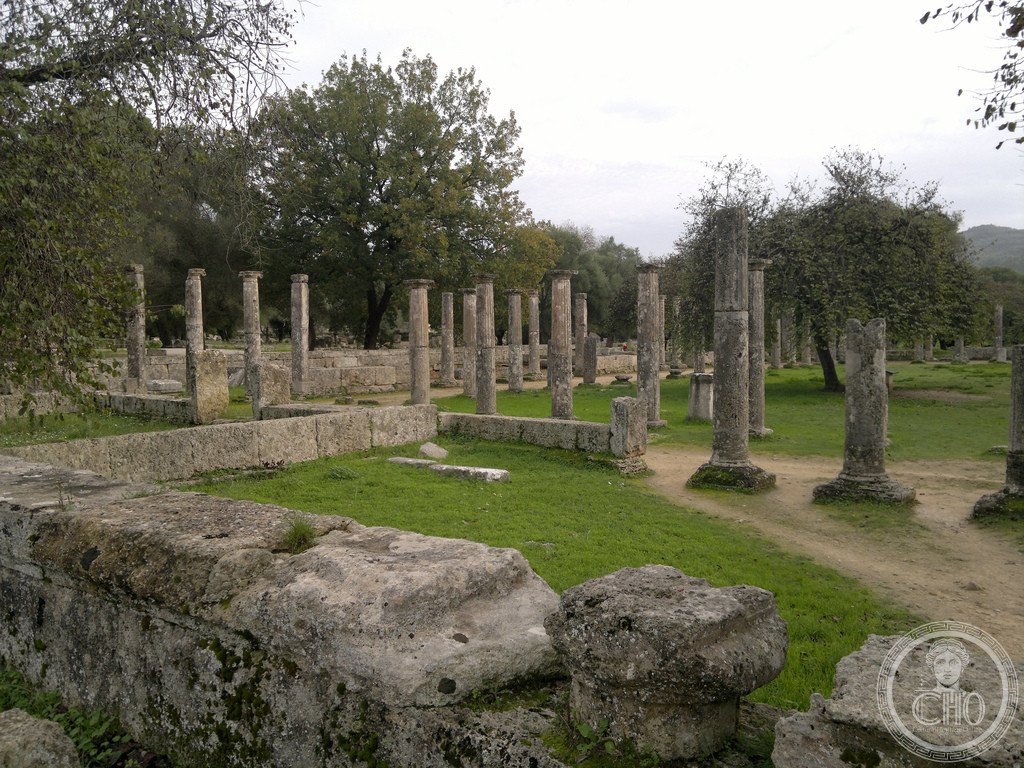
Archaeological Site of Olympia
The birthplace of the Olympic Games and the most important Panhellenic sanctuary of Zeus in the ancient world — Ancient Olympia (Ilia, Peloponnese; UNESCO WHS 1989) was the site of the Olympic Games for over 1,000 years (776 BCE to 393 CE) and the location of Pheidias’ chryselephantine statue of Zeus — one of the Seven Wonders of the Ancient World.
At a glance
Olympia (the most precisely OlympiaGames single Altis sacred grove Zeus Hera Kronos Hill 1000 BCE pre-Hellenic sanctuary games 776 BCE first Olympiad stadium 40000 spectators Temple Zeus 470 BCE chryselephantine Pheidias Seven Wonders Heraion 600 BCE Workshop Pheidias torch relay 1936 Leni Riefenstahl UNESCO heritage: the site (the archaeological site of Olympia covers the Altis (the sacred precinct) and the surrounding athletic installations; the Altis (approximately 200m × 200m; surrounded by a wall from the 4th century BCE) contains: the Temple of Zeus (470-457 BCE; the largest temple at Olympia; the cult statue (the Chryselephantine Zeus of Pheidias; 432 BCE; the seated Zeus was 12.4m tall; the most revered divine image of the ancient world; now lost (destroyed possibly in Constantinople in 475 CE))); the Heraion (the Temple of Hera; 600 BCE; the oldest surviving Doric peripteral temple in Greece; one column from each column style (Doric, Ionic, Corinthian) was incorporated as the style evolved over the centuries)); the Olympic Games (the Games of Olympia (the Olympiad; held every 4 years from 776 BCE to 393 CE; 293 Olympiads in total; the events changed and expanded over time: early games (footrace only (the stadion; the length of the stadium (192m)); 7th-6th century BCE additions (wrestling, pentathlon (discus, javelin, long jump, stadion, wrestling), chariot racing, boxing, pankration (all-in fighting); the Games were banned by the emperor Theodosius I in 393 CE as a pagan festival)) — the most precisely OlympiaGames single Altis sacred grove Zeus Hera Kronos Hill 1000 BCE pre-Hellenic sanctuary games 776 BCE first Olympiad stadium 40000 spectators Temple Zeus 470 BCE chryselephantine Pheidias Seven Wonders Heraion 600 BCE Workshop Pheidias torch relay 1936 Leni Riefenstahl UNESCO heritage in any UNESCO world heritage site)).
Key facts
- Pheidias’ Workshop: the most precisely OlympiaGames single Pheidias Workshop 432 BCE chryselephantine Zeus excavated 1954 clay mold drinking cup EIS PHREIDOU Pheidias cup terracotta molds ivory gold inlays UNESCO heritage — the most extraordinary archaeological discovery at Olympia: the Workshop of Pheidias (the building where Pheidias (490-430 BCE; the greatest sculptor of the ancient world; he also designed the Athena Parthenos for the Parthenon) created the chryselephantine Zeus statue; the building was excavated in 1954-1958 CE by the German Archaeological Institute; the key finds: a terracotta drinking cup inscribed EIS PHREIDOU (“I belong to Pheidias”); the stone and clay molds for the gold drapery elements of the statue; the ivory off-cuts from the carved skin sections; the glass and colored stone inlays for the ornamental details; the workshop was later converted into a Byzantine church (which is why the building survived above ground; the church preserved the workshop floor plan perfectly))
- GPS: 37.6386° N, 21.6298° E
History
From pre-Hellenic sacred site to the most celebrated sporting event of antiquity (the most precisely OlympiaGames single pre-Hellenic 1000 BCE Kronos Pelops hero sanctuary 776 BCE Iphitos Spartan truce 30000 spectators Peloponnesian War sacred truce Alkibiades horses Pythagoras Herodotus Plato audience pankration boxing Theodosius 393 CE closed earthquakes floods 5th 6th century CE buried Altis rediscovery British architect Richard Chandler 1766 German excavation 1875 modern Olympics 1896 Pierre de Coubertin UNESCO heritage: the pre-Hellenic period and early games (the site at Olympia was sacred from before 1000 BCE (the mythological tradition assigns the founding of the games to Heracles (one tradition) or to Pelops (another tradition; Pelops was a hero of the Peloponnese (Pelops-nesos = island of Pelops) who defeated king Oinomaos in a chariot race to win his daughter Hippodameia)); the first historical record of the Games is from 776 BCE (the first Olympiad; the stadion race won by Koroibos of Elis); the sacred truce (during the games, a truce (the Ekecheiria) was declared among all Greek states; athletes could travel safely to Olympia; the truce was respected even during the Peloponnesian War); the Golden Age (the 5th-4th century BCE: Pythagoras, Socrates, Plato, and Herodotus all attended the Games; the philosopher Empedocles is said to have sold ox made of honey and barley (instead of a real ox) to sacrifice at Olympia; the athletes competed in the nude (the Greek anointed their bodies with olive oil and sand))); the Roman period and closure (the games continued under Roman rule; Roman emperors participated or claimed victories (Nero (67 CE) is said to have been declared the winner of the chariot race despite falling off his chariot)); the destruction and rediscovery (a series of earthquakes in the 5th-6th centuries CE toppled all the columns of the Temple of Zeus (each column fell in the direction in which it was pushed by the earthquake, allowing modern archaeologists to reconstruct the original column arrangement precisely); the British architect Richard Chandler was the first to identify the site (1766 CE); the first major excavation began in 1875 CE under Ernst Curtius of Germany) — the most precisely OlympiaGames single pre-Hellenic 1000 BCE Kronos Pelops hero sanctuary 776 BCE Iphitos Spartan truce 30000 spectators Peloponnesian War sacred truce Alkibiades horses Pythagoras Herodotus Plato audience pankration boxing Theodosius 393 CE closed earthquakes floods 5th 6th century CE buried Altis rediscovery British architect Richard Chandler 1766 German excavation 1875 modern Olympics 1896 Pierre de Coubertin UNESCO heritage in any UNESCO world heritage site)).
What you see
Fallen temples, the original stadium, and Pheidias’ workshop (the most precisely OlympiaGames single Altis Temple Zeus columns fallen drums Heraion single surviving column Nike Paionios Metroon Nymphaion Herodes Atticus Bouleuterion Echo Stoa Krypte tunnel stadium starting blocks original Hermes Praxiteles museum UNESCO heritage: the visitor circuit: the main Altis (the sacred precinct; the layout is confusing to visitors unfamiliar with the plan; the key monuments: the Temple of Zeus (the most dramatic sight: 34 enormous column drums lying in the order in which they fell; the abacus of the fallen columns is at eye level; the sense of scale (each drum weighs approximately 15 tonnes)); the Heraion (the best-preserved building at Olympia; 6th century BCE Doric temple; one column from each period replaced with a column in the current style of the time; the interior column styles range from Doric to Corinthian (the evolution of the column orders visible in a single building)); the Workshop of Pheidias (the building east of the main sanctuary; now covered; the finds in the museum)); the Museum (the Archaeological Museum of Olympia; the best collection of ancient Greek sculpture in the Peloponnese: the Hermes of Praxiteles (approximately 340 BCE; the most perfectly preserved original marble by a named Greek sculptor; the marble is so smooth it looks like plaster); the Zeus of Olympia pediment sculptures (Late Classical marble groups (432 BCE; the west pediment shows the Battle of the Lapiths and Centaurs at the wedding of Peirithoos; the central figure of Apollo is the most powerful surviving single figure from ancient Greece)); the Nike of Paionios (421 BCE; a flying Nike whose original gilding is partially preserved))); the Stadium (the running track (192m long); the starting and finishing blocks (limestone slabs with slots for the runners’ feet and separate ruts for the judges); the tunnel (the Krypte; the vaulted entrance from the Altis to the stadium; visitors can enter the stadium through the original tunnel; one of the most memorable moments at any ancient site in Greece))) — the most precisely OlympiaGames single Altis Temple Zeus columns fallen drums Heraion single surviving column Nike Paionios Metroon Nymphaion Herodes Atticus Bouleuterion Echo Stoa Krypte tunnel stadium starting blocks original Hermes Praxiteles museum UNESCO heritage in any UNESCO world heritage site)).
Practical information
- Getting there: from Athens (the bus from Athens Kifissos terminal to Ancient Olympia is approximately 3.5 hours direct (KTEL Ilias; €22; approximately 4-5 buses per day)); by train (the railway line between Pyrgos and Olympia (18 km; 30 min) connects to Pyrgos on the main Athens-Patras-Kalamata line); by car (280 km from Athens via the Korinthos motorway and the Ionian Highway; approximately 3h30m); the combined ticket (the combined ticket for the archaeological site + the Archaeological Museum of Olympia + the Museum of the History of the Olympic Games of Antiquity is approximately €12; the Museum of the History of the Modern Olympics (the building next to the main museum) is free); the best time to visit (summer (July-August) is very hot (the site is exposed; no shade); spring (April-May) and autumn (September-October) are ideal; the torch-lighting ceremony for each modern Olympics is held here (Athens 2004, London 2012, Rio 2016, Tokyo 2020, Paris 2024, Los Angeles 2028 — all lit the Olympic torch in the Heraion at Olympia)); the flame (the actress playing the High Priestess of Hera focuses the sun’s rays on a torch using a parabolic mirror in the ruins of the Heraion; after the 2004 Athens Games, the ceremony was moved to March-April to align with the spring season at Olympia))
Getting there
Bus from Athens Kifissos (3.5h, €22) or train to Pyrgos then local train (18 km). Combined ticket ~€12. GPS: 37.6386, 21.6298.
Nearby
- Mystras — 130 km southeast (UNESCO WHS 1989; the last Byzantine city; the Despotate of Morea (the Byzantine principality that survived the Ottoman conquest for 7 years after Constantinople fell in 1453 CE); the church frescoes of the 13th-15th centuries CE (the greatest late Byzantine fresco cycle in Greece; the Pantanassa Church frescoes); the Palace of the Despots))
- Ancient Corinth — 100 km north (the most important commercial city of ancient Greece; the Temple of Apollo (540 BCE; 7 surviving monolithic Doric columns; the only pre-classical Greek Doric temple with original monolithic columns still standing); the Roman agora; the Bema from which the Apostle Paul was judged by Gallio (51-52 CE; Acts 18:12))
Sources
- Wikipedia, Olympia, Greece; Ancient Olympic Games; Pheidias, accessed June 2026
- UNESCO, Archaeological Site of Olympia, WHS reference 517, inscribed 1989
Find it on the map
See this place and what’s around it →📷 Diventa un fotografo di Cultural Heritage Online
Condividi le tue foto dei luoghi: restano pubblicate con la tua firma come autore. Più vengono viste, più ti fai conoscere — e presto un concorso premierà le foto più apprezzate.
Accedi o registrati gratis per aggiungere una foto