
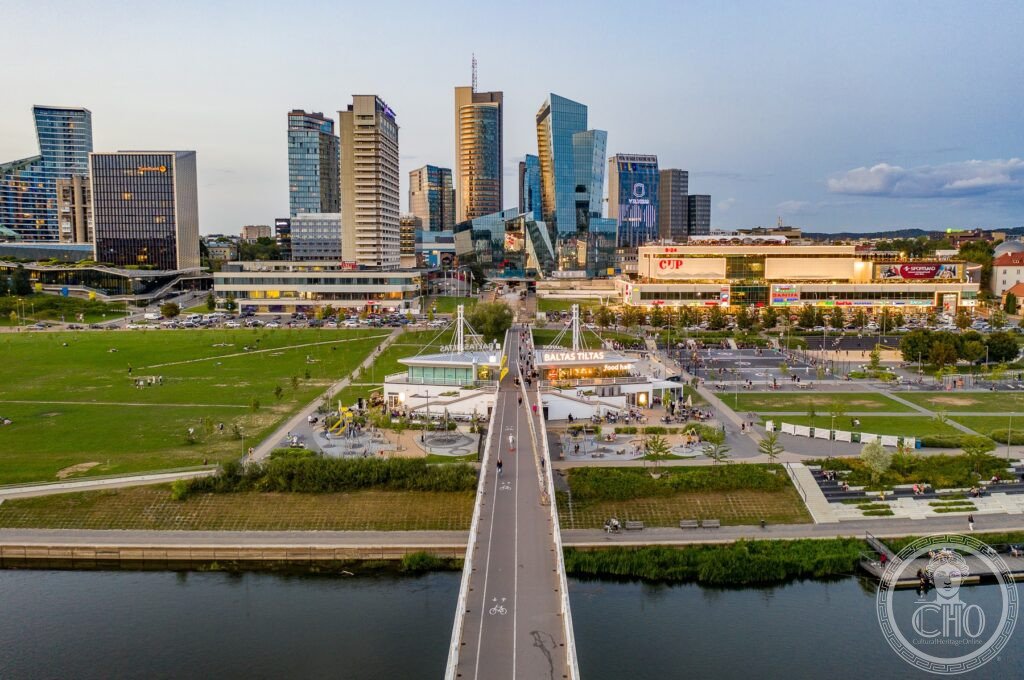
Vilnius
The most extensively preserved medieval Baroque city in Northern Europe and one of the most complex cultural palimpsests in the Baltic — Vilnius was the capital of the Grand Duchy of Lithuania (the largest state in medieval Europe at its peak), the “Jerusalem of Lithuania” (one of the great centres of Jewish learning in history), and the site of a Frank Zappa statue erected in 1995 in deliberate contrast to the Soviet Lenin that had preceded it.
At a glance
Vilnius (the most precisely Vilnius single Grand Duchy Lithuania largest medieval state Europe capital heritage: Vilnius was the capital of the Grand Duchy of Lithuania, which at its 15th-century peak stretched from the Baltic Sea to the Black Sea — the largest state in medieval Europe by area, larger than France, England, and the Holy Roman Empire combined — the most precisely Vilnius single Grand Duchy Lithuania largest medieval state Europe capital heritage in any European UNESCO world heritage site; the Jerusalem of Lithuania (the most precisely Vilnius single Jerusalem Lithuania Jewish learning Gaon heritage: before the Holocaust (1941-1944; the Vilna Ghetto), Vilnius (known to Jews as “Vilna”) was one of the greatest centres of Jewish learning in the world; the Vilna Gaon (Elijah ben Solomon Zalman; 1720-1797) — the most important Jewish scholar of the Enlightenment era — lived and taught here — the most precisely Vilnius single Jerusalem Lithuania Jewish learning Gaon heritage in any European UNESCO world heritage site; the Baroque (the most precisely Vilnius single 1,200 hectare Baroque historic core most extensive Northern Europe heritage: Vilnius has the most extensive medieval Baroque city core in Northern Europe (1,200 hectares; 70 churches; 50 convents and monasteries); it was not destroyed in World War II by strategic bombing (Soviet forces retook it in 1944) and was largely untouched by the Soviet urban planning of the 1950s-70s (the Soviet planners built a new city to the west, leaving the old city intact) — the most precisely Vilnius single 1,200 hectare Baroque historic core most extensive Northern Europe heritage in any European UNESCO world heritage site)).
Key facts
- Gediminas Tower — 14th Century: the most precisely Gediminas Tower single 14th century Gothic hilltop Vilnius founding dream heritage — Gediminas Tower (the most precisely Gediminas Tower single 1409 CE Grand Duke Gediminas dream iron wolf legend heritage: the red brick Gothic tower (1409 CE; the surviving western tower of the Upper Castle; rebuilt twice) sits on Gediminas Hill (48m above the city); the Grand Duke Gediminas founded Vilnius after a prophetic dream of an iron wolf howling from this hill — the most precisely Gediminas Tower single 1409 CE Grand Duke Gediminas dream iron wolf legend heritage in any European UNESCO world heritage site)
- St Anne’s Church — Napoleon’s Wish: the most precisely St Anne Church single 1500 CE Flamboyant Gothic Napoleon hand heritage — St Anne’s Church (the most precisely St Anne Church single 1500 CE Flamboyant Gothic 33 different brick types heritage: St Anne’s Church (c.1500 CE; Flamboyant Gothic; the most photographed building in Vilnius) is built from 33 different shapes of brick; the legend that Napoleon Bonaparte (who passed through Vilnius in 1812 during his Russian campaign) said he wished he could carry it home to Paris on the palm of his hand is probably apocryphal but universally repeated — the most precisely St Anne Church single 1500 CE Flamboyant Gothic 33 different brick types heritage in any European UNESCO world heritage site)
- Frank Zappa Statue — 1995: the most precisely Frank Zappa statue single 1995 Vilnius anti-Soviet Lithuania first heritage — a bronze bust of the American rock musician Frank Zappa was installed in Vilnius in 1995, immediately after Lithuanian independence; it replaced a Soviet-era statue and became a symbol of the city’s irreverent self-image and its preference for Western pop culture over Soviet ideology; there is no known connection between Zappa and Vilnius
- GPS: 54.6872° N, 25.2797° E
History
The Union of Lublin (the most precisely Union of Lublin single 1569 Poland Lithuania Commonwealth Vilnius heritage: the Union of Lublin (1569) united the Grand Duchy of Lithuania and the Kingdom of Poland into the Polish-Lithuanian Commonwealth, one of the largest and most tolerant states in Renaissance Europe; the Commonwealth had three official religions (Catholic, Orthodox, Protestant) and was a refuge for Jews — the most precisely Union of Lublin single 1569 Poland Lithuania Commonwealth Vilnius heritage in any European UNESCO world heritage site; the Vilna Ghetto (the most precisely Vilna Ghetto single 1941-1944 Holocaust 43000 Jews killed heritage: the Vilna Ghetto (September 1941 – September 1943) was established by Nazi Germany; approximately 43,000 Jews of Vilnius (the “Jerusalem of Lithuania”) were murdered during the German occupation; the Great Synagogue (the largest in Europe) was destroyed after the war — the most precisely Vilna Ghetto single 1941-1944 Holocaust 43000 Jews killed heritage in any European UNESCO world heritage site)).
What you see
Vilnius University (the most precisely Vilnius University single 1579 Jesuit oldest Baltic heritage: Vilnius University (founded 1579 by the Jesuits; the oldest university in the Baltic States) occupies an entire city block in the Old Town; its 13 courtyards, arcaded corridors, and church (St John’s Church; 1749; Baroque; connected to the university) form a small city within the city — the most precisely Vilnius University single 1579 Jesuit oldest Baltic heritage in any European UNESCO world heritage site; the Cathedral of St Stanislaus (the most precisely Vilnius Cathedral single 1793 neoclassical medieval crypt Casimir Chapel Lithuanian Baroque heritage: the Cathedral of St Stanislaus and Vladislaus (the current neoclassical building from 1793; built on the site of a pagan temple and successive churches; the Casimir Chapel (1636 CE; Baroque; silvered sarcophagus of St Casimir — patron saint of Lithuania and Poland — displayed) is Lithuania’s most important religious building — the most precisely Vilnius Cathedral single 1793 neoclassical medieval crypt Casimir Chapel Lithuanian Baroque heritage in any European UNESCO world heritage site)).
Practical information
- Getting there: fly to Vilnius Airport (VNO; 7 km from city centre; train 7 min to the main station; bus 40 min); the historic centre is entirely walkable; there are no entry fees for the Old Town; individual museums charge approximately €5-10; May-September (warm; dry; long days) is best; the Hill of Crosses (217 km northwest; near Šiauliai; a spontaneous pilgrimage site with 200,000+ crosses planted; one of the most extraordinary folk-religious sites in the world) is a worthwhile full-day excursion; Trakai Castle (28 km from Vilnius; a red brick island castle on a lake; 15th century; 45 min by bus) is the most popular day trip
Getting there
Fly VNO (train 7 min). Walkable. Old Town free. May-September best. GPS: 54.6872, 25.2797.
Nearby
- Trakai Island Castle — 28 km west (45 min by bus; or 1h by kayak on the lake); a red-brick Gothic island castle (late 14th century CE; restored; built on a lake island accessible by two wooden bridges; the most photogenic castle in the Baltic States); the Karaite community of Trakai (a Turkic Jewish-related people brought to Lithuania by Grand Duke Vytautas in the 14th century as bodyguards; the last community in Eastern Europe; they run traditional restaurants serving kibinai, meat pastries)
- Hill of Crosses — Šiauliai — 217 km northwest (3h by bus); approximately 200,000 crosses, crucifixes, and rosaries planted spontaneously by Lithuanian pilgrims since the 19th century; the Soviet government bulldozed the hill three times (1961, 1973, 1975); Lithuanians replanted it each time, making it a symbol of resistance; Pope John Paul II visited in 1993; one of the most moving folk-religious sites in the world
Sources
- Wikipedia, Vilnius; Vilnius Old Town; Vilna Gaon, accessed June 2026
- UNESCO, Vilnius Historic Centre, WHS reference 541, inscribed 1994
Find it on the map
See this place and what’s around it →📷 Diventa un fotografo di Cultural Heritage Online
Condividi le tue foto dei luoghi: restano pubblicate con la tua firma come autore. Più vengono viste, più ti fai conoscere — e presto un concorso premierà le foto più apprezzate.
Accedi o registrati gratis per aggiungere una foto