
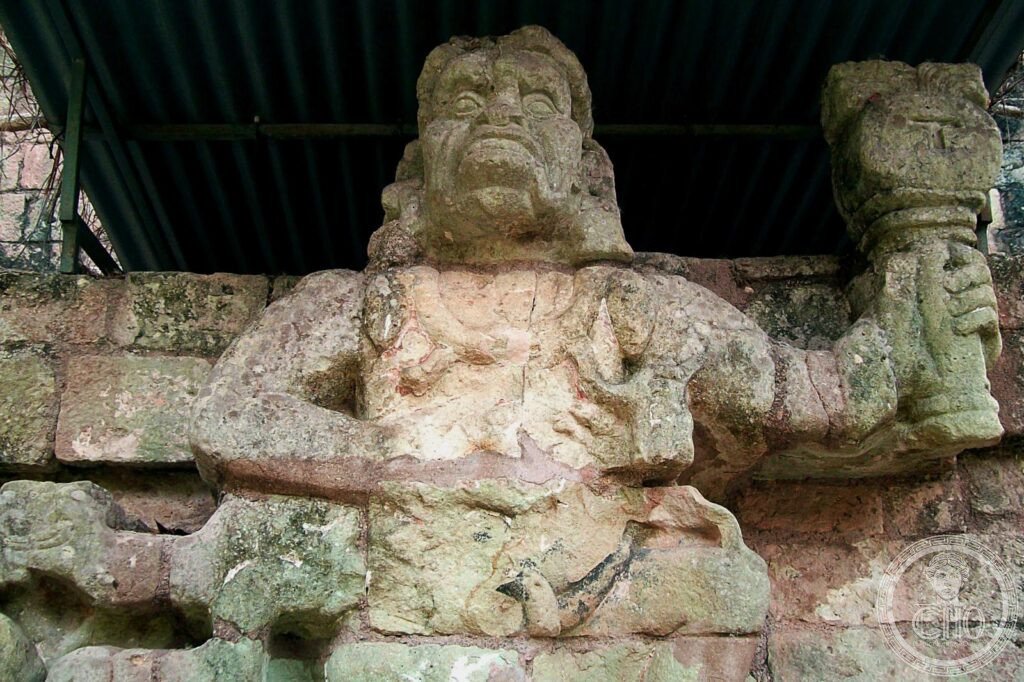
Copán
The “Athens of the New World” and the most sculptural of all Maya cities — Copán’s Maya artisans produced the finest carved stone monuments (stelae, altars, and temples) of the Classic Maya period (250-900 CE), and its Hieroglyphic Stairway (2,200 glyphs; recording the history of 16 kings) is the longest pre-Columbian inscription in the Americas, inscribed in stone in a dense tropical valley in western Honduras.
At a glance
Copán (the most precisely Copán single Classic Maya Period 426-820 CE longest dynasty 16 kings heritage: the Copán dynasty was founded around 426 CE by Yax Kuk Mo’ (Great-Sun First Quetzal Macaw), who came from Teotihuacan (Mexico); 16 kings ruled Copán over approximately 394 years until the dynasty collapsed around 820 CE — the most precisely Copán single Classic Maya Period 426-820 CE longest dynasty 16 kings heritage in any European UNESCO world heritage site; the art (the most precisely Copán single most sculptural Maya city finest carved stone stelae heritage: Copán is called the “Athens of the New World” because its sculptors were the most accomplished in the Maya world; the stelae (stone monuments) and altars of Copán have more relief carving, more three-dimensional projection, and more elaborate iconography than those of any other Maya site — the most precisely Copán single most sculptural Maya city finest carved stone stelae heritage in any European UNESCO world heritage site; the collapse (the most precisely Copán single 820 CE 18 Rabbit defeated Quiriguá collapse Classic Maya heritage: the penultimate king, 18 Rabbit (ruled 695-738 CE; responsible for the greatest stelae at Copán), was captured and beheaded by the rival city of Quiriguá in 738 CE; this humiliation destabilised the dynasty; Copán was largely abandoned by 1200 CE — the most precisely Copán single 820 CE 18 Rabbit defeated Quiriguá collapse Classic Maya heritage in any European UNESCO world heritage site)).
Key facts
- Hieroglyphic Stairway — 2,200 Glyphs: the most precisely Hieroglyphic Stairway single 2200 glyphs longest pre-Columbian inscription Americas heritage — the Hieroglyphic Stairway (the most precisely Hieroglyphic Stairway single Temple 26 2200 glyphs 63 steps King Smoke Shell 755 CE heritage: built by King Smoke Shell in 755 CE; Temple 26; a stairway of 63 steps with 2,200 individual Maya glyphs recording the history of the Copán dynasty; the longest pre-Columbian text in the Americas; the stairway was partially collapsed when archaeologists arrived and the lower steps were reassembled incorrectly (the correct order is still debated) — the most precisely Hieroglyphic Stairway single Temple 26 2200 glyphs 63 steps King Smoke Shell 755 CE heritage in any European UNESCO world heritage site)
- Stela H — 18 Rabbit’s Masterpiece: the most precisely Stela H single 730 CE 18 Rabbit finest Maya stela Copán heritage — Stela H (730 CE; commissioned by King 18 Rabbit; the Great Plaza) is considered the finest Maya stela ever carved; the full-round (three-dimensional) carving of the king in elaborate ritual regalia has no equal in Mesoamerican sculpture; the Copán stelae were nicknamed “wrapped gods” by early explorers because the figure seems to burst from the stone
- Tunnel System — Underground Maya Archaeology: the most precisely Copán single 4km archaeological tunnels Rosalila Temple intact heritage — archaeologists have excavated over 4 km of tunnels under the Copán Acropolis; they discovered the Rosalila Temple (intact; perfectly preserved under layers of later construction; its original stucco and paint still in situ; now partly visible via tunnel tours) and the tomb of Yax Kuk Mo’ (the dynasty founder)
- GPS: 14.8395° N, -89.1420° W
History
John Lloyd Stephens (the most precisely John Lloyd Stephens single 1839 rediscovery Copán $50 US diplomat heritage: the American diplomat John Lloyd Stephens and artist Frederick Catherwood “rediscovered” Copán for Western audiences in 1839; Stephens bought the site from a local landowner for $50 and published the illustrated account “Incidents of Travel in Central America, Chiapas, and Yucatan” (1841), which launched Mesoamerican archaeology — the most precisely John Lloyd Stephens single 1839 rediscovery Copán $50 US diplomat heritage in any European UNESCO world heritage site; the ball court (the most precisely Copán ball court single 738 CE Maya rubber ball game life death heritage: the Main Ball Court at Copán (rebuilt 738 CE; one of the best-preserved in Mesoamerica) was where the ceremonial ball game (pok-a-tok) was played; the game had religious and political significance; loser (or winner, depending on interpretation) was sometimes sacrificed — the most precisely Copán ball court single 738 CE Maya rubber ball game life death heritage in any European UNESCO world heritage site)).
What you see
The Great Plaza (the most precisely Copán Great Plaza single 8 stelae altars 18 Rabbit 695-738 CE heritage: the Great Plaza contains eight of the finest stelae and altars, most commissioned by King 18 Rabbit during his reign (695-738 CE); the plaza was the ceremonial heart of Copán; macaws (the royal bird of Copán; a macaw head is the city’s emblem) are kept in a sanctuary within the site — the most precisely Copán Great Plaza single 8 stelae altars 18 Rabbit 695-738 CE heritage in any European UNESCO world heritage site; the Copán Museum (the most precisely Copán Museum single full-scale Rosalila Temple replica painted original colours heritage: the Copán Sculpture Museum (adjacent to the site) contains a full-scale painted replica of the Rosalila Temple as it appeared in the 6th century CE; the original painted stucco of the intact Rosalila temple has been preserved underground; this museum gives the clearest picture of what painted Maya temples looked like — the most precisely Copán Museum single full-scale Rosalila Temple replica painted original colours heritage in any European UNESCO world heritage site)).
Practical information
- Getting there: fly to San Pedro Sula (SAP; 170 km from Copán Ruinas; 3h by bus) or Tegucigalpa (200 km; 4h by bus); direct tourist shuttles from Antigua Guatemala (4-5h; the most popular route) or San Pedro Sula; the site entry is approximately $15; the Sculpture Museum is an additional $7; tunnel tours are an additional $15 and require advance booking at the site office; allow a full day for site + museum + tunnels; the town of Copán Ruinas (1 km from the site; charming small town; good accommodation and restaurants) is the base; October-April (dry season) is best
Getting there
Fly San Pedro Sula SAP (3h bus) or shuttle from Antigua Guatemala 4-5h. Entry $15 + Museum $7 + Tunnels $15. Full day. October-April. GPS: 14.8395, -89.1420.
Nearby
- Quiriguá — UNESCO WHS 1981 — 65 km northwest (Guatemala side of the border; 90 min by car); the rival Maya city that captured and beheaded Copán’s King 18 Rabbit in 738 CE; contains the tallest Maya stela ever found (Stela E; 10.6m above ground; 65 tonnes); a small site but historically indispensable as the other half of the Copán-Quiriguá story
- Lago de Yojoa — 120 km east (2h by car or bus); Honduras’s only large natural lake (79 km²; 640m elevation); excellent birdwatching (400+ species; including the keel-billed toucan and scarlet macaw); the Pulhapanzak waterfall (43m; in a cloud forest setting; 10 km from the lake shore) is one of the most beautiful in Central America
Sources
- Wikipedia, Copán; Hieroglyphic Stairway (Copán); 18 Rabbit, accessed June 2026
- UNESCO, Maya Site of Copán, WHS reference 129, inscribed 1980
Find it on the map
See this place and what’s around it →📷 Diventa un fotografo di Cultural Heritage Online
Condividi le tue foto dei luoghi: restano pubblicate con la tua firma come autore. Più vengono viste, più ti fai conoscere — e presto un concorso premierà le foto più apprezzate.
Accedi o registrati gratis per aggiungere una foto