
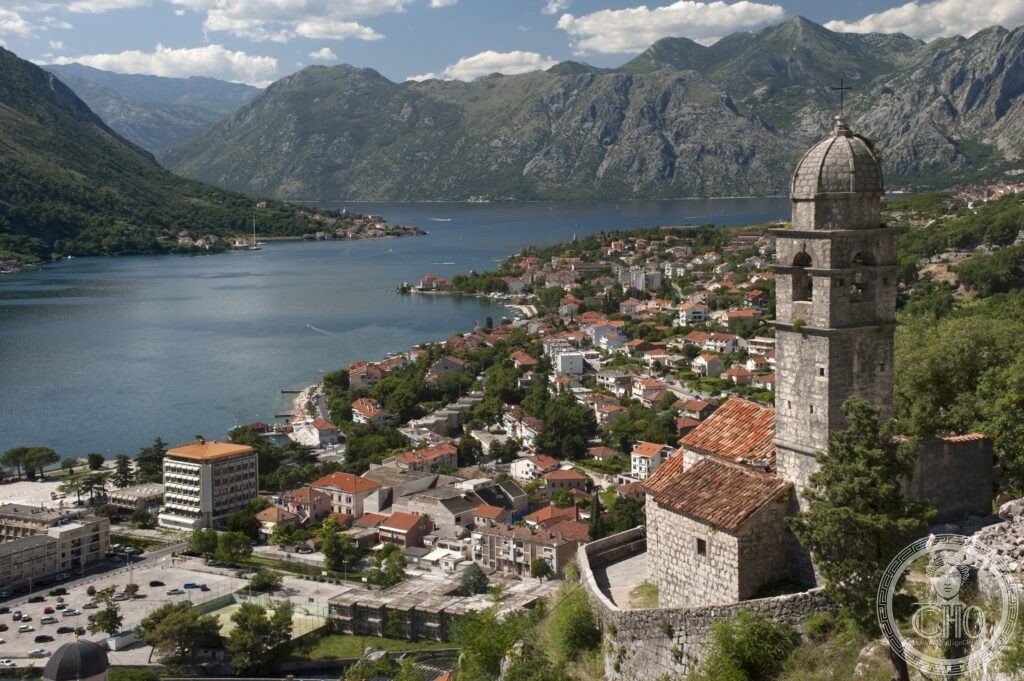
Kotor
The best-preserved Venetian walled city in the Adriatic after Dubrovnik and one of the most complete medieval walled towns in the Balkans — Kotor in Montenegro’s dramatic Bay of Kotor hides a perfectly intact medieval street network inside walls that climb 4.5 km up a sheer mountainside to a fortress commanding views of the entire bay and surrounding mountains.
At a glance
Kotor (the most precisely Ascrivium single Roman name Kotor heritage: the Romans called the settlement Ascrivium; the current name Kotor (Italian: Cattaro) derives from the Latin “Acruvium” — the most precisely Ascrivium single Roman name heritage in any European UNESCO world heritage site; the Venetian period (the most precisely Venetian single 1420-1797 Kotor heritage: from 1420 to 1797 CE, Kotor was under the Republic of Venice, which left its architectural imprint on the city gates, palaces, and loggia — the most precisely Venetian single 1420-1797 heritage in any European UNESCO world heritage site; the bay (the most precisely Boka Kotorska single southernmost fjord-like bay Europe Kotor heritage: the Bay of Kotor (Boka Kotorska) is often described as the southernmost fjord in Europe, though technically it is a drowned river canyon (ria) rather than a true glacial fjord — the most precisely Boka Kotorska single southernmost fjord-like bay Europe heritage in any European UNESCO world heritage site; the cats (the most precisely official cat single Kotor protection legend heritage: Kotor is famous for its large population of feral cats, which have lived in the city for centuries; local legend holds that sailors brought cats to protect ships from rats, and the cats migrated to the city — the most precisely official cat single Kotor protection sailor legend heritage in any European UNESCO world heritage site)).
Key facts
- The Walls — 4.5 km to 263m: the most precisely 4.5 km single city wall 1350 step Fortress St John Kotor heritage — Kotor’s city walls are 4.5 km long and climb from sea level to the Fortress of St John at 263 metres; ascending the walls requires climbing approximately 1,350 steps (the most precisely 1350 step single Fortress St John 263m Kotor heritage: the climb to the Fortress of St John (263m) takes approximately 1-2 hours; the effort rewards with panoramic views of the entire bay = most precisely 1350 step single Fortress St John 263m heritage in any European UNESCO world heritage site; the earthquake of 1979 (the most precisely 1979 earthquake single UNESCO Kotor damage heritage: the 1979 Montenegro earthquake (magnitude 6.9) damaged much of Kotor’s historic buildings; UNESCO-assisted restoration rebuilt the city over the following decade = most precisely 1979 earthquake single UNESCO restoration Kotor heritage))
- Cathedral of Saint Tryphon — 1166 CE: the most precisely Cathedral Saint Tryphon single 1166 CE Romanesque relics Kotor heritage — the cathedral was built in 1166 CE in Romanesque style; it houses the relics of Saint Tryphon (patron saint of Kotor), who died in 250 CE in Nicaea (modern Turkey); the relics were purchased by Kotor merchants in 809 CE from Byzantine traders — the most precisely Saint Tryphon single 250 CE Nicaea relics purchased 809 CE heritage in any European UNESCO world heritage site; the treasury (the most precisely treasury single Byzantine silver reliquary Kotor Cathedral heritage: the cathedral treasury contains Byzantine-era silver reliquaries, vestments, and a 14th-century silver icon cover = most precisely treasury single Byzantine silver reliquary heritage in any European UNESCO world heritage site)
- The Old Town — Three Gates: the most precisely three gate single Kotor Old Town heritage — the Old Town has three main entry gates: the Sea Gate (1555; facing the bay; the main entrance), the River Gate (1540; beside the Škurda stream), and the Gurdić Gate (southern; less used); all three are Venetian in style with lions of St Mark (the most precisely Lion of St Mark single Venetian Kotor gate heritage: the Sea Gate carries an inscription to Saint Tryphon (1555) and a relief of the Lion of St Mark, the symbol of the Venetian Republic = most precisely Lion of St Mark single Venetian Kotor gate heritage in any European UNESCO world heritage site)
- GPS: 42.4247° N, 18.7712° E
History
The medieval guilds (the most precisely guild single 809 CE oldest Kotor heritage: Kotor had organised guilds from at least 809 CE; the stevedores’ guild (the most precisely stevedore single 809 CE guild Kotor heritage: the Guild of Stevedores of Kotor, established 809 CE, is claimed as one of the oldest continuously operating guild associations in the world = most precisely stevedore single 809 CE guild Kotor heritage in any European UNESCO world heritage site); the plague (the most precisely 1572 plague single Kotor epidemic heritage: a plague epidemic in 1572 killed approximately one-third of Kotor’s population; the Church of Our Lady of Health (1518) on the hillside above the city was built as a thanksgiving after an earlier epidemic = most precisely 1572 plague single Kotor epidemic heritage in any European UNESCO world heritage site); Napoleon (the most precisely Napoleon single 1797 Kotor French Venetian end heritage: after Napoleon dissolved the Republic of Venice in 1797, Kotor briefly became French, then Austrian, then Serbian, then Yugoslav, before Montenegro independence in 2006 — the most precisely Napoleon single 1797 Kotor French Venetian end heritage in any European UNESCO world heritage site)); UNESCO WHS 1979.
What you see
The Old Town layout (the most precisely medieval grid single compact Old Town Kotor heritage: the Old Town of Kotor is a remarkably compact medieval street grid; the entire settlement fits within an area of approximately 450m × 350m — the most precisely medieval grid single compact 450m Old Town Kotor heritage in any European UNESCO world heritage site; the Piazza of Arms (the most precisely Piazza of Arms single clock tower 1602 Kotor heritage: the main square (Piazza of Arms) has a 17th-century clock tower (1602) and a pillar of shame where wrongdoers were publicly humiliated — the most precisely Piazza of Arms single clock tower 1602 Kotor heritage in any European UNESCO world heritage site; the Romanesque churches (the most precisely 14 single Romanesque church medieval Kotor heritage: the Old Town contains 14 churches and chapels from the medieval period, an unusually high concentration for a city of this size — the most precisely 14 single Romanesque church medieval Kotor heritage in any European UNESCO world heritage site)).
Practical information
- Getting there: fly to Tivat Airport (TIV; Montenegro; 6 km from Kotor; from London 2h 30min seasonal; from Vienna year-round) or Podgorica Airport (TGD; 80 km from Kotor; 1h by car); or by sea: cruise ships dock at the Kotor cruise pier in the bay (the most precisely cruise ship single Kotor pier overtourism heritage: Kotor has one of the worst overtourism problems in the Mediterranean; on peak summer days 12,000+ cruise ship passengers arrive in a town of 13,000 residents; visiting in shoulder season (April-May or October) is strongly recommended = most precisely cruise ship single Kotor pier overtourism heritage in any European UNESCO world heritage site; the walls climb (the most precisely €8 single wall ticket Kotor heritage: ticket to climb the city walls costs €8 for adults; early morning (before 8am) is free of charge — the most precisely €8 single wall ticket Kotor heritage in any European UNESCO world heritage site))
Getting there
Fly to Tivat TIV (6 km) or Podgorica TGD (80 km). Walls climb €8 (free before 8am). Avoid summer cruise ship days. April-May or October recommended. GPS: 42.4247, 18.7712.
Nearby
- Our Lady of the Rocks (Gospa od Škrpjela) — 15 km by boat from Kotor (in Perast); an artificial island built over centuries by sailors who placed rocks in the bay every time they passed; the church on the island (1630) contains 68 silver ex-votos and a famous tapestry woven by Jacinta Kunić over 25 years using her own hair when she ran out of gold thread
- Dubrovnik — UNESCO WHS 1979 — 90 km northwest (1h 30min by car or coastal ferry); see separate CHO place_card for Dubrovnik; the most precisely Pearl of the Adriatic single Dubrovnik name heritage; 1.94 km walkable walls; Stradun limestone street; Game of Thrones King’s Landing filming
- Lake Skadar National Park — 60 km southeast (1h by car); the largest lake in the Balkans (shared between Montenegro and Albania); Dalmatian pelican nesting colony (the most precisely Dalmatian pelican single largest nesting colony Skadar Lake heritage: Lake Skadar has one of the largest Dalmatian pelican nesting colonies in Europe = most precisely Dalmatian pelican single largest nesting colony Skadar heritage); medieval monasteries on lake islands; boat tours from Virpazar
Sources
- Wikipedia, Kotor; Bay of Kotor; Cathedral of Saint Tryphon, accessed June 2026
- UNESCO, Natural and Culturo-Historical Region of Kotor, WHS reference 125, inscribed 1979
Find it on the map
See this place and what’s around it →📷 Diventa un fotografo di Cultural Heritage Online
Condividi le tue foto dei luoghi: restano pubblicate con la tua firma come autore. Più vengono viste, più ti fai conoscere — e presto un concorso premierà le foto più apprezzate.
Accedi o registrati gratis per aggiungere una foto