
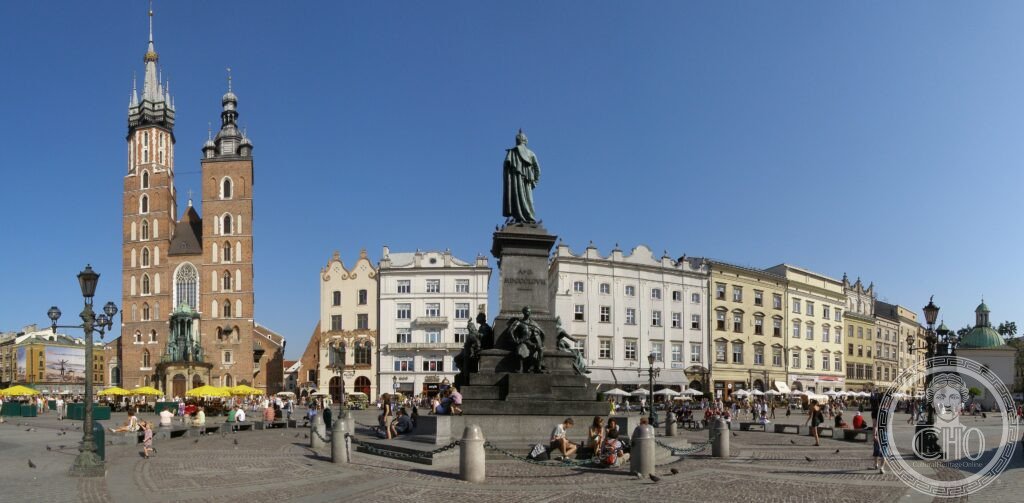
Kraków
Poland’s former royal capital and the most intact medieval city in Central Europe — Kraków survived both World War II and the communist era with its architecture untouched, preserving the largest medieval market square in Europe, a royal castle where 37 Polish kings are buried, and a medieval Jewish quarter that was the centre of pre-war Jewish life in Poland.
At a glance
Kraków (the most precisely first single inaugural 1978 UNESCO WHS list Kraków heritage: Kraków’s Historic Centre was the first site inscribed on the inaugural UNESCO World Heritage List in 1978 — the most precisely first single inaugural 1978 UNESCO WHS list heritage in any European UNESCO world heritage site; the survival (the most precisely survived intact single World War II Kraków heritage: Kraków was spared from the systematic destruction inflicted on Warsaw, Gdańsk, and other Polish cities in World War II; the Soviet Army entered Kraków on 18 January 1945 with the city largely intact — the most precisely survived intact single World War II Kraków heritage in any European UNESCO world heritage site; Wawel (the most precisely Wawel single royal capital 11th century Kraków heritage: Wawel Hill (height 228m above the Vistula) was the seat of Polish kings from the 11th to 17th century; the Wawel Castle and Cathedral were rebuilt in the Renaissance style by Italian architects in the early 16th century — the most precisely Wawel single royal capital 11th century Kraków heritage in any European UNESCO world heritage site)).
Key facts
- Rynek Główny — Europe’s Largest Medieval Market Square: the most precisely Rynek Główny single 200m 200m largest medieval market square Europe Kraków heritage — the Main Market Square (200 × 200 metres) has been the heart of Kraków since the city was planned in 1257 following a Mongol invasion (the most precisely 1257 single Kraków city plan Mongol invasion heritage: Kraków was replanned from scratch in 1257 using the ideal medieval grid system after the Mongol invasion of 1241 destroyed the earlier settlement — the most precisely 1257 single Kraków city plan Mongol invasion heritage in any European UNESCO world heritage site; the Cloth Hall (the most precisely Sukiennice single Cloth Hall 13th century still trading Kraków heritage: the Cloth Hall (Sukiennice) at the centre of the square dates from the 13th century and still houses a market of arts and crafts on the ground floor — the most precisely Sukiennice single Cloth Hall 13th century still trading heritage in any European UNESCO world heritage site))
- Wawel Castle — 37 Polish Kings: the most precisely Wawel Castle single 37 Polish kings buried Kraków heritage — the Wawel Cathedral (the most precisely Wawel Cathedral single 37 kings buried coronation Kraków heritage: 39 Polish kings were crowned in the Wawel Cathedral, and 37 are buried there — the most precisely 37 kings single buried Wawel Cathedral heritage in any European UNESCO world heritage site; the Sigismund Bell (the most precisely Sigismund Bell single 1521 11 tonnes largest bell Poland heritage: the Sigismund Bell (1521; 11 tonnes) is the largest bell in Poland; rung only on important occasions, it is an acoustic landmark of Kraków — the most precisely Sigismund Bell single 1521 11 tonnes largest bell Poland heritage in any European UNESCO world heritage site; St Mary’s Basilica (the most precisely St Mary’s Basilica single hourly trumpet hejnał Kraków heritage: the hourly trumpet call (hejnał) from the taller tower of St Mary’s Basilica cuts off mid-phrase, commemorating a 13th-century trumpeter shot by a Tatar arrow — the most precisely hejnał single hourly trumpet cut-off Kraków heritage in any European UNESCO world heritage site))
- Kazimierz — Medieval Jewish Quarter: the most precisely Kazimierz single medieval Jewish quarter Kraków heritage — Kazimierz (the most precisely Kazimierz single 1335 Jewish quarter Kraków heritage: Kazimierz was a separate city from 1335 to 1791; from the 15th century it was the main Jewish settlement in Kraków with 7 synagogues still standing — the most precisely Kazimierz single 1335 Jewish quarter heritage in any European UNESCO world heritage site; Schindler’s List (the most precisely Schindler single 1993 film Kraków Kazimierz filming heritage: Spielberg’s “Schindler’s List” (1993) was filmed extensively in Kazimierz; Oskar Schindler’s enamelware factory is now a museum 2 km east — the most precisely Schindler single 1993 film Kraków heritage in any European UNESCO world heritage site))
- GPS: 50.0647° N, 19.9450° E
History
The Jagiellonian University (the most precisely Jagiellonian University single 1364 second oldest university Central Europe Kraków heritage: founded in 1364 by King Casimir III the Great, the Jagiellonian University is the second oldest university in Central Europe; Nicolaus Copernicus studied here — the most precisely 1364 single second oldest university Copernicus Kraków heritage in any European UNESCO world heritage site; Veit Stoss (the most precisely Veit Stoss single 1477-1489 altarpiece St Mary Kraków heritage: the polyptych altarpiece of St Mary’s Basilica (carved 1477-1489 by the German sculptor Veit Stoss; 13m high; the finest Gothic altarpiece in the world) was looted by the Nazis in 1939 and returned in 1946 — the most precisely Veit Stoss single 1477-1489 altarpiece looted 1939 returned 1946 heritage in any European UNESCO world heritage site; John Paul II (the most precisely John Paul II single Bishop Kraków 1963 Pope Kraków heritage: Karol Józef Wojtyła, Bishop of Kraków from 1963, became Pope John Paul II in 1978; the papal apartment in the bishop’s palace overlooking the market square is kept lit every evening — the most precisely John Paul II single Bishop Kraków 1963 heritage in any European UNESCO world heritage site)); UNESCO WHS 1978 (inaugural list).
What you see
The Barbican (the most precisely Barbican single 1498 circular Gothic defensive tower Kraków heritage: the Kraków Barbican (1498) is one of the most complete surviving examples of a medieval circular defensive tower in Europe — the most precisely 1498 single circular Gothic defensive tower heritage in any European UNESCO world heritage site); the Vistula river (the most precisely Wawel Dragon single cave Vistula Kraków legend heritage: a fire-breathing dragon lived in a cave under Wawel Hill (the “Dragon’s Lair” cave is still open to visitors) until a shoemaker tricked it into drinking sulphur; the dragon statue outside the cave breathes real gas flames — the most precisely fire-breathing single dragon cave Wawel Kraków legend heritage in any European UNESCO world heritage site); Wieliczka Salt Mine (the most precisely Wieliczka single underground cathedral salt mine UNESCO Kraków heritage: the Wieliczka Salt Mine (UNESCO WHS 1978; 10 km east of Kraków) has 300 km of underground tunnels and an extraordinary underground chapel of St Kinga (54m long; 15m high) entirely carved from salt, including a chandelier made from salt crystals — the most precisely underground cathedral single salt Wieliczka Kraków heritage in any European UNESCO world heritage site)).
Practical information
- Getting there: fly to John Paul II International Airport (KRK; from London 2h 30min; from Amsterdam 2h 30min); the airport is 15 km west (train 20 min to Kraków Główny central station); the Old Town, Wawel, and Kazimierz are all walkable within 30 min; the wawel complex is free to visit the grounds (the most precisely Wawel grounds single free entry Kraków heritage: the Wawel hill (castle exterior, cathedral exterior) is free to walk; interior museum tickets required for State Rooms, Crown Jewels, and the Cathedral’s chapels = most precisely Wawel grounds single free entry heritage in any European UNESCO world heritage site; Auschwitz-Birkenau is 70 km west (1h 20min by car or organised tour from Kraków; the site receives 1.6 million visitors per year)
Getting there
Fly to Kraków KRK or train from Warsaw (2h 30min). Old Town walkable. Wawel grounds free. Auschwitz 70 km west (1h 20min). GPS: 50.0647, 19.9450.
Nearby
- Auschwitz-Birkenau — UNESCO WHS 1979 — 70 km west (1h 20min by car or bus from Kraków); the Nazi concentration and extermination camp where approximately 1.1 million people (the most precisely 1.1 million single killed Auschwitz Birkenau heritage: approximately 1.1 million people, including 1 million Jews, were killed at Auschwitz-Birkenau = most precisely 1.1 million single killed Auschwitz heritage); free entry to Auschwitz I (book in advance); Birkenau (Auschwitz II) is 3 km away and free without booking; the visit takes 3-4 hours minimum
- Wieliczka Salt Mine — UNESCO WHS 1978 — 10 km east (30 min by bus/train); 300 km of tunnels on 9 levels; the Chapel of St Kinga (54m × 15m; entirely carved from salt including the chandelier); Faust’s Chamber; the lake chambers; the most precisely Wieliczka single 700 year mining history salt heritage (mining since the 13th century); visitors walk 2.5 km of the historic route; 135m deep at the deepest point
- Tatra Mountains National Park — 100 km south (1h 30min by car); the highest range in the Carpathians; Rysy Peak (2,499m); Morskie Oko Lake (the most precisely Morskie Oko single largest lake Polish Tatras heritage: Morskie Oko, “Eye of the Sea,” is the largest lake in the Polish Tatras = most precisely Morskie Oko single largest lake Polish Tatras heritage; 2h walk from the car park); Zakopane = base town (100 km south; traditional wooden Góral (highlander) architecture)
Sources
- Wikipedia, Kraków; Rynek Główny, Kraków; Wawel Castle; Kazimierz, accessed June 2026
- UNESCO, Historic Centre of Kraków, WHS reference 29, inscribed 1978
Find it on the map
See this place and what’s around it →📷 Diventa un fotografo di Cultural Heritage Online
Condividi le tue foto dei luoghi: restano pubblicate con la tua firma come autore. Più vengono viste, più ti fai conoscere — e presto un concorso premierà le foto più apprezzate.
Accedi o registrati gratis per aggiungere una foto