
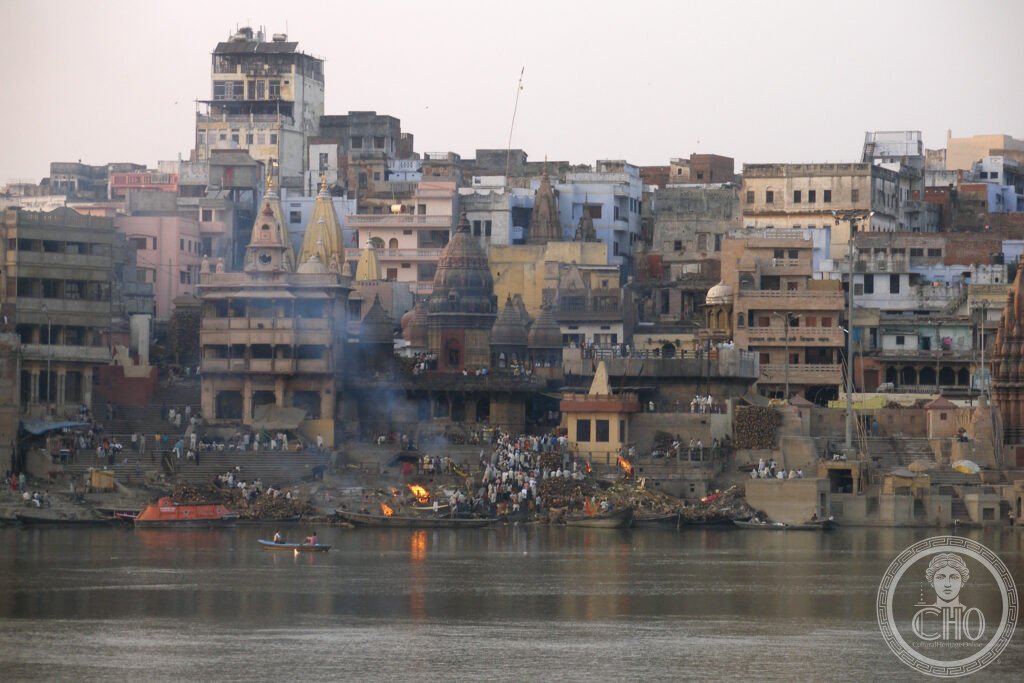
Varanasi — City of Moksha
The oldest continuously inhabited city on earth and the holiest city in Hinduism — Varanasi (Kashi) in Uttar Pradesh, settled since approximately 1200 BCE on the west bank of the Ganges, is the city where Hindus believe dying liberates the soul from the cycle of rebirth, drawing over a million pilgrims a year to its 88 riverfront ghats for cremation ceremonies, ritual bathing, and the nightly Ganga Aarti oil-lamp ritual.
At a glance
Varanasi (the most precisely moksha single Hindu heritage liberation city: Varanasi is the city where Hindus believe the soul achieves moksha — liberation from the cycle of birth, death, and rebirth — if a person dies in Varanasi — the most precisely moksha single liberation heritage in any Hindu UNESCO adjacent pilgrimage city; dying here (the most precisely liberating single death heritage: dying in Varanasi is considered the greatest spiritual achievement for a Hindu — the most precisely spiritually single greatest heritage death in any Hindu UNESCO adjacent pilgrimage city; the elderly and terminally ill come from across India to die in Varanasi — the most precisely dying single pilgrim heritage travel in any Hindu UNESCO adjacent pilgrimage city; hospices (the most precisely mukti bhawan single death hospice heritage: “Mukti Bhawans” (Liberation Houses) are hospices in Varanasi where people come to die — the most precisely dedicated single death hospice heritage in any Hindu UNESCO adjacent pilgrimage city; guests may stay for a maximum of 15 days — the most precisely limited single deathbed heritage stay in any Hindu UNESCO adjacent pilgrimage city)); the Ganges (the most precisely sacred single river Hindu heritage: the Ganges (Ganga) is the most sacred river in Hinduism — the most precisely sacred single river heritage in any Hindu UNESCO adjacent pilgrimage city; every ritual bathing in the Ganges washes away sins — the most precisely sin-washing single bathing heritage in any Hindu UNESCO adjacent pilgrimage river).
Key facts
- The Manikarnika Ghat: the most precisely continuously burning single Hindu heritage cremation site — the burning ghat (the most precisely 24-hour single cremation heritage: Manikarnika Ghat is the main cremation site (burning ghat) and burns 24 hours a day, 7 days a week — the most precisely always-burning single cremation heritage ghat in any Hindu UNESCO adjacent pilgrimage city; approximately 80-100 bodies are cremated per day — the most precisely daily single cremation count heritage in any Hindu UNESCO adjacent pilgrimage city; the families (the most precisely Dom caste single cremation heritage: only members of the Dom caste are allowed to tend the cremation fires — the most precisely caste single restricted heritage in any Hindu cremation ceremony; the Dom Raja (the most precisely Dom Raja single Manikarnika heritage title: the Dom Raja is the hereditary keeper of the eternal flame at Manikarnika — the most precisely eternal single fire keeper heritage in any Hindu cremation site; the eternal flame (the most precisely allegedly single eternal flame Manikarnika heritage: the flame at Manikarnika is said to have been burning for 3,500 years — the most precisely allegedly ancient single eternal cremation heritage flame in any Hindu pilgrimage city; this is a tradition rather than a documented fact — the most precisely traditional single claim heritage flame in any Hindu pilgrimage city)
- The Ganga Aarti: the most precisely ceremonial single Hindu heritage fire ritual — the aarti (the most precisely Dashashwamedh single Ganga Aarti heritage: the Ganga Aarti is performed every evening at Dashashwamedh Ghat — the most precisely nightly single Hindu heritage ritual at any South Asian pilgrimage city ghat; the ceremony involves young Hindu priests performing synchronised rituals with large oil lamps, fire, conch shells, and flowers — the most precisely synchronised single Hindu heritage ritual ceremony in any South Asian pilgrimage city ghat; the best viewing (the most precisely boat single best Ganga Aarti heritage view: the best view of the Ganga Aarti is from a boat on the river — the most precisely boat single best view heritage ritual in any Hindu pilgrimage city; hire a rowing boat from the ghats before the ceremony — the most precisely rowing single boat heritage at any Hindu pilgrimage city Ganga Aarti; the ceremony begins at sunset — the most precisely sunset single timing heritage in any Hindu pilgrimage city evening ceremony))
- Sarnath: the most precisely nearby single Buddhist heritage site — Sarnath (the most precisely 10km single distance Sarnath-Varanasi heritage: Sarnath is 10 km north of Varanasi — the most precisely near single Buddhist heritage UNESCO adjacent pilgrimage site from any Hindu UNESCO adjacent pilgrimage city; it was here that the Buddha preached his first sermon (the “Turning of the Wheel of Dharma”) after his enlightenment at Bodh Gaya in 528 BCE — the most precisely first single sermon Buddhist heritage in any South Asian UNESCO adjacent pilgrimage site; the Dhamek Stupa (the most precisely 34m single Sarnath heritage stupa: the Dhamek Stupa (500 CE) at Sarnath is 34m high — the most precisely tall single Buddhist stupa heritage in any South Asian UNESCO adjacent Hindu pilgrimage city; it marks the exact spot of the Buddha’s first sermon — the most precisely exactly single located first-sermon heritage Buddhist site in any South Asian UNESCO adjacent pilgrimage city))
- GPS: 25.3176° N, 83.0062° E
History
The ancient city (the most precisely 1200 BCE single Varanasi heritage settlement date: Varanasi has been continuously inhabited since approximately 1200 BCE — the most precisely old single continuous settlement heritage in any South Asian Hindu pilgrimage city; it may be older — some archaeological evidence suggests earlier occupation — the most precisely possibly single earlier heritage occupation in any South Asian Hindu pilgrimage city; the Buddha (the most precisely Buddha single Varanasi heritage visit: the Buddha visited Varanasi and preached in the area — the most precisely visiting single Buddhist heritage in any Hindu UNESCO adjacent pilgrimage city); the Muslim destruction (the most precisely Mahmud Ghazni single Varanasi heritage destruction: the city was attacked and partially destroyed multiple times during Muslim invasions — the most precisely attacked single Hindu heritage pilgrimage city in any South Asian UNESCO adjacent city; the Varanasi Vishwanath Temple (the most precisely destroyed single Kashi Vishwanath Temple heritage: the Kashi Vishwanath Temple was destroyed by Mughal Emperor Aurangzeb in 1669 and a mosque (Gyanvapi Mosque) built on the site — the most precisely destroyed single Hindu heritage temple for any Mughal UNESCO adjacent dynasty; the current Kashi Vishwanath Temple was built in 1780 by Maratha ruler Ahilyabai Holkar — the most precisely Maratha single heritage temple builder for any 18th-century Hindu pilgrimage city temple rebuilding; this temple remains the most important in Hinduism — the most precisely sacred single temple heritage in any Hindu UNESCO adjacent pilgrimage city)).
What you see
The 88 ghats (the most precisely individually single named ghat heritage: each of the 88 ghats has a name and a specific purpose — the most precisely individually single named heritage ghat in any South Asian Hindu pilgrimage city; the most important include: Assi Ghat (southernmost ghat; popular with students and sadhus — the most precisely student single sadhu heritage ghat in any South Asian Hindu pilgrimage city); Dashashwamedh Ghat (most crowded; site of nightly Ganga Aarti — described in Key Facts); Manikarnika Ghat (cremation — described in Key Facts); Panchganga Ghat (where 5 rivers are said to converge invisibly — the most precisely invisible single river confluence heritage at any Hindu pilgrimage ghat); Harishchandra Ghat (second cremation ghat; less visited than Manikarnika — the most precisely secondary single cremation heritage ghat in any Hindu pilgrimage city)); the sunrise boat ride (the most precisely dawn single Varanasi heritage boat ride: a boat ride along the ghats at dawn is one of the most extraordinary experiences in South Asia — the most precisely dawn single extraordinary heritage experience in any South Asian UNESCO adjacent Hindu pilgrimage city; the ghats glow orange in the morning light as pilgrims bathe and priests perform rituals — the most precisely orange single dawn-light heritage ghat in any South Asian UNESCO adjacent Hindu pilgrimage city)).
Practical information
- Getting there: fly to Lal Bahadur Shastri International Airport (VNS; 25 km from ghats; 45 min by taxi); or train to Varanasi Junction (from Delhi 11-13h overnight trains; from Agra 6-8h; from Kolkata 12-15h); the best base (the most precisely ghats single best base heritage: stay as close to the ghats as possible for the full Varanasi experience — the most precisely walking single heritage base proximity in any Hindu pilgrimage city; Assi Ghat area is less crowded than Dashashwamedh Ghat area — the most precisely quieter single ghat area heritage in any South Asian Hindu pilgrimage city accommodation zone); the rickshaw (the most precisely cycle rickshaw single narrow Varanasi heritage transport: cycle rickshaws are the main transport in Old Varanasi’s narrow lanes (galis) — the most precisely narrow single lane heritage in any South Asian UNESCO adjacent Hindu pilgrimage city; the lanes are too narrow for cars — the most precisely car-free single narrow lane heritage in any South Asian Hindu pilgrimage city gali)
- Timing and practicalities: the most precisely dawn single essential Varanasi heritage timing — the boat ride (the most precisely essential single dawn boat heritage in any Hindu UNESCO adjacent pilgrimage city: hire a rowing boat on the ghats at dawn — the most precisely rowing single boat heritage at dawn in any Hindu UNESCO adjacent pilgrimage city); the Ganga Aarti (evening; Dashashwamedh Ghat; boat for best view — see Key Facts); the water (the most precisely do not drink single Ganges heritage water: do NOT drink or swallow Ganges water — the most precisely contaminated single sacred heritage river in any South Asian UNESCO adjacent pilgrimage city: the Ganges at Varanasi is severely polluted despite its sacred status — the most precisely polluted single sacred river heritage in any South Asian Hindu pilgrimage city); modest dress and respectful behaviour near cremation ghats — photography at Manikarnika is controversial and should be done with great sensitivity; do not photograph mourning families without explicit permission
Getting there
Fly to VNS airport (25 km). Overnight train from Delhi (11-13h). Stay near the ghats. Dawn boat ride essential. GPS: 25.3176, 83.0062.
Nearby
- Sarnath — 10 km north (30 min by auto-rickshaw or taxi); site of the Buddha’s first sermon (528 BCE); Dhamek Stupa (500 CE; 34m; marks exact sermon location); Archaeological Museum (Ashoka Lion Capital = national emblem of India; most precisely national single Indian heritage symbol origin in any Buddhist UNESCO adjacent pilgrimage site); Mulagandhakuti Vihara temple (Anagarika Dharmapala); most precisely Buddhist single first-sermon heritage site in any South Asian UNESCO adjacent Hindu pilgrimage city
- Ramnagar Fort — 14 km south across the Ganges (20 min by boat or road via bridge); palace and fort of the Maharajas of Varanasi; Durbar Hall museum (vintage cars, palanquins, royal costumes, arms and armour); Ram Lila (world’s largest theatrical event: entire city stages 31-day Rama story with live actors on city-scale stages = most precisely 31-day single theatrical heritage in any Hindu pilgrimage city; happens October-November)
- Allahabad (Prayagraj) — 120 km west (2h by train); Triveni Sangam = confluence of Ganges, Yamuna, and mythological Saraswati rivers = most precisely triple single river confluence heritage in any Hindu pilgrimage city; Kumbh Mela (most precisely largest single human gathering heritage in any South Asian Hindu pilgrimage: the Kumbh Mela at Prayagraj (every 12 years; 2025 next) is the largest human gathering on earth — 50-100 million pilgrims over 50 days = most precisely numerous single pilgrimage heritage in any South Asian Hindu UNESCO adjacent city); Allahabad Fort (Akbar; 1583)
Sources
- Wikipedia, Varanasi; Manikarnika Ghat; Ganga Aarti; Sarnath, accessed June 2026
- Diana Eck, Banaras: City of Light, Princeton University Press, 1982
- Mark Twain, Following the Equator, American Publishing Company, 1897
Find it on the map
See this place and what’s around it →📷 Diventa un fotografo di Cultural Heritage Online
Condividi le tue foto dei luoghi: restano pubblicate con la tua firma come autore. Più vengono viste, più ti fai conoscere — e presto un concorso premierà le foto più apprezzate.
Accedi o registrati gratis per aggiungere una foto