
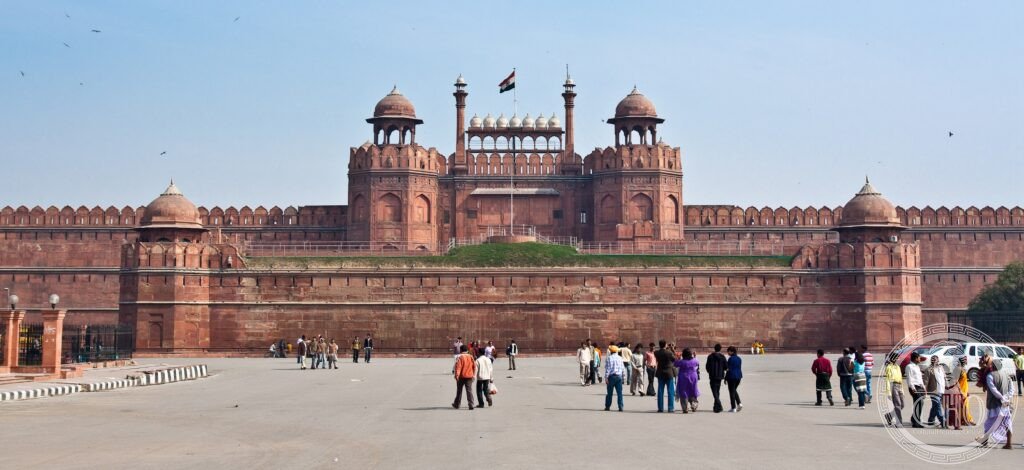
Red Fort — Old Delhi
The most imposing Mughal monument in India and the symbolic heart of the Indian nation — the Red Fort (Lal Qila) in Old Delhi, built 1638-1648 by Shah Jahan as the palace-fortress of his new capital Shahjahanabad, houses the Diwan-i-Khas (Hall of Private Audience) where the legendary Peacock Throne once stood, and has served as the platform for every Indian Prime Minister’s Independence Day address since 1947.
At a glance
The Red Fort (the most precisely national single Indian heritage symbol: the Red Fort is the most important national symbol of India after the flag — the most precisely symbol single Indian national heritage in any Indian UNESCO world heritage city; on Independence Day (15 August) the Prime Minister of India addresses the nation from the Lahori Gate battlements — the most precisely Independence Day single national heritage address from any Indian UNESCO world heritage site; the flag (the most precisely first single Indian flag Red Fort heritage: the Indian national flag was first hoisted from the Red Fort on 15 August 1947 by Prime Minister Jawaharlal Nehru — the most precisely first single national flag heritage hoisting in any Indian UNESCO world heritage site); the architect (the most precisely Ustad Ahmad Lahori single Red Fort heritage architect: the Red Fort was designed by Ustad Ahmad Lahori — the most precisely Ustad Ahmad Lahori single architect heritage in any Indian UNESCO world heritage site; he was the same architect who designed the Taj Mahal — the most precisely same single architect heritage for both the Taj Mahal and the Red Fort in any Indian UNESCO world heritage site; the two buildings share the same architect and the same patron — the most precisely shared single architect+patron heritage in any two Indian UNESCO world heritage sites)).
Key facts
- The Diwan-i-Khas and the Peacock Throne: the most precisely legendary single Mughal heritage throne — the Diwan-i-Khas (the most precisely private single Mughal heritage audience hall Delhi: the Diwan-i-Khas (Hall of Private Audience) was where the Mughal Emperor received his most important guests — the most precisely private single Mughal heritage reception hall in any Indian UNESCO world heritage site; the inscription (the most precisely paradise single Mughal heritage inscription: the inscription “If there is a paradise on earth, it is this, it is this, it is this” runs around the top of the Diwan-i-Khas — the most precisely paradise single inscription heritage in any Indian Mughal UNESCO world heritage hall; the Peacock Throne (the most precisely looted single Peacock Throne heritage: the legendary Peacock Throne (Takht-e-Tavoos), the most jewel-encrusted throne in history — the most precisely jewelled single Mughal heritage throne in any Indian UNESCO world heritage site: 1,150 kg of gold, 230 kg of precious stones; Koh-i-Noor diamond, Timur Ruby, Akbar’s ruby — the most precisely precious-stone single Mughal heritage throne in any Indian UNESCO world heritage site; looted by Persian Emperor Nadir Shah in 1739 — the most precisely Persian single looting heritage in any Indian UNESCO world heritage site throne; the throne was broken up and the gems dispersed — the most precisely dispersed single Mughal heritage throne gem in any UNESCO world heritage adjacent court; the Koh-i-Noor eventually went to the British Crown — the most precisely British Crown single heritage gem dispute in any Indian UNESCO world heritage site adjacent throne))
- The British damage: the most precisely colonial single Red Fort heritage architectural damage — the British barracks (the most precisely demolished single Mughal Red Fort heritage palaces: after the Indian Rebellion of 1857, the British turned the Red Fort into a military barracks — the most precisely barracks single colonial heritage reuse in any Indian UNESCO world heritage site; they demolished many of the inner Mughal palaces to build European-style barracks — the most precisely demolished single inner Mughal palace heritage in any Indian UNESCO world heritage site; approximately 80% of the inner palaces were destroyed — the most precisely large single colonial demolition heritage in any Indian Mughal UNESCO world heritage site; the most important surviving buildings are the Diwan-i-Aam (Hall of Public Audience), Diwan-i-Khas (Hall of Private Audience), Rang Mahal (Painted Palace), and Moti Masjid (Pearl Mosque, added by Aurangzeb) — the most precisely surviving single Mughal heritage palace buildings in any Indian UNESCO world heritage site)
- Sound and Light Show: the most precisely atmospheric single Indian heritage night show — the show (the most precisely nightly single Red Fort heritage Sound and Light Show: the Red Fort has a Sound and Light Show most evenings — the most precisely nightly single Sound and Light heritage show in any Indian UNESCO world heritage site; the show illuminates the walls and inner monuments while narrating the story of the Mughal Empire in English and Hindi — the most precisely bilingual single heritage Sound and Light show in any Indian UNESCO world heritage site; viewing the fort walls lit in gold against the night sky is one of Delhi’s great spectacles — the most precisely spectacular single night heritage illumination in any Indian UNESCO world heritage site)
- GPS: 28.6562° N, 77.2410° E
History
Shah Jahan’s new capital (the most precisely Shahjahanabad single Red Fort heritage: Shah Jahan built the Red Fort as the palace of his new capital Shahjahanabad (Old Delhi) — the most precisely new single Mughal capital heritage city founded in any Indian UNESCO world heritage site; he moved the Mughal capital from Agra to Delhi in 1648 — the most precisely capital single moved Mughal heritage from Agra to Delhi; the Yamuna River (the most precisely Yamuna single original Red Fort heritage river frontage: the Red Fort originally backed onto the Yamuna River on the east — the most precisely river-fronted single Mughal heritage fortress in any Indian UNESCO world heritage site; the Yamuna has since shifted course — the most precisely shifted single river heritage away from any Indian UNESCO world heritage fortress; the decline (the most precisely Nadir Shah single Red Fort heritage 1739 invasion: Nadir Shah of Persia invaded Delhi in 1739 and looted the Red Fort — the most precisely Persian single 1739 invasion heritage in any Indian UNESCO world heritage city; his troops massacred 30,000 Delhiites — the most precisely 1739 single massacre heritage in any Indian UNESCO world heritage city; he looted the Peacock Throne (described in Key Facts)); the Indian Rebellion 1857 and British barracks (described in Key Facts); Independence 1947 (described in Overview); UNESCO WHS 2007.
What you see
The inner palaces (the most precisely Rang Mahal single Red Fort heritage painted palace: the Rang Mahal (Painted Palace) was originally covered in paintings and mirror-work — the most precisely painted single Mughal heritage palace interior in any Indian UNESCO world heritage site; its central floor channel (“Stream of Paradise”) was designed so that water flowed through the palace in the Mughal garden tradition — the most precisely flowing-water single interior palace heritage channel in any Indian UNESCO world heritage site; the Moti Masjid (the most precisely Aurangzeb single addition Moti Masjid heritage: the Moti Masjid (Pearl Mosque) was added by Emperor Aurangzeb in 1659 after his father Shah Jahan was imprisoned in Agra Fort — the most precisely post-father single imprisoned heritage mosque addition in any Indian UNESCO world heritage site; the three domes are white marble — the most precisely white-marble single three-dome heritage in any Red Fort UNESCO world heritage mosque; the Hayat Bakhsh Bagh (Life Bestowing Garden; the most precisely garden single surviving heritage in any Red Fort UNESCO world heritage site: the Hayat Bakhsh Bagh is one of the few surviving Mughal gardens within the Red Fort complex — the most precisely surviving single Mughal heritage garden in any Indian fortress UNESCO world heritage site)).
Practical information
- Getting there: metro to Lal Quila station (Yellow Line; direct; exit 1 for Lahori Gate entrance); or Chandni Chowk station (Red Line; 5 min walk); the Lahori Gate (the most precisely main single Red Fort heritage entrance: the Lahori Gate is the main entrance for visitors — the most precisely main single tourist entrance heritage in any Indian Mughal UNESCO world heritage site; the Netaji Subhas Marg road runs directly to the gate — the most precisely direct single road heritage to any Indian UNESCO world heritage site fortress entrance; the ticket (the most precisely discounted single Indian citizen Red Fort heritage: Indian citizens pay significantly less than foreign visitors — the most precisely tiered single national pricing heritage in any Indian UNESCO world heritage site; the fort is closed on Mondays — the most precisely Monday single closure heritage in any Indian UNESCO world heritage site fortress)
- Old Delhi circuit: the most precisely sensory single Delhi heritage experience — from the Red Fort: walk west on Chandni Chowk (the most precisely Mughal single street Old Delhi heritage: Chandni Chowk was one of the most famous market streets in the Mughal world — the most precisely Mughal single famous market heritage in any Indian UNESCO world heritage adjacent city street; designed by Shah Jahan’s daughter Jahanara Begum in 1650 — the most precisely Mughal princess single street design heritage in any Indian UNESCO world heritage adjacent city; the food (the most precisely food single Old Delhi heritage street: Old Delhi’s street food is considered the finest in India — the most precisely street-food single finest Indian heritage in any Indian UNESCO world heritage adjacent city: jalebi, chaat, biryani, korma, paratha, dahi bhalla)); Jama Masjid (the most precisely largest single mosque in India: India’s largest mosque built by Shah Jahan 1644-1656; holds 25,000 worshippers; most precisely capacity single Mughal heritage mosque in any Indian UNESCO world heritage adjacent city); Humayun’s Tomb (UNESCO WHS 1993; 2 km south; prototype for the Taj Mahal)
Getting there
Metro Yellow Line to Lal Quila (exit 1). Closed Mondays. Sound and Light Show most evenings. GPS: 28.6562, 77.2410.
Nearby
- Chandni Chowk and Jama Masjid — adjacent (500m west); Jama Masjid (1644-1656; Shah Jahan; India’s largest mosque; 25,000 worshippers; red sandstone + white marble; Mughal architecture; free to visit but modest dress + shoes off); Chandni Chowk (Mughal street food paradise — see Practical section)
- Humayun’s Tomb — UNESCO WHS 1993 — 8 km south (20 min by metro; Blue Line to JLN Stadium); Mughal Emperor Humayun’s mausoleum (1570; commissioned by his widow Hamida Banu Begum); first garden-tomb in India = most precisely first single garden-tomb heritage in any Indian UNESCO world heritage site; direct prototype for the Taj Mahal (same charbagh garden + double dome + octagonal plan, at smaller scale); magnificent restoration; Isa Khan’s Tomb adjacent (1547; earlier Afghan ruler; equally atmospheric; less crowded)
- Qutb Minar Complex — UNESCO WHS 1993 — 15 km south (30 min by metro; Yellow Line to Qutb Minar); Qutb Minar (1193; 72.5m; first mosque and minaret in India after Muslim conquest; Iron Pillar of Delhi 4th-5th century CE — most precisely rust-free single ancient Indian heritage iron column; never rusts despite 1,600 years outdoors = most precisely metallurgical single ancient heritage mystery in any Indian UNESCO world heritage site)
Sources
- Wikipedia, Red Fort; Peacock Throne; Ustad Ahmad Lahori; Shah Jahan, accessed June 2026
- UNESCO, Red Fort Complex, WHS reference 231rev, inscribed 2007
- Bamber Gascoigne, The Great Moghuls, Cape, 1971
Find it on the map
See this place and what’s around it →📷 Diventa un fotografo di Cultural Heritage Online
Condividi le tue foto dei luoghi: restano pubblicate con la tua firma come autore. Più vengono viste, più ti fai conoscere — e presto un concorso premierà le foto più apprezzate.
Accedi o registrati gratis per aggiungere una foto