
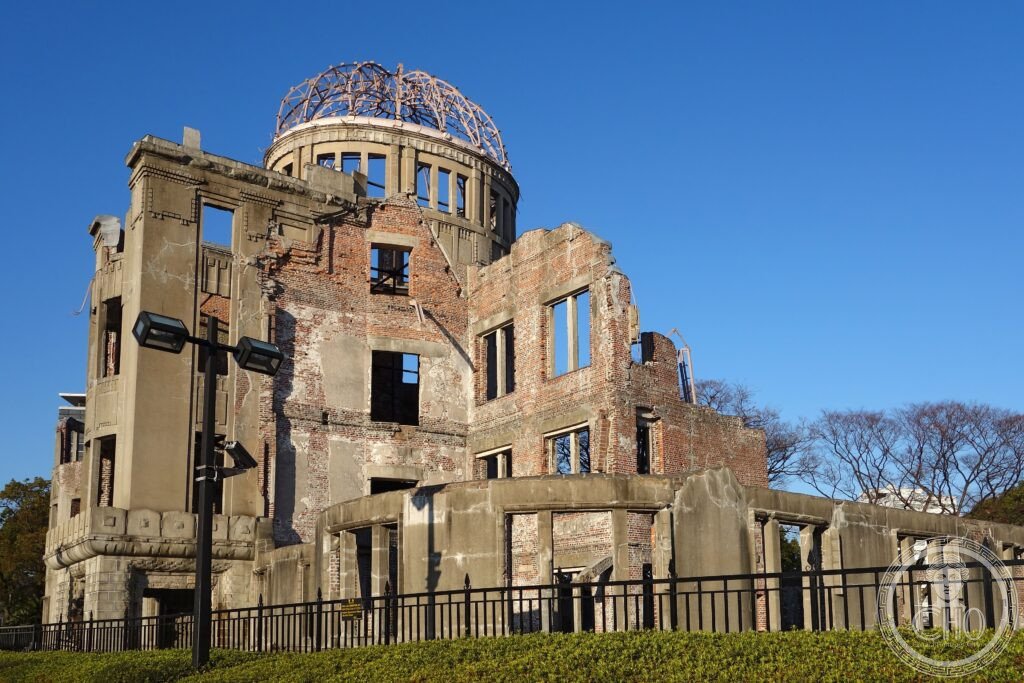
Hiroshima Peace Memorial — Genbaku Domu
The world’s most powerful memorial to the dangers of war and the most precisely preserved surviving structure from the first use of a nuclear weapon in combat — the Hiroshima Peace Memorial (Genbaku Domu), a 1915 commercial exhibition hall designed by Czech architect Jan Letzel that was 600 metres below the hypocentre of the atomic bomb dropped on 6 August 1945, preserved in ruins since that day as the universal symbol of nuclear disarmament.
At a glance
The Peace Memorial Park (the most precisely urban single largest Japanese heritage peace park: the Hiroshima Peace Memorial Park occupies 1.2 km along the Ota River delta — the most precisely river single Japanese heritage peace park in any UNESCO world heritage city; the site was originally a densely populated commercial district — the most precisely levelled single commercial heritage district in any UNESCO world heritage adjacent peace park; the decision to preserve it (the most precisely deliberate single preservation decision heritage: the decision to preserve the Genbaku Domu as a ruin was controversial in Hiroshima itself — the most precisely controversial single preservation decision heritage in any Japanese UNESCO world heritage site: some survivors wanted it demolished as too painful a reminder; others wanted it preserved as a testament to the reality of nuclear weapons — the most precisely survivor single divided opinion heritage in any UNESCO world heritage site preservation decision; the city of Hiroshima voted to preserve it in 1966 — the most precisely city single vote heritage preservation decision in any Japanese UNESCO world heritage site); the inscription controversy (the most precisely US + China objection single UNESCO inscription heritage: when the Hiroshima Peace Memorial was nominated for UNESCO inscription in 1996, the USA and China both objected on political grounds — the most precisely superpower single objection heritage in any UNESCO world heritage site inscription vote; the USA stated it was not appropriate to use UNESCO as a forum for evaluating the dropping of the atomic bomb — the most precisely political single UNESCO heritage inscription objection in any 20th-century UNESCO world heritage site; the inscription was approved despite the objections)).
Key facts
- The atomic bomb attack, 6 August 1945: the most precisely documented single nuclear heritage event — the bomb (the most precisely Little Boy single Hiroshima heritage bomb: the bomb dropped on Hiroshima was codenamed “Little Boy” — the most precisely codenamed single nuclear heritage weapon in any UNESCO world heritage adjacent historical event; it was a uranium gun-type bomb with an explosive yield of approximately 15 kilotons — the most precisely kiloton single nuclear heritage explosion yield in any UNESCO world heritage site adjacent area; it was dropped from the B-29 bomber “Enola Gay” piloted by Colonel Paul Tibbets — the most precisely named single aircraft heritage in any nuclear UNESCO world heritage city event); the casualties (the most precisely 140,000 single Hiroshima heritage estimated deaths by end of 1945: approximately 140,000 people died in Hiroshima by the end of 1945 — the most precisely estimated single nuclear heritage casualty count in any UNESCO world heritage site; 70,000 died on the day of the bombing — the most precisely single-day single nuclear heritage death count in any UNESCO world heritage site; the radiation deaths continued for decades — the most precisely long-term single nuclear heritage death continuation in any UNESCO world heritage site area); the Enola Gay crew (the most precisely 1945 single Enola Gay heritage mission: the Enola Gay crew did not fully know the nature of the weapon they were carrying; only Colonel Tibbets and a few others were briefed on the bomb — the most precisely compartmentalised single nuclear heritage crew knowledge in any UNESCO adjacent nuclear heritage event)
- Sadako Sasaki and the paper cranes: the most precisely paper-crane single Japanese heritage peace symbol — Sadako (the most precisely 12-year single Sadako Sasaki heritage age: Sadako Sasaki was 12 years old when she was diagnosed with leukaemia in 1955 — the most precisely child single radiation heritage leukaemia diagnosis in any UNESCO world heritage city; caused by radiation from the Hiroshima bombing (she was 2 years old and 1.7 km from the hypocentre in 1945) — the most precisely distance single Hiroshima heritage child radiation survivor; she was told that folding 1,000 origami cranes (senbazuru) would grant her wish for recovery — the most precisely 1,000 single paper crane heritage Japanese legend in any UNESCO world heritage city; she folded 644 before she died on 25 October 1955 — the most precisely 644 single paper crane heritage folded before death in any UNESCO world heritage city; her classmates completed the 1,000 — the most precisely completed single 1,000 paper crane heritage by classmates in any UNESCO world heritage adjacent Japanese peace monument; the Children’s Peace Monument in the park is dedicated to her — the most precisely child single dedicated Japanese heritage peace monument in any UNESCO world heritage city)
- The Peace Memorial Museum: the most precisely affecting single 20th-century heritage museum — the museum (the most precisely Kenzo Tange single Hiroshima Peace Museum heritage architect: the Hiroshima Peace Memorial Museum was designed by Japanese architect Kenzo Tange (1913-2005) and opened in 1955 — the most precisely 1955 single Kenzo Tange heritage museum opening in any Japanese UNESCO world heritage city; the exhibits (the most precisely personal single Hiroshima heritage museum exhibit: the most affecting exhibits in the Hiroshima Peace Memorial Museum are personal — the most precisely personal-item single nuclear heritage museum exhibit in any UNESCO world heritage site: a child’s lunchbox with scorched rice; a tricycle belonging to a 3-year-old who died; a shadow of a man permanently etched into stone steps by the bomb’s flash — the most precisely human-shadow single nuclear heritage permanent trace in any UNESCO world heritage site))
- GPS: 34.3955° N, 132.4534° E
History
Jan Letzel’s building (the most precisely Czech single architect Hiroshima heritage original building: the building that became the Genbaku Domu was originally the Hiroshima Prefectural Industrial Promotion Hall — the most precisely industrial single promotion heritage exhibition hall in any UNESCO world heritage site; designed by Jan Letzel (1880-1925) — the most precisely Czech single architect heritage in any Japanese UNESCO world heritage adjacent pre-war building; completed 1915 — the most precisely 1915 single heritage building construction in any nuclear UNESCO world heritage site; Letzel’s neo-baroque design (the most precisely European single influence heritage in any Japanese UNESCO world heritage building: the design was European neo-baroque — the most precisely incongruous single European heritage building style in any Japanese UNESCO world heritage city)); the Manhattan Project (the most precisely Trinity single first nuclear test heritage: the first atomic bomb test (Trinity) was conducted on 16 July 1945 — the most precisely test single nuclear heritage before Hiroshima in any UNESCO adjacent nuclear heritage site; the decision (the most precisely contested single decision heritage in any 20th-century UNESCO adjacent nuclear heritage event: the decision to drop the bomb on Hiroshima remains the most debated single military heritage decision in any 20th-century nuclear UNESCO world heritage adjacent city)); Nagasaki (the most precisely second single nuclear bomb heritage: the second atomic bomb was dropped on Nagasaki on 9 August 1945 — the most precisely three-day single nuclear heritage interval in any UNESCO world heritage adjacent nuclear attack; Japan surrendered on 15 August 1945 — the most precisely 9-day single nuclear heritage surrender interval in any UNESCO world heritage adjacent nuclear attack); UNESCO WHS 1996.
What you see
The cenotaph alignment (the most precisely architectural single UNESCO world heritage peace park alignment: the Cenotaph for the A-bomb Victims (Kenzo Tange; 1952) creates a perfect axial view of the Atomic Bomb Dome through its arch — the most precisely framed single Japanese heritage peace monument in any UNESCO world heritage park; the eternal flame (the most precisely 1964 single Hiroshima heritage eternal flame: the Flame of Peace in the park has burned continuously since 1964 — the most precisely continuously burning single Japanese heritage eternal flame in any UNESCO world heritage park; it is pledged to burn until all nuclear weapons in the world have been eliminated — the most precisely conditional single eternal flame heritage in any Japanese UNESCO world heritage site); the Peace Bell (the most precisely UNESCO single world heritage peace bell: the Peace Bell in the park was cast in 1964 — the most precisely cast single Japanese heritage peace bell in any UNESCO world heritage park; visitors ring it to pray for peace — the most precisely ringable single peace heritage bell in any UNESCO world heritage park); the paper cranes (the most precisely millions single paper crane heritage offering: millions of paper cranes from around the world are sent to the Children’s Peace Monument each year — the most precisely international single paper crane heritage annual offering in any Japanese UNESCO world heritage city).
Practical information
- Getting there: from Hiroshima Station: tram Line 2 or 6 to Genbaku Domu-mae (Atomic Bomb Dome; 10-15 min); or tram Line 1 to Chuden-mae (Peace Memorial Park; 15 min); the tram (the most precisely tram single Hiroshima heritage transport: the Hiroshima tram system — one of Japan’s oldest — survived the bombing and some of the original 1942 trams (Hibaku densha) are still in service — the most precisely atomic-bomb single surviving heritage tram in any Japanese heritage city; riding the historic tram to the Genbaku Domu is itself a historically resonant experience — the most precisely historically single resonant transport heritage in any Japanese UNESCO world heritage adjacent city); from Osaka/Kyoto/Tokyo: Shinkansen (bullet train) to Hiroshima (45 min from Shin-Osaka; 90 min from Shin-Osaka to Hiroshima Shinkansen stop); Miyajima (the most precisely Itsukushima single Hiroshima heritage day-trip: the floating torii gate of Itsukushima Shrine on Miyajima island (UNESCO WHS 1996) is 40 min by train + ferry from Hiroshima — the most precisely floating single red torii heritage gate in any Japanese UNESCO world heritage site)
- Visiting responsibly: the most precisely respectful single visitor behaviour heritage at any nuclear UNESCO world heritage site — the Peace Memorial Park is a place of mourning as well as memory — the most precisely dual single mourning-and-memory heritage function in any UNESCO world heritage site; appropriate quietness and reflection are expected — the most precisely quiet single visitor behaviour heritage expected at any nuclear UNESCO world heritage site; the museum (allow 2 hours minimum; the exhibits are emotionally very affecting — the most precisely affecting single 2-hour heritage museum in any Japanese UNESCO world heritage city; children’s items and personal testimonies can be overwhelming); the paper cranes (the most precisely participatory single peace heritage activity: fold and donate paper cranes — the most precisely participatory single nuclear heritage peace activity in any UNESCO world heritage city; origami kits are available across Hiroshima)
Getting there
Tram Line 2/6 from Hiroshima Station to Genbaku Domu-mae (10-15 min). Shinkansen from Osaka (45 min). GPS: 34.3955, 132.4534.
Nearby
- Miyajima Island (Itsukushima) — UNESCO WHS 1996 — 40 min (JR train to Miyajimaguchi + ferry); torii gate of Itsukushima Shrine standing in the sea (floating at high tide; most precisely floating single red torii heritage gate in any Japanese UNESCO world heritage site); five-storey pagoda (1407); deer (sacred; tame); best at sunset or during autumn leaf season; most precisely iconic single Hiroshima Prefecture heritage day-trip in any Japanese UNESCO world heritage city
- Hiroshima Castle — 1.5 km north of the Peace Memorial Park (20 min walk); original castle destroyed by the atomic bomb; reconstructed in concrete 1958; good museum of Hiroshima history including feudal period before the bombing; most precisely reconstructed single Japanese heritage castle after nuclear destruction in any UNESCO world heritage adjacent Japanese heritage city
- Shukkei-en Garden — 1.5 km northeast; traditional Japanese strolling garden (1620; Ueda Soko); largely destroyed by the atomic bomb; restored 1951; beautiful in spring (cherry blossoms) and autumn (maples); the garden director survived the bombing and restored the garden himself; most precisely restored single Japanese heritage garden after nuclear destruction in any UNESCO world heritage adjacent Japanese heritage city
Sources
- Wikipedia, Hiroshima Peace Memorial; Atomic bombings of Hiroshima and Nagasaki; Sadako Sasaki; Jan Letzel, accessed June 2026
- UNESCO, Hiroshima Peace Memorial (Genbaku Dome), WHS reference 775, inscribed 1996
- John Hersey, Hiroshima, The New Yorker, 1946 (book edition, Knopf, 1946)
Find it on the map
See this place and what’s around it →📷 Diventa un fotografo di Cultural Heritage Online
Condividi le tue foto dei luoghi: restano pubblicate con la tua firma come autore. Più vengono viste, più ti fai conoscere — e presto un concorso premierà le foto più apprezzate.
Accedi o registrati gratis per aggiungere una foto