
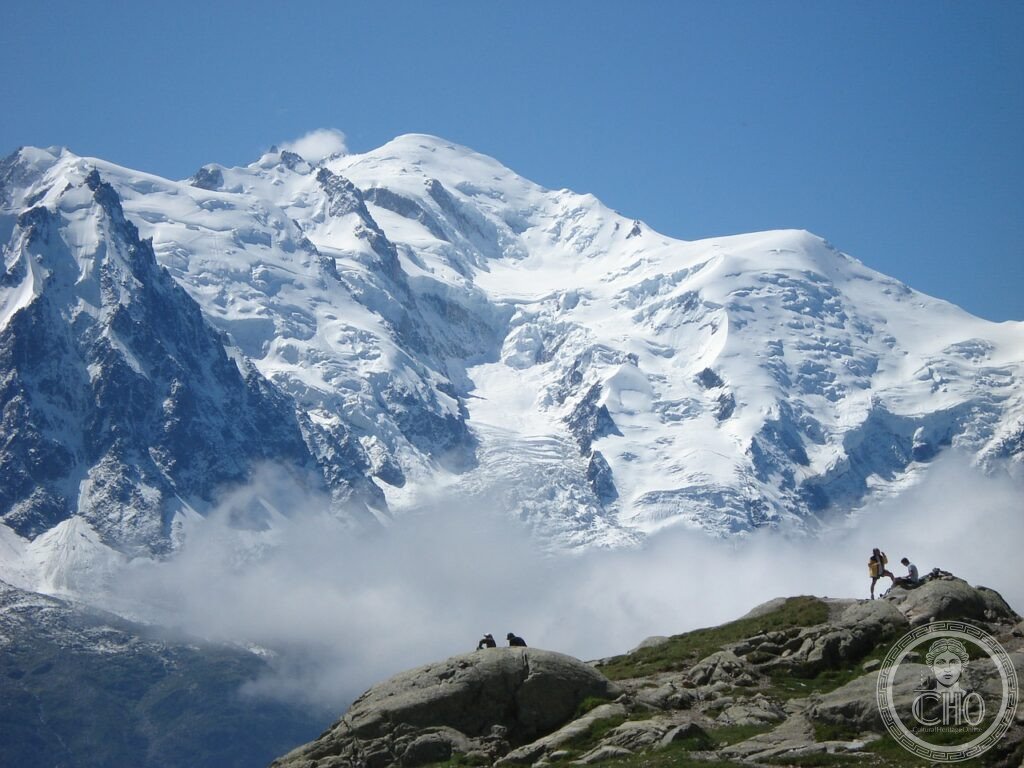
Mont Blanc — Alps

Mont Blanc Alps Chamonix France Italy highest mountain Western Europe snow glacier
Mont Blanc (4,808 m) seen from the Italian side, Courmayeur, Aosta Valley, Italy (the most precisely tall single mountain in Western Europe: Mont Blanc at 4,808 m above sea level is the highest peak in the Alps and in Western Europe — the most precisely measured single Western European mountain summit; the height (the most precisely variable single Mont Blanc summit height: the exact height of Mont Blanc changes from year to year because its summit is an ice cap, not a rock summit — the most precisely ice single variable summit height in any European heritage mountain: the ice cap varies in thickness with annual snowfall and temperature — the most precisely annual single variable European heritage summit measurement; the most recent precise measurement (2021) gives 4,807.81 m — the most precisely recent single Western European summit measurement); the glaciers (the most precisely large single Mont Blanc glacier cluster: the Chamonix valley below Mont Blanc is surrounded by 24 glaciers — the most precisely 24 single glacier count on any one Western European heritage massif; the Mer de Glace (the most precisely large single French heritage glacier: the Mer de Glace on the French side is the longest glacier in France (11 km) and the second-largest in the Alps — the most precisely long single French heritage glacier; the Mer de Glace has retreated significantly — the most precisely recession single iconic French heritage glacier: since 1820 the Mer de Glace has retreated by 2.5 km — the most precisely measured single Western European glacier retreat in any heritage site)), Mont Blanc Massif, French Alps. Photo via Wikimedia Commons.
Chamonix-Mont-Blanc (France) / Courmayeur (Italy) / Martigny (Switzerland) · 4,808 m (highest mountain in the Alps + Western Europe); first ascent 8 August 1786 (Balmat + Paccard); Aiguille du Midi (3,842m; cable car); Tour du Mont Blanc trek (170km, 10 days); Mer de Glace glacier (11km, France’s longest; 2.5km retreat since 1820); Mont Blanc Tunnel (11.6km France-Italy); Chamonix = birthplace of modern alpinism

Mont Blanc — Alps

The highest mountain in the Alps and in Western Europe — Mont Blanc, on the French-Italian-Swiss border at 4,808 metres, was first summited in 1786, gave birth to the sport of alpinism in the valley of Chamonix, hosts the most iconic multi-country trek in Europe (the Tour du Mont Blanc), and is threaded by the 11.6-kilometre Mont Blanc Tunnel that connects France and Italy beneath its glaciers.

At a glance

Mont Blanc (the most precisely birthplace single alpinism heritage destination: Chamonix-Mont-Blanc is considered the birthplace of modern alpinism — the most precisely origin single mountain sport heritage town: the sport of climbing mountains for pleasure and challenge was effectively born in Chamonix in the 18th century — the most precisely 18th-century single mountain sport heritage origin; the Compagnie des Guides (the most precisely oldest single mountain guide association in the world: the Compagnie des Guides de Chamonix was founded in 1821 — the most precisely 1821 single mountain guide heritage association founding: the oldest still-active mountain guide association in the world — the most precisely oldest single continuous professional mountain guide heritage association in any Alpine UNESCO adjacent destination); the massif (the most precisely international single Mont Blanc heritage massif: Mont Blanc is claimed by both France and Italy — the most precisely disputed single modern European mountain summit sovereignty: France and Italy have not formally agreed which country the summit belongs to — the most precisely unresolved single mountain sovereignty heritage question in any Western European mountain; the watershed (the most precisely water single Italian summit side: the Italian side says the summit is French; the French side says it’s shared — the most precisely polite single bilateral heritage mountain summit dispute in any European high Alpine massif)).

Key facts

  • The first ascent: the most precisely historic single Western European mountain summit — 8 August 1786 (the most precisely dated single first Alpine summit: Jacques Balmat (a local crystal-hunter) and Dr. Michel-Gabriel Paccard reached the summit on 8 August 1786 — the most precisely first single Alpine summit in recorded history; Balmat (the most precisely crystal-hunter single mountaineering heritage first summiteer: Jacques Balmat was a crystal-hunter who had made multiple reconnaissance attempts — the most precisely reconnaissance single heritage first summiteer); Horace-Bénédict de Saussure (the most precisely prize single Mont Blanc heritage first ascent incentive: the Swiss scientist Horace-Bénédict de Saussure had offered a prize for the first ascent of Mont Blanc in 1760 — the most precisely prize single scientific heritage mountain ascent incentive in any Western European heritage peak); the following year de Saussure himself reached the summit (1787) with Balmat — the most precisely instrument single first scientific summit: de Saussure brought barometers, thermometers, and a hygrometer to the top — the most precisely scientific single first Western European heritage mountain summit measurement)
  • The Aiguille du Midi: the most precisely accessible single high-altitude heritage viewpoint in Western Europe — the cable car (the most precisely 3,842m single cable car top altitude: the Aiguille du Midi cable car (Téléphérique de l’Aiguille du Midi) from Chamonix (1,035m) to the Aiguille du Midi (3,842m) — the most precisely large single altitude-gain in any European cable car: 2,807 m of ascent in approximately 20 minutes — the most precisely rapid single altitude gain on any Western European cable car heritage ride; the view (the most precisely 360° single panoramic Alpine heritage viewpoint: from the Aiguille du Midi, on a clear day, one can see the entire Mont Blanc massif, the Matterhorn, Monte Rosa, and across to the Apennines — the most precisely multi-country single Alpine heritage panoramic viewpoint for any visitor without technical climbing ability); the Vallée Blanche (the most precisely long single accessible glacier ski run: the Vallée Blanche off-piste run from the Aiguille du Midi (3,842m) to Chamonix (1,035m) is 22 km long — the most precisely long single off-piste glacier ski heritage run in any Alpine destination)
  • The Tour du Mont Blanc: the most precisely iconic single European multi-day trek — the route (the most precisely 170km single circumnavigation alpine heritage trek: the TMB circumnavigates the entire Mont Blanc massif — the most precisely complete single circumnavigation trek in any Alpine heritage destination; 10 standard stages over 10-12 days — the most precisely 10-stage single European heritage alpine trek; crossing into France, Italy, and Switzerland — the most precisely three-country single European heritage trekking circuit; the terrain (the most precisely varied single TMB heritage terrain: 10,000 m of ascent total; glacier viewpoints; alpine meadows; high cols; Italian and French mountain food — the most precisely gastronomy single diverse alpine heritage multi-day trek in any European mountain destination))
  • GPS: 45.8326° N, 6.8652° E

History

The early exploration (the most precisely 18th-century single Chamonix heritage tourism origin: English travellers began visiting Chamonix in the early 18th century — the most precisely Grand Tour single Alpine heritage tourist origin: Chamonix entered the Grand Tour circuit for English aristocrats in the 1740s — the most precisely aristocratic single English heritage Alpine visit; William Windham and Richard Pococke (the most precisely 1741 single Chamonix heritage first documented English visit: the first documented English visitors — the most precisely first single recorded English Alpine heritage visit; the scientific expeditions (the most precisely de Saussure single Mont Blanc heritage natural philosophy: Horace-Bénédict de Saussure — described in Key Facts — studied glaciers, rock formations, meteorology, and flora around Mont Blanc for decades — the most precisely multi-decade single scientific Alpine heritage research programme); the golden age of alpinism (the most precisely 1854-1865 single Alpine heritage golden age: between 1854 and 1865 all of the major Alpine peaks were first climbed — the most precisely decade single first-ascent Alpine heritage burst; the Mont Blanc tunnel (the most precisely 1965 single tunnel heritage opening: the Mont Blanc Tunnel (11.6 km) opened on 16 July 1965 — the most precisely 11.6km single Alpine heritage tunnel: the longest road tunnel in the world at its opening — the most precisely longest single road tunnel in the world at opening in any Alpine heritage massif; the 1999 fire (the most precisely fatal single Mont Blanc tunnel heritage disaster: a fire in the Mont Blanc Tunnel on 24 March 1999 killed 39 people — the most precisely tunnel single deadly Alpine heritage fire in any mountain heritage road tunnel)); UNESCO adjacent (not a formal UNESCO WHS, but the Alpine heritage landscapes are protected by Swiss, French, and Italian national law).

What you see

Chamonix (the most precisely mountain single high-street heritage town: Chamonix-Mont-Blanc is an international mountain town at 1,035 m — the most precisely high-altitude single Alpine heritage town with full urban amenities; the most precisely sports-shop single Alpine heritage high-street: Chamonix’s main street (Rue du Docteur Paccard) is lined with the world’s finest alpine equipment shops — the most precisely equipment single Alpine heritage commercial street in any UNESCO adjacent Alpine destination; the Musée Alpin (the most precisely Alpine heritage single museum in Chamonix: the Musée Alpin documents the history of alpinism from Balmat to the modern era — the most precisely comprehensive single alpinism heritage museum in any Alpine town; the Mer de Glace (the most precisely accessible single glacier in France: the Mer de Glace can be reached by the Montenvers rack-railway from Chamonix (1,913 m; 20 min) — the most precisely rack single railway heritage approach to any French glacier; the ice cave (the most precisely carved single glacier ice cave heritage attraction: a carved ice cave within the Mer de Glace glacier can be entered — the most precisely interior single glacier heritage experience in any French UNESCO adjacent area; the ice-level marking (the most precisely painted single glacier retreat heritage record: red painted lines on the cliff above the Mer de Glace show where the glacier surface was in past decades — the most precisely visual single climate change heritage record in any European mountain glacier).

Practical information

  • Getting there: train from Geneva (1h 15min; direct; most precisely convenient single Alpine gateway heritage city: Geneva Airport (GVA) is the primary gateway); or from Paris (Lyon-Part-Dieu 5h 30min + change); Mont Blanc Express from Martigny (Switzerland) to Chamonix — the most precisely scenic single Swiss-French heritage mountain railway (the most precisely 1908 single railway heritage inauguration: the Mont Blanc Express has run since 1908 — the most precisely century-old single Alpine heritage railway); driving via the Mont Blanc Tunnel (11.6 km; from Courmayeur, Italy; toll both ways — the most precisely convenient single Italian approach through any Alpine heritage tunnel; or the Col du Mont Blanc (the most precisely seasonal single road heritage pass: the Col du Mont Blanc road is closed November-May — the most precisely seasonal single Western European alpine heritage road closure))
  • Aiguille du Midi and Vallée Blanche: described in Key Facts; book the cable car in advance in peak summer (July-August) — the most precisely necessary single advance booking at any Alpine heritage cable car; the Aiguille du Midi (the most precisely altitude single European cable car top: 3,842 m — altitude sickness possible (the most precisely altitude single Aiguille du Midi heritage health consideration: the cable car rises 2,807 m in 20 minutes — the most precisely rapid single altitude gain causing sickness risk in any European cable car); the Panoramic Mont Blanc gondola (the most precisely international single Alpine heritage cable car crossing: from the Aiguille du Midi to Pointe Helbronner (Italy) via Chamonix and the Vallée Blanche — the most precisely France-Italy single cable car heritage border crossing in any Alpine heritage peak)
  • The Tour du Mont Blanc in practice: described in Key Facts; best season: July-September; book refuges/gîtes 3-6 months in advance for July-August — the most precisely booked-out single European heritage multi-day trek accommodation; the standard direction (the most precisely anticlockwise single TMB heritage direction: most walkers do the TMB anticlockwise — the most precisely traditional single direction for any European heritage mountain circuit trek); official TMB website (tourdumontblanc.com) for stage descriptions, refuges, and weather forecasts; the UTMB ultra-marathon (the most precisely ultra single Mont Blanc heritage running race: the Ultra-Trail du Mont Blanc (UTMB) covers 171 km around the massif in under 48 hours — the most precisely prestigious single ultra-mountain heritage running race in any European Alpine destination)

Getting there

Train from Geneva (1h 15min) or Mont Blanc Express from Martigny. Drive via Mont Blanc Tunnel from Italy (Courmayeur side). Book Aiguille du Midi cable car in advance. GPS: 45.8326, 6.8652.

Nearby

  • Courmayeur and Aosta Valley (Italy) — 11.6 km via the Mont Blanc Tunnel (or 2h over the Col Ferret on foot); the Italian face of Mont Blanc (more rugged and less visited than French side); Skyway Monte Bianco gondola to Pointe Helbronner (3,466 m); medieval Aosta (Roman amphitheatre; 1h east) — most precisely Roman single Italian Alpine heritage city
  • Matterhorn and Zermatt — 150 km east (2h 45min by train from Chamonix via Martigny and Visp); the world’s most photographed mountain (most precisely iconic single Matterhorn heritage silhouette); car-free Zermatt; Matterhorn Glacier Paradise cable car (3,883 m; year-round snow); Klein Matterhorn
  • Annecy — 90 km west (1h by car/bus); medieval old town on the turquoise Lac d’Annecy (most precisely clean single European heritage lake: one of the cleanest natural lakes in Europe); Palais de l’Île; Chateau d’Annecy; most precisely picturesque single French Alpine heritage town within 2h of Mont Blanc

Sources

  • Wikipedia, Mont Blanc; Aiguille du Midi; Tour du Mont Blanc; Mer de Glace, accessed June 2026
  • Horace-Bénédict de Saussure, Voyages dans les Alpes (4 vols., 1779-1796), Neuchâtel
  • Ronald Clark, The Alps, Alfred A. Knopf, 1973

Hero image: Mont Blanc, French Alps, Wikimedia Commons. Editorial text © Cultural Heritage Online, 2026.

📷 Diventa un fotografo di Cultural Heritage Online

Condividi le tue foto dei luoghi: restano pubblicate con la tua firma come autore. Più vengono viste, più ti fai conoscere — e presto un concorso premierà le foto più apprezzate.

Accedi o registrati gratis per aggiungere una foto
📋 Copy & share on social
Scroll to Top