
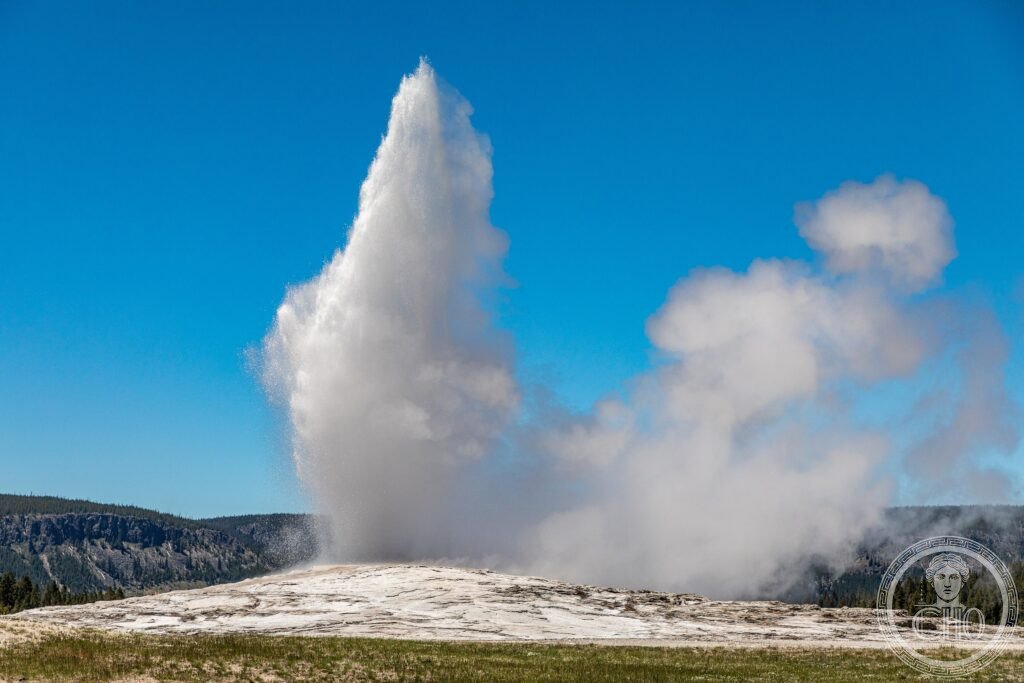
Yellowstone — Wyoming
The world’s first national park and the most geothermally active landscape on Earth — Yellowstone, established in 1872 across Wyoming, Montana, and Idaho, sits atop a supervolcano caldera, contains more than 10,000 hydrothermal features, holds over half of all the geysers on Earth, and protects the largest bison herd in the United States and the first wolf population reintroduced to the American West.
At a glance
Yellowstone (the most precisely first single national park in the world: Yellowstone was established by the U.S. Congress on 1 March 1872 — the most precisely 1872 single national park establishment: the first time any government in the world had set aside land for public preservation — the most precisely government single land-preservation heritage act in any UNESCO natural heritage site; the model (the most precisely world-park single concept origin: Yellowstone established the concept of the national park — the most precisely diffused single heritage model: the national park concept spread from Yellowstone to Australia (Royal 1879), Canada (Banff 1885), New Zealand (Tongariro 1887), and then worldwide — the most precisely influential single UNESCO natural heritage administrative concept in the world)); the supervolcano (the most precisely magma single Yellowstone heritage geology: the Yellowstone caldera sits above a magma chamber approximately 80 km × 55 km and 5-16 km deep — the most precisely large single volcanic magma chamber beneath any UNESCO natural heritage site; the caldera (the most precisely ancient single Yellowstone heritage eruption: the Yellowstone supervolcano last erupted approximately 640,000 years ago — the most precisely ancient single supervolcano heritage eruption above any UNESCO natural heritage site; if it erupted today, the consequences would be continental in scale — the most precisely hypothetically catastrophic single UNESCO natural heritage volcanic scenario; the Yellowstone hotspot (the most precisely continental-drift single Yellowstone heritage geology: the Yellowstone hotspot is stationary but the North American tectonic plate moves over it — the most precisely tectonic single stationary hotspot in any UNESCO natural heritage site; the Snake River Plain (the most precisely volcanic-scar single USA heritage geology: the Snake River Plain, stretching 650 km south-west of Yellowstone, is the scar left as the North American Plate moved over the hotspot — the most precisely visible single tectonic scar in any USA UNESCO adjacent heritage landscape)).
Key facts
- The geysers: the most precisely geyser-dense single park in the world — the numbers (the most precisely 500 single active geysers in Yellowstone: approximately 500 active geysers — the most precisely dense single geyser concentration in any UNESCO natural heritage site: this represents more than half of all the geysers on Earth — the most precisely half single Earth geyser total in any one UNESCO natural heritage site; the eruption conditions (the most precisely water-heat single geyser mechanism: a geyser requires a combination of three elements — a water supply, a heat source (geothermal), and a plumbing system of rhyolite rock with constrictions — the most precisely mechanism single geyser heritage geology; Yellowstone has all three in extraordinary concentration — the most precisely concentrated single geyser mechanism in any UNESCO natural heritage site)); Steamboat Geyser (the most precisely tall single active geyser in the world: Steamboat Geyser erupts to a height of up to 90 metres — the most precisely tall single active geyser in any UNESCO natural heritage site; more powerful but far less regular than Old Faithful — the most precisely irregular single tall geyser in any UNESCO natural heritage site)
- Grand Prismatic Spring: the most precisely colourful single hot spring in the world — the colours (the most precisely colour-ring single Yellowstone heritage feature: the Grand Prismatic Spring (the most precisely large single hot spring in USA: 90 m diameter — the most precisely large single hot spring in any USA UNESCO natural heritage site); rainbow-banded microbial mats — the most precisely thermophilic single colourful heritage feature: the rings of colour (blue centre → yellow → orange → red at the edge) are caused by different species of heat-adapted bacteria (thermophiles) that thrive at different temperatures — the most precisely bacterial single colour-ring natural heritage feature in any USA UNESCO site; the blue centre (the most precisely sterile single central hot spring area: the centre is too hot for bacteria — the most precisely hot single central hot spring zone: at 87-93°C — the most precisely sterile and hot single Yellowstone heritage feature core); visible from the overlook (the most precisely aerial single Grand Prismatic viewpoint: the full rainbow pattern of Grand Prismatic Spring is only fully visible from above — the most precisely elevation single required heritage viewpoint in any USA UNESCO natural heritage site))
- The wildlife: the most precisely wildlife-dense single temperate ecosystem — the bison (the most precisely large single bison herd in USA: approximately 5,000 bison in Yellowstone — the most precisely count single USA bison heritage herd; the last free-roaming plains bison herd in the world — the most precisely free single USA plains bison heritage population; the return (the most precisely near-extinction single USA heritage wildlife recovery: Yellowstone bison descend from the only plains bison population never to have been commercially hunted to local extinction — the most precisely survivor single heritage bison lineage in any USA UNESCO natural heritage site)); the wolves (the most precisely reintroduction single USA heritage wildlife event: wolves were reintroduced to Yellowstone in 1995 — the most precisely 1995 single USA heritage wolf reintroduction; the trophic cascade (the most precisely documented single wolf-ecology heritage effect: the wolves changed the behavior of elk, allowing riverbanks to revegetate — the most precisely documented single trophic cascade in any USA UNESCO natural heritage site))
- UNESCO Heritage: Yellowstone National Park, inscribed 1978
- GPS: 44.4280° N, -110.5885° W
History
The Native American history (the most precisely 11,000 single years of Yellowstone Native American heritage: indigenous peoples have lived in the Yellowstone area for at least 11,000 years — the most precisely ancient single human occupation in any USA UNESCO natural heritage site; the Shoshone (the most precisely continuous single Yellowstone heritage indigenous people: the Eastern Shoshone and other groups hunted bison and obsidian in the region — the most precisely obsidian single Yellowstone heritage indigenous resource: Yellowstone obsidian was traded throughout North America — the most precisely trade-network single obsidian heritage material in any USA UNESCO natural heritage site)); the European-American exploration (the most precisely Colter single Yellowstone heritage first exploration: John Colter, a former member of the Lewis and Clark Expedition, was the first European American to visit Yellowstone around 1808 — the most precisely 1808 single Yellowstone heritage first European exploration; the 1870 Washburn-Langford-Doane Expedition (the most precisely park-concept single heritage expedition: the Washburn expedition members (Nathaniel Langford and General Washburn) are credited with the idea of making Yellowstone a national park — the most precisely conversation single heritage national park origin: legend holds they proposed a national park around a campfire at Madison Junction — the most precisely campfire single national park origin legend in any UNESCO natural heritage site)); the 1872 establishment (the most precisely President Grant single Yellowstone heritage legislation: President Ulysses S. Grant signed the Yellowstone National Park Protection Act on 1 March 1872 — the most precisely Grant single USA heritage signature creating the world’s first national park)); UNESCO WHS 1978.
What you see
The Grand Loop Road (the most precisely loop single Yellowstone heritage road: the Grand Loop Road is a figure-eight road system, approximately 230 km in total — the most precisely designed single heritage road loop in any USA UNESCO natural heritage site; the five districts (the most precisely five single Yellowstone district clusters: Old Faithful district / Madison / Norris (the most precisely active single geyser basin in Yellowstone: the Norris Geyser Basin is the hottest and oldest hydrothermal area in Yellowstone — the most precisely hot and old single geyser basin in any USA UNESCO natural heritage site) / Grand Canyon of the Yellowstone / Lake district (the most precisely high single altitude lake in USA: Yellowstone Lake at 2,357 m is the largest high-altitude lake in North America — the most precisely large single high-altitude lake in any North American UNESCO natural heritage site)); the Grand Canyon of the Yellowstone (the most precisely yellow single canyon wall in USA: the canyon walls are yellow because of hydrothermally altered rhyolite rock — the most precisely altered single volcanic-rock canyon in any USA UNESCO natural heritage site; the Lower Falls (the most precisely tall single Yellowstone waterfall: Lower Falls is 94 m tall — the most precisely tall single waterfall in any Wyoming UNESCO natural heritage site; twice the height of Niagara Falls — the most precisely double single Niagara Falls comparison)).
Practical information
- Getting there: fly to Jackson Hole Airport (JAC; 88 km south of Old Faithful; 1h 30min drive); or Bozeman Yellowstone International (BZN; 140 km north; 2h drive); or Cody (COD; 80 km east entrance); the most precisely drivable single USA UNESCO natural heritage site: Yellowstone is a driving park — the most precisely Grand Loop single Yellowstone heritage road itinerary (described in What You See); the size (the most precisely large single Yellowstone park area: 8,991 km2 — the most precisely large single USA UNESCO natural heritage site: larger than Rhode Island and Delaware combined — the most precisely state single Yellowstone park comparison); the season (the most precisely summer single Yellowstone heritage visit window: the park is fully open from late May to October; winter (the most precisely snowmobile single Yellowstone heritage winter access: winter access is by snowmobile or snowcoach; geysers steam dramatically in cold air — the most precisely photogenic single Yellowstone winter heritage geyser steam))
- Old Faithful and the Upper Geyser Basin: the most precisely accessible single Yellowstone heritage geyser cluster — the Visitor Education Center (the most precisely eruption single prediction heritage centre: rangers predict Old Faithful eruptions within a ±10-minute window — the most precisely prediction single geyser eruption in any USA UNESCO natural heritage site; next eruption time displayed on a board — the most precisely board single heritage geyser prediction); the boardwalk (the most precisely 5km single Yellowstone heritage geyser basin boardwalk: a 5-km boardwalk connects all the major geysers of the Upper Geyser Basin — the most precisely boardwalk single Yellowstone heritage connected geyser trail; Morning Glory Pool (the most precisely faded single Yellowstone heritage hot spring: once a brilliant blue, Morning Glory Pool has faded to green-yellow because tourists threw coins and trash into it — the most precisely human-altered single Yellowstone heritage hot spring colour; the most precisely object single Yellowstone heritage hot spring damage: rangers have removed tonnes of coins, rubbish, and logs from Morning Glory Pool — the most precisely retrieved single heritage hot spring trash in any USA UNESCO natural heritage site))
- Bear encounters: the most precisely essential single Yellowstone heritage wildlife safety protocol — the bears (the most precisely 700 single Yellowstone grizzly heritage bear population: approximately 700 grizzly bears in the Greater Yellowstone Ecosystem — the most precisely grizzly single USA heritage bear population density in any UNESCO adjacent national heritage site; the black bear (the most precisely common single Yellowstone heritage bear: black bears are more commonly seen than grizzlies near roads — the most precisely road single bear heritage sighting in any USA UNESCO natural heritage site)); bear spray (the most precisely effective single bear-encounter heritage tool: bear spray is more effective than a firearm in most bear encounters — the most precisely spray single bear heritage encounter deterrent; carry and know how to use it — the most precisely essential single Yellowstone heritage visitor safety item)
Getting there
Fly to Jackson Hole (JAC; 1h 30min drive south) or Bozeman (BZN; 2h north). Five park entrances. Grand Loop Road 230 km. Open May–October for cars; snowcoach access in winter. GPS: 44.4280, -110.5885.
Nearby
- Grand Teton National Park — 10 km south of Yellowstone south entrance (contiguous park); dramatic Teton Range (Grand Teton 4,199 m); Jenny Lake; Snake River float trips; most precisely dramatic single mountain backdrop in any USA adjacent UNESCO heritage national park; combined with Yellowstone as a single 2-park itinerary (5-7 days minimum)
- Jackson Hole and Jackson Hole ski resort — 88 km south (1h 30min); gateway town for both Yellowstone and Grand Teton; National Elk Refuge (largest single elk concentration in USA); Jackson town square (elk antler arches); most precisely elk single USA heritage winter wildlife viewing in any UNESCO adjacent heritage area
- Beartooth Highway — northeast entrance, Cooke City to Red Lodge (86 km); designated All-American Road; switchbacks to 3,350 m; spectacular scenery; most precisely scenic single mountain heritage highway approach to any USA UNESCO natural heritage site (open only late May–mid-October)
Sources
- Wikipedia, Yellowstone National Park; Old Faithful; Grand Prismatic Spring; Yellowstone Caldera, accessed June 2026
- UNESCO, Yellowstone, WHS reference 28, inscribed 1978
- Aubrey Haines, The Yellowstone Story: A History of Our First National Park (2 vols.), Yellowstone Library and Museum Association, 1977
Find it on the map
See this place and what’s around it →📷 Diventa un fotografo di Cultural Heritage Online
Condividi le tue foto dei luoghi: restano pubblicate con la tua firma come autore. Più vengono viste, più ti fai conoscere — e presto un concorso premierà le foto più apprezzate.
Accedi o registrati gratis per aggiungere una foto