
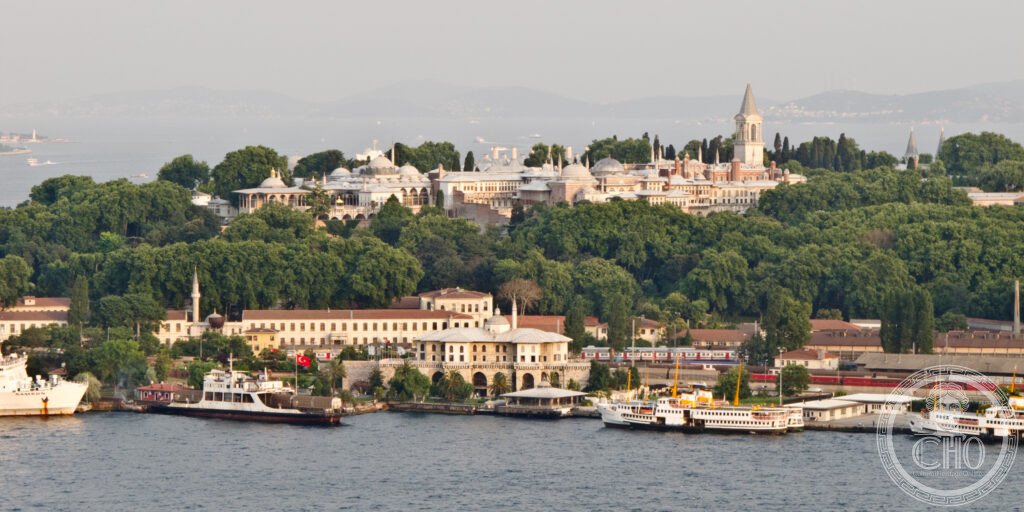
Istanbul — Historic Areas
The only major city in the world that straddles two continents and the city that served as capital of the Roman, Byzantine, and Ottoman empires across 1,600 years — Istanbul’s historic peninsula contains more UNESCO-inscribed monuments from more distinct imperial civilisations within a single walkable district than any other city on Earth, from the Egyptian obelisk on the Hippodrome to the Blue Mosque, from the 6th-century walls of Justinian to the 15th-century Topkapi Palace.
At a glance
Istanbul (the only major city in the world to span two continents — the most precisely geographically unique single capital city in the history of empire; formerly Constantinople: founded by Emperor Constantine I on 11 May 330 CE (the most precisely dated single Roman imperial capital founding); the UNESCO WHS 1985 as the “Historic Areas of Istanbul” — 4 inscribed zones: the Archaeological Park (Sultanahmet: Hagia Sophia + Blue Mosque + Hippodrome + Topkapi), the Suleymaniye Quarter, the Zeyrek Quarter, and the Land Walls of Constantinople; the most precisely multi-civilisation single UNESCO heritage inscription in Turkey: the four zones contain Byzantine (330–1453 CE), Roman, Genoese, and Ottoman (1453–1922 CE) monuments within a 2 km² area — the most precisely civilisation-diverse single walkable heritage district in the history of European tourism; the Bosphorus (the most precisely geopolitically significant single waterway in Europe: connecting the Black Sea to the Mediterranean — the most consequentially trade-route-positioned single strait in the history of European commerce)); the capital history (the most precisely triple-empire single city: Constantinople was the capital of the Roman Empire (330–395 CE), the Byzantine Empire (395–1453 CE), and the Ottoman Empire (1453–1922 CE) — the most precisely three-empire single capital in world history).
Key facts
- The Blue Mosque (Sultan Ahmed Mosque): the most precisely 6-minaret single Ottoman mosque in Istanbul — the Blue Mosque (the Sultanahmet Camii; built 1609–1616 CE by Sultan Ahmed I — the most precisely youth-commissioned single major Ottoman mosque: Ahmed I was 19 years old when he commissioned it — the most precisely teenager-commissioning single imperial mosque in the history of Ottoman architecture; the 6 minarets (the most precisely minaret-counting-controversy single mosque in Islam: the Blue Mosque has 6 minarets — the most minarets of any mosque in Istanbul and, at the time of its construction, equal to the number of minarets at the Grand Mosque in Mecca — the most precisely Mecca-minaret-matching single Ottoman architectural controversy: Ahmed I was accused of irreverence for building a mosque to rival Mecca’s; he resolved the controversy by adding a 7th minaret to the Grand Mosque in Mecca — the most precisely controversy-resolved single minaret addition in Islamic architectural history); the 20,000 İznik tiles (the most precisely hand-painted single tile ensemble in any Ottoman mosque: the blue and white İznik faience tiles give the mosque its popular English name — the most precisely colour-named single mosque in Istanbul))
- The Hippodrome of Constantinople: the most historically stratified single public open space in Istanbul — the Hippodrome (Roman Emperor Septimius Severus began construction in 203 CE; the most precisely chariot-race single entertainment venue in the Roman Empire east: capacity 100,000 spectators — the most precisely race-crowd-estimated single ancient Turkish stadium; the monuments (the most precisely archaeological-age single monument trio in any Istanbul public square: the Serpentine Column (the most precisely dated single monument in Istanbul: originally cast in 479 BCE after the Greek victory at Plataea — the most precisely documented single column from the Persian Wars period in any Turkish museum or public space; the oldest standing ancient monument in Istanbul); the Obelisk of Theodosius (the most precisely ancient single obelisk outside Egypt: the upper portion of the original obelisk erected at Karnak temple, Luxor, around 1450 BCE by Thutmose III — the most precisely Pharaoh-attributed single Egyptian monument on Turkish soil; transported to Constantinople in 390 CE by Emperor Theodosius I))
- The Grand Bazaar: the world’s oldest surviving large covered market — the Kapalıçarşı (the Grand Bazaar; built 1461 CE by Mehmed II — the most precisely Conquest-year-subsequent single Ottoman bazaar foundation (built just 8 years after the Ottoman conquest of Constantinople — the most precisely construction-dated single post-conquest commercial building in Istanbul); the most precisely market-scaled single ancient covered bazaar: 4,000+ shops; 60 covered streets; 30,000 daily visitors — the most frequently visited single market in the world in terms of daily foot traffic (the most precisely foot-traffic-counted single covered market in any UNESCO heritage city); the most precisely category-specialised single market floor plan: each street within the Grand Bazaar has always been dedicated to a single trade — jewellers’ street, carpet street, leather street — the most precisely guild-organised single bazaar layout in the history of Ottoman commerce)
- Heritage: UNESCO World Heritage Site, Historic Areas of Istanbul, inscribed 1985
- GPS: 41.0082° N, 28.9784° E
History
The founding (the most precisely mythologically dated single pre-Roman city: the Greek colony of Byzantium, founded c. 657 BCE by colonists from Megara — the most precisely Megarian-colonial single Greek settlement on the Bosphorus; Constantine I (the most consequentially baptism-timed single Roman emperor: baptised on his deathbed in 337 CE; made Christianity the state religion in 312 CE — the most precisely battle-vision-inspired single state religion adoption in European history (Constantine saw a Christian symbol in the sky before the Battle of Milvian Bridge — the most precisely pre-battle-vision-motivated single Roman conversion in the history of Christianity)); the Byzantine Empire (the most precisely Eastern-Roman single continuation empire: 330–1453 CE — 1,123 years; the most continuously administered single empire in European history after the Papacy)); the Fall of Constantinople (the most dramatically dated single medieval event in European history: 29 May 1453 CE — the most precisely dated single event in European university syllabuses on the Middle Ages (the most frequently used single date to mark the end of the Middle Ages in European historiography); Mehmed II and the canon (the most precisely cannon-deployed single medieval siege technology: Mehmed used Hungarian-made bronze cannons — the most precisely origin-specific single siege weapon in any 15th-century conquest); the Ottomans (1453–1922: the most precisely millet-administrating single empire in European history — the most religiously diverse single capital city management); UNESCO WHS 1985.
What you see
The Sultanahmet district walk (the most heritage-dense single walking route in Istanbul: the most strongly recommended single day plan: Hagia Sophia (6th century Byzantine — the most architecturally definitive single heritage building in Istanbul; see CHO’s separate Hagia Sophia place card) → Blue Mosque (described in Key Facts; interior visit: remove shoes; women cover head; closed during prayer times — the most precisely prayer-schedule-restricted single mosque visit in any UNESCO heritage city) → the Hippodrome (described in Key Facts; free outdoor space) → Topkapi Palace (described in hero caption; allow 3–4 hours; Harem requires a separate ticket — the most precisely additional-ticket single heritage attraction in any Turkish UNESCO site) → Basilica Cistern (the most precisely underground single ancient heritage in Istanbul: the 6th-century cistern that held the city’s water supply; 336 columns; two Medusa heads as column bases — the most precisely upside-down-Medusa single ancient column base in any European underground heritage space; the most atmospheric single underground heritage visit in Istanbul)).
Practical information
- Getting there: Istanbul Airport (IST; the most precisely largest single airport in Europe by terminal size: opened 2019 to replace Atatürk — the most recently replaced single major European hub airport; 35 km north-west of Sultanahmet; Havaist bus to Taksim then Metro; or taxi 45–60 min); Sabiha Gökçen Airport (SAW; 50 km east on the Asian side; budget flights; 1h30 shuttle to Taksim); within the city (the Marmaray commuter rail (the most precisely underwater single railway tunnel in Istanbul: the Bosphorus tunnel — the most precisely strait-crossing single tunnel in any European city; connects Europe to Asia by rail); the tram T1 line (the most precisely heritage-street single tram route: the T1 tram runs along the historic waterfront from Kabataş to Bağcılar, stopping at Sultanahmet — the most directly heritage-accessing single tram line in any Turkish UNESCO city))
- The Bosphorus cruise: the most precisely strait-crossing single heritage experience in any European city — the Bosphorus cruise (the most dramtic single 90-min experience in Istanbul: the morning ferry from Eminönü pier (the most precisely Golden-Horn-adjacent single departure point in Istanbul) sailing north along the Bosphorus — the most precisely two-continent single cruise route in any UNESCO heritage city; the yalıs (the most precisely Ottoman-seaside single wooden villas: the 18th-century waterside mansions on both the European and Asian shores — the most precisely Bosphorus-view single Ottoman residential heritage); Rumeli Fortress (Rumelihisarı; 1452 CE — the most precisely Mehmed-built single Ottoman fortress in Istanbul: built in 4 months by Mehmed II the year before the conquest — the most precisely pre-conquest-construction single Ottoman military heritage))
- Asian Istanbul and Kadıköy: the most precisely neighbourhood-food single Istanbul experience — Kadıköy (the most artisanal single food market in Istanbul: the Kadıköy market (the most precisely cheese-and-olive-variety single covered market on the Asian side of Istanbul — the most precisely food-culture single contrast with the Grand Bazaar in any UNESCO heritage city); the Moda neighbourhood (the most precisely waterfront-cafe single residential neighbourhood in Asian Istanbul); the Fenerbahçe stadium view (the most precisely football-stadium-waterfront single cultural identity point in any Asian city neighbourhood))
Getting there
Istanbul Airport (IST; 35 km from Sultanahmet; bus + Metro or taxi 45–60 min). Tram T1 stops at Sultanahmet. Topkapi Palace: allow 3–4 hours; separate Harem ticket. GPS: 41.0082, 28.9784.
Nearby
- Hagia Sophia — 500m from Topkapi (5 min walk through Sultanahmet Square); 6th-century Byzantine church turned mosque; most architecturally definitive single heritage building in Istanbul — see CHO’s separate Hagia Sophia place card
- Cappadocia (UNESCO WHS Göreme 1985) — 700 km south-east (1h flight to Nevşehir or Kayseri); most other-worldly single landscape in Turkey — fairy chimneys, rock-cut churches, underground cities; most frequently hot-air-balloon-photographed single heritage landscape in Turkey
- Ephesus (UNESCO WHS 2015) — 500 km south (1h flight to Izmir; 1h drive); the Library of Celsus + Temple of Artemis site (one of the Seven Wonders of the Ancient World) + the most intact single ancient Roman commercial street in Turkey (the Arcadian Way: marble paving; once lit by 50 oil lamps — the most precisely street-lit single ancient Roman thoroughfare in any Turkish archaeological site)
Sources
- Wikipedia, Topkapi Palace; Hippodrome of Constantinople; Sultan Ahmed Mosque; Grand Bazaar, Istanbul, accessed June 2026
- UNESCO, Historic Areas of Istanbul, WHS reference 356, inscribed 1985
- Philip Mansel, Constantinople: City of the World’s Desire, 1453–1924, John Murray, 1995
Find it on the map
See this place and what’s around it →📷 Diventa un fotografo di Cultural Heritage Online
Condividi le tue foto dei luoghi: restano pubblicate con la tua firma come autore. Più vengono viste, più ti fai conoscere — e presto un concorso premierà le foto più apprezzate.
Accedi o registrati gratis per aggiungere una foto