
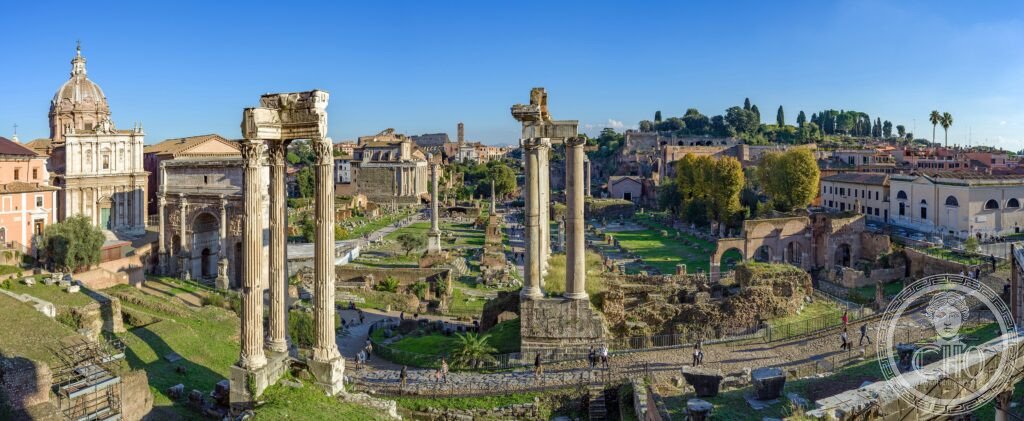
Rome — The Eternal City
The most historically layered city in Western civilisation and the capital of the longest-lasting empire in the ancient world — Rome, built on seven hills above the Tiber River and founded according to tradition in 753 BCE, contains a greater density of historical monuments, ancient ruins, Renaissance palaces, and Baroque fountains than any other city in the world, compressed into a historic centre of just 14 km².
At a glance
Rome (la Città Eterna — the Eternal City; UNESCO WHS 1980 as the “Historic Centre of Rome,” extended in 1990 to include the properties of the Holy See in the city — the most diplomatically complex single UNESCO extension in the history of the programme: UNESCO inscribing the property of a sovereign state (the Vatican) within another sovereign state (Italy); 14 million visits per year — the most visited single city in Italy; the most visited UNESCO heritage city in southern Europe after Paris; the most precisely over-time visited single city in the world (Rome has been a major pilgrimage and tourism destination continuously since at least the 2nd century CE — the most uninterruptedly visited single city in the history of European travel); the heritage density (the most artistically dense single capital city in Europe: Rome contains 7 of the 10 greatest ancient ruins in the world (by architectural significance); over 900 churches; the most Baroque fountains per km² of any city in the world; 2,000 years of continuous architectural stratification).
Key facts
- The Pantheon: the most perfectly preserved single building in the ancient world — the Pantheon (built 125 CE by Emperor Hadrian — the most precisely Hadrianic single building: the inscription on the portico reads “M. Agrippa built this” — the most famously wrong single building attribution in Roman architecture (Agrippa built the original 27 BCE structure; Hadrian rebuilt it completely but kept Agrippa’s inscription — the most deferential single attribution decision in the history of Roman imperial vanity); the dome (the most perfectly designed single concrete dome in history: 43.3 m diameter — the world record for the largest concrete dome from 125 CE to 1436 CE (when Brunelleschi’s Florence dome, at 45.5 m, exceeded it — the most precisely timed single architectural world-record transfer in the history of dome construction); the oculus (the 8.8-m circular opening at the dome’s apex — the most precisely sky-connected single interior in any Roman building: the only source of light in the building; rain falls into a drain beneath the marble floor — the most precisely weather-permitting single Roman drainage system); free entry until 2022; a €5 entry fee was introduced in 2022 — the most recently monetised single free UNESCO monument in Italy)
- The Trevi Fountain: the most economically productive single fountain in the history of art — the Fontana di Trevi (the most visited single fountain in the world: approximately 10,000 visitors per hour in summer — the most densely attended single fountain in any European city; the coins (150,000 coins thrown per day — the most precisely counted single daily coin deposit in any European public water feature (approximately €1 million per year is collected — the most profitable single act of collective superstition in European urban heritage); the money is donated to Caritas Roma — the most precisely charitable single coin-throwing fund in any European city); the designer (Nicola Salvi, commissioned 1732 by Pope Clement XII — the most precisely papal-commissioned single Baroque fountain in Rome; the scale (26 m wide × 20 m high — the most precisely rock-theatrically staged single fountain backdrop in any European Baroque fountain; the most cinematically reproduced single fountain in the history of European film: Anita Ekberg in Fellini’s La Dolce Vita (1960) — the most definitively cinema-associated single fountain in world film history))
- The Palatine Hill and the Baths of Caracalla: the birth of Rome and the largest single ancient bath complex in the world — the Palatine Hill (described in hero caption; the most expensive single residential hill in the history of the Roman Empire: the Palatine was the exclusive neighbourhood of Roman emperors from Augustus onward — the most precisely emperor-monopolised single residential area in ancient Rome; the word “palace” derives from “Palatine” — the most precisely etymologically named single hill in the history of European architecture); the Baths of Caracalla (completed 235 CE; the most completely preserved single ancient bathing complex in the world: capacity for 8,000 bathers simultaneously — the most precisely bathing-capacity-estimated single Roman public bath; 11 hectares; the most extensively floored single ancient building in Rome: the mosaics covering the floors are the most extensive single Roman mosaic floor in any public building in Italy; now the site for Rome’s summer opera season — the most atmospherically ancient single opera location in Italy)
- Heritage: UNESCO World Heritage Site, Historic Centre of Rome, with the Properties of the Holy See in That City Enjoying Extraterritorial Rights and San Paolo Fuori le Mura, inscribed 1980 (extended 1990)
- GPS: 41.8902° N, 12.4922° E
History
The founding (Rome was traditionally founded on 21 April 753 BCE — the most precisely myth-dated single city founding in European history: the date was calculated from the Romulus legend by the Roman scholar Marcus Terentius Varro in 47 BCE — the most precisely backcalculated single ancient founding date in classical scholarship; the most annually celebrated single city founding: Rome’s Natale di Roma is celebrated on 21 April each year); the Republic (509 BCE – 27 BCE: the most governmentally consequential single historical period for Western democratic traditions; the Roman Republic’s Senate (the most imitated single legislative institution in the history of Western governance: the US Senate, the Italian Senate, and most Western legislative upper chambers are direct descendants in name, structure, or both)); the Empire (27 BCE – 476 CE: Augustus to Romulus Augustulus — 503 years — the most continuously administered single empire in Western history; the most geographically extensive single empire before the British Empire: 5 million km² at its peak under Trajan in 117 CE); the Papal period (the most institutionally continuous single political presence in any European city: the Catholic Church’s administration of Rome from the 4th century CE to 1870 — the most persistently papal-governed single European capital); UNESCO WHS 1980.
What you see
The Rome visit (the most overwhelming single heritage decision in the world: where to start in a city with 2,000 years of architectural layering; the essential sequence (the most practically structured single Roman heritage itinerary for 3 days: Day 1 — Ancient Rome: the Colosseum (described in CHO’s separate Colosseum place card) + Roman Forum + Palatine Hill (combined ticket; the most cost-effective single ancient Rome trio); the Capitoline Museums (the most architecturally perfect single hill in Rome: Michelangelo’s piazza design, 1536 — the most precisely Michelangelo-designed single civic space in Rome); Day 2 — the Pantheon (described in Key Facts; free morning before crowds); Piazza Navona (the most athletically Roman single Baroque square: built over the Stadium of Domitian, 86 CE — the most precisely over-athletics-venue single Baroque square in Europe; Bernini’s Fountain of the Four Rivers — the most ostentatiously commissioned single fountain in Baroque Rome); the Trevi Fountain (described in Key Facts; best visited at dawn); Campo de’ Fiori (the most atmospheric single morning market in Rome: the fruit and vegetable market under the statue of Giordano Bruno — the most precisely burned-philosopher-memorialized single market in any European city (Bruno was burned for heresy on this square in 1600 — the most precisely documented single philosophical martyrdom site in Italian heritage)); Day 3 — Trastevere (the most villagelike single neighbourhood in central Rome: the medieval street grid on the west bank of the Tiber; Santa Maria in Trastevere (the oldest basilica dedicated to the Virgin in Rome — the most precisely ancient single Marian church in the city)) + Vatican (separate card).
Practical information
- Getting there: Rome Fiumicino–Leonardo da Vinci Airport (FCO; 32 km west; the most frequently used single Italian airport for international arrivals: 40 million passengers per year — the most transited single Italian air hub; the Leonardo Express train (the most direct single airport transfer in Rome: 32 min to Roma Termini station; €14 — the most precisely timed single airport train in Italy)); Rome Ciampino Airport (CIA; 15 km south-east; budget flights; Terravision or SIT Bus shuttle to Termini); by high-speed train: Rome Termini (the most centrally located single major railway station in any European capital: Roma Termini is 2 km from the Colosseum and 1 km from the Trevi Fountain); booking (the most strongly recommended single booking strategy in Rome: the Colosseum, Vatican Museums, and Borghese Gallery all require advance booking — the most consistently sold-out trio of attractions in any European capital; the Borghese Gallery (the most strictly timed single visit in Rome: maximum 2 hours per timed-entry group, maximum 360 people per day — the most precisely access-controlled single art museum in Italy))
- The Vatican Museums and the Sistine Chapel: the most art-dense single museum complex in the world — the Vatican Museums (the most visited single museum complex per collection value in the world: 6 million visitors per year to see 70,000 works, of which 20,000 are on display — the most precisely curated single collection ratio in any major museum; the Sistine Chapel (the most celebrated single ceiling painting in the history of Western art: Michelangelo’s ceiling (1508–1512) — the most physically uncomfortable single great artwork to paint: Michelangelo spent 4 years painting lying on his back on scaffolding 20 m above the floor — the most precisely ergonomically tortured single artistic commission in the history of Italian painting; the most photographed single ceiling in any museum in the world; photography is technically forbidden and universally practised — the most consistently unenforced single heritage prohibition in Rome); book tickets online 2+ months in advance in summer — the most advance-booked single church visit in the world))
- The Via Appia Antica and the Catacombs: the most historically atmospheric single road in European antiquity — the Via Appia Antica (the most consequentially named single road in the history of Western civilisation: “the Queen of Roads” (the Appia Antica; begun 312 BCE — the most precisely dated single Roman road construction in Italy); the most romantic single cycling route in Rome: the first 16 km of the original Via Appia from the Porta San Sebastiano are closed to cars on Sundays (the most precisely traffic-free single ancient road in Italy); the Catacombs (the most precisely Christian-burial-stratified single ancient Roman monument: 4 different catacomb systems within 3 km of each other along the Via Appia (San Callisto, San Sebastiano, Santa Domitilla, San Gennaro) — the most comprehensively accessible single early Christian burial network in any Italian city))
Getting there
From Fiumicino Airport: Leonardo Express train to Termini 32 min (€14). Termini to Colosseum: Metro B 4 stops (8 min). For Pantheon, Trevi Fountain, Piazza Navona: walk from Spagna (Metro A) or bus. Book Colosseum + Vatican Museums well in advance. GPS: 41.8902, 12.4922.
Nearby
- Vatican Museums and Sistine Chapel — 4 km north-west from the Roman Forum (30 min walk or Metro A to Ottaviano); described in Practical section; book online 2+ months in advance for summer
- Ostia Antica — 30 km south-west (Metro B to Laurentina then bus, or direct ATAC train from Porta San Paolo); the most intact single ancient Roman city outside Rome itself — Ostia Antica (Rome’s ancient harbour city; the most extensively excavated single Roman commercial city in Italy: warehouses, tenements, taverns, and baths visible above ground — the most precisely everyday-life-revealing single Roman city archaeology (the most preserved Roman middle-class apartment buildings (insulae) in the world: multi-storey Roman residential architecture — the most precisely working-class ancient Roman housing in any Italian site); less touristed than Pompeii (the most precisely crowd-free alternative to Pompeii in central Italy) — the most time-efficient single ancient city alternative to Pompeii for Rome-based visitors)
- Tivoli — Villa Adriana and Villa d’Este (UNESCO WHS 1999 and 2001) — 30 km east (1h by COTRAL bus from Ponte Mammolo Metro B); two of the most important heritage villas in Italy within 5 km of each other — Villa Adriana (Hadrian’s personal pleasure complex, 118–138 CE: the most personally archaeological single Roman villa; larger than the Pompeii archaeological site; the Canopus (the most precisely Egyptian-themed single garden canal in Roman architecture: a copy of the famous channel at Canopus near Alexandria — the most precisely nostalgia-designed single Roman garden water feature)); Villa d’Este (16th century; the most extensively terraced single Italian Renaissance garden: 51 fountains; 364 water jets (the most precisely counted single water feature inventory in any Italian heritage garden))
Sources
- Wikipedia, Rome; Pantheon, Rome; Roman Forum; Trevi Fountain; Baths of Caracalla, accessed June 2026
- UNESCO, Historic Centre of Rome, WHS reference 91rev, inscribed 1980 (extended 1990)
- Mary Beard, SPQR: A History of Ancient Rome, Profile Books, 2015
Find it on the map
See this place and what’s around it →📷 Diventa un fotografo di Cultural Heritage Online
Condividi le tue foto dei luoghi: restano pubblicate con la tua firma come autore. Più vengono viste, più ti fai conoscere — e presto un concorso premierà le foto più apprezzate.
Accedi o registrati gratis per aggiungere una foto