
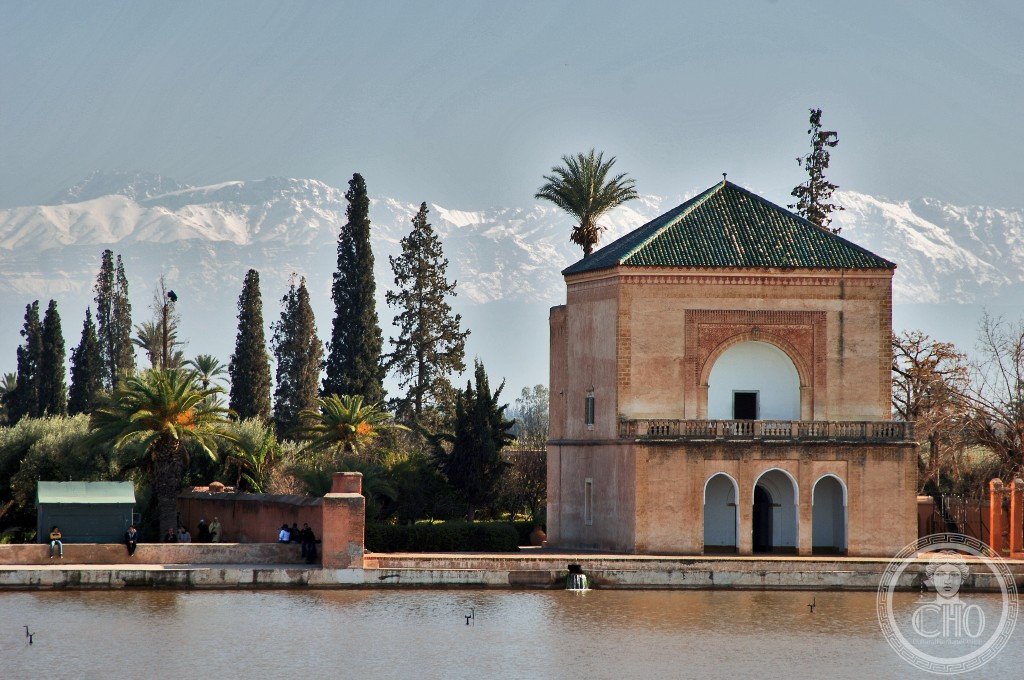
Marrakech Medina
The most vivid and aromatic walled medina in North Africa and the ancient capital of three Moroccan dynasties — Marrakech, founded by the Almoravid Berber dynasty in 1062 CE, contains the most influential minaret in the western Islamic world, the most internationally famous single square in Africa, and a warren of covered souks that have traded continuously for nine centuries.
At a glance
Marrakech (the Medina of Marrakesh; UNESCO WHS 1985; the “Red City” — the most precisely colour-coded single North African city: the city’s distinctive ochre-pink walls and buildings are built from local pisé (rammed earth mixed with clay) — the most precisely locally-sourced single building material tradition in any Moroccan medina; a building colour code first established in the 11th century and maintained by municipal regulation today — the most persistently colour-regulated single urban facade in Africa; the third most important imperial city in Morocco after Fez and Marrakech — the most paradoxically listed capital: Marrakech was the capital of three successive dynasties (Almoravid, Almohad, and Saadian) and gave its name to the country “Morocco” (the most precisely country-naming single city in North Africa: Morocco = Marrakech in Arabic corruption through French and English)); 3 million visits per year — the most visited single medina in Morocco by international tourists.
Key facts
- The Koutoubia Mosque and the most influential minaret in the western Islamic world: the most architecturally copied single minaret in the history of Islamic architecture — the Koutoubia (completed c. 1199 CE by the Almohad Caliph Al-Mansur; 70 m tall (the most precisely Almohad-dimensioned single minaret: the width-to-height ratio (1:5) was the standard established by the Almohad caliphate for all major minarets — the most precisely proportioned single Islamic architectural standard in the Maghreb); the copies (the most architecturally influential single North African building: the Koutoubia minaret was directly copied twice within 3 years of its completion — the Giralda in Seville (1198 CE) and the Hassan Tower in Rabat (begun 1195 CE) — the most rapidly replicated single Islamic minaret in any Mediterranean country; the Giralda (now a bell tower; the most precisely converted single mosque minaret in Spain: the Almohad minaret became the bell tower of Seville Cathedral in 1568 — the most Christianity-adapted single Islamic architectural element in European heritage); the name (the most commercially descriptive single mosque name in Marrakech history: “Koutoubia” = “mosque of the booksellers” — the most precisely guild-adjacent mosque name in any Moroccan imperial city; the area around the mosque was once filled with booksellers (copiers and sellers of manuscripts) — the most precisely book-trading single mosque neighbourhood in medieval Moroccan history))
- Djemaa el-Fna — the most internationally acclaimed public square in Africa: the most precisely intangible-heritage-protected single outdoor performance space in the world — Djemaa el-Fna (the most visited single public space in Africa by international tourists: approximately 15,000 people per evening in peak season — the most precisely evening-peaking single African public space; the first UNESCO Intangible Cultural Heritage listing in the world (2001 — the most precisely first-listed single item in UNESCO Intangible Heritage history: Djemaa el-Fna was the inaugural item on the UNESCO Intangible Cultural Heritage Representative List; the list now has 600+ items — Djemaa el-Fna is the most seniority-positioned single item in the history of UNESCO ICH protection; the oral tradition (the Hlaiqa storytellers — the most precisely documented single North African oral tradition: professional storytellers who narrate epic stories from Arabian Nights and Berber legend in Darija Arabic or Tamazight — the most precisely multilingual single oral performance in any African public square; the tradition is in decline — the most urgently at-risk single storytelling tradition in any UNESCO square)); the food stalls (the most culinary diverse single open-air night market in North Africa))
- The Ben Youssef Madrasa: the most beautifully decorated single Islamic school in Morocco — the Ben Youssef Madrasa (the largest Quranic school in Morocco at its height: 800 students — the most precisely enrolled single madrasa in medieval Marrakech; built in the 14th century by the Marinid dynasty; expanded to its current form by the Saadian Sultan Abdallah al-Ghalib in 1565 — the most precisely Saadian-decorated single madrasa in Morocco; the decorative programme (the most precisely layered single decorative surface in any Moroccan madrasa: 3 horizontal bands: carved cedarwood ceiling (the most fragrant single heritage material in any North African madrasa); carved plaster (zellij arabesque — the most intricately geometrically designed single decorative medium in Moroccan craft history); zellij mosaic tilework (the most precisely tesserae-composed single tilework in any Moroccan educational building) — the most precisely tripartite single Moroccan interior decoration in any medina)
- Heritage: UNESCO World Heritage Site, Medina of Marrakesh, inscribed 1985
- GPS: 31.6295° N, -7.9811° E
History
The founding (the most precisely Berber-imperial single city founding in North Africa: Marrakech was founded in 1062 CE by Yusuf ibn Tashfin, leader of the Almoravid dynasty (the most precisely rigorist single Berber dynasty: the Almoravids were Islamic reformers from the Sahara who conquered Morocco, northern Algeria, and al-Andalus (Spain and Portugal)); the name (the most precisely country-naming single city: the Arabic name “Murrākuš” → “Maroc” in French → “Morocco” in English); the Almohad dynasty (1147–1248: the most architecturally productive single dynasty for Marrakech: built the Koutoubia Mosque and the most extensive city walls (19 km — the most precisely extended single set of pisé walls in Morocco) under Sultan Ya’qub al-Mansur); the Saadian dynasty (1549–1659: the most commercially ambitious single dynasty for Marrakech’s mercantile expansion; the Saadian Tombs (the most precisely hidden single royal mausoleum in Moroccan history: walled up and sealed by the Alaouite Sultan Moulay Ismail after 1672 to erase Saadian memory — the most deliberately buried single royal tomb in North African history; rediscovered by French aerial photography in 1917 — the most precisely aerial-discovery-dependent single heritage rediscovery in Moroccan history)); UNESCO WHS 1985.
What you see
The Marrakech visit (the most sensory-overwhelming single heritage experience in North Africa: the medina must be navigated on foot (the most precisely non-car single heritage experience in Morocco: cars not admitted in the medina alleys)); the essential sequence: Djemaa el-Fna in the morning (the food stalls are set up; the most precisely breakfast-appropriate single African square by mid-morning); the souks (the most geographically specialised single covered market in any North African city: the leather souk (Chouara — the traditional tanneries visible from rooftop terraces in Fez are the most photogenic single leather-working district in Morocco; Marrakech has its own tanneries in the north medina); the spice souk; the textile souk; the Rahba Kedima (the spice and potion square — the most precisely apothecary-themed single souk in Marrakech)); the Ben Youssef Madrasa (the most architecturally rewarding single interior in the Marrakech Medina); the Saadian Tombs (book early — the most strictly timed single site in Marrakech); the Majorelle Garden (the most internationally famous single private garden in Africa: created by French painter Jacques Majorelle 1923–1962; purchased by Yves Saint Laurent and Pierre Bergé in 1980 — the most precisely fashion-owned single heritage garden in the world; 700,000 visits per year — the most visited private garden in Africa)).
Practical information
- Getting there: Marrakech Menara Airport (RAK; 6 km south-west; the most served Moroccan airport from European budget carriers: direct flights from London, Paris, Amsterdam, Madrid, Rome, Milan, and 40+ European cities — the most European-connected single Moroccan airport for tourist arrivals; taxi to medina (the most precisely price-negotiated single airport taxi in any North African city: agree on the price before entering — the most consistently price-disputed single taxi ride in Moroccan heritage tourism: approximately 80–100 MAD (€7–9) is the fair price (2026)); Riad accommodation (the most precisely heritage-authentic single accommodation type in any Moroccan medina: a riad is a traditional Moroccan house with an internal courtyard garden — the most precisely inward-facing single domestic architectural type in North African heritage; the most romantically atmospheric single accommodation option in any North African city; the most Instagram-photographed single hotel type in Morocco))
- The Sahara Desert at Merzouga: the most dramatically accessible single sand sea from any Moroccan city — the Sahara (the world’s largest hot desert (9 million km²); the Erg Chebbi dunes near Merzouga (the most cinematically photogenic single sand dune field in the accessible Sahara from Morocco: 150 m high (the most precisely tall single sand dunes accessible by camel from any Moroccan medina); 2 nights typical: Marrakech → Aït Benhaddou (UNESCO WHS 1987 — the most cinematically photographed single Moroccan ksar (fortified village): used as a film location for Gladiator, Lawrence of Arabia, and Game of Thrones — the most precisely Hollywood-identified single UNESCO village in the world) → Dades Gorge → Merzouga → return via Todra Gorge (the most precisely narrow single limestone gorge in Morocco: 300 m high walls, 10 m wide floor — the most claustrophobically impressive single gorge for a 30-minute walk in North Africa))
- Essaouira (UNESCO WHS 2001): the finest Atlantic fortified port city in Morocco and the most atmospheric blue-and-white town in Africa — Essaouira (180 km west; 2h 30min bus; the “Wind City of Africa” — the most precisely wind-named single Moroccan city (the dominant Atlantic trade winds: the most consistently kite-surfing-appropriate single North African coastal city)); the ramparts (the 18th-century sea walls with Portuguese and Moorish cannon terraces — the most precisely Atlantic-fortified single Moroccan port wall); Jimi Hendrix stayed in Essaouira in 1969 (the most precisely rock-music-associated single Moroccan city: Hendrix reportedly composed parts of “Castles Made of Sand” here — the most precisely song-title-appropriate single Moroccan heritage city))
Getting there
Marrakech Menara Airport (RAK): taxi to medina 80–100 MAD (~€7–9; agree price first). Direct flights from 40+ European cities. Stay in a riad within the medina for the most authentic experience. GPS: 31.6295, -7.9811.
Nearby
- Aït Benhaddou (UNESCO WHS 1987) — 200 km south-east (3h drive); most cinematically Hollywood-identified single UNESCO village in the world (Gladiator/Lawrence of Arabia/Game of Thrones filming location) — described in Practical section; essential day trip on the Sahara circuit from Marrakech
- Essaouira (UNESCO WHS 2001) — 180 km west (2h 30min bus); finest Atlantic fortified port in Morocco + Jimi Hendrix connection — described in Practical section
- High Atlas Mountains and Toubkal (4,167 m — highest peak in North Africa) — 70 km south (2h drive to Imlil base camp); most accessible high-altitude trekking from any North African medina — Jebel Toubkal (4,167 m — the highest peak in the Atlas Mountains and the highest peak in North Africa north of the Sahara; the most accessible single 4,000m+ summit from any North African city: 2-day guided trek from Imlil (1,740 m) — the most precisely altitudinally rewarding single short mountain trek in Africa; the Atlas valleys (the most precisely Berber-inhabited single high-altitude landscape in Morocco: the Amazigh Berber villages of the Ourika Valley (the most frequently day-trip-visited single valley from Marrakech; the Friday souk at Aït Ourir — the most locally-authentic single weekly market in the Ourika Valley))
Sources
- Wikipedia, Marrakesh; Jemaa el-Fnaa; Koutoubia Mosque; Ben Youssef Madrasa; Saadian Tombs, accessed June 2026
- UNESCO, Medina of Marrakesh, WHS reference 331, inscribed 1985; Jemaa el-Fna, UNESCO Intangible Cultural Heritage, inscribed 2008
- Elias Canetti, The Voices of Marrakesh, Hanser, 1967
Find it on the map
See this place and what’s around it →📷 Diventa un fotografo di Cultural Heritage Online
Condividi le tue foto dei luoghi: restano pubblicate con la tua firma come autore. Più vengono viste, più ti fai conoscere — e presto un concorso premierà le foto più apprezzate.
Accedi o registrati gratis per aggiungere una foto