
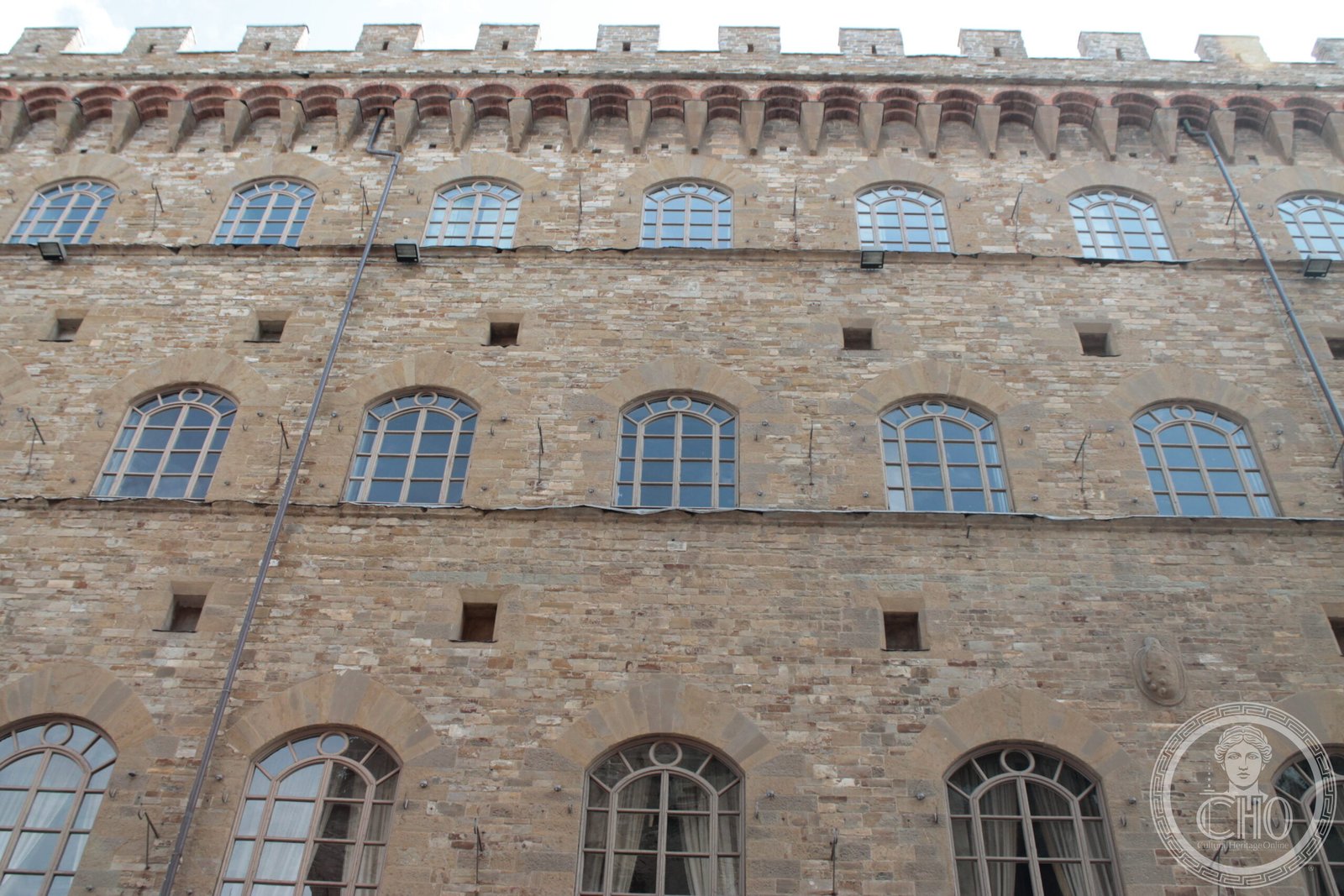

In a thirteenth-century palace on the Arno where the Tornabuoni family once entertained the Medici, Salvatore Ferragamo's museum holds 14,000 shoes and the story of the Florentine shoemaker who dressed the feet of Greta Garbo, Audrey Hepburn, Marilyn Monroe, and three generations of Hollywood.
At a glance
The Museo Salvatore Ferragamo occupies the ground floor and basement of Palazzo Spini Feroni, a Gothic palace at Piazza di Santa Trinita on the Arno in central Florence, which has served as Ferragamo's global headquarters since the company purchased it in 1938. Founded in 1995, the museum holds over 14,000 shoe models created from 1920 to the present — the world's most extensive archive of luxury footwear design — alongside accessories, archival garments, personal documents, and historical materials relating to both the craft of shoemaking and the cultural contexts in which Ferragamo's work was embedded: Italian luxury after unification, Hollywood costume in the studio era, the Florentine artisanal tradition.
Key facts
- Opened: 1995
- Collection: 14,000+ shoe models, 1920–present
- Address: Piazza di Santa Trinita 5r, 50123 Firenze
- GPS: 43.7698, 11.2512
- Building: Palazzo Spini Feroni (1289, Gothic revival, enlarged 1874)
- Website: ferragamo.com/museo
History
Salvatore Ferragamo was born in 1898 in Bonito, near Avellino in Campania, the eleventh of fourteen children of a sharecropping family. He was apprenticed to a shoemaker at nine and emigrated to the United States in 1914 at sixteen, joining brothers already working in Boston. He moved to California in 1923 after the film studios there became his primary clients: Cecil B. DeMille commissioned shoes for his biblical epics, and Ferragamo's designs appeared in The Ten Commandments, The Thief of Bagdad, and dozens of other films before he had turned 25.
Ferragamo returned to Italy in 1927, establishing his production in Florence to access the skilled artisans of the city's leather trade. He studied anatomy at the University of Florence to understand the architecture of the foot — the first couturier shoemaker to apply scientific study to comfort as rigorously as to aesthetics — and patented numerous innovations: the steel arch support (1929), the cork-platform sole (1937, which created the wedge heel as a category), the invisible sandal with nylon thread (1947), the cage heel (1955). The list of clients continued throughout: Greta Garbo, Audrey Hepburn, Marilyn Monroe (the museum holds the red stilettos she wore in the Some Like It Hot era), Sophia Loren, the Duchess of Windsor.
Salvatore died in 1960, leaving the company to his wife Wanda and six children. The museum was established by the family in 1995 to preserve and exhibit the archive of the 14,000 shoe models Salvatore had created — a figure that represents less than one-tenth of the total production documented in the company's records.
What you see
Palazzo Spini Feroni was built in 1289 for the Spini banking family — rivals of the Bardi and Peruzzi in financing the English wool trade — in a Gothic style whose crenellated tower remains one of the most prominent features of the Arno quayside. The palace was sold to the Feroni family in the seventeenth century (hence the compound name) and was substantially enlarged and gothicised again in 1874. When Ferragamo purchased it in 1938, the building was already four centuries of Florentine commercial history; it is now one of the few palaces on the Arno that has remained in private hands and in active commercial use without subdivision.
The museum occupies the lower floors and basement — spaces that open onto the original medieval masonry — and are arranged as thematic exhibitions that rotate from a permanent collection centred on Ferragamo's design innovations. The shoe as object receives the treatment usually reserved for jewellery: lit individually, displayed in protective cases, contextualised by the film stills or fashion photographs in which they first appeared. The contrast between the medieval stone vaults and the precision of the shoe cases is one of the more effective museological juxtapositions in Florence.
Practical information
- Opening hours: Check ferragamo.com/museo (typically Wednesday–Monday 10:00–19:30)
- Admission: Ticketed
- Time needed: 1–1.5 hours
- Highlights: Marilyn Monroe stilettos, invisible sandal (1947), cork-platform wedges (1937), Audrey Hepburn commissions
Getting there
Palazzo Spini Feroni is at Piazza di Santa Trinita, immediately beside the Santa Trinita bridge on the south side of the Arno crossing at Via Tornabuoni. From Florence SMN station: 15 minutes on foot across Piazza della Repubblica and south on Via Strozzi / Via Tornabuoni. Closest bus stop: Lungarno Corsini. By car: ZTL restricted zone; park at Parcheggio Oltrarno or Piazza del Carmine and walk across Ponte Santa Trinita (100 m from the museum).
Nearby
- Ponte Santa Trinita — 50 m, the most beautiful Renaissance bridge in Florence (Ammannati, 1569)
- Palazzo Strozzi — 200 m north, major temporary exhibition venue
- Santa Trinita church — 50 m, Sassetti Chapel with Ghirlandaio frescoes (1483–86)
- Uffizi Gallery — 700 m east, the world's greatest collection of Italian Renaissance painting
Sources
- Wikipedia (English): Salvatore Ferragamo S.p.A.
- Museo Salvatore Ferragamo: ferragamo.com/museo
- Wikipedia (Italian): Palazzo Spini Feroni
- Wikimedia Commons: File:Palazzo Spini Feroni – Firenze.jpg, CC BY-SA 4.0
- Nominatim / OpenStreetMap: GPS 43.7698, 11.2512
Find it on the map
See this place and what’s around it →📷 Become a Cultural Heritage Online photographer
Share your photos of places: they stay published under your name as the author. The more they're seen, the more you get noticed — and soon a contest will reward the most appreciated photos.
Log in or sign up free to add a photoIs this page about you?
This page is read by travellers and heritage enthusiasts who find it on Google. Tell us how you are connected to this place and we will take it from there.