
Curated Itinerary
Towers, Cafés and the Fiat Rooftop: A Turin Modernism RoadBook (1923–1938)
Turin built one of Italy’s first skyscrapers, raced cars on a factory roof and ran its whole modern revolution between vermouth and espresso. This is a day through the city’s lean, fast architecture of the 1920s and ’30s — café stops included.
Turin is a city of straight lines and arcaded streets, laid out like a diagram, and between the wars it took to modern architecture as if it had been waiting for it. In barely fifteen years it raised Italy’s first true skyscraper, built a car factory with a test track on the roof, and gave a pair of young Rationalists their first commissions. It did all this under Fascism, and the marble and the towers carry that weight — but it also did it over coffee, in a city that more or less invented the Italian aperitivo.
This route runs north to south, from the towers of the old centre down to the great Fiat works at Lingotto. Turin rewards walking under its porticoes; use a tram for the longer southern hops. And stop often: the historic cafés on this walk are heritage in their own right.
Read the full story behind this walk: Turin Between the Wars.
Read the full story behind this walk: Turin Between the Wars.
Read the full story behind this walk: Turin Between the Wars.
Read the full story behind this walk: Turin Between the Wars.
Before you go
A word from your host
Two things to carry with you. First, the honest note: much of this was built under Fascism, and one stop still bears Mussolini’s old name — look at it clearly rather than looking away, because the same years also produced the brave, doomed Pagano. Second, the pleasant one: Turin is the spiritual home of the Italian aperitivo and of the historic café, so treat the café stops on this walk as real destinations, not breaks. Order a vermouth or a bicerin, sit under the porticoes, and let the city set the pace. It always has.
Getting around
Turin is built on a grid and made for walking, much of it under continuous porticoes that keep off sun and rain alike — the central stops link easily on foot. For the southern run out to the Stadio, the Valentino and Lingotto, use the trams and the single metro line; one daily ticket covers everything. [TO]BIKE city bikes and e-scooters are widely available; ride in the lanes. Several stops are working buildings — a hotel, a stadium, a converted factory — so check what is open and look with discretion.
Step by step
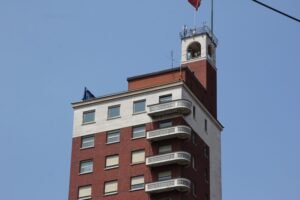
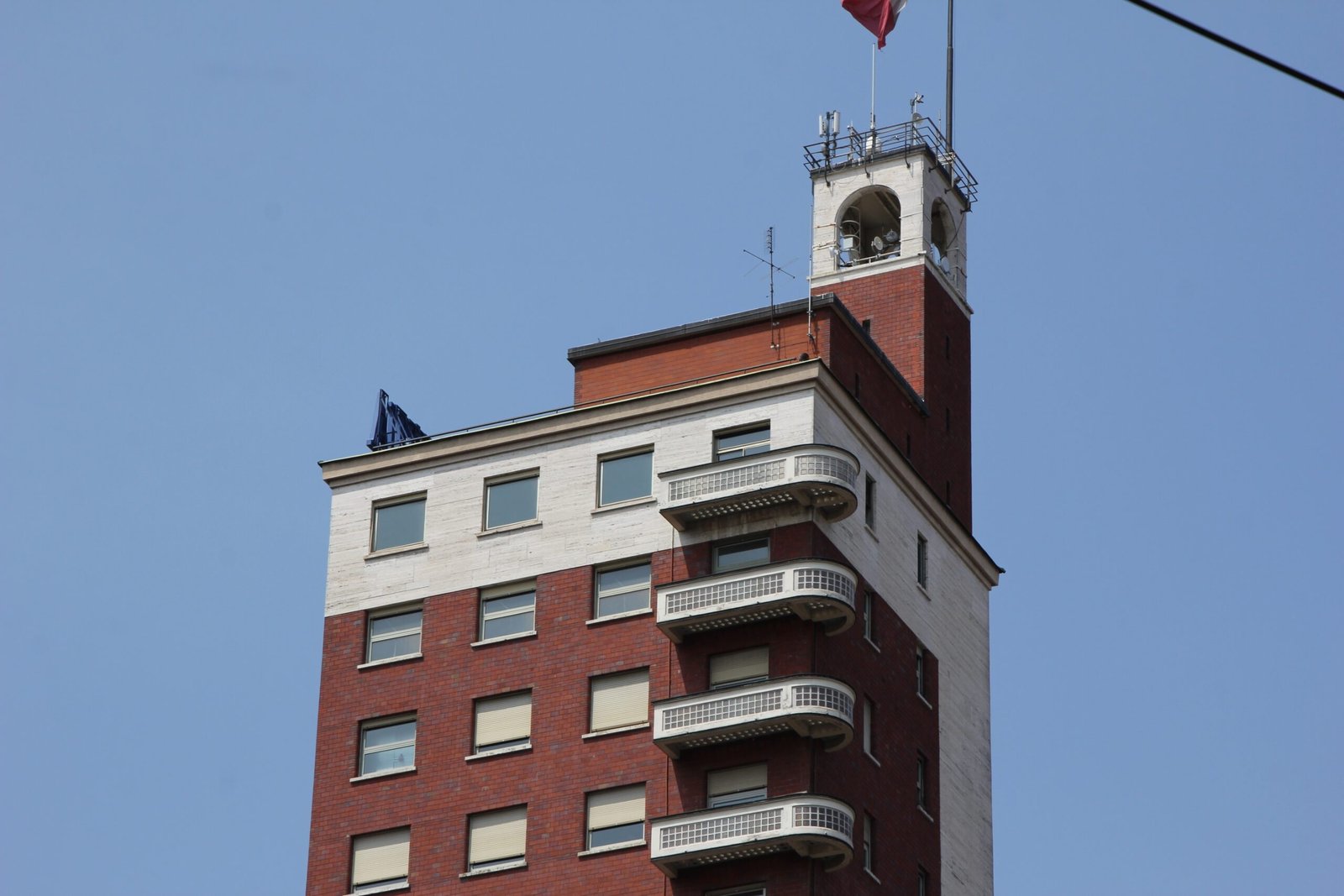
Torre Littoria di Torino
Begin under Turin’s first skyscraper: the Torre Littoria of 1934, a slim Art Déco tower dropped into the baroque heart of Piazza Castello.
The storyBuilt in 1933–34 by Armando Melis de Villa and Giovanni Bernocco, the tower rose nearly ninety metres in steel and dark cladding, deliberately modern against the royal square around it. Its name — Littoria, from the Fascist symbol of the lictor’s bundle — fixes it firmly in its decade.
Insider tipStand back in Piazza Castello to see it the way 1930s Turin did, jarring against the baroque. The square itself, with the Royal Palace and Palazzo Madama, gives you the “before” to the tower’s “after”.
A fitting stopYou are steps from Turin’s great historic cafés: Caffè Mulassano (1907), where the tramezzino sandwich was invented, and Caffè Torino (1903) are both on or near Piazza San Carlo, a short walk south.
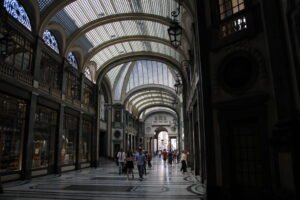
Galleria San Federico
A 1933 shopping arcade in polished Art Déco, still lined with shops and crowned by a historic cinema.
The storyThe Galleria San Federico cut through a city block in 1933, all marble, brass and curved glass in the confident commercial Déco of the age. At its heart is the Cinema Lux, one of the grand picture-palaces that made cinema-going a modern ritual.
Insider tipLook up at the glazed roof and the lettering; this is everyday 1930s design rather than a monument, which is exactly its charm. It connects through to Piazza San Carlo, the city’s drawing-room square.
A fitting stopOn Piazza San Carlo, Caffè San Carlo (1822) and Caffè Torino keep their gilded interiors; order a bicerin, Turin’s historic layered coffee-and-chocolate drink.
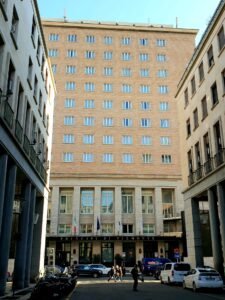
Hotel Principi di Piemonte
Turin’s grand inter-war hotel, opened in 1930 — Art Déco luxury in marble, brass and dark wood, built for the age of the sleeper train and the motor car.
The storyThe Principi di Piemonte opened in 1930 as the city’s most modern luxury hotel, its interiors a showcase of Déco craftsmanship. It belongs to the same moment as the ocean liners and the great stations: travel reimagined as glamour.
Insider tipIt is a working hotel, so admire the façade and, discreetly, the lobby. The quiet streets of this quarter, the Quadrilatero, are good for an unhurried wander between stops.
A fitting stopThis is vermouth country — Turin invented modern vermouth, and the aperitivo with it. A pre-dinner Vermouth di Torino in any old bar here is drinking local history.
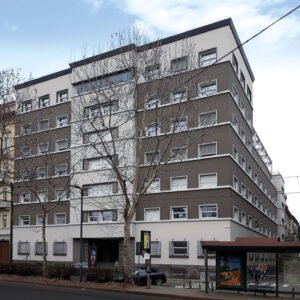
Palazzo Gualino
The Palazzo Gualino of 1930: a calm, stripped office block that announced Rationalism in Turin, by the young Giuseppe Pagano and Gino Levi-Montalcini.
The storyCommissioned by the financier and art patron Riccardo Gualino, this 1928–30 office building was one of the first fully Rationalist works in Italy. Its architect, Giuseppe Pagano, would later build the Bocconi in Milan, break with Fascism, and die in Mauthausen in 1945. His partner here, Gino Levi-Montalcini, was the brother of the Nobel laureate Rita Levi-Montalcini.
Insider tipRead the façade against the heavier buildings around it: no ornament, just proportion and the grid of the windows. It looks ordinary now only because it won the argument.
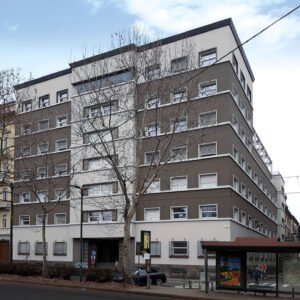
Casa Gualino — First Rationalist House in Turin by Pagano & Levi-Montalcini
The first Rationalist house in Turin, by the same Pagano and Levi-Montalcini — a private villa as a manifesto.
The storyBuilt for the Gualino family at the turn of the 1930s, the house carried the new architecture from the office into domestic life: clean volumes, flat roofs, light. Together the two Gualino commissions made Turin, briefly, a laboratory of Italian modernism.
Insider tipIt is a private home, so this is a façade to read from the street. Pair it in your mind with the office a step away — the same minds working out the same ideas at two scales.
A fitting stopThe Crocetta quarter around here is residential and genuine; find a neighbourhood bar for a coffee or an aperitivo among locals.
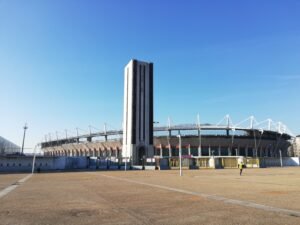
Stadio Olimpico Grande Torino (ex Stadio Mussolini)
A 1933 stadium built for the regime’s mass spectacle — sport as architecture, and as politics.
The storyOpened in 1933 and originally named for Mussolini, the stadium was part of the era’s drive to stage the nation through sport. Heavily rebuilt since — it later hosted the 2006 Winter Olympics and is home to Torino FC — it remains a document of how the 1930s used architecture to gather crowds.
Insider tipThis is the most rebuilt stop on the walk, so come for the history and the sense of scale rather than original fabric. Match-day aside, the surrounding sports district is quiet.
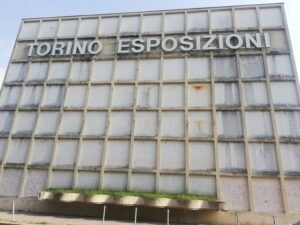
Palazzo di Torino Esposizioni
The Turin exhibition halls, begun in 1938 — and later the site of Pier Luigi Nervi’s breathtaking concrete vault.
The storyTorino Esposizioni grew from 1938 as the city’s great exhibition complex. After the war the engineer Pier Luigi Nervi roofed its main hall with a ribbed concrete vault of astonishing lightness, one of the masterpieces of twentieth-century engineering — the 1930s ambition carried into a freer post-war language.
Insider tipAccess depends on what the complex is hosting, so check ahead. Even from outside, in the green setting of the Valentino park by the river, the scale of the ambition is clear.
A fitting stopThe Parco del Valentino along the Po is the city’s favourite green space; kiosks and cafés here make a good riverside pause.
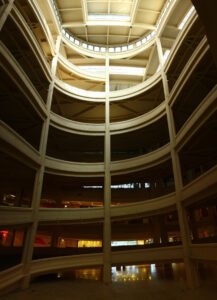
Lingotto FIAT — Test Track Factory by Giacomo Matté Trucco
End at the Lingotto: the 1923 Fiat factory with a car test track on its roof — the boldest industrial building of its age in Europe.
The storyDesigned by the engineer Giacomo Matté Trucco and finished in 1923, the Lingotto ran cars up through five floors of assembly to a banked test track on the roof. Le Corbusier called it one of the most impressive sights in industry. Closed in 1982 and reborn as a Renzo Piano complex, it still has the rooftop track — and you can go up to it.
Insider tipGo up to the roof: the banked track and the little glass “bubble” meeting room over the void are unforgettable, and the view over Turin to the Alps is the best finale this walk can offer.
A fitting stopThe complex has cafés and restaurants; raise a final glass to a city that built the future between two world wars — and never stopped drinking its coffee standing up.
Download for tour navigation
GPX for Garmin / Komoot / OsmAnd. KML for Google Earth and Maps.