
Hội An Ancient Town
The best-preserved trading port in South-East Asia — a 30-hectare town on the Thu Bồn River where Japanese, Chinese, Dutch, and Portuguese merchants built their warehouses and assembly halls in the 16th–18th centuries, its narrow streets and wooden shophouses intact because the port silted up in the 19th century and bypassed the colonial development that destroyed every comparable city in the region.
At a glance
Hội An (ancient name: Faifo) is a port city on the Thu Bồn River in the Quảng Nam Province of central Vietnam, 30 km south of Da Nang. Its Ancient Town — a 30-hectare historic core — is the best-preserved example of a South-East Asian trading port from the 15th to 19th centuries. During the 16th–18th centuries, Hội An was one of the most important trading ports in the region, connecting the Nguyễn Lords of Vietnam with Japan, China, Portugal, the Netherlands, and India; its position at the mouth of the Thu Bồn River, which gave access to the silk, porcelain, and lacquer of the Vietnamese interior, made it a natural emporium. The silting of the river mouth in the 19th century shifted trade to Da Nang and left Hội An’s buildings intact, unchallenged by the colonial development that rebuilt every other major port city in Vietnam. The Ancient Town was inscribed as a UNESCO World Heritage Site in 1999.
Key facts
- Architecture: the Ancient Town contains approximately 844 structures of historical significance; the architecture is an extraordinary fusion of Vietnamese, Chinese, Japanese, and European building traditions; the narrow shop-houses (typically 4 metres wide and 20–30 metres deep) with their open street fronts, wooden facades, and internal courtyards are the most distinctive building type
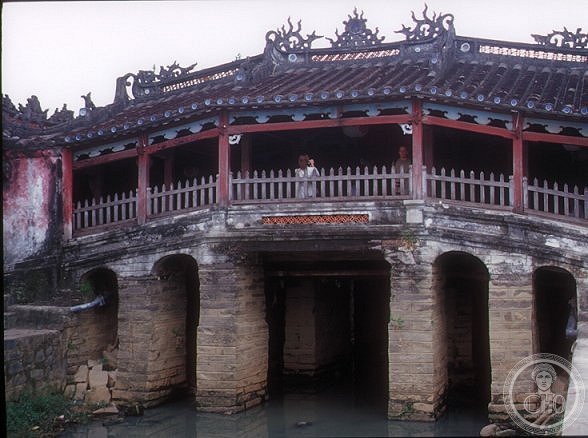
- Japanese Covered Bridge (Cầu Nhật Bản): built c. 1593 by the Japanese trading community; a roofed bridge over a small canal with a small temple inside; the most iconic structure in Hội An and the image on the 20,000 VND banknote; has been restored six times, most recently in 2024
- Assembly Halls (Hội Quán): the Chinese merchant communities built five assembly halls, one for each dialect group (Fujian, Cantonese, Hakka, Teochew, Hainan); these multi-functional buildings served as meeting rooms, temples, and clan welfare centres; the Fujian Assembly Hall (Phúc Kiến Hội Quán) is the largest and most elaborate, dedicated to the sea goddess Mazu
- Lanterns: Hội An is famous for its silk lanterns, made by local craftspeople in the traditional styles of the different trading communities; on the 14th of each lunar month, the Old Town turns off electric lights and is lit only by lanterns; the Full Moon Lantern Festival is the most atmospheric event in Vietnam’s heritage calendar
- Japanese quarter: the Japanese trading community maintained a quarter in the north of the town from c. 1575; Japan closed its ports to foreign trade in 1635 (Sakoku policy), ending the Japanese presence in Hội An; the Japanese community gradually assimilated into the Chinese and Vietnamese populations
- Heritage: UNESCO World Heritage Site, Hội An Ancient Town, inscribed 1999
- GPS: 15.8801° N, 108.3380° E
History
The site of Hội An was a trading centre from at least the Cham period (2nd–15th century AD); the Cham port of Chiêm Bất La (Chinese: Zhanpo) at the mouth of the Thu Bồn River is documented in Chinese sources from the 7th century. After the Nguyễn Lords of Thuận Hóa (who governed central Vietnam under nominal Lê dynasty sovereignty) took control of the area in the 16th century, they encouraged the development of Hội An as an international emporium; Japanese merchants arrived from around 1575, followed by Chinese merchants from Fujian and Guangdong.
The peak of Hội An’s prosperity was the late 16th to mid-18th century. Japanese Red Seal Ships (licensed merchant vessels) brought silver and copper from Japan in exchange for Vietnamese silk, lacquer, and goods from China; Chinese junks brought porcelain and silk from Fujian; Portuguese and Dutch ships traded European goods. The town was cosmopolitan in the modern sense: Japanese, Chinese, Vietnamese, and European traders lived in adjacent quarters, regulated by separate rules for each community. The Japanese merchant community produced the first translations of Vietnamese customs and geography into Japanese, preserving knowledge that would otherwise have been lost.
The silting of the Thu Bồn River mouth from the mid-19th century transferred maritime trade to Da Nang (Tourane), the deep-water harbour 30 km north, which became the colonial port city. Hội An’s buildings were not demolished for colonial development because there was no economic reason to redevelop them; the town continued as a market centre for the surrounding agricultural region. UNESCO inscription in 1999, following Vietnamese independence and the opening of the country to tourism in the 1990s, transformed Hội An into one of Vietnam’s principal heritage tourism destinations.
What you see
The Ancient Town is best explored on foot: the main streets (Trần Phú Street, Nguyễn Thái Học Street, and the riverside promenade) run parallel through the 30-hectare core. The architecture is immediately legible as a hybrid tradition: the shop-house facades blend Chinese tile and woodwork with Vietnamese proportions and Japanese roof forms; the shuttered wooden fronts that open entirely to the street in the morning and close at night preserve a commercial vernacular that has disappeared from every other South-East Asian trading city.
The Japanese Covered Bridge (the 14th of each lunar month, when it is lit by lanterns and the streets around it are pedestrian-only) is the most photographed structure; the Fujian Assembly Hall’s courtyard garden and its complex of shrines to Mazu and the generals of the sea are the finest interior space in the town. The Tấn Ký House (one of the best-preserved merchant houses, open to visitors) demonstrates the internal courtyard layout and the multi-level wooden structure typical of the Chinese-Vietnamese shophouse tradition. At night, when the coloured lanterns are lit on the waterfront and the boats cross the river, the town has an atmosphere — warm, dense, layered with competing architectural traditions — that is impossible to find elsewhere in the world.
Practical information
- Heritage ticket: VND 120,000 (approximately EUR 4.5) gives access to 5 of the heritage sites in the Old Town (choose from Assembly Halls, ancient houses, museums, and the Japanese Bridge); sold at multiple points in the Old Town
- When to visit: the full Moon Lantern Festival (14th of each lunar month, electric lights off, lanterns lit) is the best single experience; the March–April period has the best weather; October–November is the rainy season but the flooded streets have their own beauty
- Tailoring: Hội An has 600+ tailoring shops; garments can be custom-made in 24–48 hours; prices are low and quality variable — use a shop with fittings and multiple reviews
- Bicycle rental: the best way to see the town and its surroundings; rice paddies and villages are within 5–10 km of the Old Town centre; VND 50,000–100,000 per day
Getting there
Da Nang International Airport (DAD) is 30 km north; taxis and private transfers to Hội An (45 minutes, USD 10–15). Direct flights from Hanoi, Ho Chi Minh City, Singapore, Seoul, and Bangkok. The Ancient Town itself is pedestrianised; accommodation is plentiful in the Old Town and the surrounding area. GPS: 15.8801, 108.3380.
Nearby
- Mỹ Sơn Sanctuary — the cluster of Cham Hindu temples in a river valley 40 km west of Hội An; the most important Cham religious site; partially destroyed by US bombing in 1969; UNESCO WHS; a half-day excursion from Hội An
- Da Nang — the largest city in central Vietnam; the Museum of Cham Sculpture (the finest collection of Cham art, carved between the 5th and 15th centuries); the Dragon Bridge; the Marble Mountains (limestone hills with cave temples); 30 km north
- Huế — the imperial capital of Vietnam (1802–1945); the Imperial Citadel (partially destroyed in the 1968 Tet Offensive, ongoing restoration); the royal tombs along the Perfume River; UNESCO WHS; 120 km north of Hội An
Sources
- Wikipedia, Hội An, accessed June 2026
- UNESCO, Hội An Ancient Town, WHS reference 948, inscribed 1999
- Nola Cooke and Li Tana (eds.), Water Frontier: Commerce and the Chinese in the Lower Mekong Region, 1750–1880, Rowman & Littlefield, 2004
Find it on the map
See this place and what’s around it →📷 Diventa un fotografo di Cultural Heritage Online
Condividi le tue foto dei luoghi: restano pubblicate con la tua firma come autore. Più vengono viste, più ti fai conoscere — e presto un concorso premierà le foto più apprezzate.
Accedi o registrati gratis per aggiungere una foto