
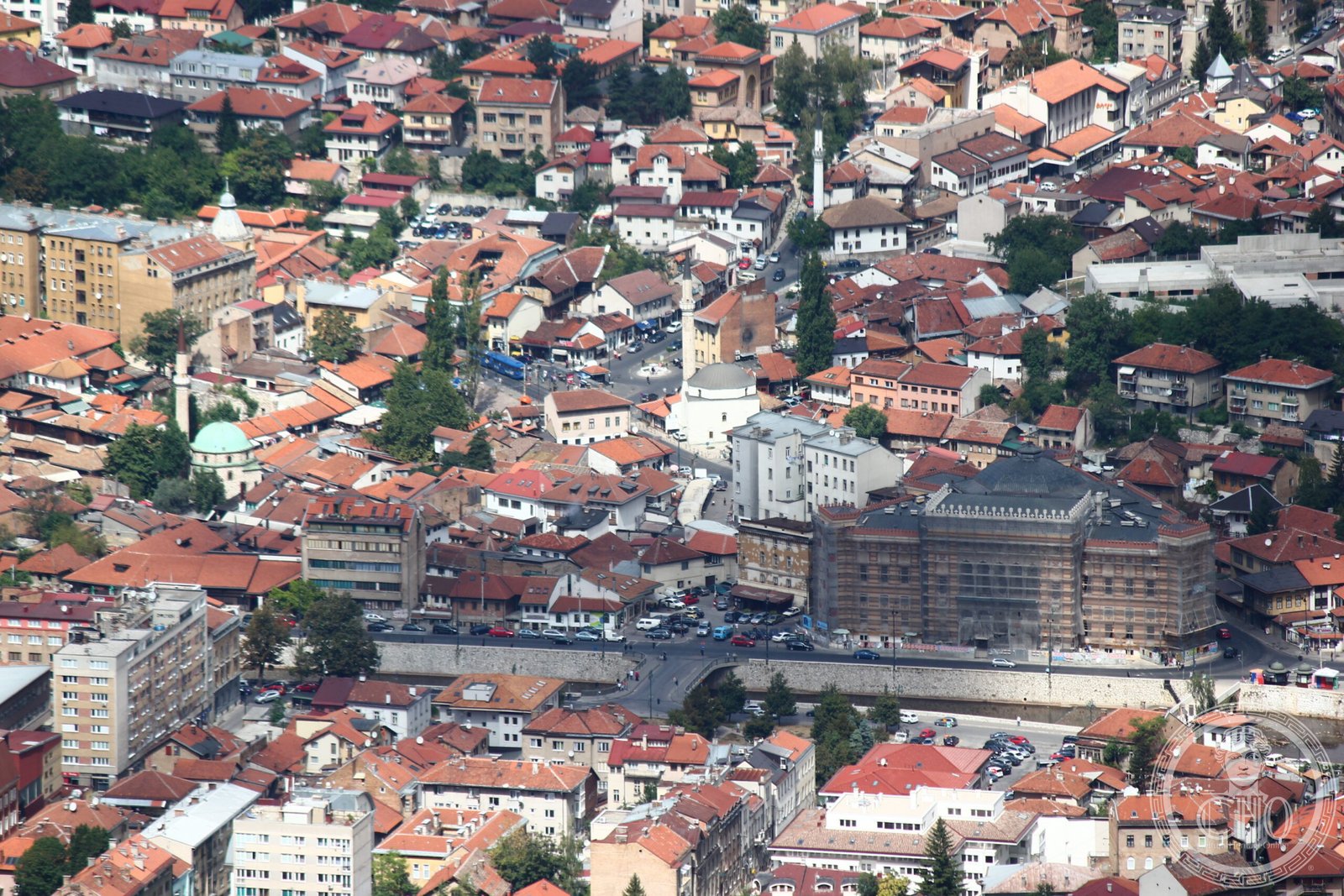
Sarajevo’s old bazaar and the historical and cultural heart of the city, Baščaršija occupies the north bank of the Miljacka river in a landscape of Ottoman architecture, narrow streets, and centuries-old commerce.
At a glance
Baščaršija is both a geographical district and a living bazaar—Sarajevo’s primary tourist destination and the city’s original center. The quarter retains its character as a working marketplace where artisans, merchants, and residents maintain traditions established in the 15th century.
History
Isa-beg Ishaković founded Sarajevo and established Baščaršija in the 15th century. The bazaar grew as the commercial and administrative nucleus of the expanding Ottoman city, developing into a dense neighborhood of interconnected streets, workshops, and gathering spaces that reflected the urban planning principles of the period.
What you see
The Gazi Husrev-beg Mosque stands as Baščaršija’s most prominent religious structure. The sahat-kula (clock tower) marks the skyline. Stone-built houses with overhanging upper floors, covered bazaar passages, and small squares create the district’s characteristic Ottoman streetscape.
Cultural significance
Baščaršija represents the historical continuity of Sarajevo from its Ottoman foundation through modern times. It functions as a cultural symbol of the city’s multicultural heritage and remains the center of traditional crafts, local life, and urban identity.
Key facts
- Country: Bosnia and Herzegovina
- City: Sarajevo
- Founded: 15th century by Isa-beg Ishaković
- Location: North bank of the Miljacka river, Stari Grad municipality
- Coordinates: 43.859°N, 18.43°E
Practical information & getting there
Baščaršija is accessible on foot from central Sarajevo. The bazaar functions as a living neighborhood and tourist area with cafés, shops, and restaurants. Visit during daylight hours to experience the full character of the markets and architecture.
Sources & resources
Find it on the map
See this place and what’s around it →📷 Become a Cultural Heritage Online photographer
Share your photos of places: they stay published under your name as the author. The more they're seen, the more you get noticed — and soon a contest will reward the most appreciated photos.
Log in or sign up free to add a photo