

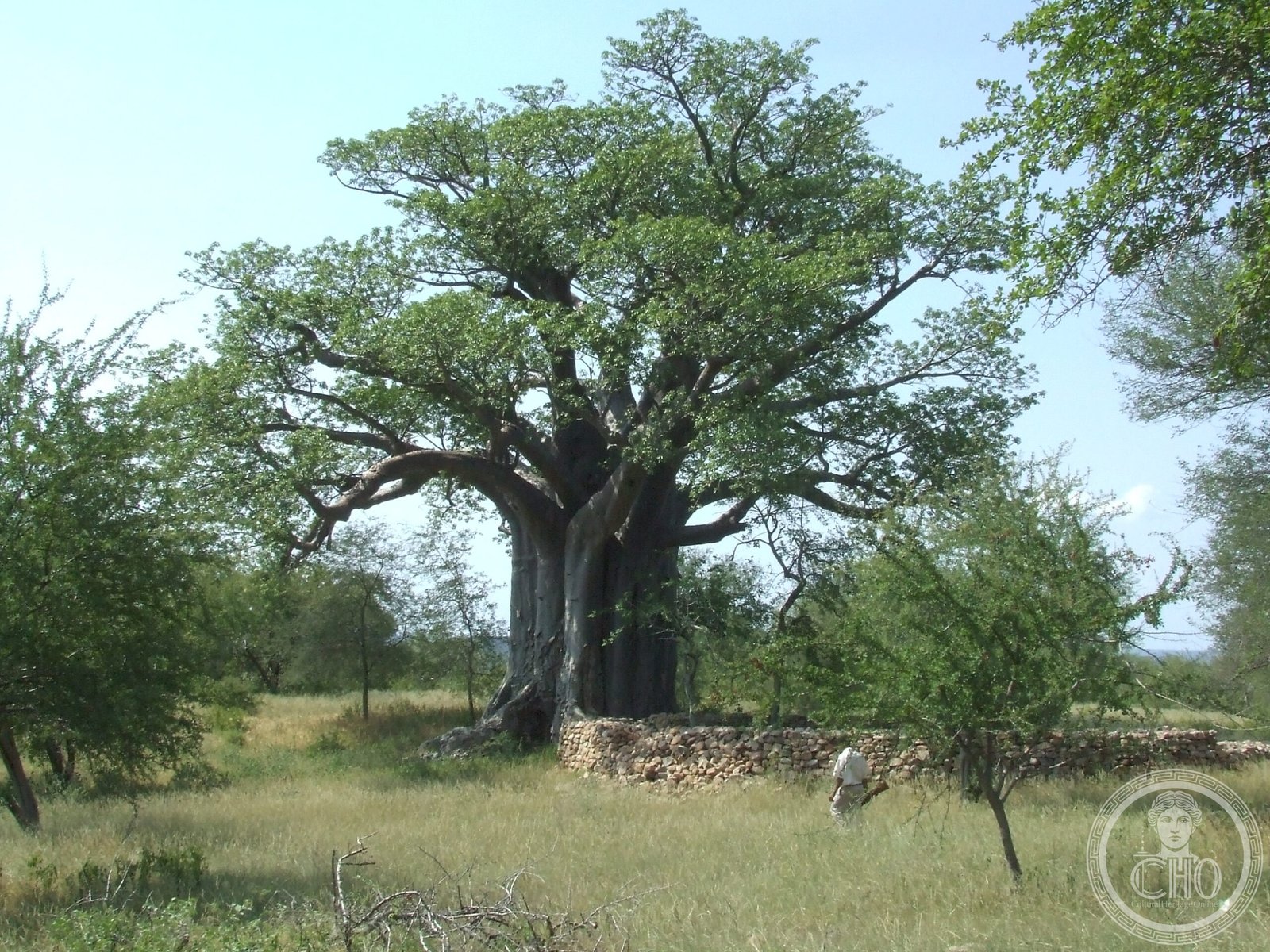
An Iron Age royal enclosure inside Kruger National Park — preserved by its location among lions and elephants rather than by a fence — where the reburial of a king and queen in 1996 became one of post-apartheid South Africas first indigenous repatriation ceremonies.
At a glance
In the far northern reaches of Kruger National Park, in a predator-active wilderness accessible only by guided walk or 4WD, the stone-walled enclosure of Thulamela occupies a commanding hilltop overlooking the Luvuvhu River. Built by a Shona-tradition Iron Age community between approximately 1250 and 1700 AD, and culturally related to the much larger state of Great Zimbabwe to the north, Thulamela is one of the southernmost expressions of the Zimbabwe stone-wall tradition. The site takes its name from the Venda word meaning place of giving birth; in 1993, excavation found two extraordinary royal burials — a king with gold bangles and a gold-decorated ivory tusk, a queen or consort with a copper bracelet and gold objects. Their remains were reburied at the site in 1996 in a ceremony attended by Venda chiefs, one of the first post-apartheid repatriation events in South Africa.
Key facts
- Location: Far northern Kruger National Park, Limpopo Province, South Africa
- Period: c. 1250–1700 AD (Iron Age, Shona cultural tradition, Zimbabwe stone-wall culture)
- Name meaning: “Place of giving birth” in Venda
- Royal burials: Two found in 1993 — a king with gold bangles, gold beads, and a gold-wire-decorated ivory tusk; a queen or consort with copper bracelet and gold objects
- Repatriation: Remains reburied at the site in 1996 in a ceremony attended by Venda chiefs — one of South Africas first post-apartheid indigenous repatriation events
- Preservation method: Deliberately maintained as a low-visitation site inside predator-active wilderness
- Access: Guided walks or 4WD only; no independent access; booked through South African National Parks
History
Thulamela was the royal centre of an Iron Age community belonging to the Zimbabwe cultural tradition — the widespread network of Shona-speaking polities that built dry-stone enclosures across the Zimbabwe Plateau and into northern South Africa between approximately 900 and 1700 AD. The most famous expression of this tradition is Great Zimbabwe, 350 km to the north. Thulamela represents a southern extension of the same political and architectural culture, contemporaneous with the later phases of Great Zimbabwe and probably a subordinate or successor polity trading in gold, ivory, and other goods through networks that extended to the Swahili coast and ultimately to the Indian Ocean trade system.
The site was first systematically excavated in 1993 by Sydney Miller of the South African National Parks Board. The excavations revealed the two royal burials that brought Thulamela international attention: an adult male (the king) buried with gold bangles on his limbs, a gold bead necklace, and a remarkable ivory tusk decorated with gold wire; and an adult female (interpreted as a queen or high-status consort) buried nearby with a copper bracelet and gold objects. The gold objects indicate direct participation in the long-distance trade networks of pre-colonial southern Africa.
In 1996, the excavated remains were reburied at the site in a ceremony that brought together Venda traditional chiefs, government officials, and representatives of South African National Parks. The event was one of the first formal post-apartheid repatriation ceremonies returning African remains from an institutional context to an indigenous community — a significant moment in the broader reconciliation of South African cultural policy with its pre-colonial heritage. Thulamela was subsequently restored and opened to guided visits within the park.
What you see
The Thulamela enclosure occupies a hilltop position with commanding views over the Luvuvhu River valley and the surrounding mopane woodland. The stone walls — granite blocks fitted without mortar in the curved-wall technique characteristic of the Zimbabwe tradition — survive to a height of several metres in places, though restoration has consolidated sections that had deteriorated. The enclosure follows the classic Zimbabwe layout: an outer zone for commoners and an inner, more elevated zone for elite activities including the royal residence. The curving walls have a distinctive aesthetic, their coursed granite blocks forming arcs and spirals that distinguish Zimbabwe-tradition sites from the straight walls of later periods.
Within the enclosure, the royal burial sites are marked and explained in the context of the 1993 excavations and the 1996 reburial. The landscape around Thulamela is part of the active Kruger wilderness — baobab trees, mopane woodland, and the possibility of encountering elephant, buffalo, or lion are constant features of the visit. The approach by guided walk through this landscape is an integral part of the experience; reaching Thulamela requires the same conditions that have preserved it.
Practical information
- Access: Guided walks or 4WD only; booked through South African National Parks (SANParks) via the Pafuri area gate
- Guided walks: Day walks from Pafuri Picnic Site or overnight wilderness trails; numbers are limited
- Entry fees: Standard Kruger National Park conservation fees apply; additional guided walk fees
- Wildlife awareness: The site is in predator-active wilderness; follow guide instructions at all times — no independent movement
- Best time: Dry season (May–September) for most accessible conditions; the northern Kruger is one of the hottest regions of the park in summer
Getting there
Thulamela is in the Pafuri area at the far northern tip of Kruger National Park, approximately 550 km from Johannesburg and 75 km from the Pafuri gate via the H1-8 road inside the park. The nearest airport is Kruger Mpumalanga International (MQP) near Nelspruit, approximately 400 km south; alternatively Louis Trichardt (Makhado) is the nearest town, approximately 140 km south of Pafuri. Booked guided experiences depart from Pafuri Picnic Site. Access from the Limpopo side via the Pafuri border crossing is also possible for visitors coming from Zimbabwe or Mozambique.
Nearby
- Pafuri Triangle — the biodiversity-rich flood plain at the confluence of the Luvuvhu and Limpopo rivers, known for exceptional birding and wildlife; one of the most scenic areas of the entire Kruger park
- Mapungubwe National Park — UNESCO World Heritage Site approximately 80 km southwest; another Iron Age hilltop royal site with gold objects and the famous gold rhinoceros, ancestral to the Zimbabwe cultural tradition
- Great Zimbabwe — the largest and most iconic Zimbabwe-tradition stone enclosure, approximately 350 km north in Zimbabwe; the cultural parent of Thulamela
Sources
- Miller, Sydney, “Thulamela: The First Excavation Report”, Koedoe 37(2), South African National Parks, 1994
- Schoeman, Alex, Thulamela: The Zimbabwe Culture North of the Limpopo, University of Pretoria, 1998
- Huffman, Thomas N., Handbook to the Iron Age: The Archaeology of Pre-Colonial Farming Societies in Southern Africa, University of KwaZulu-Natal Press, 2007
- South African National Parks, Thulamela Heritage Site, interpretive documentation, Skukuza, 2000
- Pwiti, Gilbert, “Continuity and Change: An Archaeological Study of Farming Communities in Northern Zimbabwe AD 500–1700”, Uppsala University, 1996
Find it on the map
See this place and what’s around it →📷 Become a Cultural Heritage Online photographer
Share your photos of places: they stay published under your name as the author. The more they're seen, the more you get noticed — and soon a contest will reward the most appreciated photos.
Log in or sign up free to add a photo