
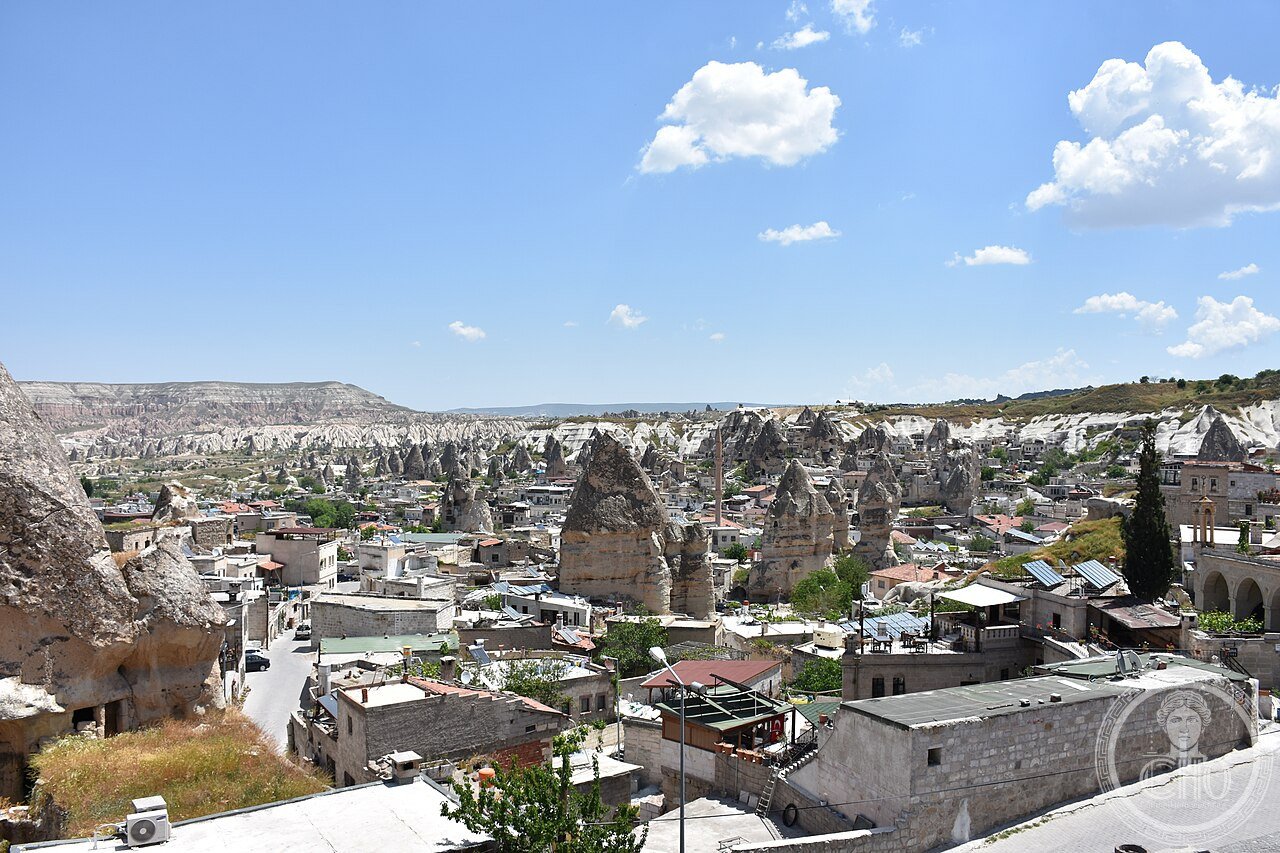
In the soft volcanic valleys of Cappadocia, early Christian monks carved their churches into the rock itself. The result — over 30 Byzantine cave churches concentrated in one narrow valley, many with intact fresco cycles — is the largest surviving rock-cut monastic complex in the world.
At a glance
The Göreme Open Air Museum, inscribed by UNESCO in 1985 as part of the Göreme National Park and Rock Sites of Cappadocia, concentrates the densest surviving cluster of Byzantine rock-cut churches in the world within a compact area approximately 1 km wide in the valleys south of the village of Göreme. Over 30 churches and chapels are carved from the characteristic soft volcanic tuff (tufa) of Cappadocia — a welded ash deposit from prehistoric volcanic eruptions that has been eroded into the "fairy chimney" columns and cliff faces that define the landscape. The churches were carved and painted by monastic communities from the 4th century AD onwards; the most significant surviving structures date from the 10th to 13th centuries. The site represents 1,500 years of continuous Christian habitation that ended abruptly in 1923 with the compulsory Greek-Turkish population exchange.
Key facts
- UNESCO: World Heritage Site (1985), ref. 357 (Göreme National Park and Rock Sites)
- Churches: 30+ rock-cut churches and chapels in the main museum area
- Key monument: Karanlık Kilise (Dark Church) — best-preserved Byzantine fresco cycle in Cappadocia
- Period: monastic use from 4th century AD; main painted churches 10th–13th century
- Community: Greek Orthodox Christians, present until the 1923 population exchange
- Nearest town: Göreme village (1 km); Nevşehir (12 km)
- Ticket note: Karanlık Kilise requires a separate additional entry fee
History
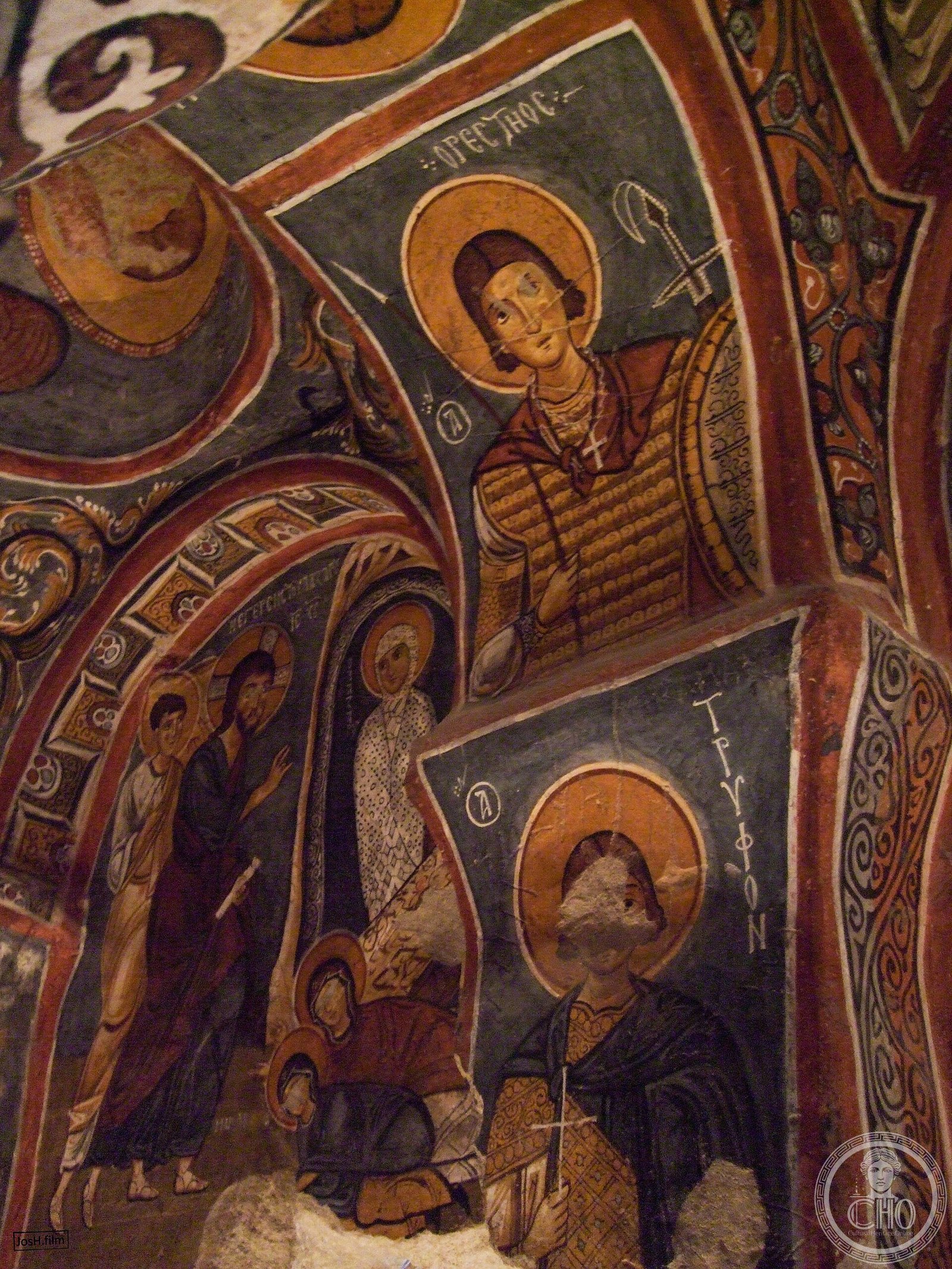
Christians began settling in the remote valleys of Cappadocia in the 4th century AD, during the same period that the Cappadocian Fathers (Basil of Caesarea, Gregory of Nyssa, Gregory of Nazianzus) were formulating the theology that would define Eastern Christianity. The volcanic tuff of the region is soft enough to carve by hand but hardens on exposure to air — ideal for creating monastic cells, churches, and underground refuges. Communities of monks carved hundreds of churches across the valleys, painting them with elaborate fresco programmes that followed the standard Byzantine liturgical scheme: Christ Pantocrator in the dome, scenes from the Life of Christ on the walls, and hierarchies of saints in the lower zones.
The Göreme valley was a major monastic centre during the Byzantine period, sustained by agricultural communities in the valley below. After the Seljuk and later Ottoman conquest, the Greek Orthodox communities survived as a recognised religious minority, continuing to use and maintain the churches. The Turkish-Greek population exchange of 1923, mandated by the Treaty of Lausanne, forced the remaining Orthodox community to leave for Greece, ending unbroken Christian habitation of over 1,500 years. Many of the rock churches were subsequently used as pigeon houses by local farmers — a use that paradoxically helped preserve the frescoes: pigeon droppings created an ammonia-rich atmosphere that inhibited the fungi that destroy organic pigments.
What you see
The most important church is Karanlık Kilise (Dark Church, 11th century), named for its single small window. It contains the best-preserved and most complete fresco cycle in Cappadocia: the Nativity, Entry into Jerusalem, Last Supper, Betrayal, Crucifixion, and Pentecost, in deep reds, blues, and greens that appear freshly painted because the darkness slowed deterioration. The church was used as a pigeon house for centuries. Tokalı Kilise (Buckle Church, 10th–11th century) is the largest church in the museum, with two interconnected naves and over 10,000 m² of fresco surface in two distinct stylistic phases (c. 920 AD and c. 963–969 AD). Elmalı Kilise (Apple Church), Çarıklı Kilise (Sandal Church), Barbara Kilise, and Yılanlı Kilise (Snake Church) each preserve partial or complete fresco cycles. Tokalı Kilise is located slightly outside the main museum compound but is included in the ticket. Nuns' convent (carved multi-storey complex) and refectory (a long rock-cut dining hall with stone table and benches) are also accessible.
Practical information
The museum is open daily (closed Mondays in winter); hours vary by season — check the Turkish Ministry of Culture and Tourism website. An entry ticket covers most churches; Karanlık Kilise requires an additional separate ticket, but is essential. Photography is restricted inside some churches (especially Karanlık Kilise — tripods and flash forbidden, protecting the frescoes). The site can be very crowded in peak season (June–September, particularly in the morning). Visit early or late in the day and in the shoulder seasons (April–May, October) for the best experience.
Getting there
The nearest airport is Nevşehir Kapadokya Airport (NAV), 35 km from Göreme, with direct flights from Istanbul (THY and Pegasus, ~1.5 hours). Kayseri Airport (ASR), 70 km east, has more frequent connections. From either airport, transfer to Göreme village by shuttle (arranged by most hotels) or taxi. Göreme is served by long-distance buses from Ankara (4.5 hours) and Istanbul (10–12 hours). The Open Air Museum is a 1 km walk or short taxi ride from Göreme village.
Nearby
- Derinkuyu Underground City — 30 km south; an 8-storey underground city carved into the tuff, housing up to 20,000 people; the deepest of Cappadocia's underground cities (already on CHO)
- Uçhisar Castle — 3 km west; the highest point in Cappadocia, a natural tuff pinnacle riddled with carved rooms, with panoramic views of the valleys
- Paşabağ (Monks' Valley) — 6 km north; the most spectacular concentration of multi-headed fairy chimneys, including a rock hermitage of St Simeon
- Ihlara Valley — 40 km southwest; a 16 km gorge with 100+ rock-cut Byzantine churches carved into the canyon walls, fewer visitors than Göreme
Sources
- Rodley, L. (1985). Cave Monasteries of Byzantine Cappadocia. Cambridge University Press.
- UNESCO World Heritage Centre — "Göreme National Park and the Rock Sites of Cappadocia" (ref. 357), inscription dossier.
- Jolivet-Lévy, C. (1991). Les Églises byzantines de Cappadoce. Paris: CNRS Éditions.
- Turkish Ministry of Culture and Tourism — Göreme Open Air Museum official information.
- Wikipedia: "Göreme Open Air Museum" — consulted June 2026.
Gallery
Find it on the map
See this place and what’s around it →📷 Become a Cultural Heritage Online photographer
Share your photos of places: they stay published under your name as the author. The more they're seen, the more you get noticed — and soon a contest will reward the most appreciated photos.
Log in or sign up free to add a photo