
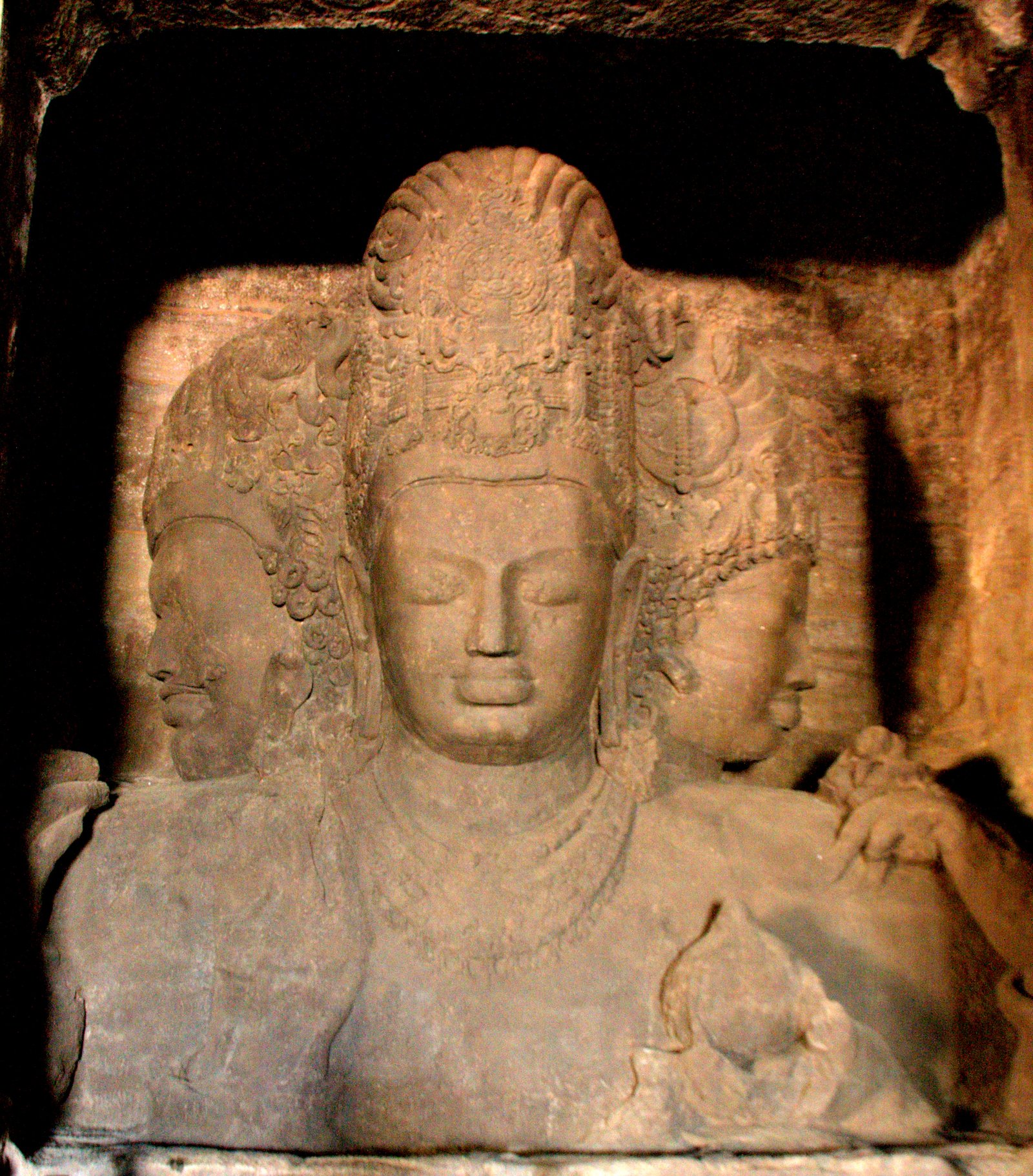
On an island 11 km from Mumbai, seven cave-temples carved from basalt contain some of the greatest sculpture in the world — chief among them a 6-metre three-faced Shiva whose serene, immense faces emerge from the darkness like a slow revelation.
At a Glance
Elephanta Island (Gharapuri in Marathi) lies in Mumbai Harbour, accessible only by ferry from the Gateway of India. The island’s seven rock-cut caves were created between the 5th and 8th centuries AD, probably under the patronage of the Kalachuri dynasty, as a sanctuary dedicated primarily to Shiva. UNESCO inscribed the caves as a World Heritage Site in 1987, recognising them as “a symbiosis of human creativity and the forces of nature.”
History and Attribution
The caves were carved directly into the volcanic basalt of the island’s hills, most likely between the 5th and 7th centuries AD (the Kalachuri period, c. 550–650 AD is the most widely accepted attribution, though scholarly debate continues). The island was occupied by successive Hindu dynasties — Chalukya, Rashtrakuta — before coming under Muslim rule and subsequently Portuguese control in 1534. The Portuguese garrisoned the island and used several sculptures for target practice, causing significant damage to the panels in Cave 1. They renamed the island “Elephanta” after a large stone elephant sculpture (now reassembled at the Bhau Daji Lad Museum in Mumbai). The island was transferred to the Archaeological Survey of India following independence.
The Trimurti and the Main Cave
Cave 1 (the Main Cave, or Great Cave of Shiva) is the largest and most elaborate of the seven. It measures approximately 27 by 27 metres, with a central hall supported by columns and three monumental sculptural panels flanking the rear wall. The centrepiece is the Trimurti (Maheshmurti) — a 6-metre-high bust of Shiva with three faces: the benevolent creator (Aghora), the fierce destroyer (Vamadeva), and the serene preserver (Tatpurusha). Each face is nearly life-sized relative to a standing adult. In the dim filtered light of the cave, the three faces emerge from the shadows with extraordinary authority. They represent not three separate gods but three aspects of a single cosmic principle.
Other Sculptural Panels
The cave’s interior is lined with carved panels of exceptional quality. Shiva-Parvati at Mount Kailash shows the divine couple in intimate conversation, Parvati casting a sidelong glance at a watching Ravana. Ardhanarishvara depicts Shiva as half-male, half-female — a theological statement on the unity of opposites carved with extraordinary anatomical sensitivity. Nataraja shows Shiva as Lord of the Dance in a dynamic multi-armed pose. The five subsidiary caves contain smaller shrines, including a rock-cut linga sanctuary (Cave 1’s inner sanctum) and more residential quarters suggesting these caves served an active monastic community.
Reaching the Caves
Ferries depart from the Gateway of India in Colaba (southern Mumbai) roughly every 30 minutes from early morning; the crossing takes 45 minutes. From the island jetty a path leads through a small market and then up a stone staircase of several hundred steps flanked by stalls selling souvenirs and coconuts. The surrounding forest is inhabited by macaque monkeys that are bold around food. The caves are open Tuesday–Sunday; the island is closed on Mondays for maintenance. A sound-and-light show is offered some evenings.
UNESCO Recognition and Conservation
UNESCO’s 1987 inscription cited the caves as one of the finest examples of Indian rock-cut architecture. Conservation challenges include salt crystallisation in the basalt (the main cause of surface erosion), the high humidity from Mumbai Harbour, and visitor pressure during peak weekends when the island can receive thousands of tourists. The Archaeological Survey of India manages restoration work and has installed walkways to reduce direct contact with the sculptures.
Practical Information
Ferries depart from the Gateway of India jetty (Apollo Bunder), Mumbai. Tickets are available at the jetty; arrive early on weekends. The site has entry fees (Indian nationals and foreign visitors have separate rates). Wear comfortable shoes for the steps. Photography is permitted without flash in most areas. The best light for photography of the Trimurti is in the early afternoon when sunlight diffuses into Cave 1. Most visitors combine the visit with the Gateway of India and the Chhatrapati Shivaji Maharaj Vastu Sangrahalaya (formerly Prince of Wales Museum) in the same day.
Sources & Resources
- UNESCO World Heritage Centre — Elephanta Caves
- Wikipedia: Elephanta Caves
- Archaeological Survey of India — Elephanta
- Stella Kramrisch, Manifestations of Shiva (1981)
Find it on the map
See this place and what’s around it →📷 Become a Cultural Heritage Online photographer
Share your photos of places: they stay published under your name as the author. The more they're seen, the more you get noticed — and soon a contest will reward the most appreciated photos.
Log in or sign up free to add a photo