
Yellowstone National Park
The world’s first national park and the most geologically active landscape accessible to visitors on Earth — Yellowstone, sitting above a supervolcano in Wyoming, contains more geysers than anywhere else on the planet, the largest bison herd in North America, thriving populations of grizzly bears and grey wolves, and the Grand Prismatic Spring — a hot spring so large and so brilliantly coloured that it is visible from commercial aircraft.
At a glance
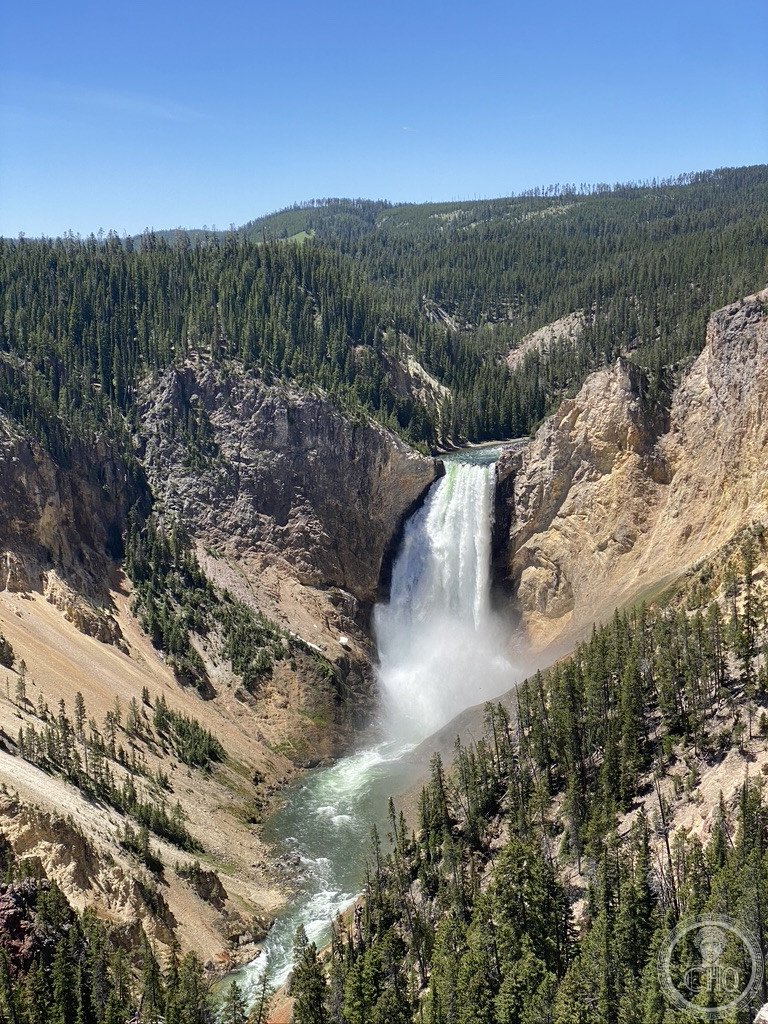
Yellowstone National Park (898,317 hectares; the world’s first national park, established by US Congress on 1 March 1872 and signed into law by President Ulysses S. Grant; the park extends into three states — Wyoming, Montana, and Idaho — although 96% of the park area is in Wyoming; UNESCO WHS 1978; one of the 12 UNESCO World Heritage Sites chosen as the inaugural list in 1978) lies within the Yellowstone Caldera, a supervolcanic depression formed by the collapse of the ground above a partially evacuated magma chamber after the last major eruption approximately 640,000 years ago; the park is divided into five main visitor regions: the Upper Geyser Basin and Old Faithful area (most geysers; most visited), the Midway Geyser Basin (the Grand Prismatic Spring), Mammoth Hot Springs (limestone terraces; the north entrance; the park headquarters), the Norris Geyser Basin (the hottest and most rapidly changing hydrothermal area), the Lamar Valley (the best wildlife viewing corridor in the park — bison, wolves, grizzlies, elk, pronghorn; known as the “American Serengeti”), and the Grand Canyon of the Yellowstone (the Yellowstone River canyon; two major waterfalls — the Upper Falls and the Lower Falls).
Key facts
- Old Faithful: the most famous geyser on Earth — Old Faithful (named in 1870 by the Washburn–Langford–Doane Expedition, the first scientific survey of the Yellowstone region, for its regular eruption cycle) erupts approximately every 60–110 minutes (the exact interval can be predicted with high accuracy from the duration of the previous eruption: a short eruption of under 2.5 minutes predicts the next eruption in approximately 60–65 minutes; a long eruption of over 2.5 minutes predicts approximately 90–110 minutes; ranger staff post the predicted eruption time at the visitor centre); each eruption lasts 1.5–5 minutes; the column of steam and boiling water reaches 32–56 metres in height; approximately 4 million litres of water erupt per year from Old Faithful; the name “Old Faithful” refers to the regularity of eruptions, not their size — there are larger geysers in the park (Steamboat Geyser, in the Norris Basin, is the world’s tallest active geyser, erupting to 90 metres, but erupts unpredictably from once per week to once per 50 years); the boardwalk viewing area around Old Faithful can accommodate approximately 5,000 visitors; on summer afternoons the viewing area is full at eruption time
- The Grand Prismatic Spring: the most photographed feature in Yellowstone and the most colourful thermal spring on Earth — the Grand Prismatic Spring (diameter 113 metres; the third-largest hot spring in the world; water temperature 69°C at the centre) is located in the Midway Geyser Basin, 10 km north of Old Faithful; the concentric colour rings (deep blue at the centre → turquoise → green → yellow → orange → red/brown at the outer rim) are produced by different communities of heat-tolerant microbes (thermophiles, also called extremophiles; archaea and cyanobacteria that survive at temperatures 40–70°C) that thrive at different distances from the centre; the outer rim colours are seasonal — in summer the high bacterial activity produces vivid orange and red; in winter the lower light and temperature slow bacterial growth and the colours fade towards brown and grey; the spring drains into the Firehole River, which runs through the basin and is stained orange by the discharge; the best view of the spring is from the Grand Prismatic Spring Overlook (a short hike above the basin; the view shows the full spectrum of colours from above)
- Yellowstone’s wildlife: the most complete ecosystem in the contiguous United States — Yellowstone is the centre of the Greater Yellowstone Ecosystem (approximately 72,000 km², encompassing the park and surrounding national forests); it supports: the American Bison (Bison bison; approximately 4,500–5,000 animals as of 2026; the largest bison herd in the USA; the only herd in the contiguous USA that has been continuously free-roaming since prehistoric times; bison are the most visible large animals in the park and frequently obstruct roads), the Grey Wolf (Canis lupus; reintroduced from Alberta, Canada in 1995 after 70 years of absence; approximately 100–130 wolves in 7–10 packs across the Greater Yellowstone Ecosystem in 2026; the Lamar Valley is the best place in the USA to observe wild grey wolves, particularly in winter when they are most active in daylight), the Grizzly Bear (Ursus arctos horribilis; approximately 700+ in the Greater Yellowstone Ecosystem; the southern-most viable grizzly population in the USA; the bear’s status under the Endangered Species Act has been debated repeatedly since 2007), and the American Elk (Cervus canadensis; approximately 10,000–20,000 in the park; the September elk rut, when bulls “bugle” and fight for females, is one of the great wildlife spectacles in North America)
- Heritage: UNESCO World Heritage Site, Yellowstone National Park, inscribed 1978 (one of the inaugural WHS list)
- GPS: 44.4280° N, -110.5885° W
History
The Yellowstone Plateau was inhabited by indigenous people for approximately 11,000 years (the Shoshone, Bannock, and Crow peoples used the area extensively; the Shoshone-Bannock consider it a sacred homeland); the first European to see the area was John Colter, a fur trapper who explored the region in the winter of 1807–1808 (his accounts of boiling springs and geysers were dismissed as fantasy by contemporaries — the area was nicknamed “Colter’s Hell”); the first scientific expedition (Washburn–Langford–Doane, 1870) documented the geysers and hot springs and proposed the creation of a public park; the Yellowstone Act was signed on 1 March 1872 by President Grant, creating the first national park in the world; the US National Park Service was created in 1916; UNESCO WHS 1978; grey wolves, hunted to local extinction in the 1920s, were reintroduced in 1995 and have since produced significant ecological cascade effects (reduced overgrazing of riverbanks by elk → return of willow and aspen → return of beaver → modification of river courses; described as a “trophic cascade”).
What you see
The park is accessed via five entrances (North: Gardiner, Montana — the only entrance open year-round; South: from Grand Teton NP; East: from Cody, Wyoming; Northeast: from Red Lodge, Montana; West: from West Yellowstone, Montana); the Grand Loop Road (230 km of paved road in a figure-eight circuit) connects all major features; key stops: Old Faithful and the Upper Geyser Basin (the 7.2 km boardwalk loop visits 150 geysers; Castle Geyser, Grand Geyser, Morning Glory Pool; 2–4h minimum); the Midway Geyser Basin (the Grand Prismatic Spring; the short overlook hike; 1h); the Grand Canyon of the Yellowstone (the Lower Falls, 94 metres high; Artist Point; the canyon rim trail; 2h); the Lamar Valley (the “American Serengeti”; wildlife watching from the road with a spotting scope is the standard method; dawn and dusk; mid-September to mid-October for the elk rut; mid-November to mid-March for wolf activity in daylight); Mammoth Hot Springs (the travertine terraces; the historic fort; the park headquarters; elk frequently grazing on the lawns around the visitor centre).
Practical information
- Admission: the America the Beautiful Annual Pass (USD $80; valid for 1 year; admits the pass holder and all occupants of a private vehicle to all 400+ US national parks and federal recreation sites) is by far the best value for anyone visiting 2+ national parks; the Yellowstone vehicle entry fee alone is USD $35 per vehicle per 7-day period (USD $20 per person on foot or bicycle); the Old Faithful Inn (the historic log hotel; built 1903–1904; the largest log building in the world; the lobby, with its 76-foot stone fireplace, is one of the great architectural interiors in the USA; advance booking required — rooms fill 6–12 months in advance in summer) is the most iconic accommodation; the park also has 12 campgrounds (book at recreation.gov; fill immediately upon opening in January for summer dates)
- Getting there: there is no direct public transportation to Yellowstone; the nearest commercial airports are Jackson Hole Airport (JAC; inside Grand Teton NP; 1h 30 min from Old Faithful; direct flights from Salt Lake City, Chicago, Los Angeles, Denver, Dallas in summer); Bozeman Yellowstone International Airport (BZN; Bozeman, Montana; 2h from the North Entrance at Gardiner; direct flights from most major US hubs); a car is essential inside the park; the peak season (July–August) is heavily crowded — roads to Old Faithful are often jammed at midday; shoulder seasons (May–June, September–October) offer better wildlife viewing (black bear and grizzly are most visible in spring/early summer when foraging near roads), fewer crowds, and the elk rut in September; winter (December–February) closes most park roads to wheeled vehicles but opens them to snowcoaches and snowmobiles; the Old Faithful Inn remains open in winter and the experience is completely different — geysers in deep snow, wolf tracks on frozen rivers, bison huddled in the thermal areas
- Thermal safety: Yellowstone’s thermal features are the most dangerous in any national park in the USA; the ground crust over some pools is thin (1–3 cm) and will not support a person’s weight; the water temperatures are high enough to cause fatal burns within seconds; several visitors have died or been seriously burned by stepping off boardwalks; all thermal areas have boardwalks for a reason; never leave the designated paths; the thermal ground looks solid but may not be
Getting there
No public transit. Fly to Jackson Hole (JAC; 1h 30 min from Old Faithful) or Bozeman (BZN; 2h from North Entrance). Car essential. GPS: 44.4280, -110.5885.
Nearby
- Grand Teton National Park — directly adjacent to the south boundary of Yellowstone (0 km; connected by the John D. Rockefeller Jr. Memorial Parkway); arguably the most dramatic mountain scenery in the American West — Grand Teton National Park (309,998 hectares; established 1929; UNESCO WHS 1978, inscribed together with Yellowstone) protects the Teton Range (the most photogenic mountain range in North America: a single wall of granite peaks rising 2,000 metres directly from the flat floor of Jackson Hole valley, with no foothills or transition zone; the Grand Teton peak at 4,199 m; the Mirror Lakes below the Tetons reflect the peaks in perfect conditions at dawn; the classic view from Schwabacher Landing is the most reproduced landscape photograph in the American West); the town of Jackson (the gateway to both parks; a lively mountain town with galleries, restaurants, and a famous Elk Refuge where approximately 7,500 elk winter)
- Glacier National Park (Montana) — 550 km north-west of Yellowstone (6h by road; or accessible from Kalispell Airport, 45 km from the West Glacier entrance); one of the most spectacular mountain landscapes in North America and one of the last intact temperate ecosystems in the world — Glacier National Park (1,012,837 hectares; UNESCO WHS 1995 as part of the Waterton-Glacier International Peace Park, shared with Canada’s Waterton Lakes NP; the Going-to-the-Sun Road, a 80-km engineering feat of mountain road that traverses the park over Logan Pass at 2,026 m, is the most scenically dramatic road in the United States; the park contained 150 glaciers in 1850; by 2026 approximately 25 remain and most are expected to be gone by 2040; the going-to-the-sun name refers to a Blackfeet legend about the sun god Napi; the park contains grizzly bears, mountain goats, bighorn sheep, and wolverines)
- Devils Tower National Monument — 400 km east of Yellowstone (4h by road; via Cody, Wyoming); the first National Monument in the USA (established 1906 by President Theodore Roosevelt) and the most extraordinary rock formation in the American Great Plains — Devils Tower (265 metres of vertical hexagonal basalt columns rising from the Wyoming plains; the columns, 1–3 metres in diameter, formed when magma intruded into sedimentary rock and cooled slowly; the sedimentary rock has since eroded away, leaving the columnar basalt core standing; sacred to the Lakota and other Plains tribes as “Bear Lodge” — the hexagonal columns were explained in Lakota legend as the claw marks of a giant bear scratching up the sides of a boulder to reach some girls who had taken refuge on top; a rock climbing destination for multi-pitch routes on the columns; the film Close Encounters of the Third Kind was filmed partly on location here)
Sources
- Wikipedia, Yellowstone National Park; Old Faithful; Grand Prismatic Spring; Yellowstone Caldera, accessed June 2026
- UNESCO, Yellowstone National Park, WHS reference 28, inscribed 1978
- National Park Service, Yellowstone: An Ancient Land, US Department of the Interior, 2024
Find it on the map
See this place and what’s around it →📷 Diventa un fotografo di Cultural Heritage Online
Condividi le tue foto dei luoghi: restano pubblicate con la tua firma come autore. Più vengono viste, più ti fai conoscere — e presto un concorso premierà le foto più apprezzate.
Accedi o registrati gratis per aggiungere una foto