
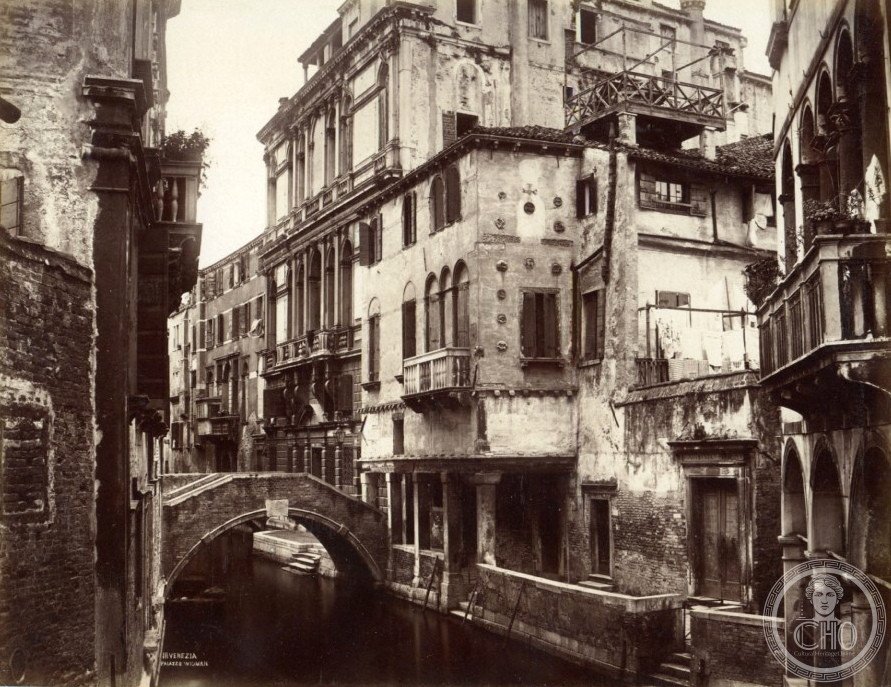
Palazzo Widmann
Palazzo Widmann — fully Palazzo Widmann Rezzonico Foscari — is a Baroque patrician palace on the Rio di San Canciano in the Cannaregio sestiere of Venice, built in the mid-17th century for the Widmann family, a Carinthian merchant dynasty that purchased its way into the Venetian patriciate in 1646 by contributing financially to the Republic’s war effort against the Ottoman Empire during the War of Candia. The palace is one of the best-preserved examples of 17th-century Venetian domestic architecture and is today operated as a cultural event venue and luxury accommodation.
At a glance
- Type
- Venetian patrician palace (palazzo)
- Period
- Mid-17th century; later additions and restorations
- Style
- Venetian Baroque
- Location
- Cannaregio sestiere, Rio di San Canciano, Venice, Italy
- Coordinates
- 45.4401° N, 12.3369° E
Overview
The palazzo stands on the Rio di San Canciano, a secondary canal in Cannaregio, one of Venice’s six sestieri and its most populous historic district. The Widmann family — also recorded as Widman or Vidman — were originally from Carinthia (modern Austria) and settled permanently in Venice after being admitted to the Venetian nobility in 1646, a practice known as aggregazione al patriziato, by which the Serenissima raised funds during the long and expensive War of Candia against the Ottomans. The palace’s interior retains important 18th-century frescoed rooms and period furnishings that document the family’s cultural ambitions in the age of the Venetian Settecento.
History
The Widmann family rose to prominence in Central Europe under Habsburg patronage: Ferdinand III granted them the barony of San Paterniano and Someregg, while Leopold I conferred the county of Ortemburg. Their entry into the Venetian patriciate in 1646 — during the first Cretan War — was part of a broader programme by which the Serenissima enrolled wealthy merchant families in exchange for financial contributions, with access to the Maggior Consiglio (Great Council) and the full rights of the nobility. In the early 19th century the family incorporated the Rezzonico name through inheritance: Antonio Widmann received the Venetian estate of Abbondio Rezzonico (d. 1810), grand-nephew of Pope Clement XIII (Carlo della Torre di Rezzonico), thus creating the double-barrelled surname Widmann Rezzonico. A further Foscari connection added a third name in subsequent generations.
What you see
The palace presents the characteristic Venetian Baroque facade articulated by a piano nobile with mullioned windows and an asymmetrical watergate (androne) at canal level. The interior is distinguished by a suite of frescoed rooms on the piano nobile, attributed to painters active in the Venetian Settecento tradition, with trompe-l’œil architectural motifs and allegorical ceiling compositions. Period furniture, stucco cornices, and terrazzo floors complete an interior that offers a well-preserved window into Venetian aristocratic domestic life in the 17th and 18th centuries. A courtyard garden — rare in dense Cannaregio — provides a green respite characteristic of the wealthier Venetian palazzi.
Cultural significance
Palazzo Widmann is one of the relatively few Venetian Baroque palaces in Cannaregio that retains its historic interior decoration largely intact, making it a valuable document of both 17th-century building practice and 18th-century patrician taste in the Serenissima. The family’s history — Carinthian merchants transformed into Venetian nobles, then linked by inheritance to a papal dynasty — encapsulates the social dynamics of the late Venetian Republic. The palace continues its role as a site of cultural life in Venice, hosting private events and accommodating guests in its historic rooms.
Practical information
- Address
- Cannaregio, Rio di San Canciano, Venice
- Access
- The palace is not a public museum; access is through organised cultural events and accommodation. Check official website for current availability.
- Nearest vaporetto stop
- Ca’ d’Oro (line 1) or Rialto (lines 1 and 2), both approximately 10 minutes on foot through Cannaregio.
Getting there
From Santa Lucia railway station, take vaporetto line 1 to Ca’ d’Oro (approximately 15 minutes), then walk south through the Cannaregio calli toward Rio di San Canciano (8–10 minutes). Alternatively, from the Rialto Bridge, cross into Cannaregio via Strada Nova and follow the signs for Rio di San Canciano (10 minutes on foot). Water taxi from Marco Polo Airport takes approximately 45–60 minutes directly to the canal entrance of the palace. Venice does not permit private motor vehicles; all access within the city is on foot or by waterway.
Sources & resources
Find it on the map
See this place and what’s around it →📷 Diventa un fotografo di Cultural Heritage Online
Condividi le tue foto dei luoghi: restano pubblicate con la tua firma come autore. Più vengono viste, più ti fai conoscere — e presto un concorso premierà le foto più apprezzate.
Accedi o registrati gratis per aggiungere una foto