
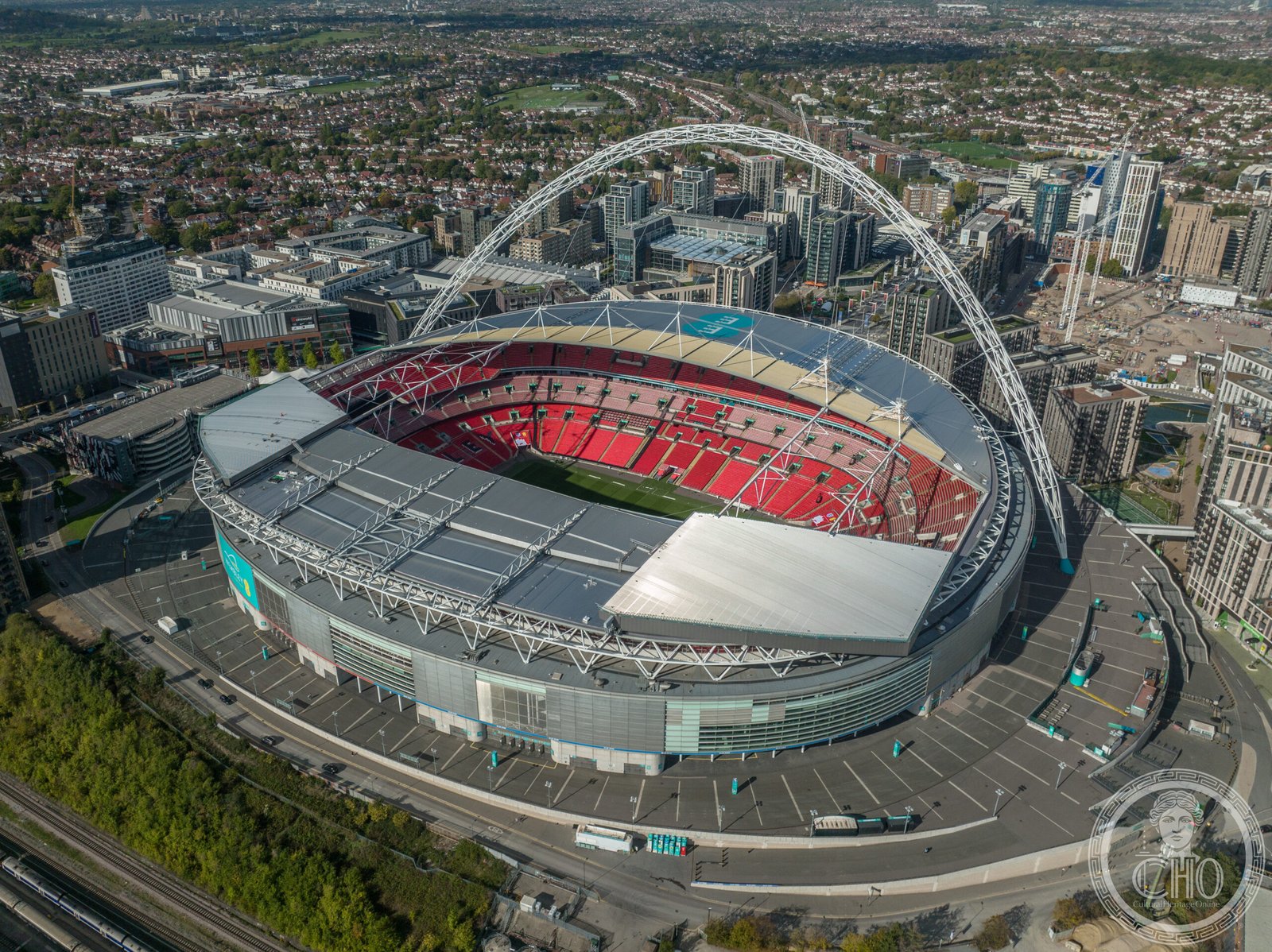
Wembley Stadium
Wembley Stadium is England’s national football stadium, located in Wembley, north-west London. Opened in 2007 on the site of the celebrated 1923 original, the 90,000-seat venue is the largest stadium in the United Kingdom and the second-largest in Europe, hosting FA Cup Finals, England home internationals, and major concert events.
At a glance
- Type
- National football stadium and multi-use arena
- Period
- Current stadium opened 9 March 2007; original Wembley stood 1923–2000
- Style
- Contemporary bowl design with retractable roof and signature arch
- Location
- Wembley, London Borough of Brent, England, UK
- Coordinates
- 51.5563° N, 0.2796° W
- Capacity
- 90,000 seats
Overview
Wembley Stadium is owned by the Football Association (FA) through its subsidiary Wembley National Stadium Ltd, making it the governing body’s permanent headquarters. With 90,000 seats it is the largest stadium in the United Kingdom and the second-largest in Europe, behind Barcelona’s Camp Nou. Beyond football, the venue hosts the NFL London Games, major international concerts, and boxing world championship bouts, cementing its status as Britain’s premier live events arena.
History
The original Wembley Stadium — the “Empire Stadium” — was built in just 300 days for the 1923 British Empire Exhibition and became iconic for its twin towers and the spontaneous “White Horse Final” of that year. It hosted the 1948 Summer Olympics football events and the 1966 FIFA World Cup Final, where England defeated West Germany 4–2. Demolition began in 2003, and the new stadium, designed by Foster + Partners and HOK Sport (now Populous), opened in 2007 after construction delays and a budget that rose to approximately £798 million.
What you see
The stadium’s most visible feature is its 133-metre-tall lattice steel arch, the world’s longest unsupported roof structure, visible from across greater London. A semi-retractable roof covers all 90,000 seats, protecting spectators while allowing natural turf to receive adequate sunlight. Inside, a steep lower tier brings fans close to the pitch, while extensive concourse facilities include over 2,600 toilets — famously claimed to be the most of any building in the world.
Cultural significance
Wembley is synonymous with the pinnacle of English football: winning at Wembley is the ultimate ambition for domestic clubs, and the ground’s turf has been hallowed since the 1923 FA Cup Final. The venue carries deep cultural weight beyond sport, having hosted legendary concerts by Queen (1986 Live Aid), Michael Jackson, Adele, and countless others, making it an enduring symbol of British popular culture and national identity.
Practical information
- Address
- Wembley Stadium, London HA9 0WS, England
- Tours
- Stadium tours available most non-event days; check the official website for schedules and pricing
- Official website
- wembleystadium.com
Getting there
Wembley is well served by London public transport. Wembley Park station (Metropolitan and Jubilee lines, London Underground) is a 5-minute walk from the stadium. Wembley Central station (Bakerloo line and Overground) is approximately 10 minutes on foot. National Rail services also call at Wembley Central. Cycling via TfL cycle hire is available; on event days, driving is strongly discouraged due to road closures.
Sources & resources
Find it on the map
See this place and what’s around it →📷 Diventa un fotografo di Cultural Heritage Online
Condividi le tue foto dei luoghi: restano pubblicate con la tua firma come autore. Più vengono viste, più ti fai conoscere — e presto un concorso premierà le foto più apprezzate.
Accedi o registrati gratis per aggiungere una foto