
Villa del Casale
La Villa Romana del Casale (UNESCO 1997, rif. 832) è la più grande villa suburbana con pavimenti musivi conservati al mondo — 3.500 m² di mosaici in 40+ stanze di una villa del IV secolo CE che include il mosaico narrativo più lungo di Roma (il Corridoio della Grande Caccia: 60 m), la scena di ginnastica femminile più famosa dell’antichità (la Sala delle Dieci Fanciulle, le “bikini girls”) e 6 ritratti di bambini con i loro giocattoli.
At a glance
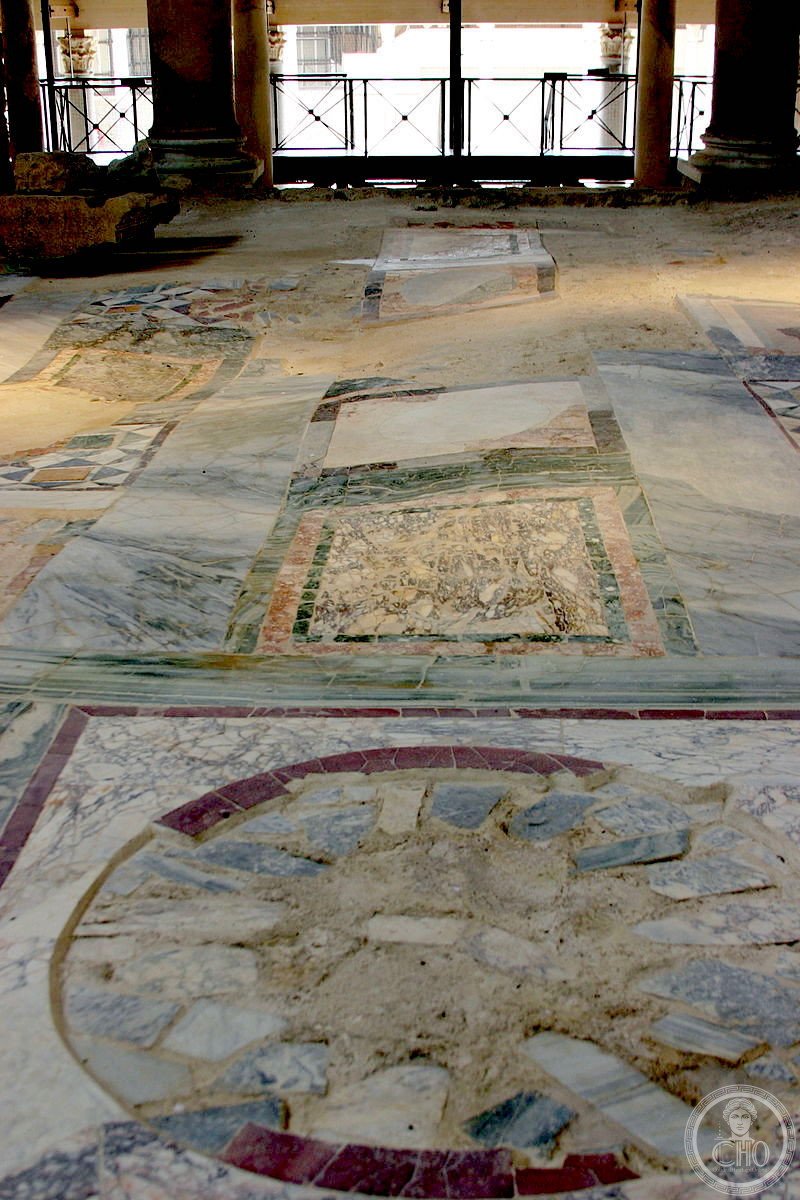
Villa del Casale Sicilia (the most precisely Villa del Casale zone Piazza Armerina Enna Sicilia Italy 37.6567 N 14.3333 E UNESCO WHS 1997 reference 832 Villa Romana del Casale: the site (the villa: the area (the total built area: 3,500 m²; the main building: a 3-wing peristyle villa with 40+ rooms arranged around a large colonnaded courtyard (the peristyle: 37 m × 29 m); the approach (the vestibule entrance is from the north; the bath complex is immediately to the left on entry; the visitor circuit: bath complex → peristyle courtyard → private apartments (east wing) → audience chamber → great hunting corridor (south wing) → triclinium (dining room, west wing))); the mosaics (the characteristics: the most recent comprehensive survey (2019 CE, CNR Rome) counted 3,522 m² of surviving mosaic across 48 rooms and corridors; the technique: opus vermiculatum (the most precise mosaic technique: tesserae as small as 1 mm placed in curved lines that follow the contours of the figures); the workshop identification (the mosaics are the work of a North African workshop (based on iconographic comparison with mosaics from Carthage (destroyed 698 CE), Hippo Regius (modern Annaba, Algeria), and Cherchell (ancient Caesarea Mauretaniae, Algeria)): the common North African themes (hunting, amphitheater sports, mythological cycle) at the Casale match exactly the production of a major Carthaginian workshop active 290–330 CE); the ownership (the owner of the villa is debated; the leading candidate: Maximian Herculius (co-emperor with Diocletian, 285–305 CE: the “Herculian” iconography (the labors of Hercules appear in 3 rooms) supports an attribution to the Herculian dynasty; but the villa was continuously occupied from 310 to at least 620 CE and the mosaics date to a single phase 310–330 CE, which would correspond to a post-Maximian phase)).
Key facts
- La Sala delle Dieci Fanciulle e le “bikini girls”: cosa mostra esattamente il mosaico e perché l’interpretazione moderna come sport femminile è più probabile dell’interpretazione come scena erotica: the Sala delle Dieci Fanciulle (the Room of the Ten Girls: the 2.9 m × 3.5 m mosaic in the east wing of the villa: the 10 women in 2 rows performing athletic activities wearing 2-piece garments resembling modern bikinis (the garments: the “mamillare” (the breast band: a strip of cloth bound around the chest; described in Roman texts from Plautus (200 BCE) to Tertullian (200 CE) as standard female athletic underwear) + the “subligaculum” (the lower loin cloth: identical to the men’s athletic loincloth of the same period)); the activities (the 10 women in the mosaic are performing: (1) running with a palm branch (the prize for a racing victory); (2) discus throwing; (3) ball exercise (bouncing a ball); (4) weight lifting (dumbbells = “halteres”: the Roman training weight); the current interpretation (the activities (running + discus + ball + weights) are exactly the Greek “pentathlon” preparation exercises as described in Galen’s “De sanitate tuenda” (c.190 CE) and in Philostratus’s “Gymnastica” (c.230 CE); the figure with the palm branch (the prize) + the crown (the “corona”: the wreath of honor for athletic victory): a clear reference to athletic competition, not an erotic scene (the crown and palm = standard athletic iconography, never erotic iconography, in Roman art)); the iconic status (the “bikini girls” nickname was coined by the Italian press in 1959 CE when the mosaic was first uncovered; the popular name was immediately adopted internationally and is now the most recognized image from the Villa del Casale globally))
- GPS (Villa Romana del Casale, Contrada Casale, Piazza Armerina): 37.6567° N, 14.3333° E
History
Da 310 CE al UNESCO 1997 (the most precisely Villa del Casale zone history: the construction (the villa: built c.310–330 CE in a single construction phase (the evidence: the unified mosaic workshop; the architectural uniformity; the absence of major modifications in the structure); the abandonment and burial (the villa was abandoned c.1160 CE following a Norman landslide that buried the western wing under 2.5 m of alluvial clay; the burial preserved the mosaics in excellent condition for 800 years: the clay prevented atmospheric exposure); the rediscovery (the villa was first documented by the architect and archaeologist Paolo Orsi in 1881 CE (the “Orsi survey”: a preliminary excavation that uncovered the mosaic of the Great Hunt); the systematic excavation (the systematic excavation: 1929–1960 CE by the Soprintendenza delle Antichità di Agrigento under Gino Vinicio Gentili: the 30-year excavation revealed the complete plan of the villa and uncovered 3,500 m² of mosaics); the protective roof (the transparent Plexiglas roof installed 1957 CE: the original material; replaced with polycarbonate panels in 2011 CE; the current roof (2014 CE): the third-generation titanium-frame polycarbonate covering 3,500 m² at 6 m clearance above the mosaics); the UNESCO inscription (1997 CE: reference 832).
What you see
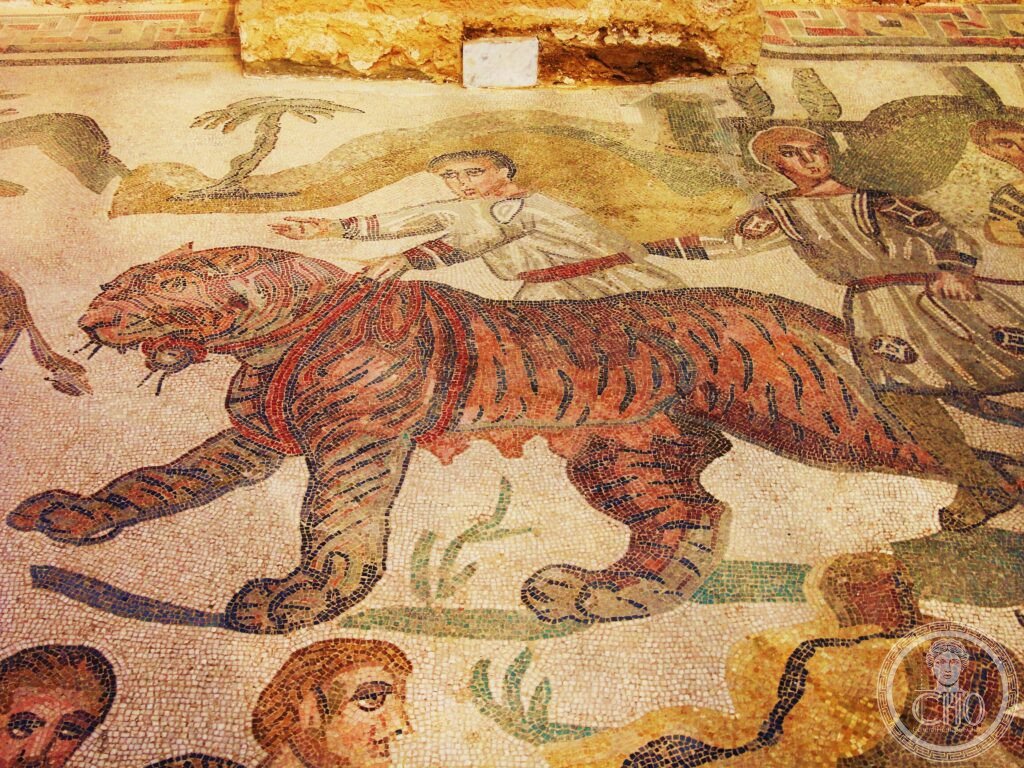
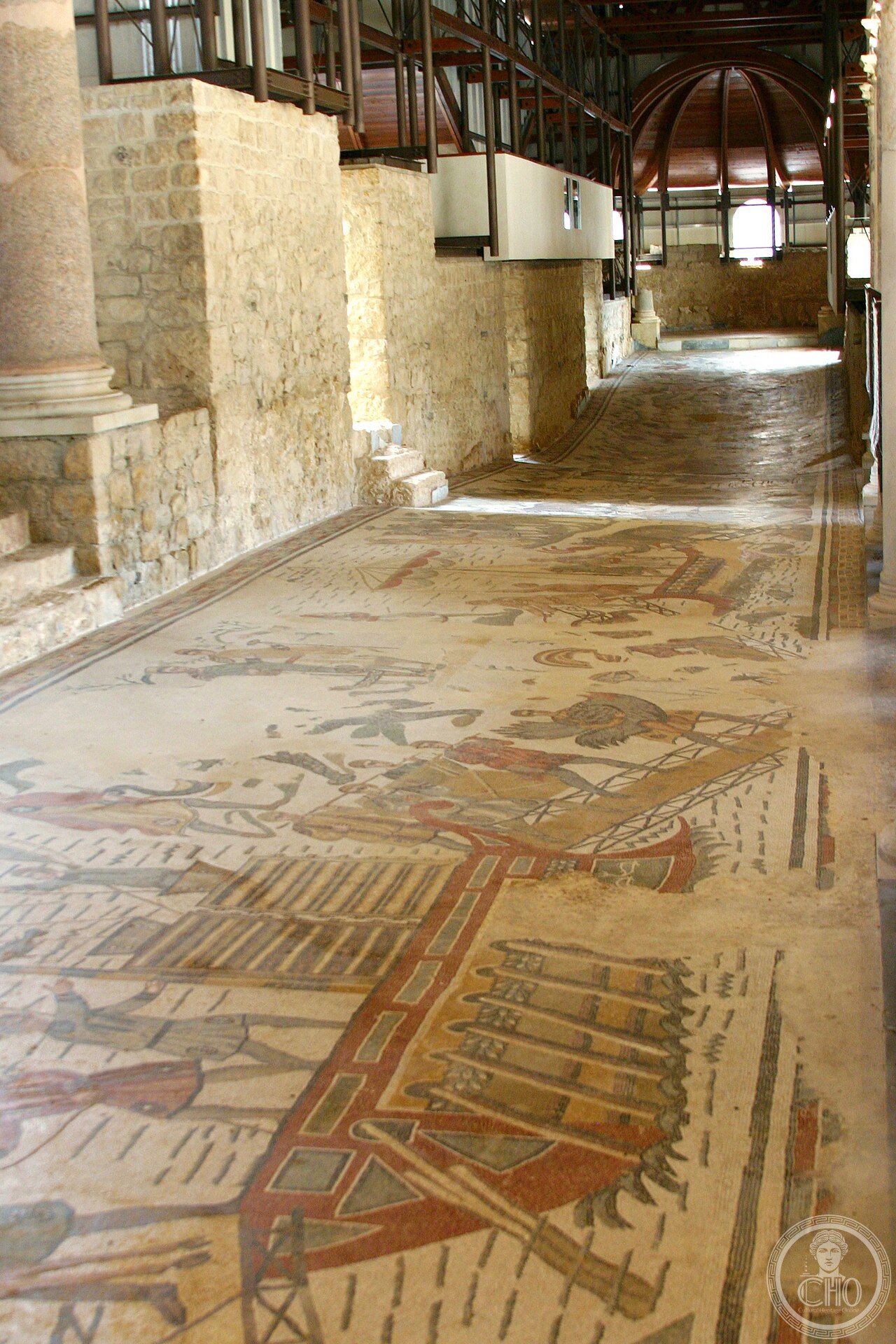
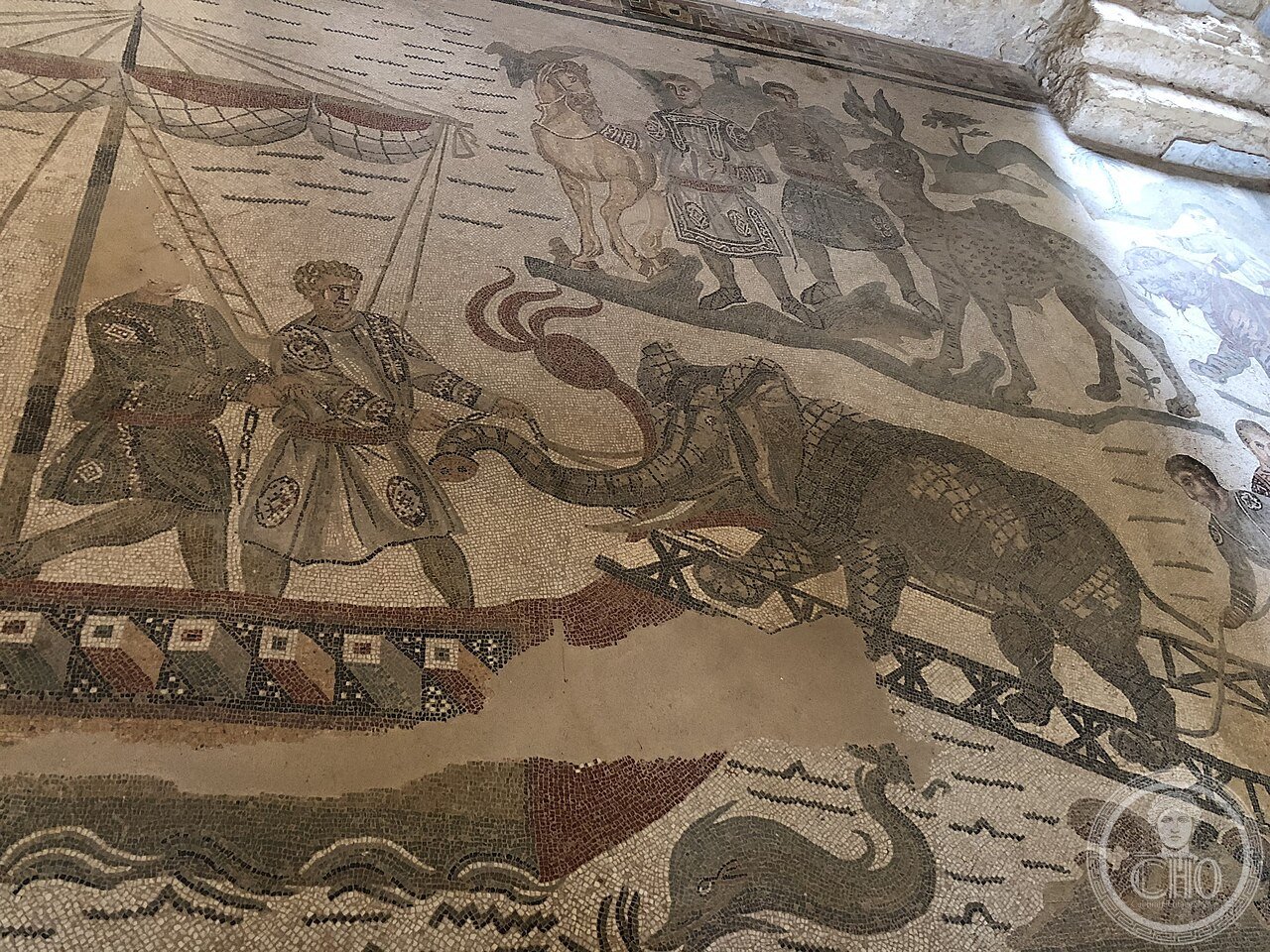
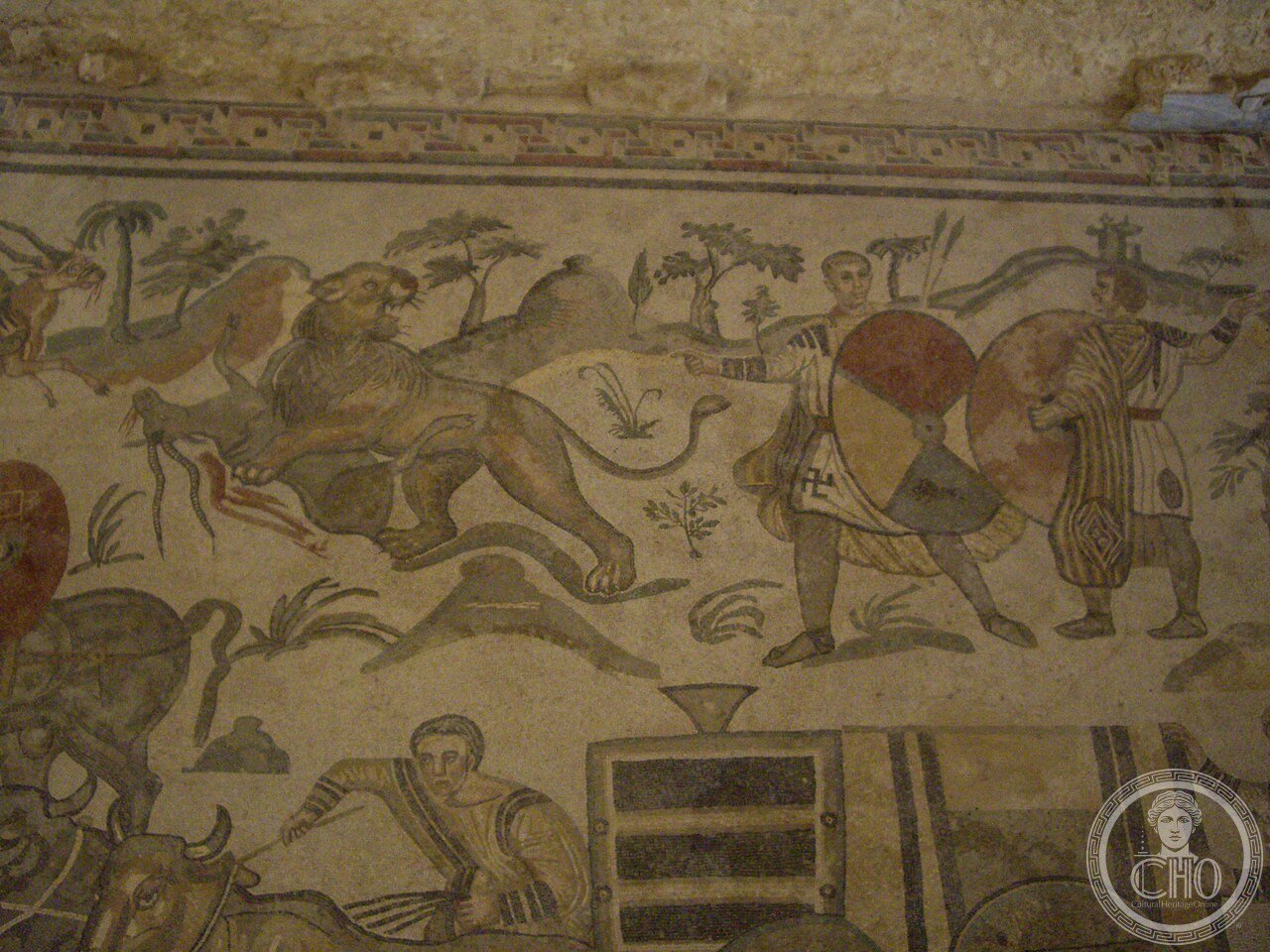
Il Corridoio della Grande Caccia, la Sala delle 10 Fanciulle, il triclinio Ercole, il peristilio (the most precisely Villa del Casale zone visit (2–3 hours): the ticket (€10; free 18-; daily 9:00–19:00 (18:00 Oct-March); the visit (the 1.3 km visitor circuit on raised walkways above the mosaics: the circuit begins at the thermal baths (the “frigidarium”: the cold plunge pool with the mosaic showing marine life and fishing scenes) → the peristyle courtyard → the “Sala di Orfeo” (the 21 m × 5 m salon with Orpheus surrounded by animals) → the private apartments with the “Bikini Girls” (the last room before the Great Hunting Corridor; the mosaic is on the floor and is viewed from the walkway at 2 m height; binoculars are not necessary because the figures are 1.2 m tall) → the “Corridoio della Grande Caccia” (60 m × 5 m: the longest continuous mosaic in the world outside of Istanbul; the subject: the capture and transport of wild animals for the Roman arena from Africa (elephants, rhinoceros, lions) and Asia (tigers, ostriches); the destination: Rome (the mosaic shows the Circus Maximus and a personification of Roma at the far end)); the tip (the visit in low season (October–March): no entry queues; the polycarbonate roof provides shade in summer but concentrates heat in July–August (the temperature under the roof in August reaches 38–42°C); visit at 9:00 AM or after 17:00 in summer).
Practical information
- Come raggiungere la Villa del Casale senza auto, e perché il taxi da Piazza Armerina è l’opzione più pratica: il trasporto (Catania Centrale → Enna: Trenitalia (50 min; €5.50; ogni 2h); Enna → Piazza Armerina: SAIS Autolinee (1h; €3.00; 4 corse/giorno (6:30 / 10:30 / 14:00 / 17:30)); Piazza Armerina → Villa del Casale: taxi dal centro di Piazza Armerina (€10; 5 km; 8 min); bus comunale (1 corsa mattutina verso la villa (verificare orari sul sito del Comune di Piazza Armerina); nessun ritorno utile con il bus); Palermo → Piazza Armerina: SAIS Autolinee (2h30; €12; 2 corse/giorno); il periodo migliore (il periodo migliore per la visita: aprile-maggio (Pasqua a Piazza Armerina: il “Palio dei Normanni” (il corteo storico in costumi normanni: prima domenica di agosto: verificare la data esatta anno per anno; il corteo non interferisce con la visita alla villa); ottobre-novembre (temperature fresche sotto il tetto della villa; nessuna fila)
Getting there
Trenitalia da Catania a Enna (50 min, €5.50) poi bus a Piazza Armerina (1h, €3) poi taxi alla villa (€10, 5 km). GPS: 37.6567/14.3333. €10. 9:00–19:00 (18:00 ott-mar).
Nearby
- Enna (il “belvedere della Sicilia” — castello Lombardo XII sec., vista sull’intera Sicilia centrale) — 30 km (il Castello di Lombardia (1061 CE: normanno; 26 torri originali; 6 superstiti; vista Etna + Eolie + Agrigento nelle giornate limpide); il Duomo di Enna (1307 CE; il Tesoro del Duomo: 4 candelabri di argento del 1.400 CE))
- Agrigento — Valle dei Templi (UNESCO 1997 rif. 831 — il più grande parco archeologico greco al mondo) — 80 km (auto o Trenitalia via Caltanissetta; i 7 templi (Concordia/Era/Zeus Olimpio/Eracle/Dioscuri); il Museo Regionale Archeologico; €14)
Gallery
Sources
- Wikipedia, Villa Romana del Casale; Mosaic of the Bikini Girls, accessed June 2026
- UNESCO, Villa Romana del Casale, WHS reference 832, inscribed 1997
- Meyboom, Paul. The Nile Mosaic of Palestrina. Leiden: Brill, 1995 (context for North African mosaic workshops)
Find it on the map
See this place and what’s around it →📷 Diventa un fotografo di Cultural Heritage Online
Condividi le tue foto dei luoghi: restano pubblicate con la tua firma come autore. Più vengono viste, più ti fai conoscere — e presto un concorso premierà le foto più apprezzate.
Accedi o registrati gratis per aggiungere una foto