
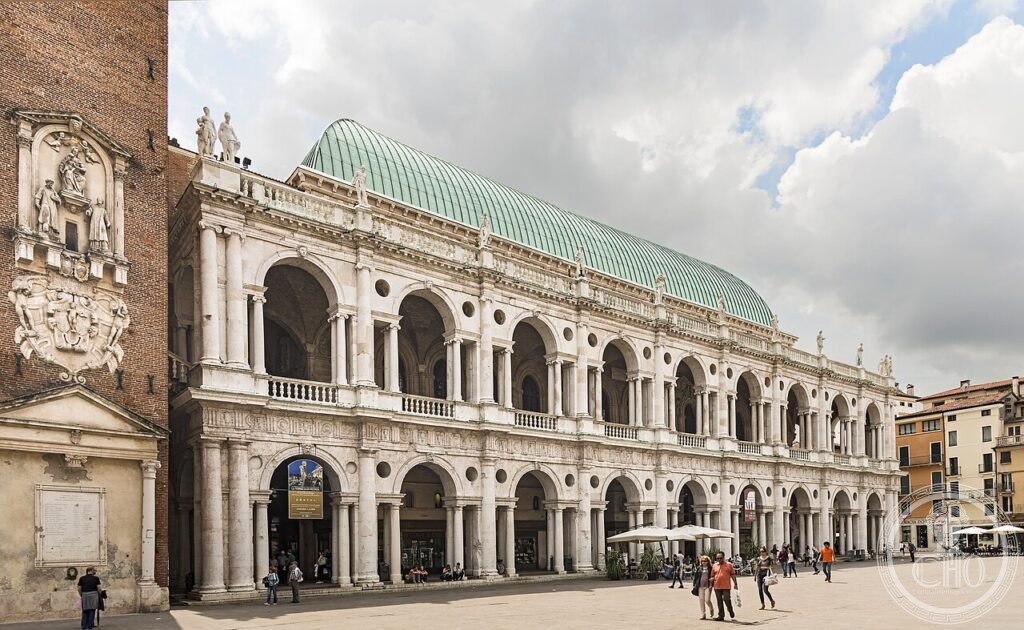
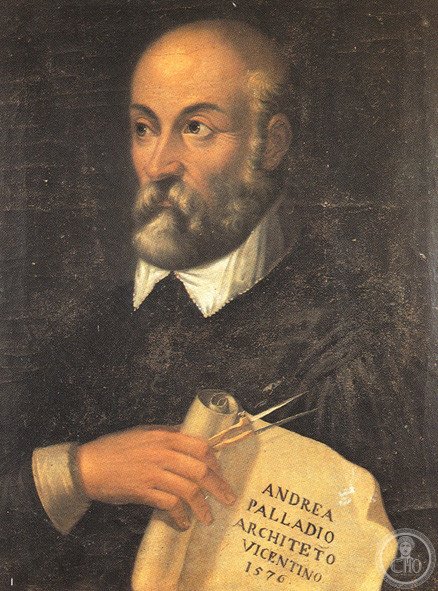
Andrea Palladio, who worked in Vicenza from 1540 to his death in 1580, invented architectural classicism as the western world knows it: his four books of architecture (I Quattro Libri dell’Architettura, 1570) defined the vocabulary of columns, pediments, proportions, and spatial sequences that shaped the design of every country house in England, every plantation house in Virginia, every federal building in Washington DC, and every bank facade in Europe for the next 350 years — and the buildings in which he first tested these ideas are in Vicenza, on the streets and piazzas of a small Venetian provincial city, preserved largely as he built them.
At a glance
Vicenza is a UNESCO World Heritage Site inscribed in 1994 (ref. 712) as “City of Vicenza and the Palladian Villas of the Veneto,” extended in 1996 to include 24 Palladian villas in the Veneto countryside. The inscription covers the 23 major buildings by Andrea Palladio in the city of Vicenza (including the Basilica Palladiana, the Teatro Olimpico, the Palazzo Chiericati, and 16 private palaces) and the most important surviving rural villas (including the Villa Rotonda / Capra, the Villa Barbaro at Maser, and the Villa Emo at Fanzolo). The outstanding universal value of the site is Palladio’s architectural language itself: the Palladian style — the direct, identifiable system of classical proportions, temple fronts, harmonious loggia sequences, and spatial clarity that Palladio developed in Vicenza and its territory — is the most globally influential architectural style of the last 400 years.
Key facts
- Basilica Palladiana (1549-1617): The transformation of the medieval Palazzo della Ragione (1172, the city’s main public building, which had been structurally failing since the 15th century) by Palladio from 1549: Palladio encased the existing medieval building in a double loggia of classical orders (Doric at ground level, Ionic above) and resolved the problem of the irregular medieval bays by inserting the “Palladian motif” (also called the Serliana) — a three-part window with a round arch in the centre flanked by two smaller rectangular openings separated by columns — at each bay, adjusting the width of the flanking elements to absorb the irregular widths of the medieval bays; this solution was so elegant and so clearly the “right” answer that the Serliana/Palladian motif became the single most copied decorative element in European architecture from 1600 to 1900
- Villa Almerico Capra “La Rotonda” (1566-1592, completed by Vincenzo Scamozzi): 2.5 km south of Vicenza; the most influential private building ever built: a square villa with four identical temple-front porticoes on four sides, a central domed room visible from all four approaches; directly copied by Colen Campbell at Mereworth Castle (Kent, 1723), by Lord Burlington at Chiswick House (London, 1729), by Thomas Jefferson at Monticello (1769-1809), and by innumerable other architects across the world; the building is still privately owned (by the Valmarana family) and is open to visitors 3 days per week
- Teatro Olimpico (1580-1585): The last building designed by Palladio (begun 1580, completed 1585 by Scamozzi after Palladio’s death); the oldest surviving indoor theatre in the world; the permanent stage set (designed by Scamozzi in 1585 for the inaugural performance of Sophocles’s Oedipus Rex, and never changed) represents seven street perspectives in forced-perspective painted wood — still used for performances today
- UNESCO: 1994, ref. 712 — extended 1996
- GPS: 45.5460, 11.5454 — Google Maps
History
Andrea Palladio (born in Padua 1508, died in Vicenza 1580) was apprenticed as a stonecutter in Padua and moved to Vicenza in 1524. His architectural career began in 1537 when the Vicentine nobleman Gian Giorgio Trissino, a humanist scholar and amateur architect, took him under his patronage, renamed him “Palladio” (after the Greek goddess Pallas Athena), introduced him to the architecture of Vitruvius, and took him to Rome three times to study the surviving ancient buildings. The combination of practical masonry skill, humanist education, and direct study of ancient Roman buildings gave Palladio the specific toolkit he used to develop his architectural system: he measured and drew the Roman ruins more systematically than any architect before him, identified the underlying proportional rules, and applied those rules to the practical problems of building in 16th-century Veneto.
Vicenza in the mid-16th century was a prosperous provincial city of the Venetian Republic with a class of wealthy noble families who competed to build impressive palaces and villas. Palladio provided them with a design language that combined classical authority (Roman temples, Vitruvian rules) with practical efficiency (the loggia as a shading device in the hot Veneto summers, the symmetrical villa plan that could be oriented to any direction). The buildings Palladio built in and around Vicenza between 1540 and 1580 were documented in his Quattro Libri dell’Architettura (1570), which became the most influential architectural textbook in history and was translated and republished continuously from 1600 to the present day.
What you see
The visit to the Palladian buildings in Vicenza is organized around two principal areas: the central piazza (Piazza dei Signori, dominated by the Basilica Palladiana and the Loggia del Capitanio) and the Corso Andrea Palladio (the main street of the historic centre, lined with Palladian palaces — principally the Palazzo Thiene, the Palazzo Barbarano, and the Palazzo Porto). The Basilica Palladiana is open to the public (as an exhibition space; the medieval sala above the ground-floor loggia is the original Palazzo della Ragione) and the roof terrace (summer only) gives the most important single view of the city — the panorama of the historic centre surrounded by the Venetian villas on the hills, with Monte Berico at the south-west.
The Teatro Olimpico (Piazza Matteotti) is one of the most extraordinary theatre buildings in the world. The interior — an elliptical cavea (auditorium) modelled on Roman theatres, with a tiers of wooden seats and a permanent stage set of forced-perspective street scenes — is preserved exactly as Scamozzi designed it for the 1585 inaugural performance. Standing in the centre of the cavea and looking at the seven street perspectives (which extend optically to a distance of 12 m, but are actually only 8 m deep, with an extreme foreshortening of the receding figures and buildings) is the closest surviving experience to what a Roman theatre audience saw in the first century BCE.
Gallery
Practical information
- Basilica Palladiana: Piazza dei Signori; open Tuesday-Sunday 10:00-18:00; closed Monday; admission varies by exhibition (~€5-10). The ground-floor loggia (exterior, free) can be seen any time.
- Teatro Olimpico: Piazza Matteotti; open Tuesday-Sunday 9:00-17:00; admission ~€11 (includes Palazzo Chiericati, the civic museum adjacent); summer performances in the original stage setting (check teatrolimpicovicenza.it).
- Villa Rotonda/Almerico Capra: Via della Rotonda 45, Vicenza; open Wednesday and Saturday (grounds) 10:00-12:00 and 15:00-18:00; interior open for guided tours Wednesday and Saturday (interior only at those times); closed November-February; admission grounds ~€5, interior ~€10.
Getting there
Piazza dei Signori, Vicenza, Veneto. By train: Trenitalia from Venezia (65 km; 45 min); from Verona (40 km; 20 min); from Milan (215 km; 1h30 Freccia or 2h regional); from Padova (30 km; 15 min). The Vicenza station is 700 m south of the historic centre (10 min walk north on Viale Roma to Piazza Matteotti then to Piazza dei Signori). By car: from Venezia, A4 west to Vicenza Est exit (65 km, 40 min); from Verona, A4 east (40 km, 25 min). The historic centre is a ZTL zone; parking outside the walls on Viale Rumor or Via Vaccari.
Nearby
- Villa Almerico Capra “La Rotonda” — 2.5 km south-east of the Basilica Palladiana; the most influential private building in architectural history (see Key Facts); still privately owned, open 3 days/week in season
- Villa Barbaro, Maser (TV) — 40 km north-east; the only surviving Palladian villa with its complete original fresco cycle by Paolo Veronese (1560-1561): the tromp-l’oeil painted rooms (servants looking around door frames, false windows, theatrical curtains) are among the most complete examples of 16th-century illusionistic painting in Italy; still owned by the Volpi di Misurata family; open March-November, Thursday-Sunday
- Padova e la Cappella degli Scrovegni — 30 km east; the Scrovegni Chapel frescoes (Giotto, 1304-1306; UNESCO 2021 ref.1545); mandatory advance booking; one of the most important single rooms in the history of Western art
Sources
- UNESCO: whc.unesco.org/en/list/712
- Wikipedia EN: Vicenza
- Palladio, Andrea: I Quattro Libri dell’Architettura, Venice, 1570 (facsimile: MIT Press, 2002)
- Centro Internazionale di Studi di Architettura Andrea Palladio: cisapalladio.org
Gallery
Find it on the map
See this place and what’s around it →📷 Become a Cultural Heritage Online photographer
Share your photos of places: they stay published under your name as the author. The more they're seen, the more you get noticed — and soon a contest will reward the most appreciated photos.
Log in or sign up free to add a photo