
Verona
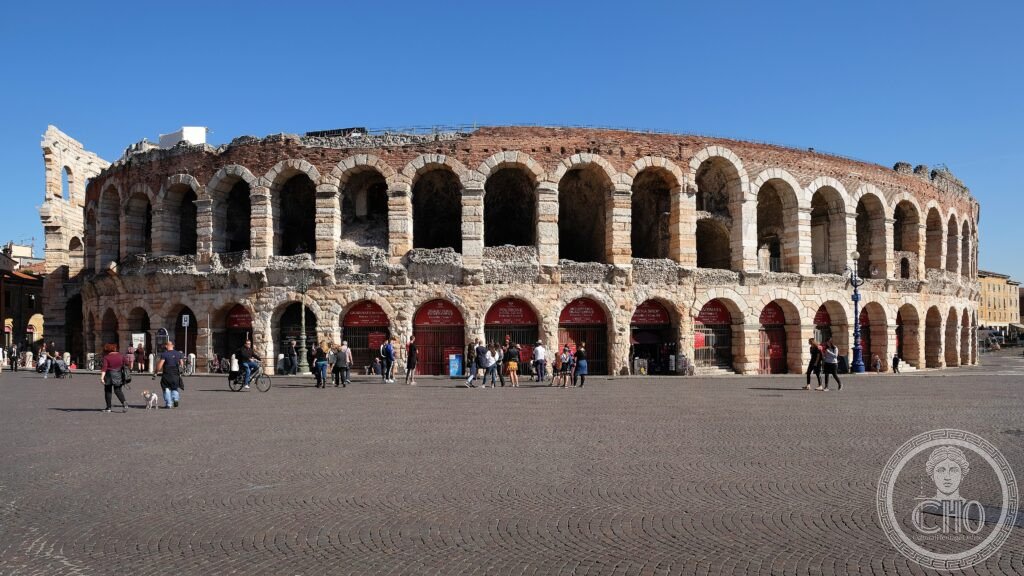
Verona (UNESCO 2000, rif. 797 Città di Verona) è la più compiuta sopravvivenza della città romana medievale del nord Italia — con l’Arena del 30 CE che ospita ancora il Festival lirico più grande d’Europa, il foro romano di Piazza delle Erbe integro nella topografia medievale, e il quartiere scaligero dove i Della Scala governarono con il più brillante mecenatismo del Trecento veneto.
At a glance
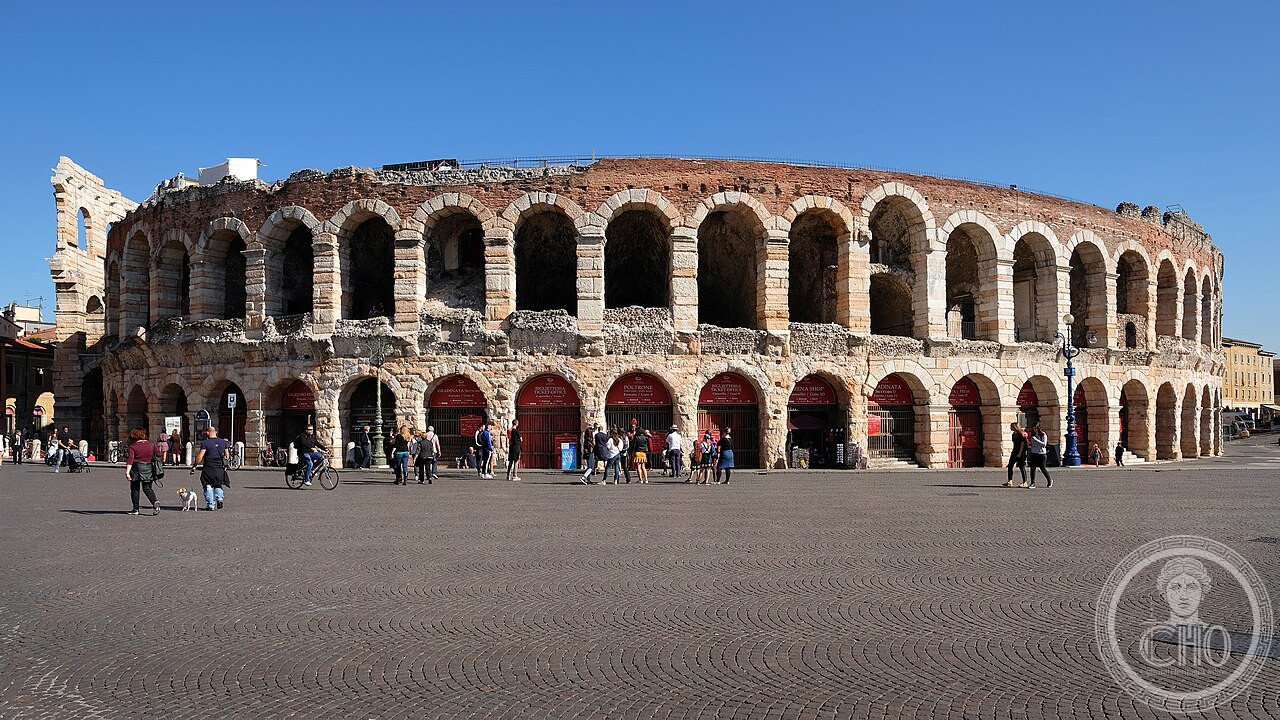
Verona Veneto (the most precisely Verona zone Verona Veneto Italy 45.4384 N 10.9916 E UNESCO WHS 2000 reference 797: the site (Verona: the city whose Roman street plan survives intact in the medieval overlay (the cardinal axis of the Roman city: the cardo maximus = present-day Via Cappello → Via Mazzini; the decumanus maximus = present-day Via Oberdan → Corso Porta Borsari; the forum = Piazza delle Erbe; the amphitheater = the Arena (outside the original Roman city walls (the walls of Augustus I century BCE: the “Ala di Giulio Cesare” visible at Porta Leoni)); the UNESCO inscription criteria: the city was inscribed for “its remarkable series of monuments, buildings and piazzas demonstrating a range of historical periods, from the Roman to the Romantic era”)); the Arena (the Arena di Verona (c.30 CE; approximately contemporary with the Colosseum of Rome (begun 72 CE) but older by 40 years; dimensions: 152 m × 123 m exterior; 139 m × 110 m interior; seating capacity: 30,000 (ancient) / 14,000 (current Festival configuration); the construction technique: the outer ring (the “ala”) of 3 concentric tiers of arches in Valpolicella white limestone (Jurassic Tithonian limestone, 152-145 Ma) + Lessini red limestone (Eocene limestone, 56-34 Ma, used for the decorative columns); the Roman concrete (the “opus caementicium”) core reinforced with basalt aggregate from the Soave volcanic outcrop (15 km east of Verona); the Festival (the Festival Lirico dell’Arena di Verona: founded 1913 CE with Verdi’s Aida (the inaugural performance, conducted by Tullio Serafin (1878–1968 CE); the cast: the soprano Giannina Russ (1873-1951 CE) as Aida; Maria Gay (1879-1943 CE) as Amneris); the modern Festival: 55 performances (June–September); the average audience per performance: 12,000; the candle tradition (the lights-out candle ceremony at the end of each performance: 14,000 candles lit simultaneously in the arena)).
Key facts
- Perché il balcone di Giulietta (Casa di Giulietta, Via Cappello 23) non ha niente a che fare con Shakespeare e cosa ci si trova davvero: the Juliet balcony (the “Casa di Giulietta” (Via Cappello 23, Verona): the specific history of the building (the building is a 14th century CE house that was the property of the Cappello family (Cappello = hat in Italian; the family coat of arms: a hat (cappello) in red on a silver field); the first documentary connection to the Shakespeare play (the play “Romeo and Juliet” (c.1595 CE) is based on Luigi da Porto’s novella “Historia novellamente ritrovata di due nobili amanti” (1530 CE) which set the story in Verona but did not identify a specific house); the invention of the balcony (the stone balcony visible today was added to the Cappello house in 1936 CE by the Municipality of Verona specifically to attract tourists; the specific decision: the 1936 CE municipal resolution “Commissione per il turismo” authorized the installation of a sarcophagus lid (from the Archaeological Museum) as a balcony; the irony: the “Juliet’s balcony” is made from the lid of a medieval stone tomb); the bronze statue (the bronze statue of Juliet in the courtyard: cast by the sculptor Nereo Costantini (1905-1978 CE) in 1972 CE; the touching of the right breast (a tradition that supposedly brings luck in love: the specific effect visible in the statue (the right breast has been touched so many times that it has developed a bright-gold polished patch (an area of ~15 cm² of bright copper on the otherwise patinated green bronze))))
- GPS (Arena di Verona, Piazza Bra): 45.4384° N, 10.9916° E
History
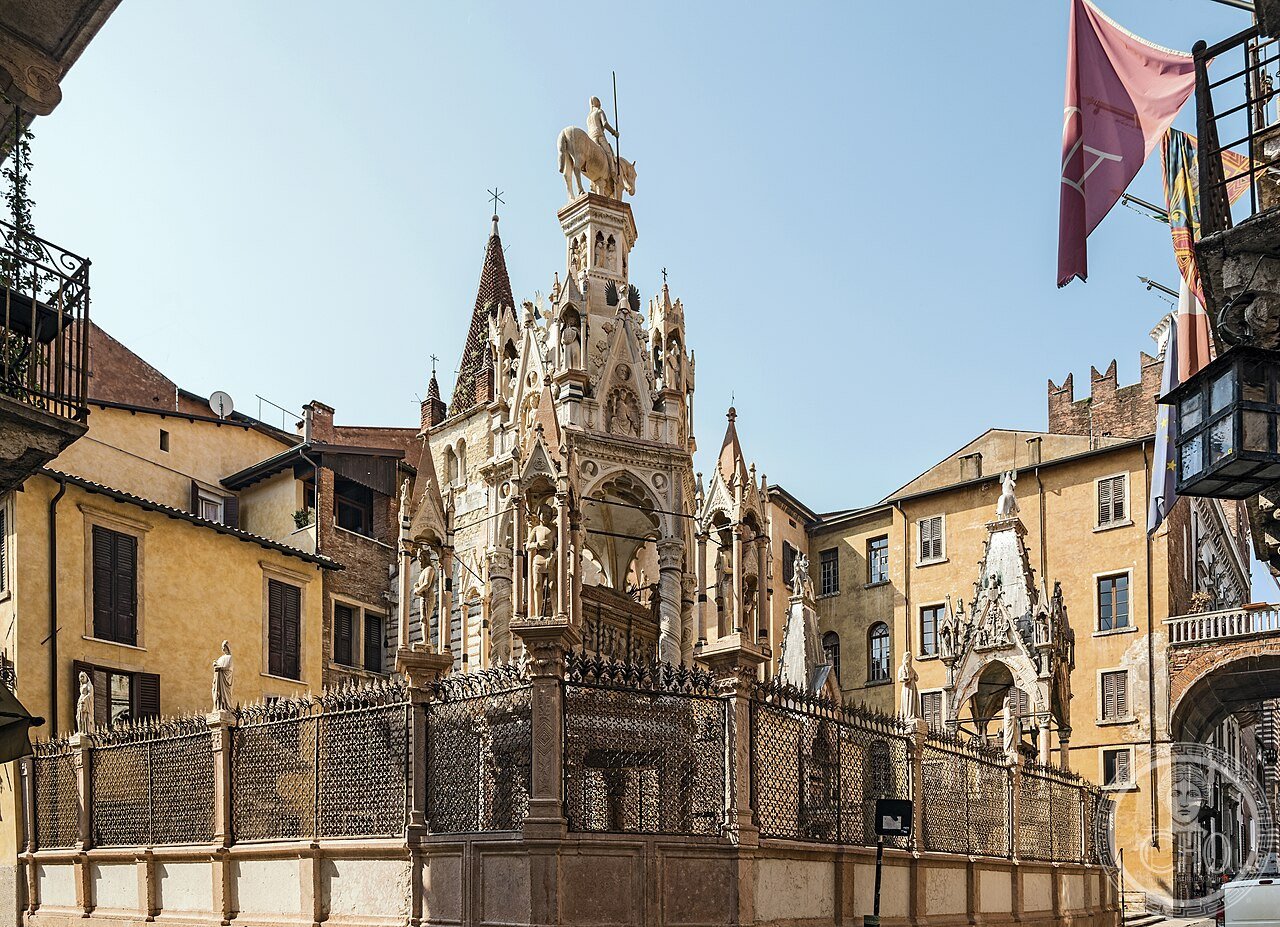
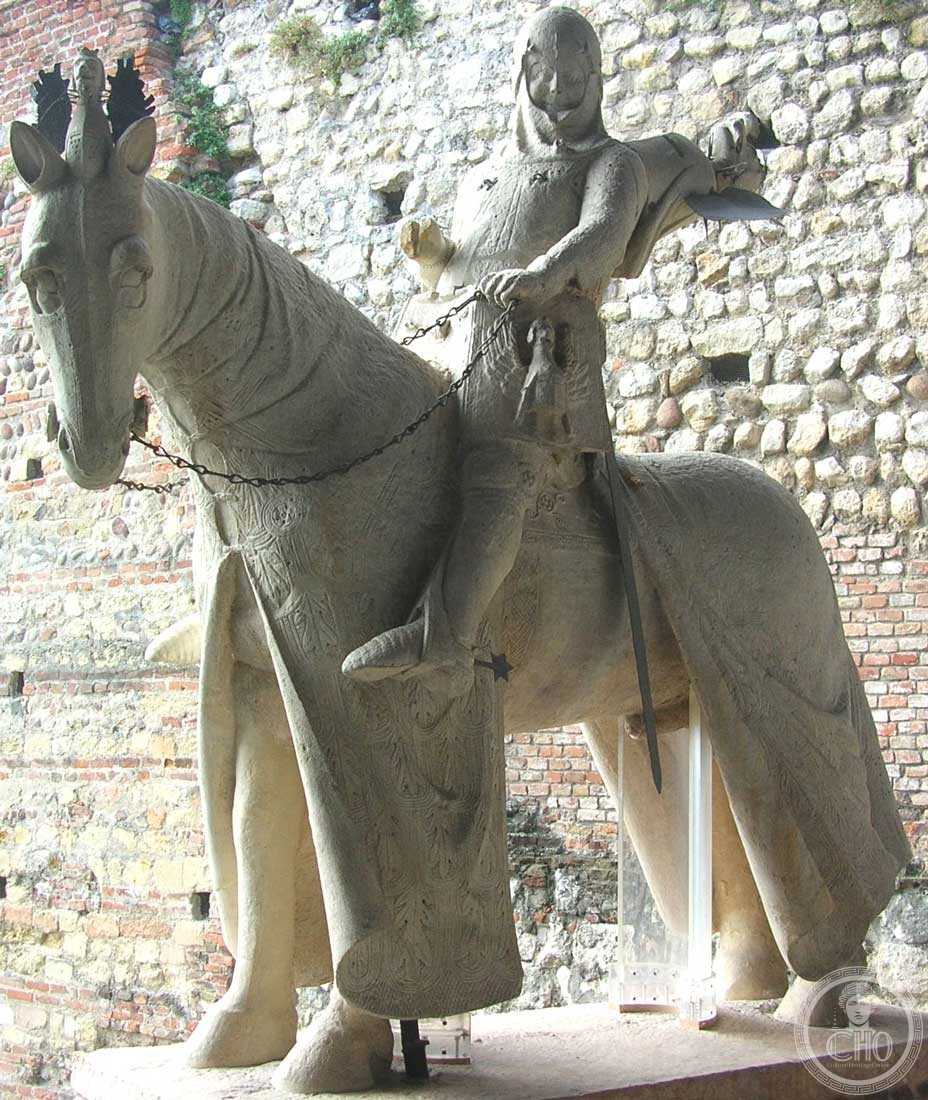
Dai Romani I sec. BCE agli Scaligeri XIV sec. CE al UNESCO 2000 (the most precisely Verona zone history: the Roman Verona (Verona Romana: the city was founded as a Latin colony in 89 BCE (the lex Pompeia de Transpadanis) and became a Roman municipality in 49 BCE with Julius Caesar’s Lex Roscia; the specific Roman infrastructure: (1) the Arena (c.30 CE); (2) the Ponte Pietra (the stone bridge: 1st century BCE; 4 arches; the original Roman bridge; 2 arches of the eastern (downstream) section survived the WWII bombing (the retreating German army destroyed the bridge on October 25, 1945 CE; the 2 surviving arches were preserved; the missing 3 arches were reconstructed 1947-1959 CE using the original Roman blocks recovered from the Adige river); (3) the Porta Borsari (the Roman city gate: 1st century BCE; the best-preserved Roman gate in the Veneto)); the Scaligeri dynasty (the Della Scala family (“Scaligeri”): the most important dynasty of medieval Verona (ruled 1262-1387 CE; 4 generations): the greatest patron: Cangrande I della Scala (1291-1329 CE; the lord of Verona who sheltered Dante Alighieri in exile 1303-1321 CE; Dante dedicated the Paradiso (the 3rd part of the Divine Comedy) to Cangrande I (“the great and glorious Cangrande della Scala”: the dedication epistle, 1315 CE); the equestrian statue of Cangrande I (now at the Castelvecchio Museum: the original 1328 CE bronze equestrian statue of Cangrande I riding his horse (the horse in an unusual “ambling” gait (lateral sequence: left hind + left fore, then right hind + right fore); the face of Cangrande I: the grinning visage of the medieval condottiere: an open smile, unique among all surviving equestrian statues of the 14th century CE))); the Venetian rule (1387-1797 CE: the Della Scala were deposed by Milan; Verona was conquered by Venice in 1405 CE and remained Venetian for 392 years); the UNESCO inscription (2000 CE: reference 797).
What you see
L’Arena, Piazza delle Erbe, la Casa di Giulietta, il Castelvecchio, il Ponte Pietra (the most precisely Verona zone visit (2 days for a thorough visit): Day 1 morning: Arena di Verona (Piazza Bra; €10 museum / €2 exterior; open 9:00-19:00 Tue–Sun; the Arena interior circuit: the standard visit sequence: enter from the east side → walk along the track level → climb the inner staircase to the 28th row (the midpoint: the best view of the full interior) → continue to the top (44th row: the view of Verona + Lessini mountains); Day 1 afternoon: Piazza delle Erbe (the Roman forum: the herbal market that gave the piazza its name has been in continuous operation since the medieval period; the specific daily market: 8:00-13:30, Monday–Saturday; the key monuments in the piazza: the “Madonna Verona” fountain (the central column + the Roman statue of a goddess holding a tablet (1st century CE Roman; mounted on the column in 1368 CE by Cangrande II della Scala))); the Casa di Giulietta (Via Cappello 23; €6; open 9:00-19:00 Tue–Sun); Day 2 morning: Castelvecchio (Corso Castelvecchio 2; €6; open 9:00-19:00 Tue–Sun; the Museo di Castelvecchio with the Cangrande I equestrian statue + Pisanello drawings); the Ponte Pietra (the Roman bridge; free; 24h; the dawn view from the bridge: the Adige river at 6:30-7:30 AM in clear weather; the orientation effect: looking west from the bridge center, the sun rises directly over the Roman theater on the eastern hill).
Practical information
- Come raggiungere Verona da Milano e Venezia e come organizzare Arena + centro storico in una o due giornate: il trasporto (Milano Centrale → Verona Porta Nuova: Trenitalia Frecciarossa (1h05; €25) o Regionale Veloce (1h35; €11); Venezia Santa Lucia → Verona: Frecciarossa (1h10; €18) o Regionale (2h05; €10); l’Arena di Verona: ingresso museo €10 (Arena solo all’esterno: €2); il Verona Card (€20/48h o €25/72h: include Arena + tutti i musei + bus urbano: conveniente da 3 musei in poi); il Festival Lirico (giugno–settembre: i biglietti per l’Arena vanno da €28 (Anfiteatro, no sedia) a €250 (palchi di proscenio); prenotare 3-6 mesi prima per le prime; le date 2026 su arena.it))
Getting there
Trenitalia Frecciarossa da Milano (1h05, €25) o Venezia (1h10, €18). Arena: Piazza Bra, GPS 45.4384/10.9916. Verona Card €20/48h (tutti i musei). Festival Lirico giu–set.
Nearby
- Lago di Garda (Sirmione, Peschiera, Riva del Garda) — 30 km (il più grande lago d’Italia; Sirmione (le Grotte di Catullo: villa romana I sec. BCE; €6); il battello Sirmione–Malcesine (1h30; €20))
- Vicenza (UNESCO 1994+1996 rif. 712 — Palladio) — 50 km (la Basilica Palladiana; la Villa Rotonda; il Teatro Olimpico di Scamozzi (1585 CE); Trenitalia Verona–Vicenza 30 min; €5)
Gallery
Sources
- Wikipedia, Verona; Arena di Verona; Juliet’s balcony, accessed June 2026
- UNESCO, City of Verona, WHS reference 797, inscribed 2000
- Da Porto, Luigi. Historia novellamente ritrovata di due nobili amanti. Venezia, 1530 (the source of the Romeo & Juliet story)
Find it on the map
See this place and what’s around it →📷 Diventa un fotografo di Cultural Heritage Online
Condividi le tue foto dei luoghi: restano pubblicate con la tua firma come autore. Più vengono viste, più ti fai conoscere — e presto un concorso premierà le foto più apprezzate.
Accedi o registrati gratis per aggiungere una foto