
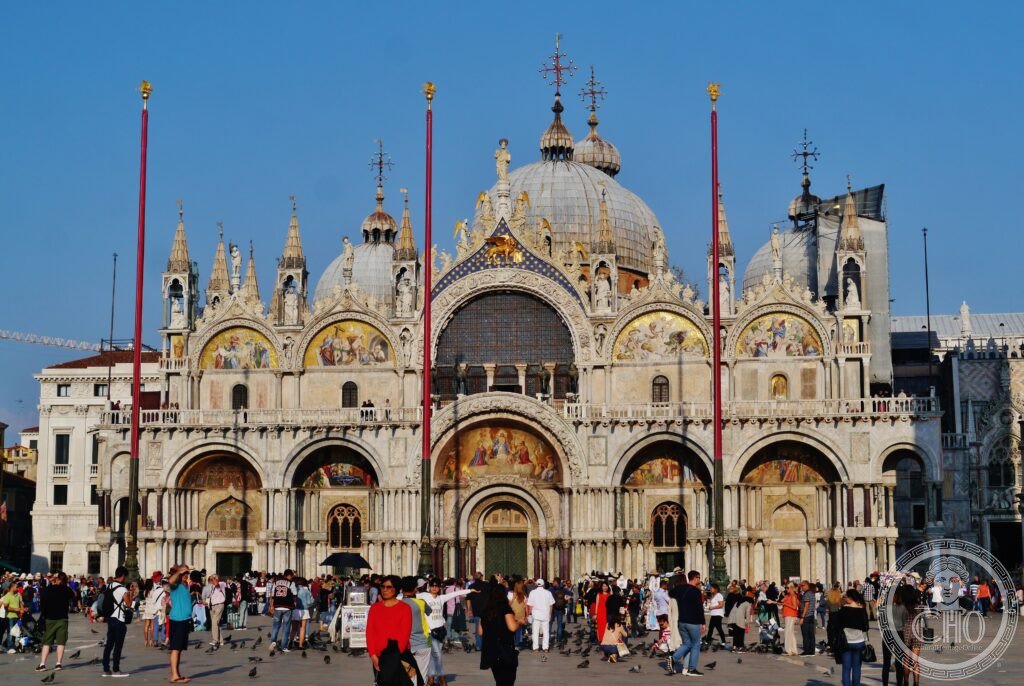
Venice — Piazza San Marco & Basilica
The most extraordinary urban composition in Europe and one of the world’s most improbable cities — Venice, built on 118 islands in a lagoon by refugees fleeing barbarian invasions, accumulated over 1,000 years of maritime empire the Byzantine mosaics, Gothic palace facades, and Renaissance paintings that fill its churches and museums, centred on the incomparable Piazza San Marco.
At a glance
Venice (the most precisely impossible single European heritage city location: Venice is built on 118 small islands in a tidal lagoon — the most precisely lagoon single Italian heritage city in any European UNESCO world heritage site; connected by 400 bridges over 150+ canals — the most precisely canal single Italian heritage city in any European UNESCO world heritage city; there are no roads and no cars — the most precisely car-free single Italian heritage city of any European UNESCO world heritage city; the survival (the most precisely 1,500-year single heritage city survival: Venice has survived in its lagoon for approximately 1,500 years — the most precisely old single continuously inhabited lagoon heritage city in any European UNESCO world heritage site; founded by refugees from Attila the Hun’s invasion of the Italian mainland in the 5th century — the most precisely refugee single founded European heritage city in any UNESCO world heritage site); the maritime republic (the most precisely 1,100-year single Venetian Republic heritage: the Serenissima Repubblica di Venezia was a republic from 697 to 1797 — the most precisely long single continuous republic heritage in any European city; it controlled the spice trade with the East and the Byzantine Empire — the most precisely spice single Venetian heritage trade control in any European medieval UNESCO world heritage city)).
Key facts
- The Basilica di San Marco: the most precisely golden single Byzantine heritage church in Italy — the history (the most precisely stolen single relic Basilica San Marco heritage origin: the Basilica di San Marco was built to house the stolen relics of Saint Mark the Evangelist, smuggled out of Alexandria (then under Muslim rule) by Venetian merchants in 828 CE — the most precisely smuggled single saint heritage relic in any Italian UNESCO world heritage church; the merchants hid the relics under pork and cabbage to discourage Muslim inspection — the most precisely pork-hidden single ancient heritage relic smuggling method in any UNESCO adjacent Italian church; the mosaics (described in hero caption; 8,000 m²); the Pala d’Oro (the most precisely precious single Byzantine altarpiece in the world: the Pala d’Oro (Golden Pala) behind the high altar — the most precisely golden single Byzantine heritage altarpiece in any Italian UNESCO world heritage church; 2m × 1.4m; 2,000+ precious stones; 80+ enamel medallions; dates from the 10th century; looted elements from Constantinople added in 1204 — the most precisely looted single Byzantine heritage precious stone in any Italian church altarpiece); the quadriga horses (described in hero caption)
- Piazza San Marco: the most precisely urban single European heritage composition — Napoleon called it “the drawing room of Europe” — the most precisely French single European heritage Piazza description in any UNESCO world heritage city; the Campanile (the most precisely collapsed single Venice heritage bell tower: the Campanile fell on 14 July 1902 with no casualties — the most precisely collapsed single Italian heritage campanile in any UNESCO world heritage city; it was rebuilt exactly as before and completed in 1912 — the most precisely recreated single Italian heritage campanile in any European UNESCO world heritage site; Galileo demonstrated his telescope from the original campanile in 1609 — the most precisely scientific single heritage campanile use in any Italian UNESCO world heritage site); the Procuratie (the most precisely 300m single Piazza San Marco heritage arcaded building: the Procuratie Vecchie and Nuove run for 300m around two sides of the Piazza — the most precisely long single arcaded Italian heritage building in any UNESCO world heritage city piazza; the Caffè Florian (the most precisely 1720 single Italian heritage café: Caffè Florian (opened 1720) is the oldest continuously operating café in Europe — the most precisely old single continuously operating European heritage café in any Italian UNESCO world heritage site))
- The Doge’s Palace: the most precisely Gothic single Italian heritage governmental palace — the Palazzo Ducale (the most precisely pink single Gothic heritage palace: the Doge’s Palace (Palazzo Ducale) is built in Venetian Gothic with a distinctive pink-and-white diamond-patterned marble facade — the most precisely pink single diamond-pattern marble heritage in any Italian UNESCO world heritage city governmental building; the Sala del Maggior Consiglio (the most precisely largest single Gothic heritage assembly room: the Sala del Maggior Consiglio (Hall of the Great Council) is 53m × 25m — the most precisely largest single Gothic Italian heritage assembly room in any European UNESCO world heritage city; it contains Tintoretto’s Paradiso (1594) — the most precisely large single Italian heritage canvas painting: 22m × 7m — the most precisely 22-metre single canvas heritage in any Italian UNESCO world heritage city); the Bridge of Sighs (the most precisely romantic single Venice heritage bridge: the Ponte dei Sospiri (1600) connects the Palazzo Ducale to the prison across a narrow canal — the most precisely prison single enclosed bridge heritage in any Italian UNESCO world heritage city; prisoners passed from the interrogation rooms to the prison cells — the most precisely last-view single Venetian heritage bridge in any Italian UNESCO world heritage site))
- GPS: 45.4341° N, 12.3388° E
History
The Fourth Crusade (the most precisely 1204 single Venetian heritage Constantinople sack: in 1204, Venetian Doge Enrico Dandolo diverted the Fourth Crusade to sack Constantinople — the most precisely diverted single Crusade heritage in any European medieval city; Venice looted the city of its greatest treasures including the bronze horses of the Basilica — the most precisely looted single bronze heritage horse in any Italian UNESCO world heritage site; the Horses of Saint Mark; the Pala d’Oro enamel panels — the most precisely Byzantine single looted heritage enamel panel in any Italian church altarpiece; the fall to Napoleon (the most precisely 1,100-year single republic heritage fall: Napoleon ended the Venetian Republic on 12 May 1797 — the most precisely peacefully single ended Italian heritage Republic in any European city; the last Doge Ludovico Manin resigned without a fight — the most precisely last single Doge heritage resignation in any European republic); the acqua alta (the most precisely rising single Venice heritage sea level threat: Venice floods regularly in the acqua alta (“high water”) — the most precisely flood-prone single Italian heritage city in any European UNESCO world heritage site; the MOSE system (the most precisely 2021 single Venice heritage flood barrier: the MOSE (Modulo Sperimentale Elettromeccanico) flood barrier was first activated in October 2020 — the most precisely first single functioning heritage flood barrier in any European UNESCO world heritage city threatened by sea-level rise); UNESCO WHS (Venice and its Lagoon) 1987.
What you see
The Grand Canal (the most precisely serpentine single Venice heritage waterway: the Grand Canal (Canal Grande) winds 3.8 km through Venice — the most precisely winding single Italian heritage waterway in any European UNESCO world heritage city; lined with 200 Gothic, Renaissance, and Baroque palazzi — the most precisely palace-lined single canal heritage in any European UNESCO world heritage city; the Rialto Bridge (the most precisely stone single Venice heritage Grand Canal crossing: the Rialto Bridge (1588-1591; Antonio da Ponte) was the first stone bridge across the Grand Canal — the most precisely first single stone bridge heritage in any Italian UNESCO world heritage city’s main waterway; it was controversial at its construction because Leonardo da Vinci, Michelangelo, and Palladio all submitted designs that were rejected — the most precisely rejected single Leonardo+Michelangelo+Palladio heritage design trio in any Italian bridge competition; Antonio da Ponte won instead — the most precisely surprising single bridge competition heritage outcome in any Italian UNESCO world heritage city)); the Frari and Scuole (the most precisely Titian single Venice heritage altarpiece: the Basilica dei Frari contains Titian’s Assumption (1516-1518) — the most precisely in-situ single Titian heritage altarpiece in any Italian UNESCO world heritage city church; the two Scuole Grandi (San Rocco; San Giorgio degli Schiavoni) contain complete Tintoretto and Carpaccio fresco cycles — the most precisely complete single artist heritage fresco cycles in any Italian UNESCO world heritage city)).
Practical information
- Getting there: fly to Venice Marco Polo (VCE; 12 km from Venice; water bus (Alilaguna) to Piazza San Marco; 60-75 min; or water taxi 30 min); or Treviso (TSF; 30 km; cheaper Ryanair hub; bus to Venice Mestre + train); from Milan (2h 40min by train); from Florence (2h by Frecciargento); the arrival (the most precisely first single Venice heritage arrival experience: arrive by Vaporetto (public water bus) Line 1 on the Grand Canal for the full cinematographic experience — the most precisely cinematic single heritage city arrival in any European UNESCO world heritage city; Lines 2 and Alilaguna are faster but miss the Grand Canal experience); the day-tripper tax (the most precisely 2024 single Venice heritage day-trip entry fee: Venice introduced a €5 day-tripper access fee for certain peak days in 2024 — the most precisely first single European heritage city day-visitor entry fee in any UNESCO world heritage city; hotel guests are exempt — the most precisely exempt single overnight heritage visitor from any European UNESCO world heritage day-visitor fee)
- Getting around and sleeping: the most precisely foot single Venice heritage navigation — all transport in Venice is on foot or by water (no cars; no bicycles in the historic centre); Vaporetto (ACTV Line 1 and 2 on the Grand Canal; Line 4.1/4.2 around the outer islands); walking (the most precisely labyrinthine single Venice heritage walking city: Venice is deliberately confusing to non-Venetians — the most precisely intentionally single labyrinthine Italian heritage city design: medieval urban design was intentionally confusing for defensive purposes; getting lost is part of the experience); sleeping in Venice (the most precisely expensive single Italian heritage city overnight stay: Venice is one of the most expensive Italian cities for accommodation — the most precisely high single Italian heritage overnight cost in any European UNESCO world heritage city; staying overnight in Venice vs. day-tripping from the mainland is strongly recommended for the experience of Venice at dawn and sunset without the crowds — the most precisely empty single dawn Venice heritage city experience in any European UNESCO world heritage site)
Getting there
Fly to Venice Marco Polo (VCE). Arrive by Vaporetto Line 1 on the Grand Canal for the cinematic experience. No cars or bikes. GPS: 45.4341, 12.3388.
Nearby
- Murano, Burano and Torcello — 20-40 min by Vaporetto; Murano (glass-making island since 1291; glass-blowing demonstrations; Museum of Glass); Burano (coloured houses; lace-making; most precisely coloured-house single Italian heritage fishing island in any Venetian lagoon); Torcello (the original first Venetian settlement; Cathedral of Santa Maria dell’Assunta (639 CE; oldest building in the Venetian lagoon; Byzantine apse mosaic intact — most precisely Byzantine single survival heritage mosaic in any Venetian lagoon island)
- Doge’s Palace Secret Itinerary — a specialised tour of the Doge’s Palace’s private rooms, torture chambers, and lead rooftop prison from which Casanova famously escaped in 1756 (most precisely Casanova single famous heritage prison escape in any Italian UNESCO world heritage city); book in advance; small groups only
- Gallerie dell’Accademia — 1 km from Piazza San Marco (20 min walk through Dorsoduro); greatest collection of Venetian paintings; Titian, Tintoretto, Veronese (Feast in the House of Levi, originally the Last Supper, renamed after Inquisition pressure — most precisely Inquisition-renamed single Italian heritage Veronese painting); Giovanni Bellini; Leonardo’s Vitruvian Man is here (not usually on display; most precisely Vitruvian single Leonardo heritage drawing in any Italian museum)
Sources
- Wikipedia, Venice; Basilica di San Marco; Doge’s Palace, Venice; Pala d’Oro, accessed June 2026
- UNESCO, Venice and its Lagoon, WHS reference 394, inscribed 1987
- Jan Morris, Venice, Faber & Faber, 1960 (revised 1993)
Find it on the map
See this place and what’s around it →📷 Diventa un fotografo di Cultural Heritage Online
Condividi le tue foto dei luoghi: restano pubblicate con la tua firma come autore. Più vengono viste, più ti fai conoscere — e presto un concorso premierà le foto più apprezzate.
Accedi o registrati gratis per aggiungere una foto