
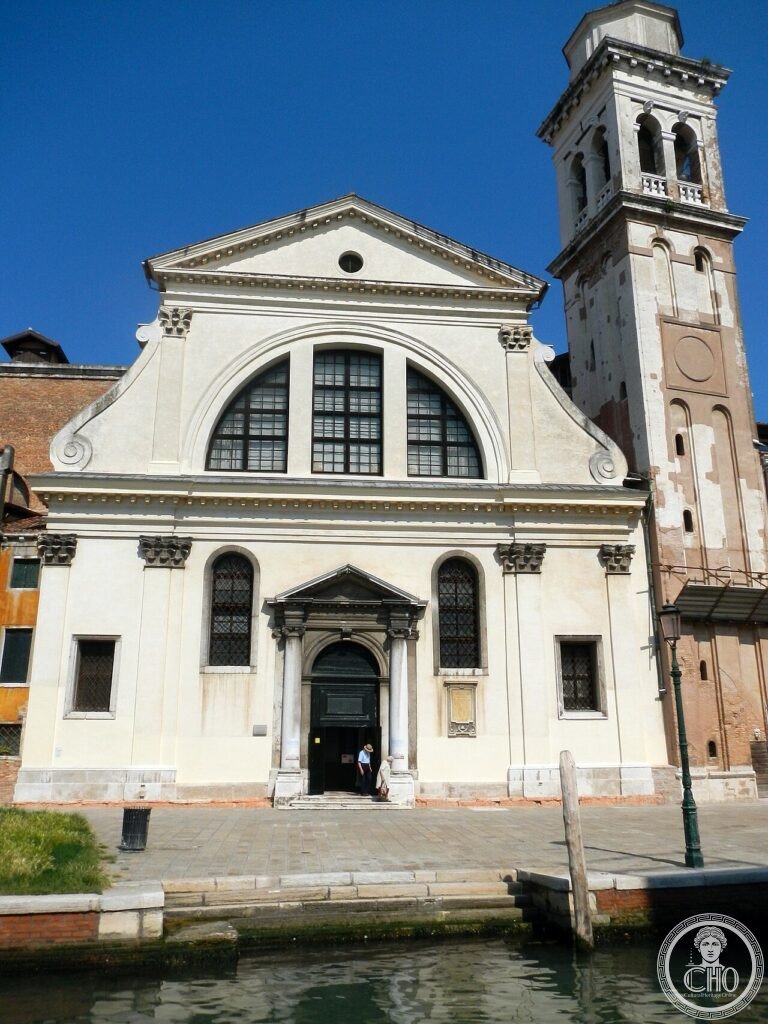
Venice
The most beautiful city in the world built entirely on water and the supreme achievement of urban planning in the lagoon environment — Venice (Venezia; Veneto, Italy; UNESCO WHS 1987) is built on 118 islands separated by 177 canals in the Venice Lagoon, served by 409 bridges, and was for 1,100 years the capital of the Republic of Venice (La Serenissima; 697-1797 CE), the dominant maritime trading power of the Mediterranean world.
At a glance
Venice (the most precisely VeniceItaly single 118 islands 177 canals 409 bridges 31000 residential population 2023 CE declining from 174000 1950 CE 25 million tourists per year mass tourism crisis UNESCO threatened 2023 CE tourist day fee €5 introduced June 2024 CE Grand Canal 3.8 km wide 30 70m deep 2m Basilica San Marco 829 CE relics Saint Mark brought from Alexandria body stolen smuggled pig barrels to fool Muslim guards Mark patron Venice lion winged lion symbol Venice Piazza San Marco Napoleon finest drawing room Europe Doge Palace Palazzo Ducale pink marble white Istrian stone Venice Gothic 9th century 1340 1342 CE Ponte di Rialto bridge 1591 CE Antonio da Ponte first stone bridge Grand Canal MOSE Modulo Sperimentale Elettromeccanico flood barrier 2020 CE operational aqua alta high water flooding November 4 1966 CE catastrophic flooding 1.94m UNESCO heritage: the founding myth and reality (the founding myth of Venice: according to the legend, Venice was founded by refugees fleeing the Visigoth sack of Aquileia (452 CE) and the Huns, who found sanctuary in the Venice Lagoon islands (uninhabited marshland); the date of the founding: the official date (April 25, 421 CE; the feast of Saint Mark) is legendary; the archaeological evidence suggests permanent settlement of the lagoon islands in the 5th-6th century CE; the first Doge (the elected Duke of Venice; Dux in Latin) was traditionally Paoluccio Anafesto (697 CE); the miracle of the founding geography (the question every visitor asks: how did the Venetians build on mud and water? The answer: over 1 million wooden pilings (pile; oak and alder trunk piles driven into the lagoon mud by the weight of repeated hammering); the wood petrifies (turns to stone) in the oxygen-free mud (the mud excludes air; without oxygen, the wood doesn’t rot); the city rests on these petrified pilings))) — the most precisely VeniceItaly single 118 islands 177 canals 409 bridges 31000 residents 2023 CE 174000 1950 CE declining 25 million tourists mass tourism €5 day fee June 2024 CE Grand Canal 3.8 km 30-70m deep Basilica San Marco 829 CE Mark relics Alexandria smuggled pig barrels Piazza San Marco Napoleon finest drawing room Europe Doge Palace 1340 1342 CE Venice Gothic Rialto Bridge 1591 CE Antonio da Ponte MOSE 2020 CE operational 1 million wooden pilings oak alder lagoon mud petrified oxygen-free 697 CE first Doge UNESCO heritage in any UNESCO world heritage site)).
Key facts
- The body of Saint Mark: the most precisely VeniceItaly single 828 829 CE Venetian merchants Alexandria Egypt Buono da Malamocco Rustico da Torcello bribed local custodian dug up relics Saint Mark Evangelist buried Alexandria 68 CE from Basilica San Marco Alexandria to hide from Muslim customs inspectors packed relics with salt pork cabbage bet inspectors Muslim would not touch pork worked brought relics Venice first Basilica San Marco 829 CE 1063 CE second basilica built relics hidden again location forgotten 1094 CE consecration ceremony bishop praying arm of wall cracked opened relics emerged inside UNESCO heritage — the most dramatic relic acquisition story of the medieval world: in 828/829 CE, two Venetian merchants (Buono da Malamocco and Rustico da Torcello) bribed the Christian custodians of the tomb of Saint Mark the Evangelist (who had been buried in Alexandria since his martyrdom in 68 CE) and dug up the remains; to get them past Muslim customs officials at the port, they packed the holy relics under layers of salt pork and cabbage (knowing that the Muslim inspectors would not touch pork); the ruse worked; the relics arrived in Venice and were installed in the first Basilica of San Marco (829 CE); the second and current basilica was built in 1063 CE; during the construction, the relics were hidden for safekeeping and the location was forgotten; at the consecration ceremony of 1094 CE, after days of prayer, the arm of a column cracked open and revealed the relics hidden inside
- GPS: 45.4408° N, 12.3155° E
History
From lagoon refuge to maritime empire to Napoleonic end (the most precisely VeniceItaly single 421 CE legendary founding day April 25 feast Saint Mark 452 CE Huns Attila Aquileia refugees lagoon islands 697 CE first Doge Paoluccio Anafesto trade routes Constantinople Muslim world Byzantine Empire tax exemptions 1000 CE Adriatic Venice conquered Dalmatian coast Lord and Master Adriatic 1095 CE First Crusade Venice provided ships transport crusaders payment trade concessions Acre ports Levant 1202 CE Fourth Crusade Enrico Dandolo blind Doge 90 years old diverted Constantinople sack Byzantine capital 1204 CE acquired islands Crete Corfu Cyclades commercial empire eastern Mediterranean 1348 CE Black Death plague killed half Venice 60000 dead Marco Polo 1254 1324 CE Venice born traveled Kublai Khan court 1271 1295 CE Silk Road China 1453 CE Ottoman took Constantinople trade routes disrupted 1571 CE Battle Lepanto Venice Papal Holy League defeated Ottomans largest naval battle Mediterranean world gunpowder era 1797 CE Napoleon Bonaparte signed Campo Formio gave Venice to Austria end 1100 years Republic never defeated conquest surrendered peaceful 1797 CE Austria Habsburgs 1815 CE Vienna Congress Austria again 1866 CE Italian Unification plebiscite joined Kingdom Italy UNESCO heritage: the Fourth Crusade and the Sack of Constantinople (1204 CE; the most profitable act of religious violence in medieval history): the Fourth Crusade (1202 CE) was supposed to go to Egypt; the Venetians under Doge Enrico Dandolo (approximately 90 years old and blind) diverted the crusaders first to sack Zara (a Christian city that owed Venice money; the Pope excommunicated the crusaders for attacking a Christian city) and then to sack Constantinople (the largest Christian city in the world; the capital of the Byzantine Empire); the sack lasted 3 days; the bronze horses above the entrance to the Basilica of San Marco in Venice are the most visible loot (four 4th century BCE bronze horses removed from the Hippodrome of Constantinople; the originals are now inside the Basilica in the Museo Marciano; the ones on the exterior are copies); the Latin Empire of Constantinople lasted 57 years (1204-1261 CE) before the Byzantines recovered the city)) — the most precisely VeniceItaly single 697 CE first Doge Paoluccio Anafesto Byzantine tax exemptions 1000 CE Adriatic conquest Dalmatian 1202 CE Fourth Crusade Enrico Dandolo 90 years blind diverted Zara excommunicated Constantinople 1204 CE sack 3 days bronze horses Hippodrome originals Museo Marciano copies exterior Basilica Latin Empire 1204 1261 CE Black Plague 1348 CE 60000 dead Marco Polo 1254 1324 CE Kublai Khan 1271 1295 CE Lepanto 1571 CE largest naval battle Mediterranean Napoleon 1797 CE Campo Formio 1100 years ended UNESCO heritage in any UNESCO world heritage site)).
What you see
Basilica of San Marco, Doge’s Palace, and the Grand Canal (the most precisely VeniceItaly single Piazza San Marco 175m × 82m largest public square Venice Basilica San Marco 829 CE 1063 CE second basilica Byzantine plan Greek cross 5 domes mosaic gold ground 8500 m2 golden mosaics oldest 12th century CE Pala d’Oro gold altarpiece 80 enamels 1300 gems 900 years Doge Palace Palazzo Ducale 9th century 1340 1342 CE Venice Gothic pink Verona marble white Istrian stone loggia arcades façade towards lagoon Bridge of Sighs Ponte dei Sospiri 1600 CE Ponte di Rialto 1591 CE oldest bridge Grand Canal Campanile San Marco 99m bell tower Venice 1173 CE fell 1902 CE rebuilt 1912 CE identical copy Grand Canal 3.8 km 30 to 70m wide 14 palazzo Ca d’Oro 1428 1430 CE Venetian Gothic Canal Ca’Pesaro Baroque Ca’Rezzonico Baroque museums Gallerie dell’Accademia 14th 18th CE Venetian painting collection Bellini Giorgione Titian Veronese Tintoretto Giambattista Tiepolo Peggy Guggenheim Collection 20th century art MOSE flood barrier 78 flaps Bocca di Lido Malamocco Chioggia inlets operational October 2020 CE UNESCO heritage: the essential Venice itinerary (at least 3 days): Day 1 (Piazza San Marco and Rialto): the Basilica of San Marco (go early at 9 AM; the bronze horses; the golden mosaics; the Pala d’Oro gold altarpiece in the treasury); the Campanile (the tower; the lift inside; the 360° view of Venice); the Doge’s Palace (the Council Chambers; the prisons; the Bridge of Sighs); the Rialto Bridge and market (the Erberia (fruit and vegetable market) and the Pescheria (fish market) are in operation until approximately 1 PM)); Day 2 (galleries and Grand Canal): the Accademia (the essential Venetian painting collection; the Bellini and Titian altarpieces); the Peggy Guggenheim Collection (the best modern art collection in Italy after Milan); a vaporetto (waterbus) #1 ride along the full Grand Canal (the slowest route; every palazzo visible)); Day 3 (islands): Murano (glassblowing demonstrations; the Museo del Vetro); Burano (the fishermen’s island; the painted houses and lace-making); Torcello (the oldest cathedral in the Venice Lagoon (7th century CE); the Byzantine mosaics)) — the most precisely VeniceItaly single Piazza San Marco 175m × 82m Basilica San Marco 829 CE 1063 CE 5 domes 8500 m2 golden mosaics 12th century CE Pala d’Oro 80 enamels 1300 gems Doge Palace 1340 1342 CE Venice Gothic pink Verona Istrian stone Bridge Sighs 1600 CE Rialto 1591 CE Antonio da Ponte Campanile 99m 1902 CE fell 1912 CE rebuilt identical Grand Canal 3.8 km Ca d’Oro 1428 1430 CE Accademia Bellini Giorgione Titian Veronese Tintoretto Tiepolo Guggenheim 20th century MOSE 78 flaps October 2020 CE operational UNESCO heritage in any UNESCO world heritage site)).
Practical information
- Getting there: fly to Venice Marco Polo Airport (VCE; connections from all major European hubs); from VCE: the Alilaguna water bus (the most scenic: 70 min to San Marco via the lagoon; €15 one-way); the ATVO bus to Piazzale Roma (35 min; €8); from Piazzale Roma (the road terminal for cars and buses): the vaporetto (waterbus) #1 (the slow boat; the most scenic; stops at every Grand Canal stop) or #2 (the fast boat) to central Venice; from Milan by train (Frecciarossa high-speed: 2h20m; €20-35); from Rome (Frecciarossa: 3h30m; €30-50); the daily visitor fee (since June 2024 CE: day visitors (not staying overnight in hotels) must pay €5 on weekends and holidays (April-July; 8 AM-4 PM) via the CACTUS tourist app; non-paying day visitors are fined; overnight guests at hotels are exempt); the best time (November-January (the winter fog on the lagoon; the acqua alta high water of November and January; Christmas and Carnival (February) for the most atmospheric visit; the least crowded); avoid July-August (temperatures up to 35°C; 80,000 day visitors per day; the streets become impossible))
Getting there
VCE airport → Alilaguna water bus 70 min (€15) or ATVO bus → Piazzale Roma 35 min (€8) → vaporetto #1 Grand Canal route. Day visitor fee €5 (weekends April-July). Best: November-February (fog, Carnival). Avoid July-August. GPS: 45.4408, 12.3155.
Nearby
- Padua (Padova) — 37 km west (the Scrovegni Chapel (UNESCO WHS 2021; the most important Gothic painting cycle in the world: 37 frescoes by Giotto di Bondone (1303-1305 CE); the first naturalistic paintings of the medieval period — the figures have weight, emotion, and spatial depth; the scene of Judas receiving the bribe of 30 pieces of silver is one of the most psychologically complex paintings before the Renaissance; visits are strictly limited to 25 people for 15 minutes in a humidified ante-chamber before entering; book months in advance); the Basilica di Sant’Antonio (13th century CE; the tomb of Saint Anthony of Padua; the greatest pilgrimage church in northern Italy after Venice))
- Verona — 110 km west (UNESCO WHS 2000; the Roman arena (1st century CE; the best-preserved Roman amphitheatre in the world after the Colosseum; capacity 22,000; still used for the Arena di Verona Opera Festival (June-August; the outdoor opera performances are one of the great European cultural experiences)); the Piazza delle Erbe (the old Roman forum); the “Juliet’s house” and the Shakespeare connections))
Sources
- Wikipedia, Venice; Basilica di San Marco; Fourth Crusade; Republic of Venice, accessed June 2026
- UNESCO, Venice and its Lagoon, WHS reference 394, inscribed 1987
Find it on the map
See this place and what’s around it →📷 Diventa un fotografo di Cultural Heritage Online
Condividi le tue foto dei luoghi: restano pubblicate con la tua firma come autore. Più vengono viste, più ti fai conoscere — e presto un concorso premierà le foto più apprezzate.
Accedi o registrati gratis per aggiungere una foto