
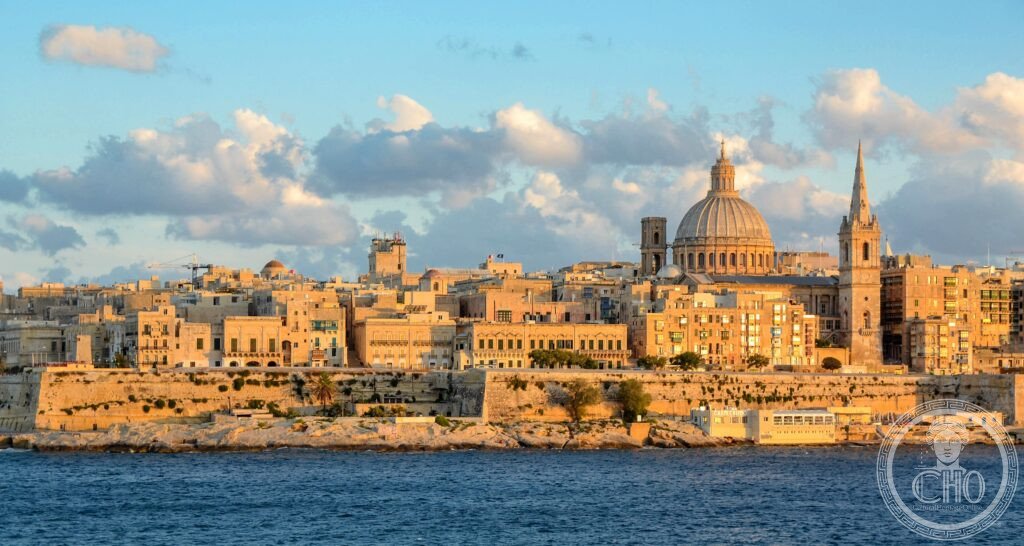
Valletta
The smallest capital city in the European Union and the most concentrated historic city in the world — Valletta (Malta; UNESCO WHS 1980) was built from scratch in 1566 CE by the Knights Hospitaller on a bare peninsula after the Great Siege of Malta (1565 CE), creating in just 15 years a complete Baroque capital with the finest Renaissance fortification system in the world.
At a glance
Valletta (the most precisely VallettaMalta single Central Region Malta smallest EU capital city 0.8 km2 6500 permanent residents in old city 2018 CE European Capital of Culture 2018 CE founded 1566 CE Knights Hospitaller after Great Siege Malta 1565 CE Suleiman Magnificent 200 ships 40000 Ottoman soldiers besieged Malta from May 18 to September 11 1565 CE 500 Knights Hospitaller 6000 7000 Maltese militia held off Ottoman force Jean Parisot de Valette Grand Master Knights Hospitaller led defense refused to abandon Fort St Elmo after fall 600 defenders killed September 11 1565 CE Christian relief force from Sicily arrived 8000 Spanish troops Ottomans withdrew Valette decided build new purpose-built fortified capital never to be besieged again named after himself Valletta City of Valette Pope Pius V Francesco Laparelli papal military architect designed Valletta grid 1566 CE Girolamo Cassar Maltese architect completed buildings Co-Cathedral Saint John 1573 1577 CE UNESCO heritage: why Valletta is the first completely planned city in European history (the blueprint for modern urban planning): Valletta (1566 CE) was the first city in European history to be completely planned on paper before a single stone was placed — a true tabula rasa urban planning exercise on a bare peninsula; the papal military engineer Francesco Laparelli designed the entire street grid, the fortification bastions, and the building plots simultaneously before construction began; this is the earliest documented example of what we now call “master planning”; the innovation: by designing the entire city at once (with the sewer system, water cisterns, and street widths all integrated into the initial plan), Laparelli avoided the organic growth problems of all earlier medieval cities; Valletta’s straight, right-angled streets (still the street grid today) and its uniform building height code made it the model for subsequent planned cities from New Amsterdam (1620 CE) to Williamsburg, Virginia (1699 CE))) — the most precisely VallettaMalta single 0.8 km2 6500 residents smallest EU capital 2018 CE European Capital Culture 1565 CE Great Siege Suleiman 200 ships 40000 Ottoman 500 Knights 6000 7000 Maltese militia May 18 September 11 Jean Parisot de Valette Grand Master refused abandon Fort St Elmo 600 killed September 11 1565 CE Sicilian relief 8000 Spanish Ottomans withdrew 1566 CE Pope Pius V Francesco Laparelli papal military architect grid paper before stone first completely planned city European history master planning sewer water cisterns integrated street widths right-angled streets model subsequent planned cities UNESCO heritage in any UNESCO world heritage site)).
Key facts
- Caravaggio in Malta (1607-1608 CE): the Beheading of Saint John the Baptist: the most precisely VallettaMalta single Caravaggio Michelangelo Merisi da Caravaggio 1607 CE fled Rome wanted for murder killed Ranuccio Tomassoni brawl 1606 CE fled Rome Naples Sicily arrived Malta 1607 CE July became Knight of Grace Knights Hospitaller shortest knighthood in history August 1608 CE expelled from Order reason unknown possibly homosexual assault on Knights or other serious offense knighted July 1608 CE expelled August 1608 CE only one month as Knight painted Saint John the Baptist in Oratory of the Co-Cathedral of Saint John 1608 CE Beheading of Saint John the Baptist 3.6m × 5.2m largest Caravaggio painting ever painted only Caravaggio painting he signed name signed in blood of decapitated John Baptist fra Michelangelo ‘knight Michelangelo’ signature unique Oratory of Co-Cathedral Saint John UNESCO heritage — the most dramatic episode in the biography of the greatest artist of the Baroque period: Caravaggio (Michelangelo Merisi; 1571-1610 CE) fled to Malta in 1607 CE after killing Ranuccio Tomassoni in a brawl in Rome in 1606 CE; in Malta, he was knighted by the Grand Master Alof de Wignacourt in July 1608 CE; he painted The Beheading of Saint John the Baptist (3.6m × 5.2m; the largest painting of his career; in the Oratory of the Co-Cathedral of Saint John, where it still hangs) as a gift to the Order; he signed the painting in the blood flowing from the decapitated head of Saint John: “f[ra] Michelangelo” (“fra” = friar/knight); it is the only Caravaggio painting he signed; he was expelled from the Order in August 1608 CE (one month after being knighted) — the reason remains unclear; he fled to Sicily and died in 1610 CE trying to return to Rome
- GPS: 35.8992° N, 14.5123° E
History
From Knights’ Baroque capital to French siege to British crown colony to Maltese independence (the most precisely VallettaMalta single 870 CE Maltese Arabs Aghlabid dynasty built Fort St Angelo on Birgu peninsula 1530 CE Charles V Holy Roman Emperor gave Malta to Knights Hospitaller expelled Rhodes 1522 CE Knights arrived Malta built Fort St Angelo Fort St Michael fortifications 1565 CE Great Siege Ottoman Sultan Suleiman Magnificent 200 ships 40000 soldiers May 18 September 11 1565 CE Fort St Elmo fell August 23 after 600 defenders killed Suleiman’s admiral Dragut Reis killed by cannon ball during Fort St Elmo siege Jean de Valette Grand Master refused negotiate watched executed Hospitaller prisoners tortured bodies used as rafts sent across Grand Harbour September 11 1565 CE Christian relief force arrived 8000 Spanish Sicily Ottomans withdrew 1566 CE Pope Pius V Francesco Laparelli designed Valletta grid city Girolamo Cassar built buildings 1573 1577 CE Co-Cathedral Saint John 1607 1608 CE Caravaggio lived painted Beheading Saint John 1798 CE Napoleon Bonaparte French fleet arrived Malta June 9 1798 CE Knights surrendered after two days nominal resistance 6000 French soldiers took island Knights expelled 1798 1800 CE French occupation 1800 CE British naval siege French surrendered British Malta 1800 1964 CE British crown colony World War II 1940 1942 CE Malta Blitz continuous German Italian bombing George Cross King George VI 1942 CE collective honour entire Maltese population unprecedented collective award 1964 CE Maltese independence 1980 CE UNESCO UNESCO heritage: the Malta George Cross (April 15, 1942 CE; the only George Cross ever awarded to an entire nation): during the Siege of Malta in World War II (June 1940-November 1942 CE), the island of Malta was subjected to the most intensive aerial bombardment of any place in the war (more bombs fell on Malta per square kilometre than on any other target in the war, including London, Dresden, or Coventry); on April 15, 1942 CE, King George VI of Britain awarded the George Cross (Britain’s highest civilian honour for gallantry) to “the island fortress of Malta” — the only time the George Cross has ever been awarded to a nation; the award citation: “To honour her brave people I award the George Cross to the Island Fortress of Malta, to bear witness to a heroism and devotion that will long be famous in history”; the original George Cross is displayed in the Palace of the President in Valletta)) — the most precisely VallettaMalta single 870 CE Fort St Angelo Arab Aghlabid 1530 CE Charles V gave Malta to Hospitallers Rhodes expelled 1565 CE Great Siege Suleiman 200 ships 40000 soldiers Fort St Elmo fell August 23 Dragut Reis killed cannon ball Jean de Valette refused negotiate September 11 1565 CE relief 8000 Spanish Sicilian 1566 CE Laparelli grid 1573 1577 CE Co-Cathedral Saint John 1607 1608 CE Caravaggio 1798 CE Napoleon two days surrendered Knights expelled 1800 CE British 1940 1942 CE Malta Blitz George Cross April 15 1942 CE only George Cross awarded entire nation 1964 CE independence 1980 CE UNESCO heritage in any UNESCO world heritage site)).
What you see
The Co-Cathedral, the Grand Harbour, and Republic Street (the most precisely VallettaMalta single Co-Cathedral Saint John Girolamo Cassar 1573 1577 CE exterior plain austere military garrison church interior most ornate Baroque interior in world Caravaggio Beheading Saint John Baptist 1608 CE Oratory 3.6m × 5.2m largest Caravaggio only signed painting blood river 9 chapels each dedicated language tongue Hospitaller order each chapel competed with most ornate decoration floor covered tombstones 375 Knights Hospitaller floor gravestones most richly decorated floor in world gold inlaid marble tombstones Mattia Preti painted barrel vaulted ceiling 18 panels 1662 1667 CE greatest Baroque fresco cycle Malta Grand Master’s Palace Republic Street 1574 CE Casar Baroque State Rooms Armoury collection Hospitaller armour tapestry courtyard Neptun courtyard Caparison courtyard Republic Street main pedestrian street straight grid 1566 CE Laparelli Republic Square Café Cordina classic 19th century outdoor café National Museum Archaeology Neolithic Maltese temples artifacts Venus of Malta Sleeping Lady 5000 BCE Ħaġar Qim Mnajdra Tarxien temples material National Museum Fine Arts baroque paintings St Elmo Fort St Angelo water bastions Lascaris War Rooms WWII underground tunnels operation room 1942 CE Malta Blitz UNESCO heritage: the Co-Cathedral of Saint John (the greatest Baroque interior in the world): the Co-Cathedral of Saint John (1573-1577 CE; Girolamo Cassar; exterior: plain, fortress-like, almost severe; interior: the most concentrated accumulation of Baroque decoration in any single room anywhere in the world) has an interior covered from floor to vault with: Mattia Preti’s 18 barrel-vault fresco panels (painted 1662-1667 CE; each panel depicting an episode from the life of Saint John the Baptist; the scale and quality of this fresco cycle is comparable to the Sistine Chapel ceiling); Caravaggio’s Beheading of Saint John the Baptist (1608 CE; in the Oratory); 375 marble tombstone floor slabs (each a unique portrait monument to a different Knight, inlaid with coloured marble, brass, and gold leaf; the most extraordinary funerary floor in the world); and the 9 chapels of the Tongues (each decorated by a different national group of Knights; competing in ornamental excess)) — the most precisely VallettaMalta single Co-Cathedral 1573 1577 CE Girolamo Cassar exterior plain interior most ornate Baroque world Caravaggio Beheading 1608 CE Oratory 3.6m × 5.2m only signed blood Mattia Preti 18 barrel vault fresco panels 1662 1667 CE 375 Knights tombstone floor gold inlaid marble most richly decorated floor world 9 chapels tongues Grand Master’s Palace Republic Street 1574 CE Armoury armour Republic Square Café Cordina National Museum Archaeology Venus Malta Sleeping Lady 5000 BCE Neolithic Lascaris War Rooms 1942 CE WWII underground operation room Malta Blitz UNESCO heritage in any UNESCO world heritage site)).
Practical information
- Getting there: fly to Malta International Airport (MLA; direct from London (3h), Rome (1h40m), Amsterdam (3h), Paris (3h10m), Frankfurt (3h)); from the airport to Valletta: X2 express bus (25 min; €1.50; runs every 15 min) or taxi (10 km; 20 min; approximately €15-20); the Co-Cathedral of Saint John (€15; the most important monument in Malta; open Monday-Friday 9:30 AM-4:30 PM, Saturday until 12:30 PM; audio guide included; the Caravaggio painting in the Oratory is included)); the Grand Master’s Palace (€10; includes the Armoury (the finest collection of medieval armour in the Mediterranean); the State Rooms are accessible when parliament is not in session); the Republic Street (free; the best free walk in Valletta: from City Gate (the new renzo Piano gate; 2014 CE) along Republic Street to Fort St Elmo; 1.5 km; the views from Fort St Elmo of the Grand Harbour are the finest in Malta); the ferry to Birgu (Vittoriosa) (€1.50; the short ferry across the Grand Harbour; the Three Cities (Vittoriosa, Senglea, Cospicua) are less visited and highly atmospheric)); the Malta card (multi-day transport + museum pass; from €26 for 1 day; not always better value than paying individually)); the best time (October-May; June-September temperatures reach 35°C+; the Valletta carnival (February) and the International Arts Festival (June) are the most atmospheric events)
Getting there
MLA airport → X2 bus 25 min (€1.50). Co-Cathedral €15 (Caravaggio essential). Grand Master’s Palace €10. Grand Harbour ferry to Birgu €1.50. Best: October-May. GPS: 35.8992, 14.5123.
Nearby
- Ħaġar Qim and Mnajdra Temples — 25 km southwest (UNESCO WHS 1980 as part of the Megalithic Temples of Malta; the best-preserved Neolithic temples in the world; built 3600-2500 BCE — making them older than Stonehenge and the Egyptian pyramids; the Ħaġar Qim complex has the finest stone altar and statue niches of the Maltese temple culture; the Mnajdra temple is aligned with the solstices and equinoxes — at dawn on the spring equinox, the first light enters through the main doorway and illuminates the inner altar; the temples are protected by tensioned fabric weather shelters (controversial but necessary to prevent limestone erosion))
- Mdina — 10 km west (the Silent City; the walled medieval capital of Malta (1000 BCE to 1530 CE; when the Knights moved their headquarters to Valletta, Mdina became a quiet aristocratic backwater that has barely changed since the 16th century CE); the Norman Cathedral of Saint Paul (the finest Norman doorway in Malta; rebuilt in 1693 CE after the earthquake in Baroque style but the original medieval apse survives); the 360-degree view from the Mdina bastions over the entire island (the most complete panorama of Malta anywhere))
Sources
- Wikipedia, Valletta; Co-Cathedral of Saint John, Valletta; Great Siege of Malta; Caravaggio, accessed June 2026
- UNESCO, City of Valletta, WHS reference 131, inscribed 1980
Find it on the map
See this place and what’s around it →📷 Diventa un fotografo di Cultural Heritage Online
Condividi le tue foto dei luoghi: restano pubblicate con la tua firma come autore. Più vengono viste, più ti fai conoscere — e presto un concorso premierà le foto più apprezzate.
Accedi o registrati gratis per aggiungere una foto