
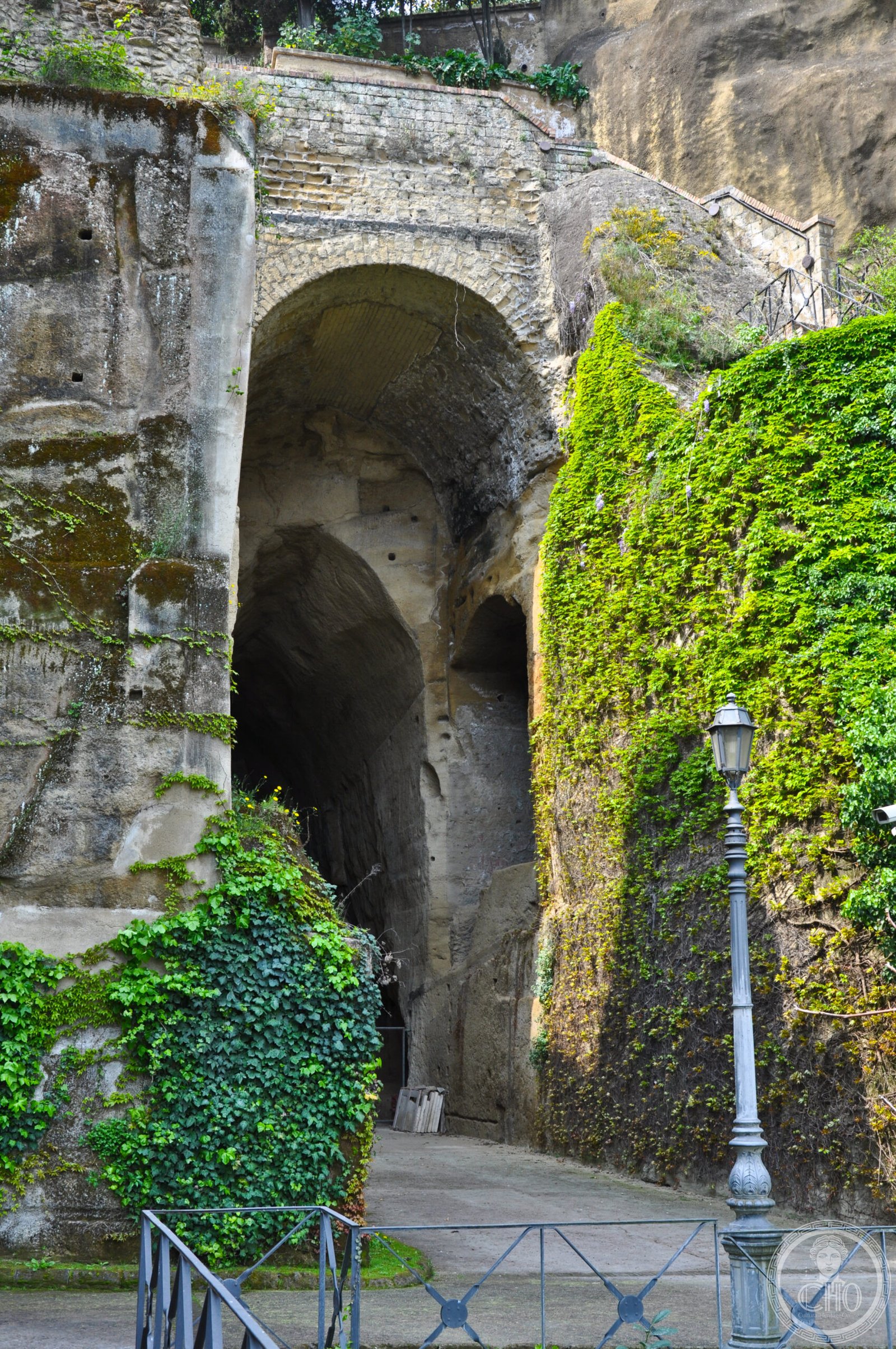
The Grotta di Seiano
The Grotta di Seiano (Tunnel of Seiano) is a Roman-era underground tunnel cut through the Posillipo tuff headland on the western coast of Naples, connecting the neighbourhood of Coroglio with the Pausilypon archaeological park and its Imperial Roman villa complex. Excavated in the 1st century BC under the direction of Lucius Cocceius Auctus — the same engineer credited with the nearby Crypta Neapolitana — and later expanded under the Emperor Augustus, the tunnel is approximately 770 metres long and served as the primary road access to the magnificent Villa di Posillipo (Villa di Vedius Pollio, later Imperial property), whose ruins overlook the sea from the promontory above.
At a glance
- Type
- Roman tunnel (cuniculus); archaeological monument
- Period
- 1st century BC (Augustan era); restored for public access in the 20th century
- Style
- Roman engineering; tuff rock-cut passage with vertical light shafts
- Location
- Parco Archeologico del Pausilypon, Via Coroglio, 80124 Napoli NA, Italy
- Coordinates
- 40.7998° N, 14.1744° E
Overview
The Grotta di Seiano forms part of the Parco Archeologico del Pausilypon, a coastal archaeological park on the Posillipo headland managed by the Campania regional authority. The tunnel is the access route into the park from the Coroglio side, and walking through its 770-metre length is itself a remarkable experience — the passage is cut entirely through yellow Neapolitan tuff (tufo giallo napoletano) with a series of vertical airshafts that admit natural light at intervals along the route. At the far end, the tunnel opens onto the terraced ruins of the Roman Imperial villa and an amphitheatre overlooking the Bay of Naples and the island of Nisida.
History
The tunnel was originally cut in the 1st century BC to provide road access to the villa of Publius Vedius Pollio, a wealthy equestrian and friend of Augustus notorious in ancient sources for reportedly feeding slaves to his moray eels. After Vedius Pollio died without heirs in 15 BC, Augustus inherited the villa and the property became Imperial. The tunnel was enlarged and improved during the Augustan period, acquiring its name “Seiano” in later tradition, possibly deriving from a corruption of “Asinius” or from early medieval usage. After centuries of disuse and partial collapse, the tunnel was cleared and stabilised in the 20th century to allow access to the Pausilypon park, which opened to guided visits managed by the Campania heritage authority.
What you see
Walking the tunnel, visitors experience the Roman engineering feat of a continuous rock-cut passage with smooth tuff walls and a series of rectangular windows cut upward to the surface for ventilation and light — identical in technique to the Crypta Neapolitana on the opposite slope. Emerging from the tunnel, the Pausilypon villa complex unfolds across terraced cliffs above the sea: a theatre (one of the smallest surviving Roman theatres), an odeon, cisterns, fishponds, porticoed terraces and the ruins of residential and service buildings covering approximately 8 hectares. The views from the promontory over the Bay of Naples to Vesuvius and the islands of Capri and Ischia are among the finest in the region.
Cultural significance
The Grotta di Seiano and the Villa di Pausilypon together represent a rare survival of Imperial Roman coastal engineering and luxury villa culture in the Bay of Naples, complementing the better-known Pompeii and Herculaneum sites with a purely Roman-era (non-volcanic) context. The tunnel demonstrates the sophistication of Roman infrastructure in the Campanian tuff landscape, which was extensively exploited for road and aqueduct engineering. The site is one of the least crowded and most atmospheric Roman remains accessible in the Naples metropolitan area.
Practical information
- Address
- Via Coroglio, 80124 Napoli NA (entrance at Coroglio; the park is also accessible from Discesa Gaiola)
- Opening hours
- Guided visits required; generally open weekends and some weekdays — check the Campania Beni Culturali website or call the park administration for current schedule
- Admission
- Free or small fee; guided tour compulsory
Getting there
By public transport from central Naples: take the Cumana railway (Ferrovia Cumana) to Bagnoli station, then follow signs or take a short taxi ride to Via Coroglio (approximately 1.5 km). Alternatively, bus lines serving the Posillipo/Bagnoli area stop near the entrance. By car: Via Coroglio is accessible from the Tangenziale di Napoli (exit Bagnoli); limited parking on Via Coroglio. The park’s alternative entrance at Discesa Gaiola is accessed from the Posillipo side via Via Posillipo.
Sources & resources
- Grotta di Seiano — Wikipedia
- Pausilypon (Villa di Pausilypon) — Wikipedia
- Cultural Heritage Online — Italy guides
Find it on the map
See this place and what’s around it →📷 Diventa un fotografo di Cultural Heritage Online
Condividi le tue foto dei luoghi: restano pubblicate con la tua firma come autore. Più vengono viste, più ti fai conoscere — e presto un concorso premierà le foto più apprezzate.
Accedi o registrati gratis per aggiungere una foto