
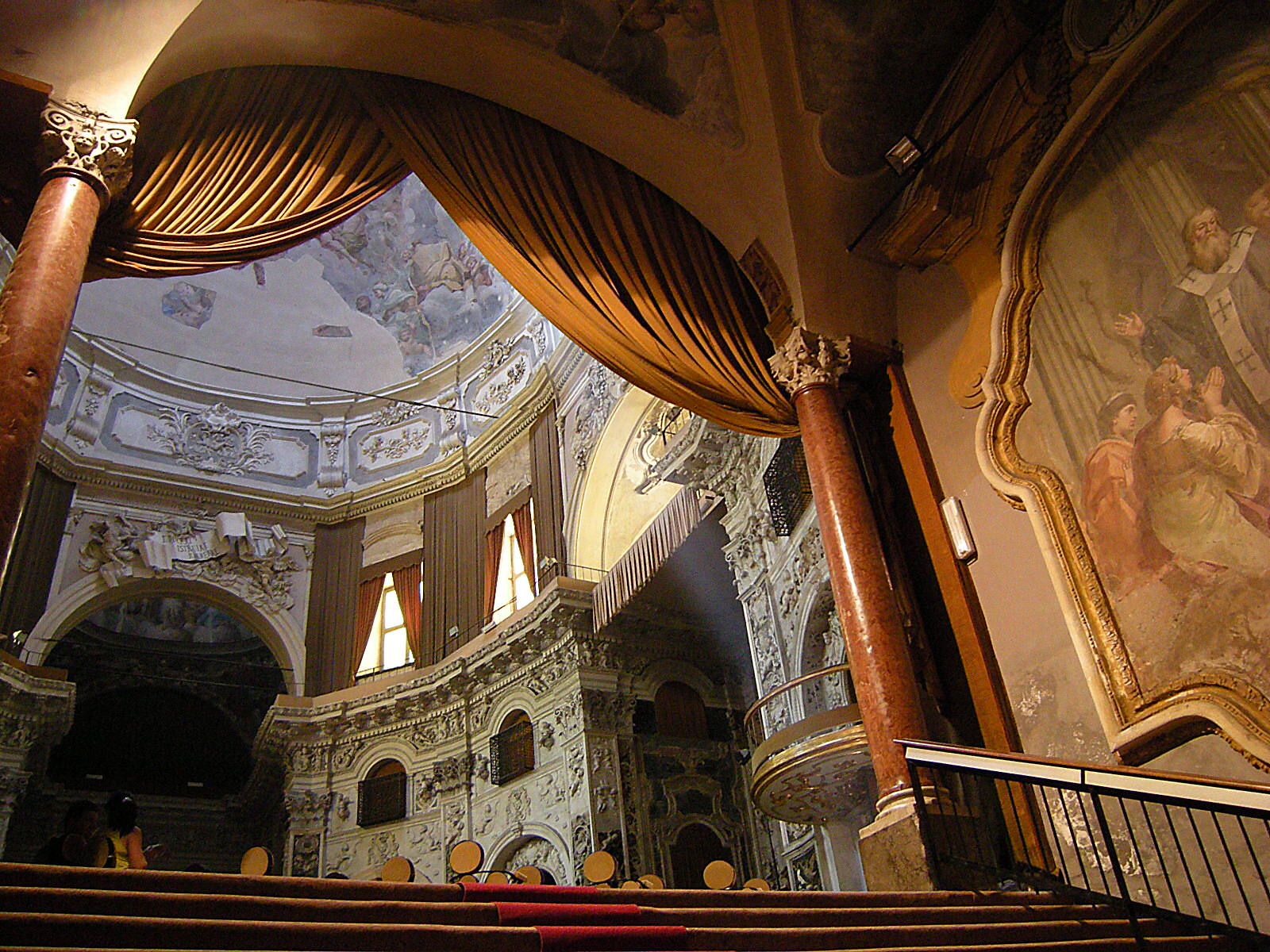
The Church of the Santissimo Salvatore
The Church of the Santissimo Salvatore is a Baroque Roman Catholic church in the historic centre of Palermo, Sicily, located in close proximity to the city’s main Baroque axis and the cathedral quarter. Its elliptical nave, richly decorated interior, and prominently curved facade represent the confident expression of seventeenth-century Sicilian Baroque, a style that made Palermo one of the most spectacular ecclesiastical cities in southern Europe.
At a glance
- Type
- Roman Catholic church (ex-convent church)
- Period
- 17th–18th century Baroque construction
- Style
- Sicilian Baroque
- Location
- Historic centre, Palermo, Sicily, Italy (38.1143° N, 13.3588° E)
Overview
The Santissimo Salvatore is one of Palermo’s significant Baroque ecclesiastical monuments, standing in the densely layered historic fabric of the city’s old quarter. Palermo’s Baroque heritage is exceptional in scale and quality, and this church participates in that tradition through its bold architectural gestures and refined interior decoration. The church’s history is intertwined with the Benedictine monastic community that was once associated with it, and its architectural programme reflects the ambition and resources of Counter-Reformation religious patronage in seventeenth-century Sicily.
History
The church was built as part of a Benedictine monastic complex in Palermo during the seventeenth century, a period of intensive ecclesiastical construction across Sicily fuelled by the wealth of the Spanish viceroyalty. Its design follows the Sicilian Baroque preference for dynamic spatial compositions, with an oval or elliptical nave plan that draws the eye towards elaborately decorated altars and vaulted ceilings. Subsequent modifications and decorative campaigns in the eighteenth century enriched the interior further, adding stuccoes, frescoes, and marble inlays characteristic of the mature Sicilian Baroque style. Following the suppression of religious orders in the nineteenth century, the church’s monastic complex was converted to secular uses.
What you see
The exterior presents a curved or articulated facade typical of Sicilian Baroque church architecture, with orders of pilasters, decorative niches, and a prominent doorway. The interior space is conceived as a unified devotional environment, with gilt stucco decorations, painted vaults, and richly framed altarpieces creating an immersive visual experience. Marble flooring and polychrome inlays on side chapels and pilasters reflect the wealth of the patronising community. The spatial relationship between nave, transept, and apse produces the dramatic scenographic effects that define the Sicilian Baroque.
Cultural significance
Palermo’s Baroque churches collectively form one of the most concentrated ensembles of seventeenth and eighteenth-century religious art and architecture in Europe, and the Santissimo Salvatore is an important node in this urban fabric. The church testifies to the cultural and economic vitality of Spanish Sicily and the ambition of its religious institutions. It contributes to Palermo’s recognition as a major destination for heritage tourism focused on Baroque art and architecture.
Practical information
- Address
- Historic centre, Palermo, Sicily, Italy (38.1143° N, 13.3588° E)
- Hours
- Check official website for current opening times
- Admission
- Check official website for current admission fees
Getting there
Palermo is served by Falcone–Borsellino Airport (PMO). The church is located in Palermo’s historic centre, walkable from the main monuments including the Quattro Canti, the Cathedral, and the Ballarò market. City buses and the Palermo Centrale railway station (approximately 10–15 minutes on foot) provide easy access. The compact historic centre is best explored on foot.
Sources & resources
Find it on the map
See this place and what’s around it →📷 Diventa un fotografo di Cultural Heritage Online
Condividi le tue foto dei luoghi: restano pubblicate con la tua firma come autore. Più vengono viste, più ti fai conoscere — e presto un concorso premierà le foto più apprezzate.
Accedi o registrati gratis per aggiungere una foto