
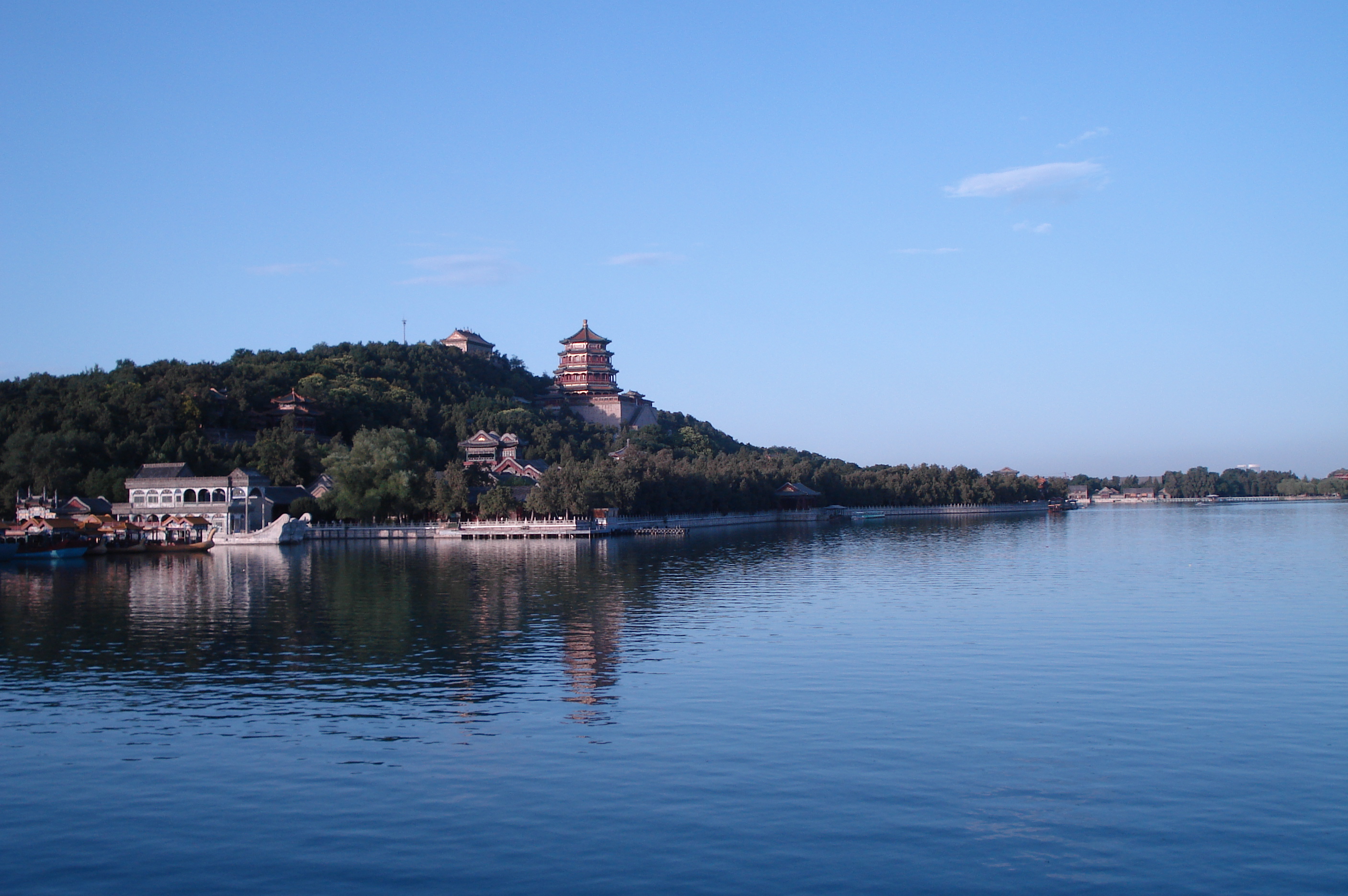
Summer Palace (Yiheyuan)
The Summer Palace, known in Chinese as Yihe Yuan or Garden of Nurtured Harmony, is a vast imperial garden complex covering 2.9 square kilometres on the northwestern outskirts of Beijing. Dominated by Longevity Hill and the expansive Kunming Lake — which accounts for three-quarters of its area — it was the favoured summer retreat of Empress Dowager Cixi during the Qing dynasty. Inscribed as a UNESCO World Heritage Site in 1998, it is one of the best-preserved imperial gardens in China.
At a glance
- Type
- Imperial garden complex and palace
- Period
- Original construction 1750; rebuilt 1886–1895 by Empress Dowager Cixi
- Style
- Traditional Chinese imperial landscape architecture
- Location
- Haidian District, Beijing, China · 39.9995° N, 116.2757° E
Overview
The Summer Palace is one of China’s most celebrated imperial landscapes, a masterpiece of classical Chinese garden design combining natural scenery with architectural grandeur. The complex covers 2.9 square kilometres, with Kunming Lake forming three-quarters of the total area and Longevity Hill rising behind it. It served as the main imperial retreat during summer months and as an informal seat of government under Empress Dowager Cixi in the late 19th century.
History
The site was first developed as a garden in 1750 by Emperor Qianlong, who dredged Kunming Lake and piled the excavated earth to form Longevity Hill. Anglo-French forces largely destroyed the complex during the Second Opium War in 1860. Empress Dowager Cixi funded a major reconstruction between 1886 and 1895, diverting funds originally allocated to the Chinese navy — a decision that later drew considerable historical criticism. The palace was again looted during the Boxer Rebellion in 1900 but restored once more thereafter.
What you see
The highlight of the complex is the Long Corridor, a 728-metre covered walkway decorated with over 14,000 painted scenes stretching along the northern shore of Kunming Lake. The Marble Boat, a two-storey stone pavilion built at the water’s edge, was famously commissioned by Cixi and became a symbol of Qing extravagance. The Seventeen-Arch Bridge connects the eastern shore to South Lake Island, and the Tower of Buddhist Incense crowns Longevity Hill with its tiered yellow-roofed profile visible from across the lake.
Cultural significance
UNESCO inscribed the Summer Palace in 1998 as an outstanding example of Chinese landscape garden design that synthesises natural scenery with man-made structures to reflect the philosophy of harmony between human beings and nature. It remains one of China’s most visited heritage sites and a key reference point for scholars of East Asian landscape architecture and Qing dynasty history.
Practical information
- Address
- 19 Xinjian Gongmen Rd, Haidian District, Beijing 100091, China
- Hours
- Generally open daily; check official website for seasonal hours
- Admission
- Paid entry; reduced rates for students and seniors
Getting there
The Summer Palace is served by Beijing Subway Line 4 (Beigongmen station, North Gate, or Xiyuan station). Multiple bus routes from central Beijing stop nearby. Taxis and ride-hailing apps are widely available from the city centre, with a journey of approximately 30–45 minutes depending on traffic.
Sources & resources
Find it on the map
See this place and what’s around it →📷 Diventa un fotografo di Cultural Heritage Online
Condividi le tue foto dei luoghi: restano pubblicate con la tua firma come autore. Più vengono viste, più ti fai conoscere — e presto un concorso premierà le foto più apprezzate.
Accedi o registrati gratis per aggiungere una foto