
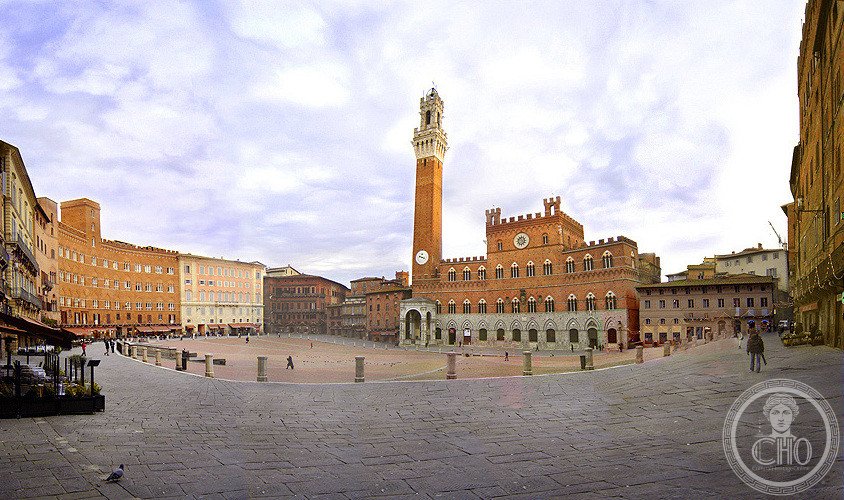
Siena: Centro Storico
Siena (UNESCO 1995) is the best-preserved medieval Italian city-republic — the city where the Republic of Siena (1125–1555 CE) built the Piazza del Campo (the most beautiful civic piazza in medieval Europe), commissioned the Palazzo Pubblico’s Allegory of Good and Bad Government (1338–1339 CE; the most politically explicit fresco cycle in Italian art), and maintained the Palio horse race for over 700 years (still run twice yearly).
At a glance
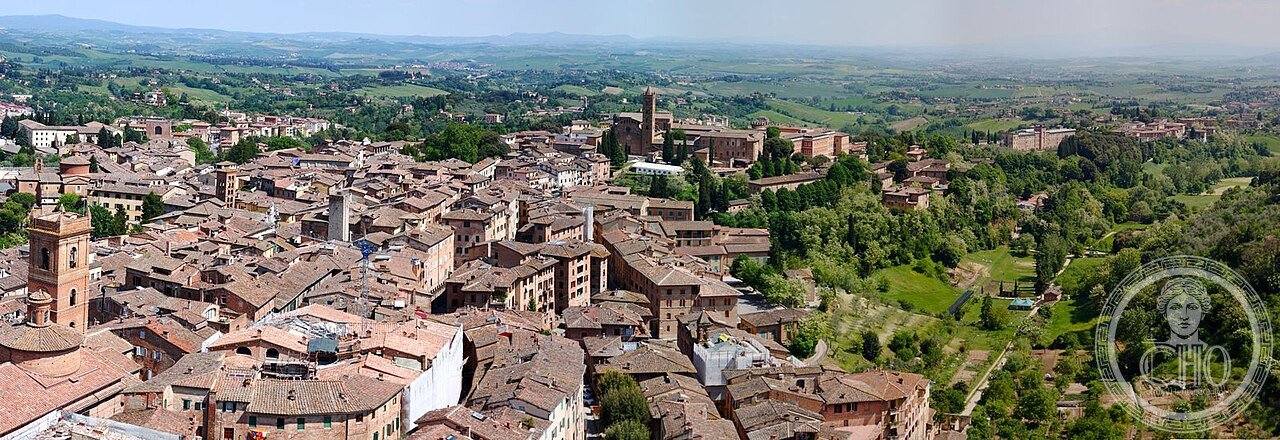
Siena centro storico (the most precisely Siena zone Siena Toscana Italy 43.3186 N 11.3307 E UNESCO WHS 1995 reference 717: the city shape (Siena is built on 3 hills converging at the Piazza del Campo; the 3 hills are now the 3 main districts (terzi) of the medieval city: the Terzo di Città (south-west; the Cathedral hill), the Terzo di San Martino (south-east; the commercial district), and the Terzo di Camollia (north; the road to Florence; the direction from which most invaders came)); the historical context (the Republic of Siena (1125–1555 CE; 430 years of republican government in which the city was governed by elected councils rather than a single ruler; the specific form: the Governo dei Nove (Government of Nine; 1287–1355 CE): 9 merchants elected every 2 months to govern the city; the Nine were the most stable and most productive government in Siena’s history — they commissioned the Palazzo Pubblico (begun 1297 CE), the Piazza del Campo pavement (begun 1327 CE), the Torre del Mangia (begun 1325 CE), and most of the major religious buildings in the city; the fall of the Nine (1355 CE: the Black Death (1348 CE) had killed approximately 50% of the Sienese population; the survivors resented the economic restrictions of the Nine’s guild system; a revolt in 1355 CE ended the government of the Nine; the subsequent governments of Siena were less stable and less productive; the city never recovered the population or economic productivity of the pre-1348 CE period)); the Palio (the Palio di Siena: the horse race run twice per year on July 2 (Palio dell’Assunta) and August 16 (Palio di Provenzano); the 17 contrade (city wards; each ward has a distinctive animal or symbol emblem; only 10 of the 17 contrade ride in each Palio (the 10 are selected by lot, with the 7 who did not ride in the previous Palio automatically qualifying); the race (3 laps of the Campo perimeter; approximately 90 seconds total; the fastest recorded Palio was 74.98 seconds in 2018 CE; the race is contested bareback — without saddles)).
Key facts
- Ambrogio Lorenzetti’s Allegory of Good and Bad Government (1338–1339 CE) in the Sala dei Nove and why it is the most important secular fresco cycle in medieval Italian art: the location (the Sala dei Nove (Room of the Nine) in the Palazzo Pubblico; the government room where the Nine held their meetings; Lorenzetti painted 3 walls with the Allegory — the west wall: the Allegory of Good Government (an allegorical figure of Justice weighing scales + Concord + the Council of Nine + 24 councillors + the city of Siena); the north wall: the Effects of Good Government in the City and Country (the most important section: a panoramic view of Siena and its countryside in 1338 CE — the earliest surviving cityscape of a real identifiable city in western art; on the south wall: the Bad Government allegory (partially destroyed by dampness; a tyrant figure with devil-like features replaces Justice)); the specific political message (the cycle was commissioned by the Nine as a visual reminder of why their government was beneficial; the specific claim (the Good Government city shows: merchants trading, builders working, women dancing, scholars teaching, schoolchildren learning, horses running, all streets busy and orderly; the countryside shows: farmers plowing, grapes being harvested, travelers moving safely on roads; the Bad Government city shows: buildings in ruins, violence in the streets, empty trading stalls, poverty)); the specific landmark in the Siena cityscape (the only building identifiable in the 1338 CE cityscape that is still standing and immediately recognizable today: the Torre del Mangia (begun 1325 CE; visible in the left background of the city scene; the Tower is 102m high — the tallest civic tower in medieval Italy; the internal staircase (505 steps) reaches the top bell chamber; the original bell (the “Sunto”) is still in position)
- GPS (Piazza del Campo): 43.3186° N, 11.3307° E
History
From the Lombard settlement to the banking city to the Black Death to the Spanish conquest (the most precisely Siena zone history: the medieval republic (Siena emerged as a city-state in the 12th century CE; the specific economic foundation: the Sienese banking houses (the Bonsignori, Salimbeni, Tolomei) were the primary bankers of the Papacy from the 12th to the 14th century CE — a monopoly based on the via Francigena (the Canterbury-Rome pilgrimage road) running directly through Siena, which made Siena a mandatory stop for all commercial and pilgrimage traffic between northern Europe and Rome)); the rivalry with Florence (Siena and Florence fought continuously from the 11th century CE; the most important Sienese victory: the Battle of Montaperti (1260 CE; the Ghibelline coalition of Siena defeated the Guelph Florence; the victory gave Siena control of central Tuscany for 6 years; the Sienese republic reached its maximum territorial extent in 1269 CE)); the Black Death (1348 CE: the Yersinia pestis bubonic plague reached Siena in May 1348 CE; the Sienese chronicler Agnolo di Tura recorded that he “buried his five children with his own hands” in a single day; the Siena population before 1348 CE: approximately 50,000; after: approximately 25,000 (a 50% mortality rate, one of the highest recorded in Italy)); the Spanish conquest (1555 CE: Emperor Charles V’s Spanish forces besieged Siena for 14 months (1554–1555 CE); the city surrendered on April 17, 1555 CE; the Sienese republic was abolished; Siena was incorporated into the Duchy of Tuscany under Cosimo I de’ Medici; the specific political irony: Florence, Siena’s arch-rival, now governed Siena directly)); 1995 CE UNESCO inscription reference 717.
What you see
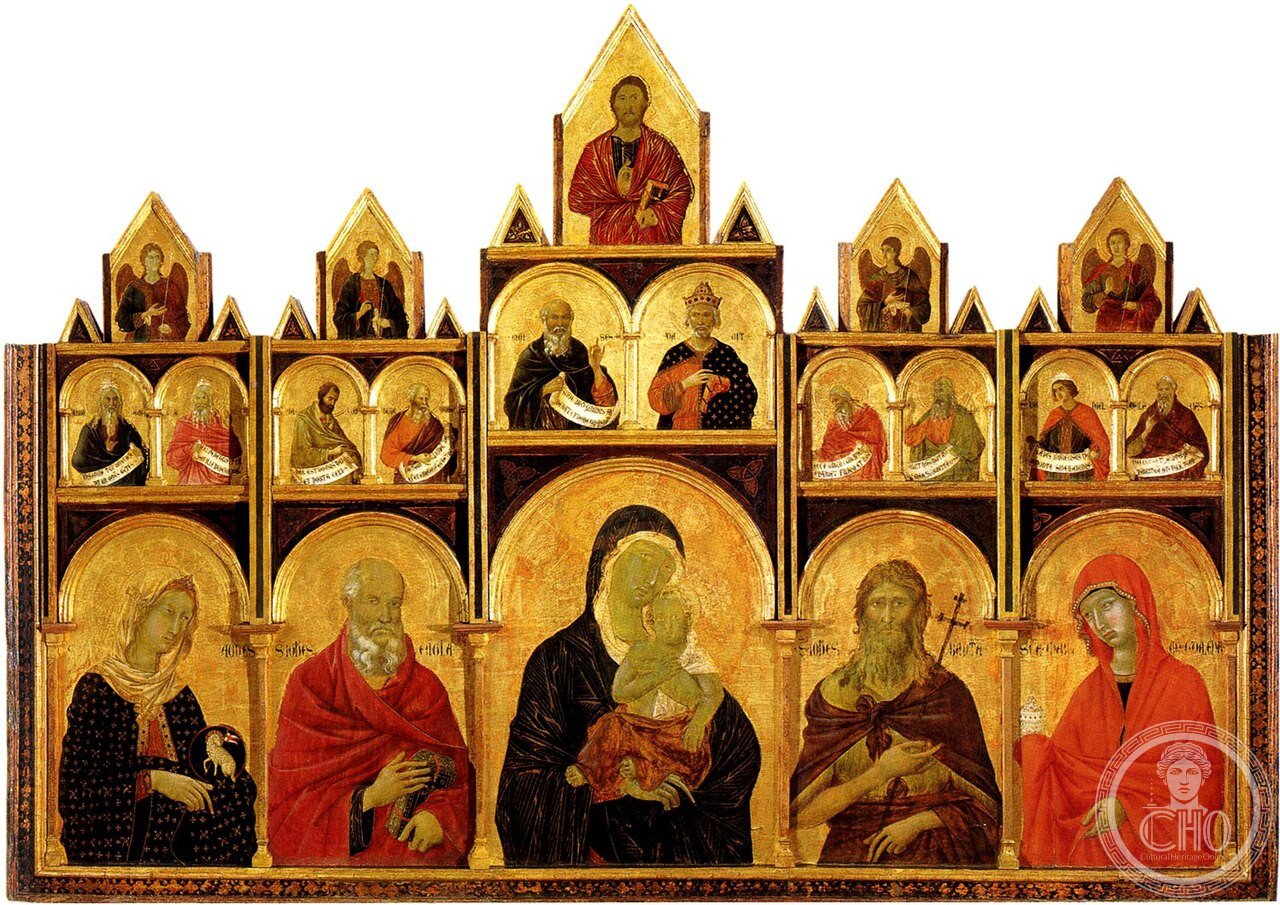
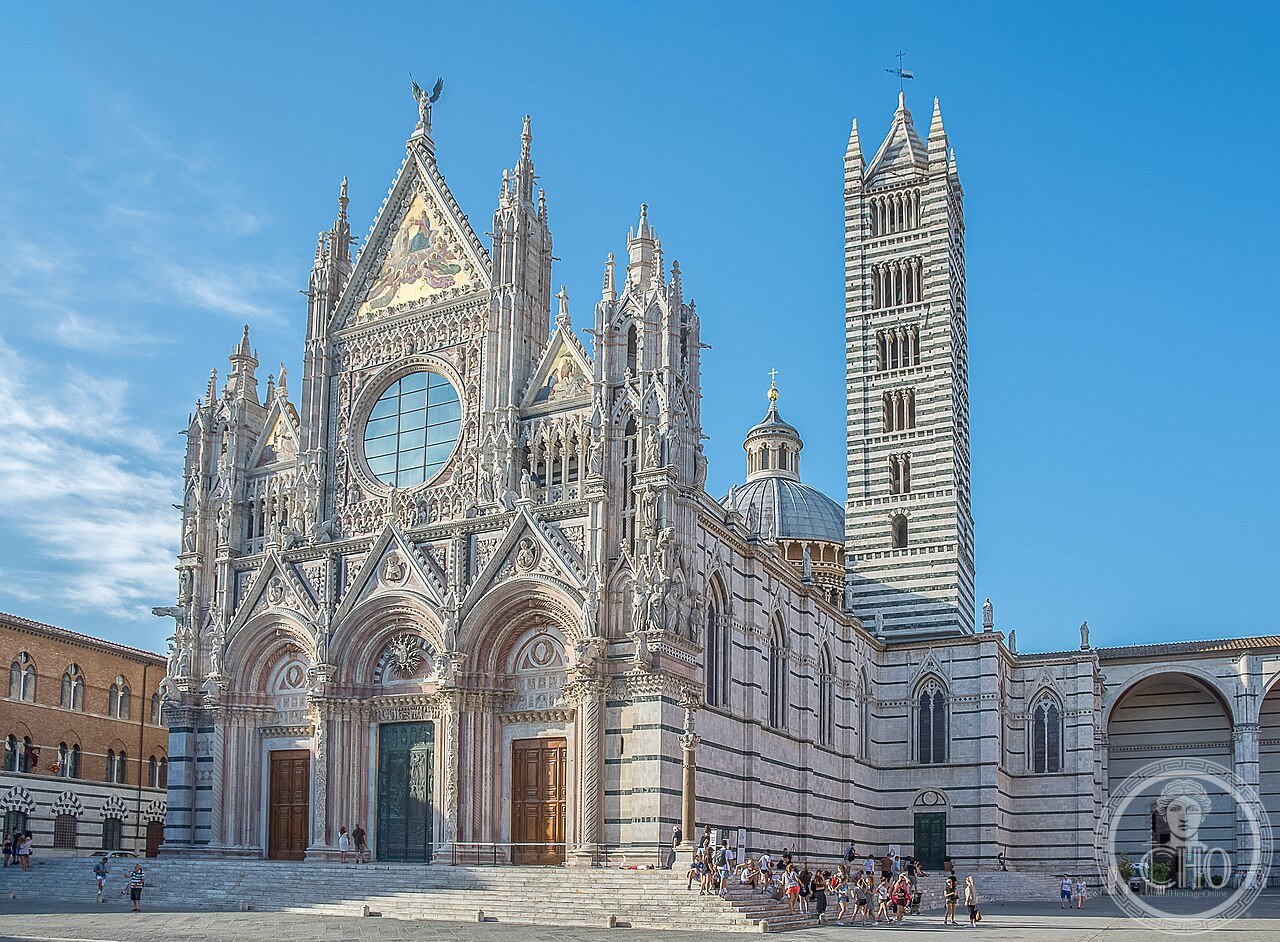
Piazza del Campo, Palazzo Pubblico, Cathedral, and the Pinacoteca Nazionale (the most precisely Siena zone visit (1 full day minimum)): 1) Piazza del Campo (the civic center; free; the shell-shaped piazza slopes 9% from the street level to the Palazzo Pubblico; the slope direction: water runs from the edges to the center and then into the drain system — a 1327 CE civil engineering solution); the Palazzo Pubblico and Torre del Mangia (Piazza del Campo 1; open daily 10 AM–7 PM; admission: Palazzo €9 / Torre del Mangia €10 / combined €14; the Sala del Mappamondo (the fresco of the Virgin Enthroned by Simone Martini (1315 CE) — the most important political fresco in the Sienese republic; the Condottiero Guidoriccio da Fogliano by Simone Martini (1328 CE; attributed; a solitary horseman crossing a barren landscape — one of the first portrait landscapes in western art)); the Sala dei Nove (the Lorenzetti Allegory frescoes (1338–1339 CE); the most important room in the building; the city panorama on the north wall visible without any visual aid — the 1338 CE cityscape of Siena is immediately recognizable to anyone who has walked the modern city)); 2) the Cathedral (Duomo; Piazza del Duomo; open daily 10:30 AM–7 PM (summer); admission €8 or combined OPA SI pass (€13 for Cathedral + Baptistery + Museo dell’Opera + Facciatone); the Libreria Piccolomini (the most intact early Renaissance fresco cycle in any Italian church interior: 10 scenes from the life of Enea Silvio Piccolomini (Pope Pius II) painted by Pinturicchio (1502–1507 CE); admission separate €4; the most brilliantly colored room in Siena)); 3) Pinacoteca Nazionale (Via San Pietro 29; €8; the definitive collection of Sienese painting: Duccio, Simone Martini, Ambrogio Lorenzetti, Pietro Lorenzetti — the 4 painters who define the Sienese Gothic school (1280–1380 CE)).
Practical information
- Attending the Palio di Siena and watching it safely without paying for reserved seating: the Palio calendar (July 2: Palio dell’Assunta (the Assumption of Mary; the patron saint of Siena); August 16: Palio di Provenzano (the Madonna of Provenzano)); the specific timeline (the Palio is not just the 90-second race; the full ceremony: (3 days before: the horse assignment by lot (the mossa); the 4 days before: the training runs (the prove; 6 per day starting 4 days before; free entry to the Campo for all prove); July 2 ceremony: the blessing of the horse in the church of the contrada (the horse blessed inside the church, which can defecate inside — a good omen); the procession of the Sienese Republic (historical costume procession, 3 PM); the race (7 PM in summer)); the viewing strategy (free standing in the center of the piazza: arrive by 2–3 PM and do not leave for 6 hours — once you enter the center you cannot exit; the center fills to 50,000 people; bring water and comfortable shoes; no toilets in the center (arrive having already used facilities); the reserved seats (in the bleachers around the perimeter: €300–1,500+ per seat depending on location; book 1 year in advance through the contrada offices); the best free views: the windows and rooftops of the surrounding palaces (some residents rent windows for €200–500 per place))
Getting there
SITA bus from Florence (Autostazione SMN, 1h15, €8, every 30-60 min — faster than train). Train: Florence SMN→Empoli→Siena (1h40, €11). No Frecciarossa service. Historic center is ZTL (restricted traffic). GPS: 43.3186, 11.3307.
Nearby
- Val d’Orcia — 50 km south (UNESCO WHS 2004; Pienza (Rossellino 1459); Montalcino (Brunello DOCG); cypress windbreak landscape (SP146 viewpoint); Bagno Vignoni thermal pool)
- San Gimignano — 38 km northwest (UNESCO WHS 1990 (ref 550); the 13 medieval towers (72 original; only 13 survive; the towers were symbols of power for wealthy medieval Sienese families); the Museo Civico with Benozzo Gozzoli frescoes; SITA bus from Siena 1h15)
Gallery
Sources
- Wikipedia, Siena; Piazza del Campo; Palio di Siena; Allegory of Good and Bad Government; Ambrogio Lorenzetti, accessed June 2026
- UNESCO, Historic Centre of Siena, WHS reference 717, inscribed 1995
- Bowsky, William M. A Medieval Italian Commune: Siena under the Nine 1287–1355. Berkeley: University of California Press, 1981
Find it on the map
See this place and what’s around it →📷 Diventa un fotografo di Cultural Heritage Online
Condividi le tue foto dei luoghi: restano pubblicate con la tua firma come autore. Più vengono viste, più ti fai conoscere — e presto un concorso premierà le foto più apprezzate.
Accedi o registrati gratis per aggiungere una foto