
Sewers Museum — Musée des Égouts de Paris
The Paris Sewers Museum (Musée des Égouts de Paris) is a unique underground institution offering visitors direct access to the functioning sewer network beneath the French capital, exploring 2,000 years of Parisian water management from Roman-era drainage to the grand 19th-century engineering feat overseen by Baron Haussmann and engineer Eugène Belgrand. Entered near the Pont de l’Alma on the Left Bank, the museum operates within the living infrastructure of one of the world’s most celebrated underground engineering systems.
At a glance
- Type
- Underground infrastructure museum / industrial heritage
- Period
- Founded 1867; sewer network largely constructed 1850s–1870s
- Style
- Second Empire engineering (masonry vaulted tunnels)
- Location
- Pont de l’Alma, 7th arrondissement, Paris, France
- Coordinates
- 48.8622° N, 2.3004° E
Overview
The Musée des Égouts de Paris is one of the world’s few museums set within a working urban infrastructure, allowing visitors to walk through vaulted tunnels where millions of cubic metres of wastewater flow daily. The museum presents the technical and social history of Parisian sanitation, from medieval open gutters and plague-era health crises to the revolutionary 19th-century sewer system that transformed Paris into a modern metropolis. Victor Hugo’s vivid description of the Paris sewers in Les Misérables (1862) had already made the system a literary landmark before the museum opened its galleries to the public in 1867.
History
Paris had rudimentary sewage disposal from Roman times, but the city’s rapid expansion in the medieval and early modern periods created catastrophic sanitation conditions. The decisive transformation came under Napoleon III and Prefect Haussmann, who commissioned engineer Eugène Belgrand to design a new sewer network between 1854 and 1870. Belgrand’s system created over 600 kilometres of masonry tunnels, replacing the open gutters that had contributed to repeated cholera epidemics. The sewers were opened to public tours in 1867 as part of the Universal Exposition, quickly becoming one of the most popular attractions in the city. The museum was formally established to document the engineering achievement and its social impact.
What you see
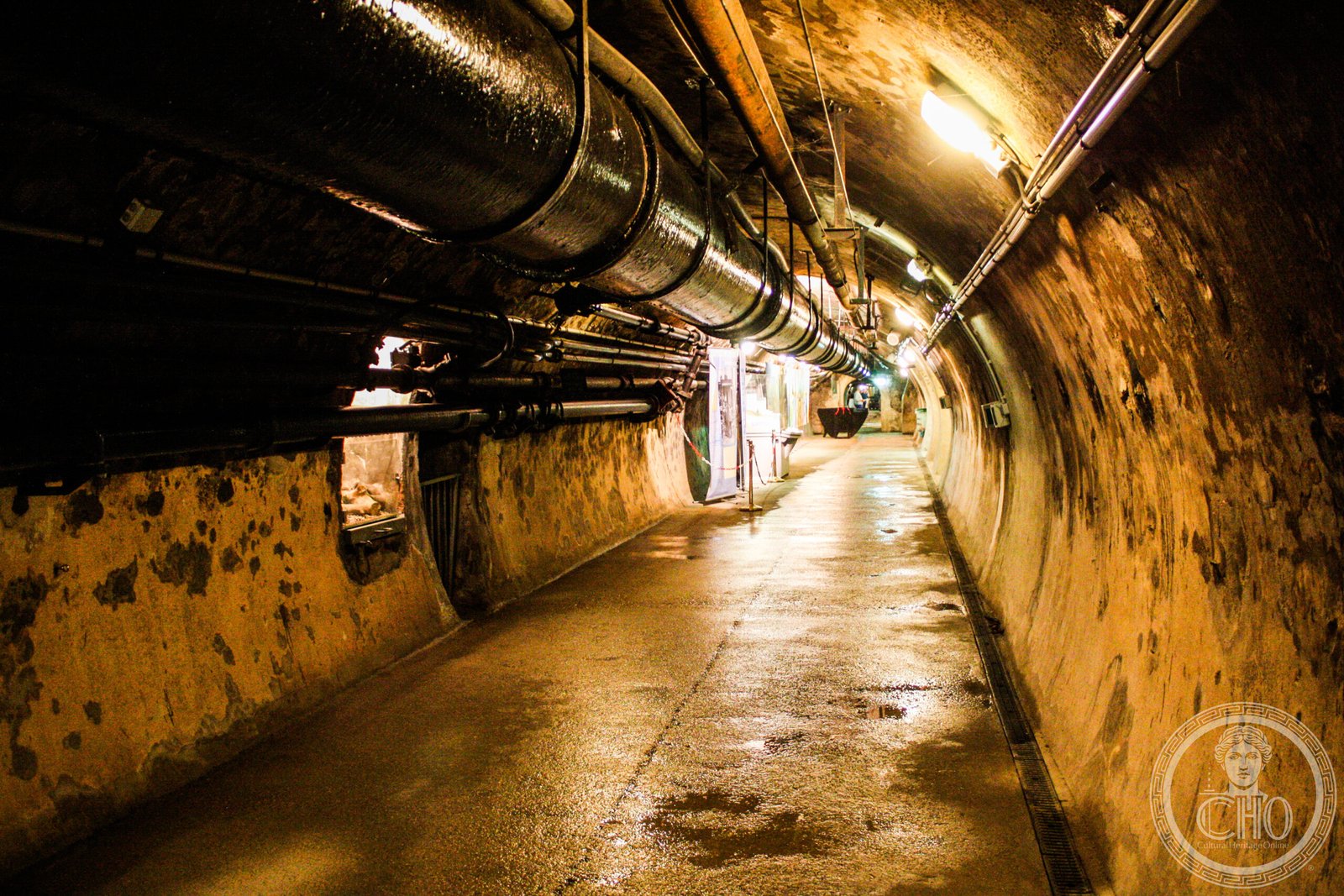
Visitors descend via stairs near the Pont de l’Alma into a network of vaulted brick tunnels, accompanied by the sound and smell of flowing water. Exhibition panels document the history of Parisian water supply and sanitation, featuring antique tools, historical photographs, maps, and engineering drawings. Original 19th-century maintenance equipment — including the famous flushing balls (boulles de curage) used to clean the tunnels — is displayed in situ. The route follows a section of the sewer directly beneath the streets above, with street names mirroring the city map overhead.
Cultural significance
The Paris Sewers Museum represents a rare case of industrial and civic infrastructure celebrated as cultural heritage, acknowledging that the invisible systems beneath cities are as historically significant as the monuments above ground. The 19th-century sewer network is a canonical example of the Haussmann-era transformation of Paris, and its engineering principles influenced urban sanitation planning across Europe and beyond. The museum’s enduring popularity reflects public fascination with the hidden city beneath the city.
Practical information
- Address
- Face au 93, quai d’Orsay, 75007 Paris, France
- Hours
- Check official website — note periodic closures for maintenance and after heavy rain events
- Admission
- Paid entry; children and concessions discounted
Getting there
The museum entrance is on the Left Bank at Pont de l’Alma. The nearest metro station is Alma–Marceau (Line 9), a short walk across the bridge. RER C stops at Pont de l’Alma. Multiple bus lines serve the Alma area. The Eiffel Tower is approximately 1 kilometre to the southeast.
Sources & resources
Find it on the map
See this place and what’s around it →📷 Diventa un fotografo di Cultural Heritage Online
Condividi le tue foto dei luoghi: restano pubblicate con la tua firma come autore. Più vengono viste, più ti fai conoscere — e presto un concorso premierà le foto più apprezzate.
Accedi o registrati gratis per aggiungere una foto