
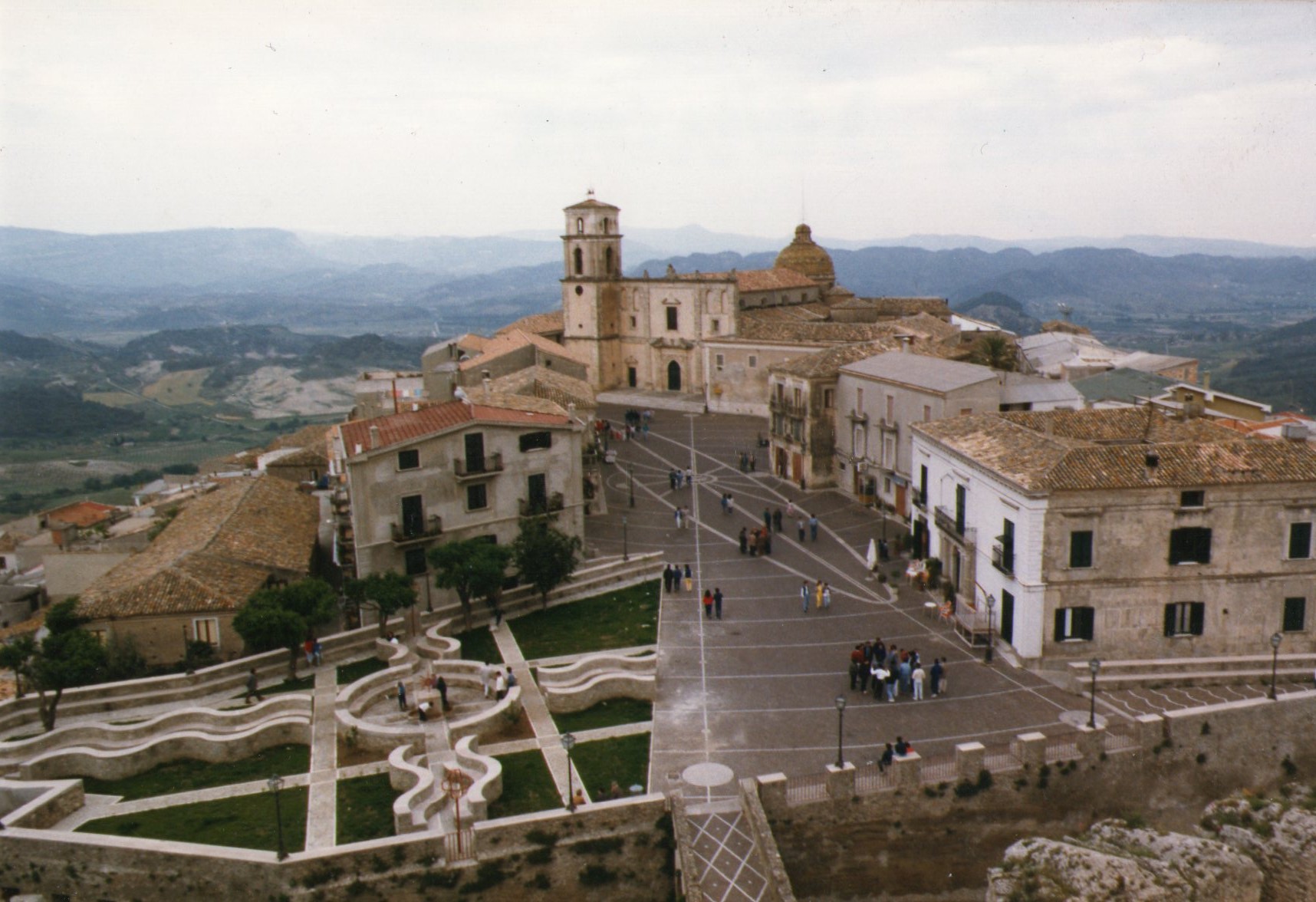
Santa Severina
Santa Severina is a small hilltop town in the Province of Crotone in Calabria, southern Italy, recognised as one of the Borghi più belli d’Italia (Most Beautiful Villages of Italy). Perched on an isolated plateau overlooking the valleys of Calabria, the town preserves an extraordinary concentration of Norman, Byzantine, and medieval heritage, including a Norman castle, a Byzantine baptistery, and a cathedral with ancient foundations.
At a glance
- Type
- Historic hilltop town and medieval comune
- Period
- Ancient Oscan and Greek settlement; Norman castle rebuilt 11th–15th century; Byzantine baptistery 8th–10th century
- Style
- Norman, Byzantine, and Romanesque architecture
- Location
- Province of Crotone, Calabria, southern Italy
Overview
Santa Severina occupies a dramatic position on a spur of rock above the surrounding Calabrian landscape, making it both a natural fortress and a visually arresting destination. Its recognition as one of the most beautiful villages in Italy reflects the remarkable preservation of its medieval urban fabric, its Norman castle (now a museum), and its ancient Byzantine baptistery. The town offers visitors a window into layers of history stretching from pre-Roman settlement through Byzantine, Norman, and Angevin dominion to the early modern period.
History
The site was inhabited in antiquity by Oscan and later Greek settlers, before becoming an important Byzantine centre in the early medieval period. Following the Norman conquest of southern Italy in the 11th century, a castle was built on the plateau to control the surrounding territory, and the town developed around it as an episcopal seat. The Byzantine baptistery, which predates the Norman period, is one of the finest surviving examples of early medieval religious architecture in Calabria. Over subsequent centuries Santa Severina passed through Angevin and Aragonese rule before entering the Kingdom of Naples.
What you see
The Norman castle dominates the town and today houses a civic museum with archaeological and historical collections. Adjacent to the cathedral stands the cylindrical Byzantine baptistery, its simple form and ancient masonry conveying the spiritual and artistic world of early medieval Calabria. The cathedral itself has Romanesque origins heavily modified over the centuries. The historic centre preserves stone streets, medieval house fronts, and panoramic viewpoints over the Calabrian interior.
Cultural significance
Santa Severina is one of the most important sites of Byzantine heritage in mainland southern Italy, and its well-preserved castle and baptistery make it a key destination for understanding the Norman conquest and its relationship with existing Byzantine culture in the Mezzogiorno. The town’s inclusion among Italy’s most beautiful villages recognises the integrity of its historic urban landscape.
Practical information
- Address
- Santa Severina, 88832 Crotone KR, Calabria, Italy
- Norman Castle
- Open for visits; hours vary seasonally — check the castle museum website
- Admission
- Admission charged for castle museum; baptistery visits by arrangement
- Coordinates
- 39.1479° N, 16.9149° E
Getting there
Santa Severina is approximately 25 kilometres west of Crotone. By car, take the SS107 westward from Crotone towards Cosenza and turn south towards Santa Severina. There is no direct railway service; the nearest station is Crotone on the Ionian coastal line. Local buses connect Crotone to Santa Severina, though services are limited. From Lamezia Terme airport, allow approximately 90 minutes by car.
Sources & resources
Find it on the map
See this place and what’s around it →📷 Diventa un fotografo di Cultural Heritage Online
Condividi le tue foto dei luoghi: restano pubblicate con la tua firma come autore. Più vengono viste, più ti fai conoscere — e presto un concorso premierà le foto più apprezzate.
Accedi o registrati gratis per aggiungere una foto