
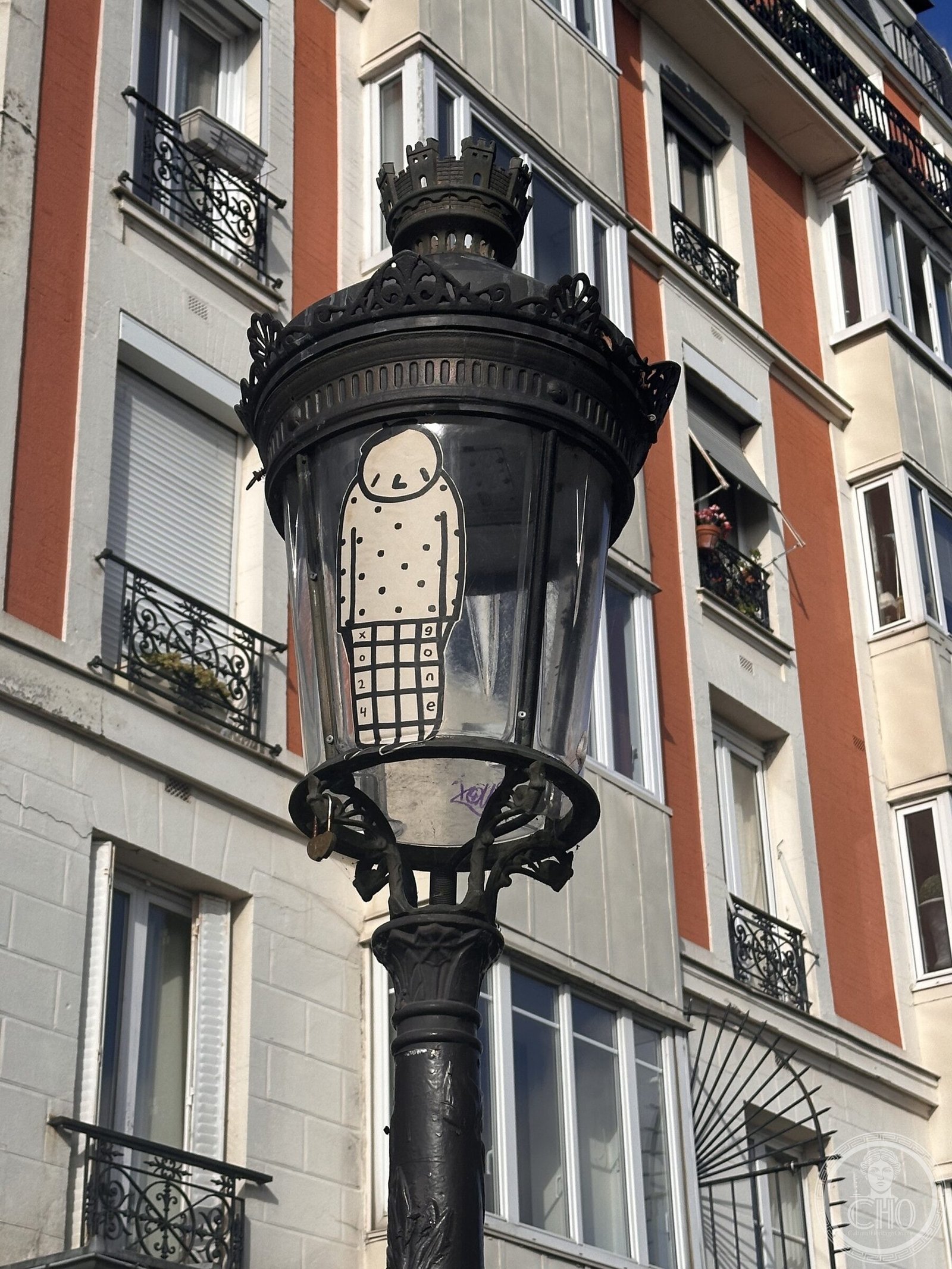
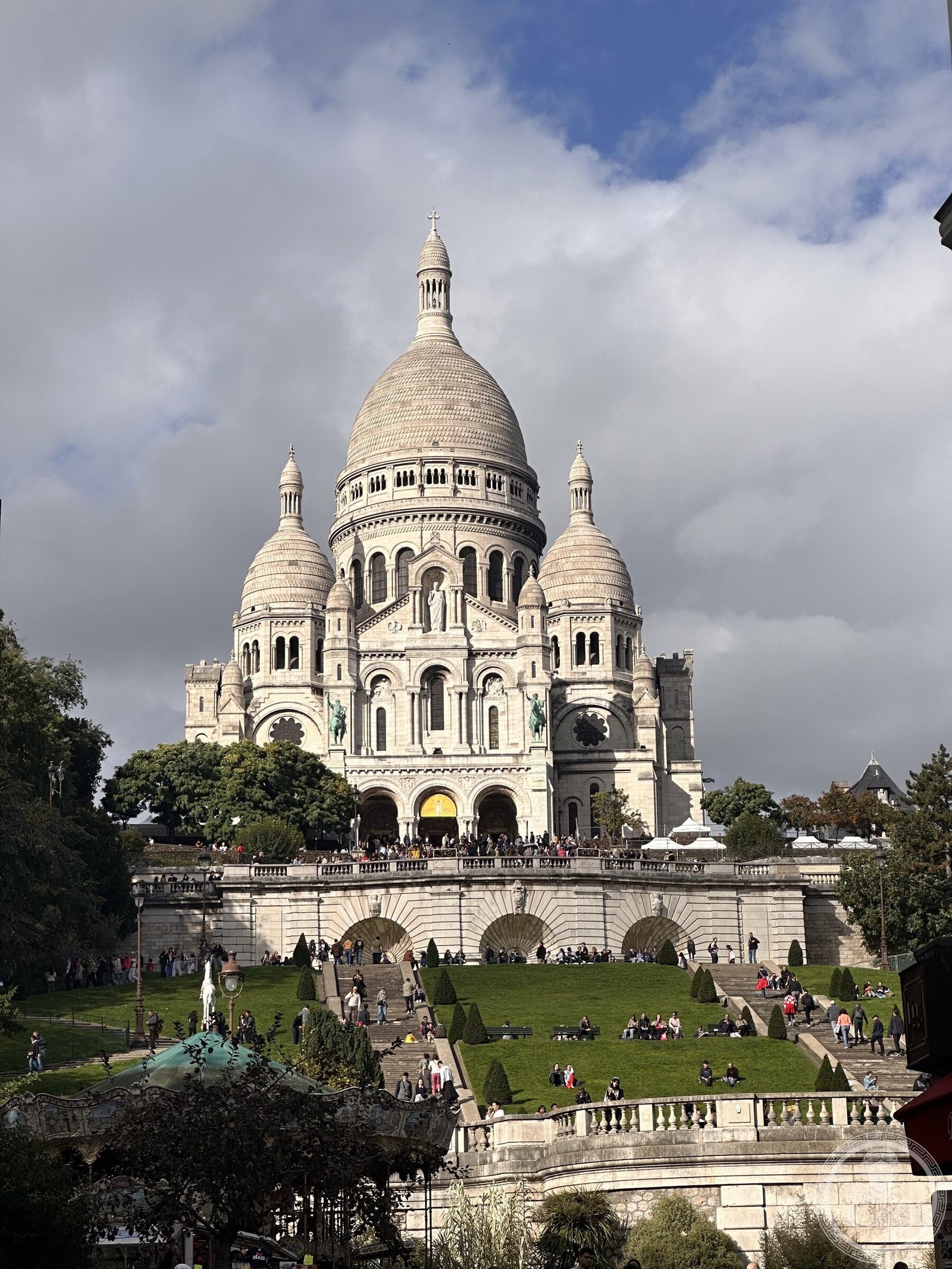
Basilica of Sacré-Cœur
The Basilica of the Sacred Heart of Paris — universally known as Sacré-Cœur — is a Roman Catholic pilgrimage church and minor basilica crowning the butte Montmartre, the highest point in Paris, at 130 metres above sea level in the 18th arrondissement. Designed by Paul Abadie in Romano-Byzantine style and built between 1875 and 1914, it was consecrated in 1919 after delays caused by World War I. Its white travertine limestone facade — which self-cleans after rain — and the 83-metre dome have made it one of Paris’s most recognisable skyline features and one of France’s most visited pilgrimage sites.
At a glance
- Type
- Roman Catholic minor basilica and pilgrimage church
- Period
- Construction 1875–1914; consecrated 1919; elevated to minor basilica by Pope Benedict XV in 1919
- Style
- Romano-Byzantine revival
- Architect
- Paul Abadie (original design); continued by Honoré Daumet, Henri-Pierre-Marie Rauline, Lucien Magne, and Jean-Louis-Charles Hulot
- Location
- 35 rue du Chevalier de la Barre, 75018 Paris, France
- Coordinates
- 48.8739° N, 2.3041° E
Overview
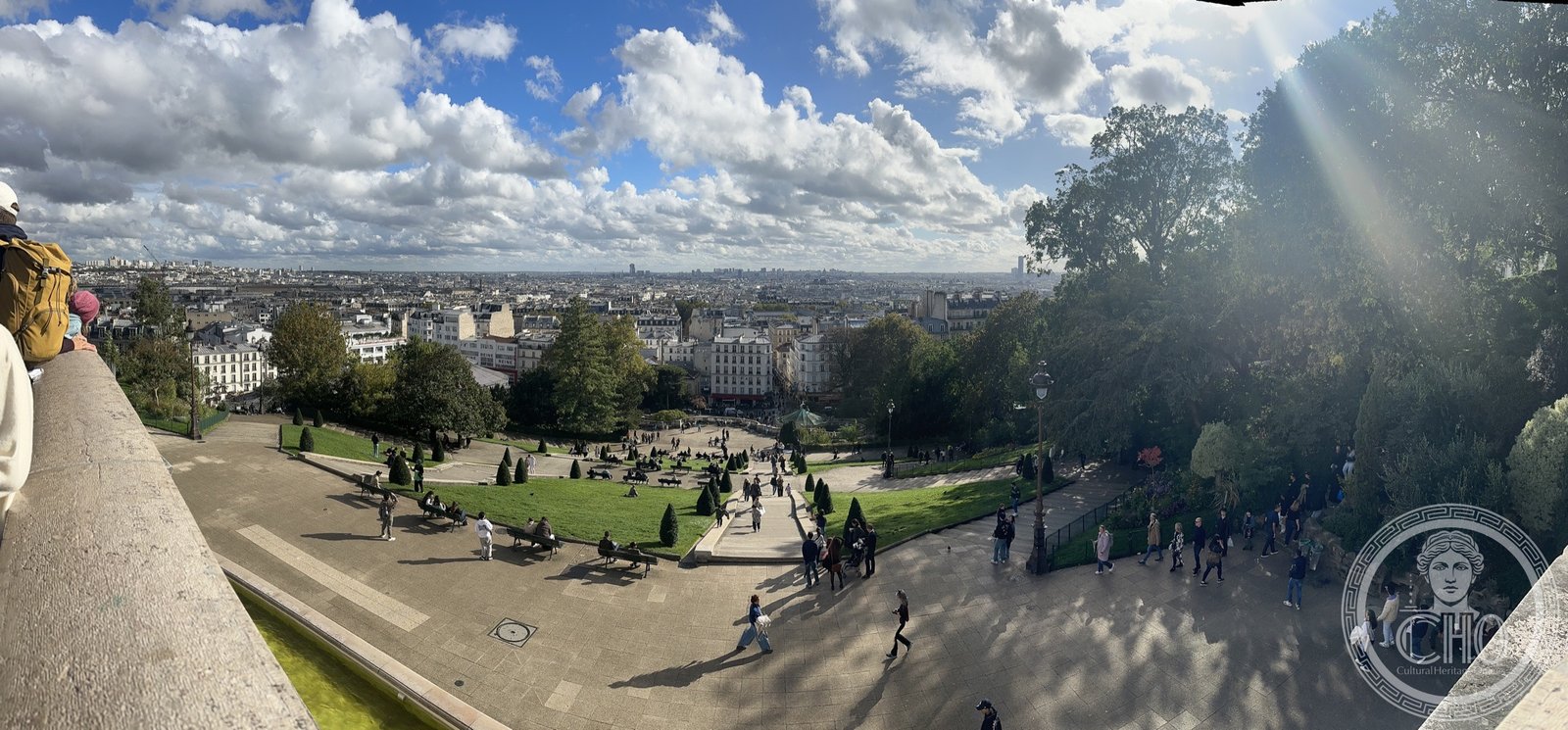
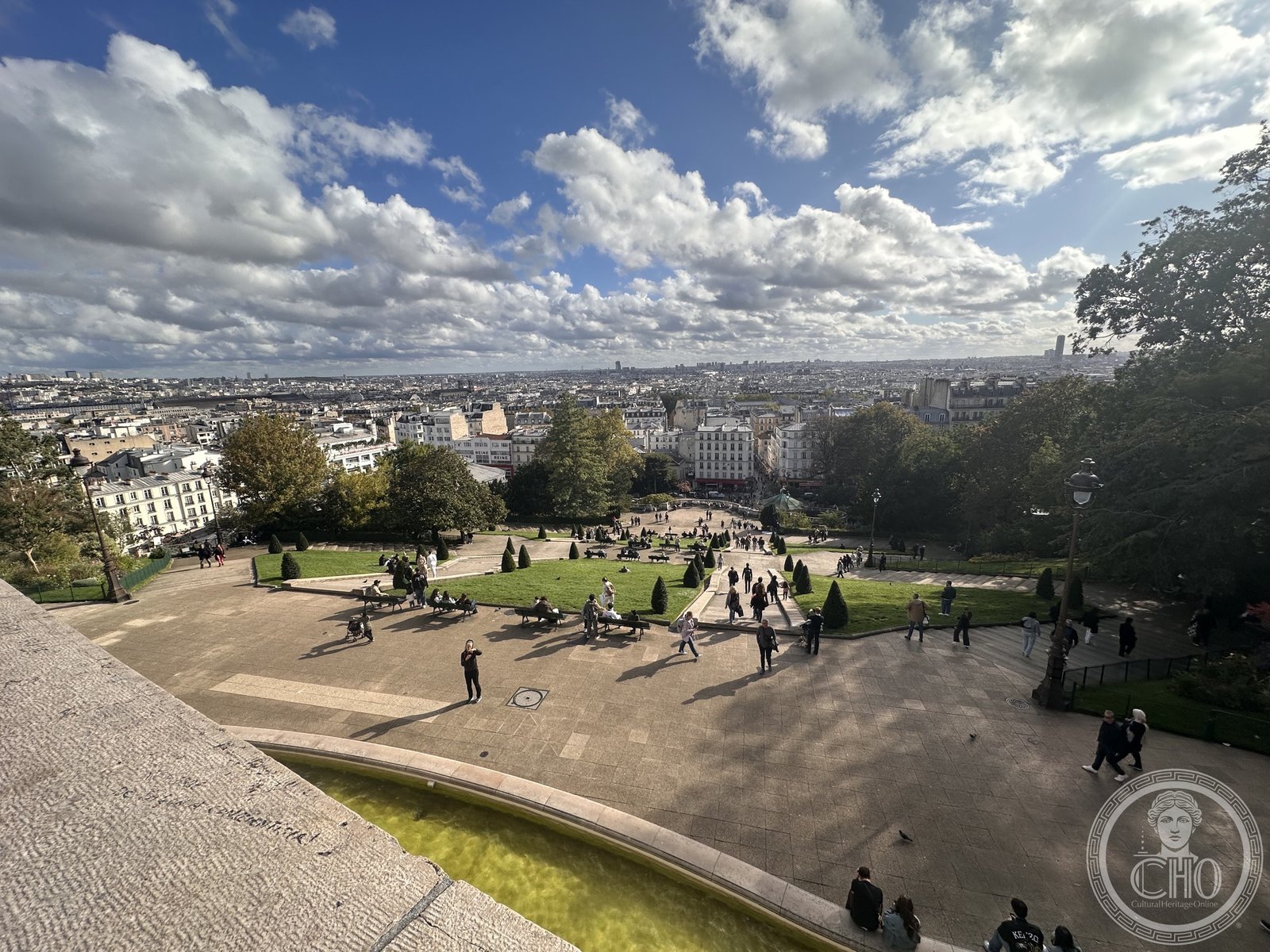
Sacré-Cœur stands at the summit of Montmartre — historically associated with the martyrdom of Saint Denis, first bishop of Paris, in the 3rd century — and is reached either by steep staircases through the gardens of Square Louise Michel or by the funiculaire de Montmartre from rue Tardieu. The basilica’s exterior is faced entirely in travertine quarried at Château-Landon, which reacts with rainwater to produce calcite and thereby maintains the building’s gleaming white appearance over time. Inside, the apse mosaic Christ in Majesty (1922–1923) by Luc-Olivier Merson, covering some 480 square metres, is among the largest mosaics in France.
History
The basilica was conceived in the aftermath of France’s defeat in the Franco-Prussian War (1870–71) and the violent suppression of the Paris Commune (1871). Catholic conservatives Alexandre Legentil and Hubert Rohault de Fleury vowed to build a church dedicated to the Sacred Heart of Jesus as an act of national expiation; the National Assembly declared the project of public utility in 1873, and Paul Abadie won the architectural competition in 1874. Construction proved technically challenging: the Montmartre hill is formed of gypsum quarries that required 83 pneumatic caissons sunk to bedrock to stabilise the foundations. Abadie died in 1884 and the project passed through five successive architects before the shell was complete in 1914; World War I delayed the consecration until 1919. The Savoyarde bell, cast in 1895 and weighing approximately 19 tonnes, is one of the world’s heaviest church bells.
What you see
The exterior presents five domes in Romano-Byzantine style — a central dome rising 83 metres flanked by four subsidiary domes — with equestrian statues of Joan of Arc and Saint Louis above the main porch. The travertine surfaces weather to a brilliant white, providing a striking contrast with the terracotta rooftops of Montmartre below. The interior is dimly lit compared with Gothic churches of similar size; the nave is relatively plain, directing the eye toward the overwhelming apse mosaic: the gilded Christ with arms outstretched against a deep blue ground, flanked by the Virgin Mary, saints, and a map of France. The crypt beneath the nave contains the tomb of Pierre-Henry Ollivier, one of the vow’s promoters, and several side chapels with devotional art. The dome gallery, accessible by a narrow staircase, offers a panoramic view extending 30 kilometres on clear days.
Cultural significance
Sacré-Cœur attracts approximately ten million visitors per year, making it the second most visited monument in France after Notre-Dame de Paris. Its location on the Montmartre butte — historically a centre of bohemian artistic life from Renoir and Van Gogh to Picasso — gives the basilica a layered cultural context that draws both pilgrims and secular tourists. The building has been a focus of political debate since its inception: critics have interpreted it as a monument of conservative reaction, while the Church and devotees regard it as a perpetual act of national contrition and prayer.
Practical information
- Address
- 35 rue du Chevalier de la Barre, 75018 Paris
- Opening hours
- Basilica: daily 06:00–22:30. Dome and crypt: daily 09:00–17:00 (winter), 09:00–19:00 (summer). Check official website for current hours.
- Admission
- Basilica: free. Dome access and crypt: paid. Check official website for current rates.
- Website
- sacre-coeur-montmartre.com
Getting there
The most convenient metro stations are Anvers (line 2) and Abbesses (line 12). From Anvers, walk north on rue Steinkerque through the market street, then climb the stairs through Square Louise Michel; the funiculaire de Montmartre (valid with standard metro ticket) runs parallel to the stairs and is recommended for those with mobility considerations. From Abbesses, take the lift from the metro platform, then follow rue Lepic and rue Lamarck northward (10–15 minutes on foot). Bus line Montmartrobus provides a circular route around the butte for visitors who prefer not to climb.
Sources & resources
Gallery
Photographs by Luigi De Marchi.
Find it on the map
See this place and what’s around it →📷 Diventa un fotografo di Cultural Heritage Online
Condividi le tue foto dei luoghi: restano pubblicate con la tua firma come autore. Più vengono viste, più ti fai conoscere — e presto un concorso premierà le foto più apprezzate.
Accedi o registrati gratis per aggiungere una foto